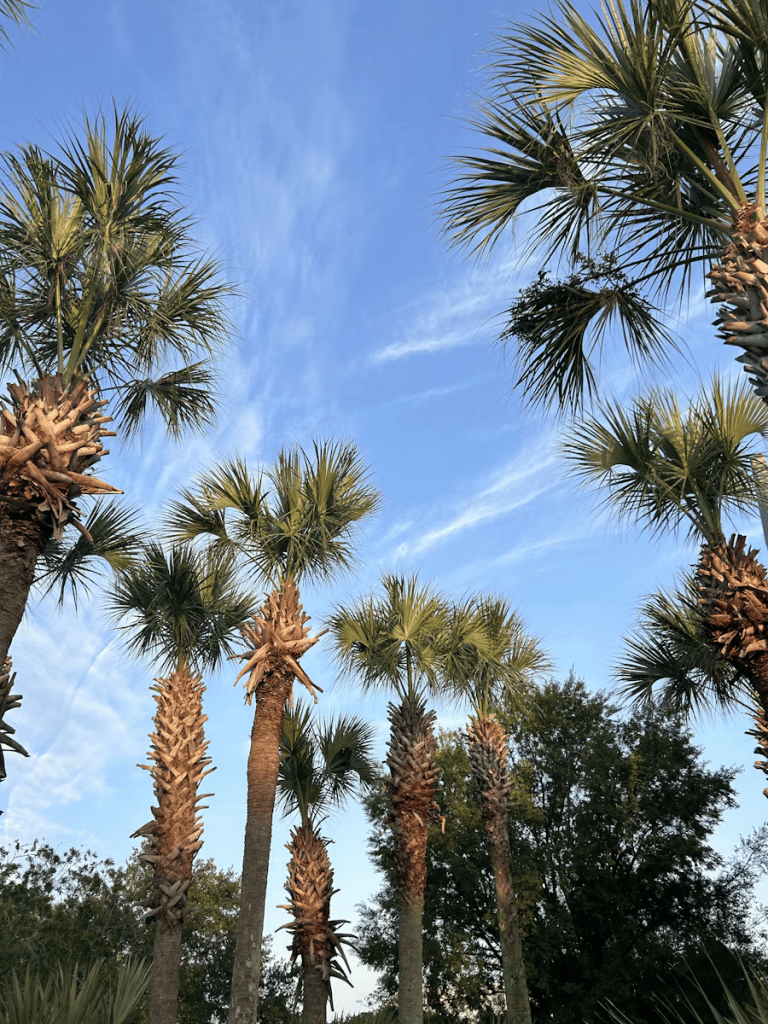
There’s no panorama of yellow, orange, red leaves. There is no chill in the air. Beaches don’t close. Trees don’t drop their leaves. It’s still too humid to leave the windows open.
It’s fall in Florida.
I’ve gotten used to it these last thirty years. People put pumpkins imported from northern places by the front door. Scarecrows stand watch over manicured lawns rather than fields ready for harvest. Pumpkin spice candles fill the house with autumnal smells. Pumpkin spice beverages keep baristas busy.
But it’s all manufactured to make it feel like fall. The pumpkins will quickly melt into a pool of orange goo. Air conditioners still run, keeping the outside humidity at bay. Palm trees will look as they did last month, last year. Pine needles will blow across the lawn, but there’s plenty more where they came from.
A few things have changed in Florida as we approach the end of October.
- I don’t have to cut the lawn every five or six days. It’s as if someone flipped the switch and the grass growth slowed.
- The days are shorter. Sunrise comes later, sunset earlier.
- It’s election season, so campaign signs pop up at intersections like fast-growing weeds. I don’t recognize the names. But I’ll need to choose some in a week or two.
- Families who live up north in the spring and summer begin showing up in Florida as northern temperatures drop. There more traffic and longer lines.
- The annual property tax bill arrives by mail. It’s not due until the end of March, but I can save money if I pay it earlier.
- I don’t have to apply as much sunblock as I did in the summer.
I’m sure there’s more signs of fall in Florida. I’ll add more as I think of them. Much different than up north, but a nice season nonetheless.


:max_bytes(150000):strip_icc()/TAL-best-things-to-do-BROWNCOSP1125-878894e71394427888050b302b066cde.jpg)