I began working for Bell Laboratories in February 1979. My department was titled Network Modeling. At the time, AT&T had a monopoly on long distance telephone service in the United States. Just about every call was made on their equipment on their networks. Network modeling involved coming up with algorithms to figure out how much equipment was needed to handle long distance demand and how much it would cost. Since every call traveled over copper wire through switching offices, a lot of equipment was involved. Remember, this was long before the days of cell phones, wireless carriers, fiber networks, and unlimited calls and data.
Since every phone call traveled through AT&T equipment, the justice department had filed a lawsuit to break up the monopoly. The purpose of my department’s network modeling was to show that breaking up the Bell system would make long distance calls unaffordable for most people, and therefore was not in the best interest of the nation.
Engineers and mathematicians in my department would come up with ways to determine and present how much equipment was needed and how much it cost to handle all the telephone calls being made across the country. Then people like me would code computer programs to analyze this information.
Since I was totally new to this, I really appreciate the time the others in my department took to explain how it all worked. Every explanation began with, “You have two wires…” Every phone had two wires that would connect to a local switching office to connect with other switching offices to the two wires of the other person’s phone.
When hired, I thought I would be working for Gerd Printz, but when I arrived, I was put in Ron Skoog’s group. I had a title: Senior Technical Associate. It sounds impressive, but it’s only one level above the lowest tier of employees. There were plenty of levels above me, all those with masters and Ph.D degrees.
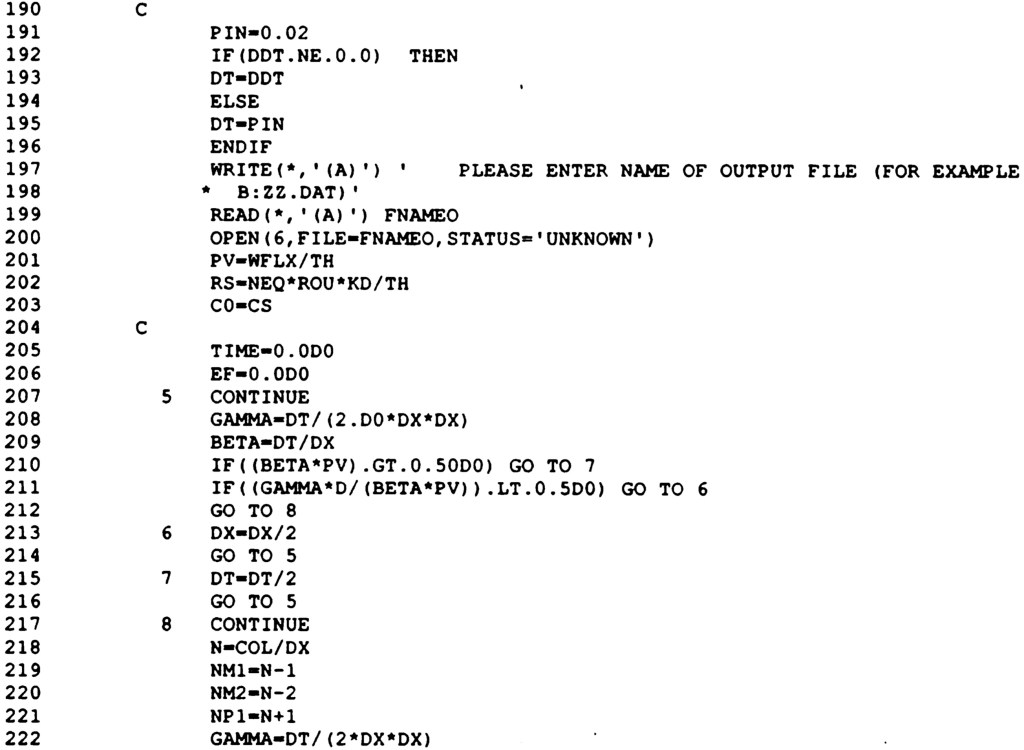
They handed me half-inch thick printout on 11×17 tractor feed printer paper filled with thousands of lines of Fortran code. It was my job to finish the coding, test it, and write it up. I worked alongside many group members who were level higher than me. I’m amazed I remember so many of their names: Joan Bazely, Pam Turner, Ted Ahern, George Askance, Joe Scholl, Gina Langlois, Lachsman Sinha, Eric Grimmelman. A few guys from Western Electric who knew a lot about equipment in the field were around the office a lot, too.
I had an office, a CRT terminal to work on, and shelves filled with IBM manuals. I would work on the code, test parts of it, and then have to go down to the computer room to pick up printouts of what I had worked on.
Once I had the program up and running, I wrote it up for internal publication and made a presentation to some who were higher up the organization who were preparing to go up against the justice department.
Our network model was a stepping stone for my next assignment. Now we began to look at how solar flares and electromagnetic pulses (EMP) would affect telecommunications. If an enemy detonated an EMP device over the United States, it could disrupt communication. But how much? And for how long? Some of this project must have had a connection with the Department of Defense, because I had to get top secret clearance. I felt pretty important for a moment, until I realized no one was going to tell me any secrets.
Anyway, to study this, we found a long distance cable between Aurora, IL and Clinton, IA that was perfectly east and west. I programmed an HP minicomputer in Basic that we installed in Aurora. The staff there would send us a cassette tape filled with data every week that we would analyze along with solar flare activity. I don’t remember what we learned from the whole effort, but it was a fun project to work on.
While I was working on those projects, I go to see other Bell Labs facilities in Holmdel and Murray Hill, both in New Jersey. Those are the places where engineers and scientists invented transistors and lasers, and developed digital communication. I also got to go the main switching office in Manhattan to see all kinds of different phone switches in action. For three years I was a beneficiary of the massive amount of money AT&T poured into it’s research arm. I met a lot of brilliant people and learned so much from them.

 Waite for it...