Since we began booking Airbnb homes rather than hotel rooms to visit our son in Dallas, we have stayed in some very nice homes. Many had been recently renovated, were creatively decorated, and were thoughtfully filled with amenities. We’ve stayed in places that had wall-mounted TVs in every room, surface phone chargers, and an easy-to-use printer. The kitchen was stocked with bottles of water, coffee pods, snacks, and condiments for meal prep. The bathrooms were chock full of fluffy towels, soaps, conditioners, and lotions. The beds were full of pillows and the closets with extra blankets. Binders full of house instructions, favorite restaurants, and nearby attractions. The owners weren’t obligated to provide all this, but we were glad they did.
Most recently, though, we stayed in what I have labeled the “spartan” airbnb. It was sparkling clean. It was well-maintained. It had lots of space for guests. I slept well in the comfortable beds.
Amenities? Virtually none. We could not find one dish towel in the kitchen. We were not able to locate any extra pillows or blankets in the bedrooms. Bath towels were few and far between. There was nothing in the refrigerator. Not a single ice cube in the freezer. One condiment: a salt shaker. Three or four generic coffee pods. Very few knick-knacks or wall hangings. Just a couple of hangers in the closets. No instructions whatsoever for the fireplace, TVs, or internet.
OK, so it wasn’t all bad. The wifi was very fast. The house was a five minute walk from my son’s house. It was the week of Thanksgiving, and the hosts had put up a Christmas tree (although it was sparsely decorated). The home looked exactly like the pictures we had seen.
We had just gotten spoiled.
After I got home, I was surprised to read reviews from guests who described this house as the nicest they had ever stayed in. Obviously these folks hadn’t stayed in too many places.
And I was also amused when I texted the host and asked about check-out instructions. (Remember, there was no binder of instructions.) The only direction was, “Please naked the beds.”
As I waited for my duffle to make its way around the baggage carousel, an unfamiliar voice said, “You’re a saint!” I looked up but didn’t see anyone I recognized.
“I don’t think I could have put up with all that seat-kicking.” The voice came from a man a few feet away, also waiting for his bags. “I was sitting across the aisle, a row behind you. I don’t know how you endured that for a whole flight!”
My wife and I had just arrived in Dallas on a nonstop flight from Orlando. A family returning from a week long trip to Disney was sitting next to us and behind us. I felt the energy of the two little boys behind us as they ate snacks, played with toys, watched videos, and bounced around for the whole two hour flight. We know what it’s like to travel with little ones, so we weren’t surprised. We’re used to having young grandchildren around, too, so it was just another one of those days. I really didn’t think that much about it.
But it got me thinking: what are the qualifications for sainthood? Was that honor harder or easier to achieve than a flight home from the Magic Kingdom? I learned that there are five steps.
You have to die. The process of becoming a saint begins five years after your death.
You must be a “servant of God.” That seems a bit subjective. It involves an examination of your life and deeds. Witnesses testify to your holiness and virtue. It’s kind of like listing three references for a job.
You must show proof of a life of “heroic virtue.” This means that others have been led to pray because of your life of service and virtue. If you make it to this stage, you attain the title venerable.
A miracle is attributed to prayers made to you. As a citizen of heaven, you can intercede on behalf of others. At this point, you are beatified, that is, you are granted the title blessed.
A second miracle is attributed to prayers to you. However, if you die as a martyr, only one miracle is necessary. A special canonization mass and prayer are spoken, and you are now a saint.
Other than being mortal, or having the patience to fly with children, I doubt if I’ll ever qualify for the title of saint.
As the delivery truck pulled away, the alert sounded and a yellow Echo circle announced one new notification. A package has arrived.
When I opened the front door, a thick FedEx envelope fell across the threshold. A familiar sight, yet today very different. The envelope was wrapped in yards of packing tape. Beneath the tape I saw the envelope was ripped, torn, trampled, and water-stained.
But the package was not for me. My wife opened it when she returned home. Although she had purchased a used book, she did not expect to find it this used. The pages were wet, puckered, and compressed into a pulpy mess. When she showed it to me, I observed, “It looks like someone ran over it with a truck!”
So what happened? At what point did someone drive across the package, mummy it up with tape and send it on its way? I came up with a few scenarios.
Maybe the sender had set it on top of their car when heading off to the shipping place. As they pulled out of their driveway, they caught a glimpse of it in the mirror as it slid off the roof. They felt the bump as they drove over it. “Oh no!” “Well, we listed it in ‘acceptable condition. Don’t worry about it.”
Or maybe a huge pile of outgoing FedEx packages at the QuickShip place slipped off as the driver loaded up the hand truck on a rainy afternoon. No one noticed it until he felt the bump under the wheel. Glancing back, he saw the package on the asphalt. He jumped out, tossed it back into the truck, and drove off.
The book looked bad enough that it may have laid out in someone’s yard through a thunderstorm before they noticed it. Waterlogged and soggy, someone may have warned, “You can’t send it like that.” “You’re right.” So they microwaved it to dry it out a little, spun some wide tape around it, and sent it off.
It could be that someone else had purchased this book and it arrived in this condition at their house. They couldn’t return it. But they could resell it. Hey, if you don’t like it, just resell it. Buyer beware, right?
“Yes,” I replied, “I’ve got a few errands to run.”
“Would you drop these off at the UPS store. This QR code with this (a clothing item) and the other one goes with this (a box of something).”
“Don’t I have to pack them in a box or something?”
“No, just give them this and they take care of it. It’s all prepaid, too.”
That’s it? I was dubious, but trusted her instructions. In between the gas station and Home Depot, I found the little strip mall UPS store. As I stepped through the door, a line of people were waiting their turn.
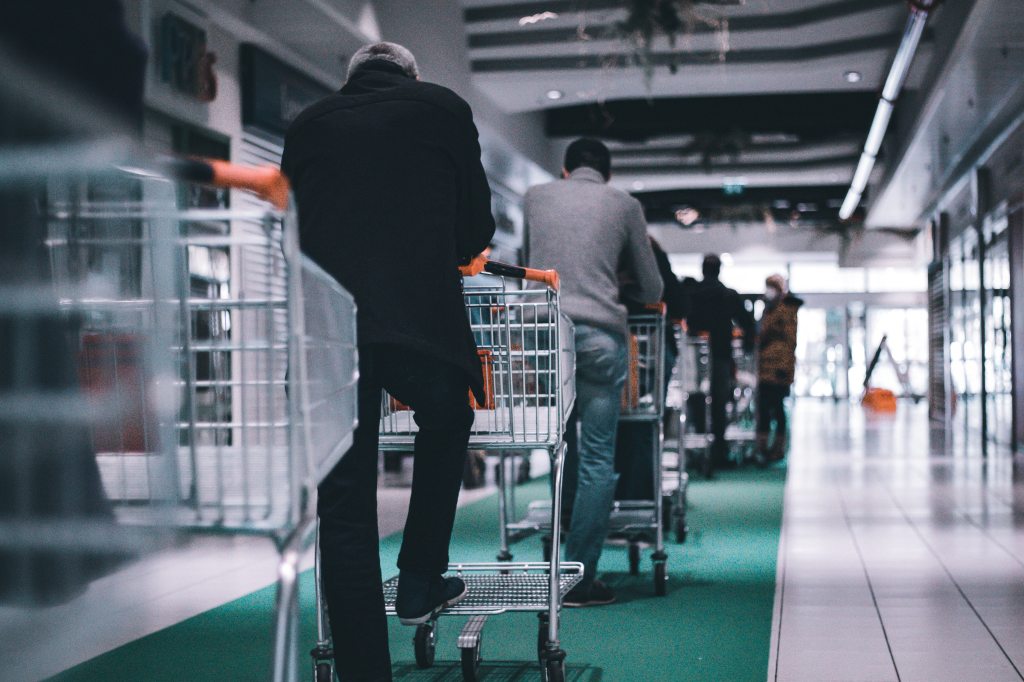
They were all holding pieces of paper just like mine and an item. A shirt. A puzzle. Some protein bars. A sauce pan. Three workers behind the desk took each item, scanned the code from the paper, tapped a touch screen, and said, “All set. Have a nice day.” Ditto for me and my two items.
In that moment, I marveled at the booming business of returns. It’s just part of life. I do a lot of online shopping. My items arrive a few days later. I like some of the items. Some don’t fit. Other times the color is off. It may be a piece of junk. It’s not a big deal. Just print a return ticket, take it to a designated place, drop it off and immediately get your money back.
It wasn’t that long ago that I would go to the store, find what I wanted, try it on, purchase it, and take it home. Today, what you want probably isn’t in the store. You have little choice but to buy online. It might fit. It might not. You might like it. You might not. Whatever. You can always easily send it back.
My wife will order three or four of the exact same item online. When they arrive, they all fit differently. She’ll keep the one that fits, and return the rest. Easy-peasy.
The business of returns is huge. Amazon resells some used merchandise, but sells to liquidators, donates some to charity, and sometimes just throws it away, generating a huge amount of waste. CNBC reports that $761 billion of merchandise was returned in 2021.
You can buy a whole pallet of returned Amazon goods. It’s a blind purchase, and it’s on you to resell it to recoup your investment. One woman paid $575 for approximately $10,000 worth of returned items. Amazing.
Food pantries deal with this. They have to swipe the bar code with a Sharpie so that recipients don’t turn around and cash in cans or boxes at a local store.
I always buy more than I need for a home project. I return all the extra unused materials for a refund. The local Home Depot has more registers for returns than for sales. Lowes had long lines of generator returns after a close call with a recent hurricane. The power hadn’t gone out long enough to even open the box, so each got a full refund. However, those generators weighed a couple of hundred pounds each, so this was no easy task.
I’ve learned the hard way to check a box at these stores before I buy something. It’s easy to tell if the box has been opened and then taped shut again. When I didn’t check, I discovered that the fan or tool still didn’t work, or pieces were still missing from an assemble-it-yourself cabinet, or the corner was still damaged from that bookshelf.
Big screen TVs are returned the week after a big game. Suits and dresses are returned after a weekend wedding. Tools are returned after a project is complete. Stores hire extra workers for returns after holidays. What an amazing business!
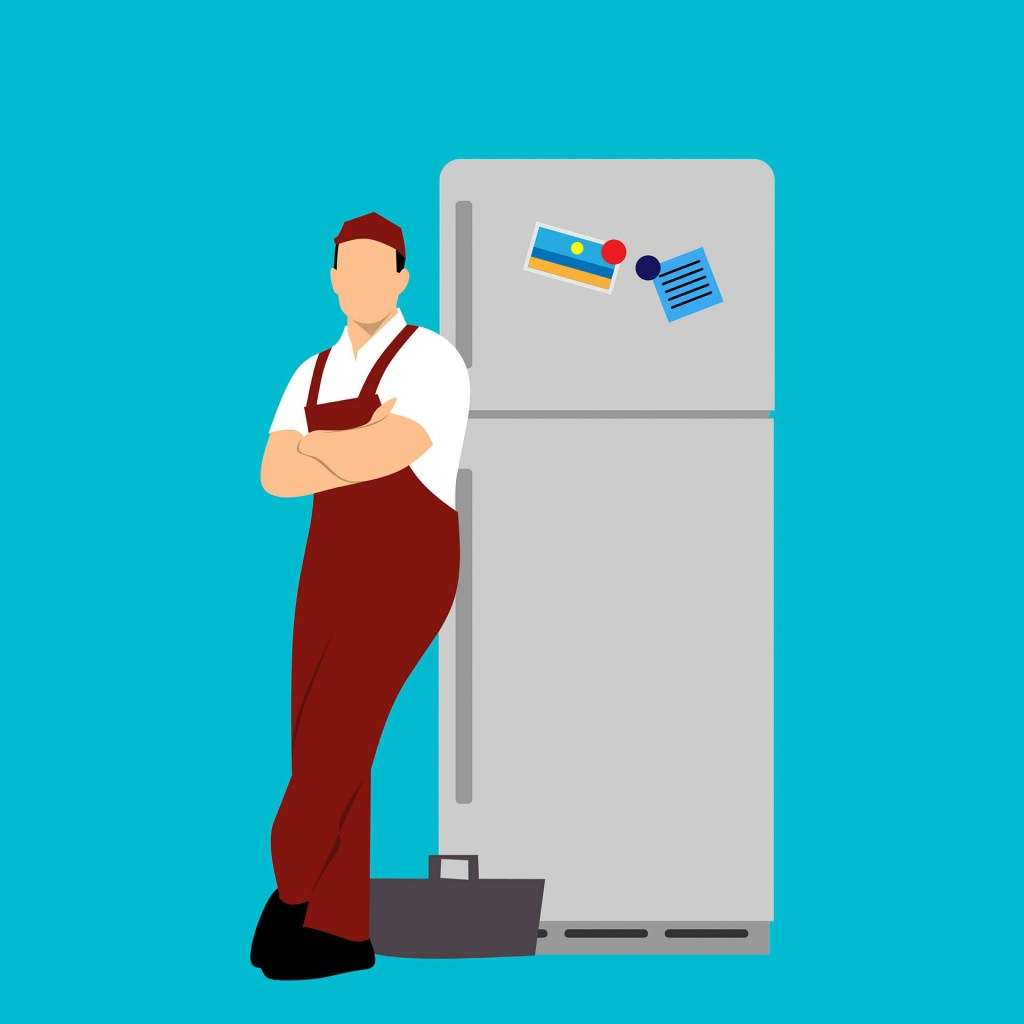
I was having a good day. Matt the appliance repairman was back to fix our ice maker which had an annoying habit of freezing up and hoarding its ice cubes. He had been out the week before to scope out the warranty-covered repair, and had returned with the manufacturer’s solution kit.
I was out front working on some landscaping when I saw his truck pull up in front of our house. I like to think of myself as a friendly person, so I greeted him with the standard generic greeting, “Hey, how’s it going today?”
I expected to hear the usual generic response, “Pretty good” or “I can’t complain.” Instead I got his brutally honest reply, “Rotten!” It was only 10 am. And it was the middle of the week, not a Monday. As I let him in the house, I wondered, “How bad could it be?” I’ll bet his first appointment of the day was at 9. Most people are happy when their appliances are in working order again, so I would think his job was a positive one.
Maybe his first stops of the day weren’t as pleasant as this one. Maybe he couldn’t fix previous problems. Maybe the estimated repair cost outraged a customer. Maybe he wasted half his morning going to someone house who wasn’t even home.
Perhaps Matt’s rotten day started early in the morning when the dog threw up in his bedroom. Or he was in the middle of a heated argument with his wife as he headed out the door. Or his back was killing him. Or a close friend had died.
You just never know the story that frames someone’s day. You usually don’t know because almost everyone hides their anger, grief, pain and frustration behind a smiling “I’m doing fine!”
Even though I know it wasn’t appropriate, I’ve asked “How are you?” to someone in hospice, just before surgery, arriving for a funeral, wrestling a screaming child, slamming a door, a door-to-door salesman, people stocking shelves in the store, the coffee shop barista, and a complete stranger on the street. I don’t have the actual numbers, but I’ll bet 99% of the time, the response was, “Pretty good” or “Not too bad.”
I do this. I do this very well. I don’t have the actual numbers, but I bet I answer this way 99% of the time. I rarely want to unpack my baggage in casual conversation. So more times than not, I too am “fine” or “hanging in there.”
Every once in a while, though, I switch it up. Sometimes I’ll respond, “Much better, thank you.” This response makes the asker pause for a moment. It generates interest, concern and sympathy. It opens the door for more conversation.
Or I’ll say, “I don’t know.” That catches the other person off guard. It makes them pause for a moment. They can’t walk away. Now they’re curious. They want to know more.
I don’t know if I’ve ever just blurted out, “Rotten,” “Horrible,” or even “Lousy.” Like most, I instinctively put up the “having a good day” front for all to see.
So I am on a personal quest to stop asking, “How are you?” or “How’s it going?” Instead, I’m going to make a statement. I’m going to say something along the lines of, “I’m glad to see you!” Or, “I really like…” something the person is wearing, doing, or saying. Maybe, “That’s an interesting…” thing a person is carrying, tune a person is humming, or tattoo on a person’s arm. I don’t have the numbers, but I’ll bet showing interest in someone gets an honest response 99% of the time.
Rewind to Matt, the appliance repair guy. Once he said, “Rotten,” I stepped back and just let him get to work. But I could have said, “I am very glad to see you!” Or, “Can you tell me about the repair kit you ordered?” Maybe, “I’m impressed that you know how to fix so many brands of appliances.” I could have picked his brain to ask, “What brands of appliances have you found to be the most reliable?” Perhaps a little interest in him and his job would have made his day a little less rotten. I would also have learned a few things.
So there’s one of my goals. Counter some of the rottenness in this world. Greet folks with words and phrases that are creative, positive, and pleasant.
One of the signs of the end of the Covid-19 pandemic was the reappearance of door-to-door sales. It had been years since anyone was dropped off to knock on doors in our neighborhood. Even the Jehovah’s Witnesses resorted to handwritten letters rather that risk being exposed to disease. To be honest, I didn’t miss them.
Suddenly, like a weed that pops up in the garden overnight, they were back. The first wave offered pest control for my home. The first man wore a branded polo shirt, and started his pitch with the standard opening, “We’ve been servicing the homes of many of your neighbors and thought you might be interested in our monthly program.” I glanced at the logo on his shirt and then back at him. In my mind, I thought, “I haven’t seen any trucks or cars with that company name on it in our neighborhood. I doubt you’ve got much business here.”
“Do you have anyone treating your home for insects? There are lots of ants in this neighborhood. We are offering a really good deal today.”
“Actually, I do.” I shared with him how much I paid for monthly pest control.
His eyes widened. “They come every month for that much? Hey, I can’t touch that. Sorry for your time.” (Oh, and by the way, I’ve never seen an ant in my house.)
The second wave was selling security systems. One gentleman pulled up to my front door on a hoverboard and tried to ring the bell. I disconnected my doorbell because someone always seemed to ring it just when I or a grandchild had laid down for a nap.
I didn’t know anyone was at the door. But my dog Samson did. He went nuts, growling and barking and baring his teeth in the window.
“All right, Sam, let’s go see who it is.” I held him by the collar as I opened the front door just a crack. The salesman’s eyes widened, he took three steps back and pleaded, “Don’t let him go!”
“Samson, sit. Stay.” I stepped out onto the front porch, leaving Sam behind the closed door.
I smirked when he said, “I’m in the neighborhood today for XYZ security systems. Have you heard of us?”
I could hear Sam growling behind the door as I said, “No, I’m not familiar with that company.”
This guy then launched into a fast-paced presentation that lost me after about fifteen seconds. He knew he didn’t have much time, so he compressed his whole pitch into about three minutes. Switching back and forth from iPad to phone, he showed me equipment, plans, surveillance videos, and pictures of neighbors who had recently installed their equipment. I didn’t recognize any of the attractive couples he claimed were my neighbors. He quoted a monthly price and asked, “I’m only in town today and tomorrow. Would you like to sign up?”
I played the, “I need to talk to my wife first” card.
“OK. I stop back tomorrow, but then I’ll be headed for some other town. Here’s my card.” With that, he segued off to the next house.
I later heard from a neighbor that a sales rep from that company had been arrested a few streets over. Turns out he got into a yelling match with a woman who called the sheriff. When they checked him out, he had warrants for his arrest in three states. LOL, maybe I need a security system because of people like him!
Next up, the tree trimming guys. “Hi, we’re in the neighborhood and see you have a few dead trees. We can take care of them for you in the next few days.” After I point out that the trees in question are on neighboring lots, not mine, they leave a card and are on their way.
I’m surprised anyone does door-to-door sales anymore. I imagine many people look at their doorbell camera and ignore whoever they see at the front door. We don’t open up to strangers anymore. We’ve heard too much about home invasions, diseases, and scams.
As much as I dislike door-to-door salespeople, I have bought their products. At the exact moment when we had decided we needed a lawn service, someone stopped by with a deal. I signed them up on the spot. We hired a crew to trim our palm trees who just happened to be in our neighborhood. We had our roof replaced by a company that was working down the street. We’ve bought magazines from teens from who knows where to earn a trip to the Bahamas. Neighbor kids selling the world’s best chocolate bars always make a few bucks at our front door.
I just about choked on my food when I heard the comment. If they only knew.
The season-opening meeting of our small group included a “breakfast for supper” meal ahead of the discussion. With about twenty members, the group had outgrown “small” status, so everyone would bring something, sharing the meal prep load. We signed up for pancake toppings, which our host said should include syrup, whipped cream, and blueberries.
Whipped cream? To me that sounded more like dessert for dinner, but I went with it. I picked up bottles of sugar free syrup and a can of aerosol whipped cream. Who knew whipped cream had gotten so expensive? Since I’ve had blueberry syrup on pancakes at restaurants before, I scanned the breakfast shelves for some of that. I couldn’t find anything other than maple flavored. Where could I find some kind of blueberry sauce?
Maybe I could find something in the ice cream aisle. If not that, then strawberry, right? Nothing but fudge and caramel. Great toppings, but not for this event.
I know. Blueberry pie filling. I made my way to the baking aisle. There it was. Perfect. I didn’t think many would choose that as a topping, but it was the cheapest one of my items.
When we arrived at the meeting home, the hosts quickly took my bags of toppings and set them out on a serving table not far from a mountain of plate-sized pancakes. A warm pan of scrambled eggs, sausage, biscuits and gravy, and fruit salad were all lined up and ready to go. I passed over the pancakes that night, opting for all the rest plus a second helping of biscuits. I was astounded at how much food some piled on their plates. I watched as several loaded up a few pancakes with syrup, blueberries, and whipped cream. The food was great and we all got to know each other a little better.
From the end of the table, I smirked at the comment, “These blueberries are delicious! I wonder who made these? I need this recipe.” I put on my best poker face and said nothing. I don’t know what it is, but something in that can full of processed blueberries made them delicious. I’m sure it was the sugar.
In that moment I recalled a soup supper from years ago at our church. Each week in the spring, families took turns bringing in their favorite soup recipes along with bread and butter before we gathered for some Wednesday worship. One week Erwin brought what he labeled his “famous” chili. It was really good chili. But it tasted familiar. Sure enough, as I helped clean up, I noticed numerous Hormel chili cans in the trash can. I chuckled and thought about how unrefined our palates really are. Bring some processed food with lots of salt and additives and everyone will praise your cooking!
We used to call them “cardboard” cookies. They were cheap store-brand cream-filled sandwich cookies, chocolate on one side and vanilla on the other. They really weren’t that good, yet we went through giant packages every week. It’s embarrassing to admit how many times I reached for a few of those over some homemade cookies. In the same vein, a package of Little Debbies snack cakes will disappear in no time, regardless of who you’re feeding.
I’ve tried some copycat recipes over the years. Glazed lemon cake from Starbucks. Chicken Marsala from Olive Garden. New York style pizza crust. Biscuits from scratch. Homemade ice cream. It’s never quite the same. I don’t know if it’s my ingredients, my oven, my lack of culinary skills or a lack of additives, but theirs is always better than mine.
There are a few things we make better than the store bought versions. My wife’s homemade pie crust is so much better than most of what we find at grocery stores or bakeries. Her cheesecakes taste as good as any we’ve ordered at restaurants. We’ve tried ceviche at several restaurants, but prefer mine, since I can include all the ingredients we prefer. It’s nearly impossible to beat homemade chocolate chip cookies. And we also prefer home-brewed coffee to most we find at coffee shops and restaurants. (We like it very strong and dark.)
Someone figured out that if you add enough fat, sugar, and salt to just about anything, people will keep coming back for more. They may even rave about your recipe!
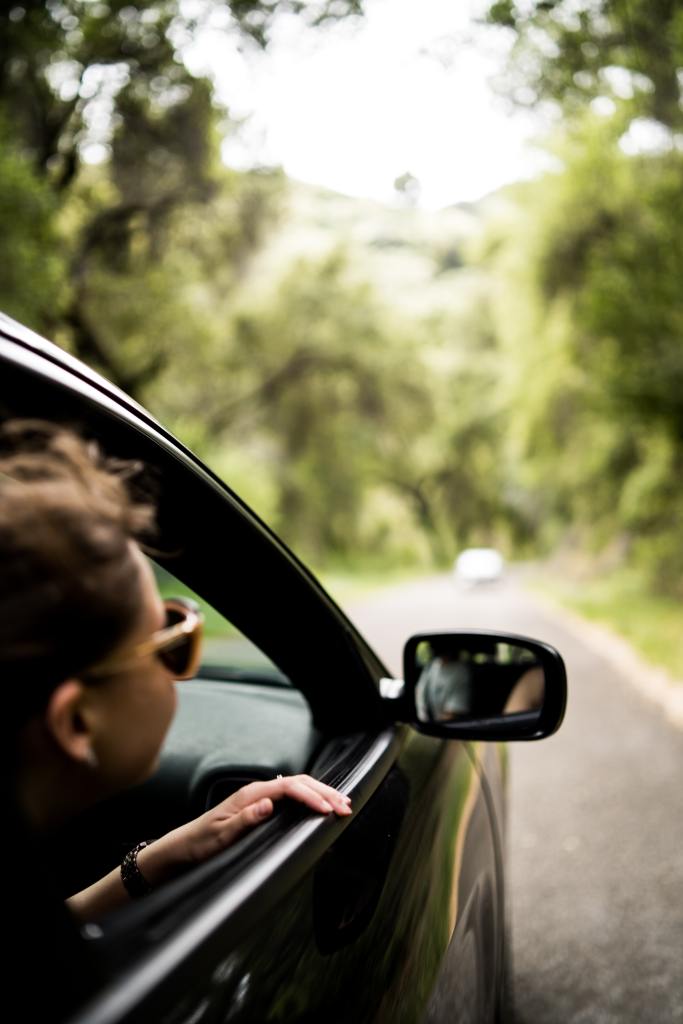
From the deep recesses of my childhood memories, I recall saying to my dad one Sunday afternoon, “Let’s go for a drive!”
I don’t know where I got the idea that is would be fun to go for a drive. It must have been a nice day, perhaps in the fall when colored leaves were still on the trees lining the streets of Delaware County (Pennsylvania). It must have seemed appealing since my family really didn’t go anywhere except school during the week and church on Sunday. We must have gone for a drive sometime before that, just to get away from suburban Philadelphia and enjoy some of the rural areas not yet developed by housing additions and shopping malls.
I remember my dad’s response. “Why?” Throughout his career my dad commuted an hour to work and back Monday through Friday either in a car or on trains. For him, the weekend was finally a chance to be home, catch up on chores, listen to a ballgame, and be with the family.
My dad’s follow up question was, “Where do you want to drive to?” I had no idea. All I knew is that miles of road were out there just waiting to be driven. We would get a chance to see the world in color rather than on black and white television. We would see farms and woods and creeks and houses and fields. Where? I don’t know. Anywhere sounded exciting to my brother and sister and I. Although, we thought that the hour-long drive to the Jersey shore was unbearable, so we really didn’t like driving that much.
I don’t think I ever took my own family out for a “drive.” Once I became a dad, it was academic. As the one who paid for the gas and maintained the car, driving around for the sake of driving around wasn’t in the budget. We owned a couple of cars to get from one place to another. We drove to work, to the store, to visit family, to school, to dance lessons, or to some other destination. But we never just went for a drive.
However, I discovered that in the early 20th century, when cars were a new form of transportation, people actually went for Sunday drives. It was mostly an American thing. The car was a form of entertainment, not just for transportation. In a time when most stores and businesses were closed on Sunday, there wasn’t much else to do.
When gasoline prices climbed later in the century, the custom all but disappeared. Even though there are more roads than ever, there are also more cars and trucks on those roads than ever. Even in the most beautiful of areas on a beautiful afternoon, it’s just not that much fun to sit in traffic.
When I lived in New Jersey, I was just a couple of towns away from Ocean Grove, a small beachside community that prohibited automobile traffic on Sundays. If you were headed north or south, you had to detour around this town. I don’t think the law is still in place, but I guess no one who lived there went for a Sunday drive.
Over the last thirty years or so, I’ve gotten to know a lot of people who drove forty-five minutes or more to go to church on Sundays. Their Sunday drive was to the place where they wanted to worship.
I’ve gone for many of walks with my wife, dogs, children and grandchildren. I’ve been on plenty of bike rides, too. I’ve also been on boat rides, horseback rides, carriage rides, kayaking and paddle-boarding. I enjoy any and all of those so much more than going for a “drive.”
I went to the library a few weeks ago for the first time in a long time. I’ll bet I hadn’t been there in two years. With a little more (retired) time on my hands to read, I decided to see what was on the shelves.
When you think to yourself, “I want to spend more time reading,” you have to address the next question, “What do I want to read?” I don’t know. Best sellers? Great writers? Classic novels? Biography? A real page-turner? I really don’t know.
I put my library card in my wallet and drove to the library, a couple of miles from my house. The sign on the automatic-opening front doors read, “Masks recommended.” Lol. No one in the library was wearing a mask, except for the front desk staff who stood behind plexiglass shields. Just an observation.
I immediately went to the new arrivals shelf. They were filled with a large selection of fiction, non-fiction, young adult, biography, and audio books. I remember someone saying that I should be reading biographies, so I started there. I scanned the shelves and spotted an autobiography by Dave Grohl, a musician with Nirvana and Foo Fighters. He wrote it during the Covid-19 concert shutdown. It looked interesting. Why not?
New fiction was two steps to my left. James Patterson? Plenty of those. Right next to his, a new crime novel by Thomas Perry. The main character was all about being chased, disappearing, and going off-grid. Looks good to me.
Two books should be plenty. I don’t want to overdo it. Wandering out from the stacks, I paused to look at some of the other people in the library. This was the most interesting part of the day.
Who spends time at the library? I saw a sheriff’s deputy filling out a multipage application for something. A woman used one of many computers to look up something online. A young lady texted friends on her phone. A mother walked her young son to the children’s library.
I also noticed a man sitting at a table doing absolutely nothing. He wasn’t reading. He wasn’t looking at a phone. He wasn’t having a hushed conversation with a friend. He wasn’t studying for a test. He wasn’t writing. He was just sitting.
Then, I saw a second person doing the exact same thing. Just sitting, at a table, in the library, doing absolutely nothing.
I was fascinated. I can’t remember the last time I just sat and did nothing. Actually I can’t remember anytime I sat and did absolutely nothing. I’m always looking at my phone. I always bring something to read. I write. I draw or doodle. I have hushed conversations. I eat snacks.
But I never, ever just sit and do nothing.
I’ve spent a lot of time the last few decades reading about and learning how to be productive. I know how to get more done in less time. I’ve mastered the 1-3-5 system to get important stuff done first. A Kanban board in my office kept me on task each week, filled up with “to-do,” “doing,” and “done” sticky notes.
All that has changed. I have retired. I no longer have to be productive. I have no weekly deadlines, presentations (sermons), scheduled meetings, classes to perpare for, phone calls to return, visits to make, or conflict resolutions to worry about. For the first time in forever, I don’t have to do anything. In others words, if I so choose, I can do nothing.
Nothing? Oh, come on. You have to do something. You need a hobby. Friends. An avocation. A purpose. A direction. A mission. You’re not dead yet. What are you going to do?
That’s the question everyone asked when I announced and embarked on my retirement. “What are you going to do?” My answer then was, “I don’t know.” In a sense, I am still answering that question.
About five months into retirement, my days have not consisted of “nothing.” My daily to-do list is filled with gardening, painting, grand-parenting, and travel planning. I spend time each day exercising, reading, writing, and playing music. I have more time to talk with my wife, try a few new things in the kitchen, and sell things on eBay.
When you are young, everyone wants to know what you want to be when you grow up. But then, for most of our lives, we identify ourselves by what we do. Once you leave the work world, though, it’s now about who you are. It is very interesting when you start thinking about yourself untethered from a career.






 Waite for it...