We had no idea what to expect when Steve walked up to our truck at a gas station on our way to Texas.
We had exited I-10 somewhere around Marianna, FL to get some gas, hit the restrooms and eat some of the lunch we had packed for our drive to Dallas, TX. After filling up, I parked the truck far away from the convenience store. We dropped the tailgate and began to a little lunch before tackling the rest of that seemingly endless stretch if highway to Pensacola.
“Excuse me, sir,” he began. “I hate to bother you. I just need a little help.” I’ve had plenty of people begin a conversation with me in that way. He continued, “I just need a little more money for a place for the night.”
It’s been six months. Six months since hospitals, nursing homes and assisted living began restricting visitors. That means I can’t go to the hospital. Or the nursing home. Or the ALF. I cannot go when the phone rings and I hear,
“Pastor, we had to call 911. They’re taking him to the emergency room.”
“Pastor, I’m having surgery next week.”
“Pastor, they moved her to hospice care.”
“Pastor, we just had a baby girl!”
“Pastor, I haven’t had communion for three months.”
In a pre-2020 — pre-CoVid-19 — world, my weekly schedule would include pre- and post-surgery visits, monthly nursing home rounds, homebound communion visits and emergency room prayers. It’s all part of pastoral care in a congregation. I cannot do any of those things now. It feels like you cut one of the legs off my stool.
A lot of visitation and prayer has been replaced by phone calls. It is a gracious alternative, but let’s face it, it’s not he same. It’s not the same as holding a hand for a prayer. It’s not the same as communion at a bedside. It’s not the same as one final face-to-face conversation. It’s not the same as reading scripture to a long-time friend struggling for every breath. It’s not the same as making the sign of the cross on a forehead while speaking words of benediction.
In the past two months, I have been able to visit some of my members in their homes who feel comfortable with an in-person visit. For many, it is the only contact with another person for months.
Others have decided to wait. For a vaccine. For a cure. For the number of positive tests to decrease. For their family to tell them it’s OK to have visitors. I’m always available, but I always respect their wishes.
This reality leaves me feeling like I’m not doing my job. Yes, you can watch me preach on YouTube. You can watch my bible class. You can pray with me on a phone call. But it’s not the same, is it? Pastoral care was designed to be analog, not digital. In person, not remote. Face-to-face.
In the past I have often sighed as I headed out the door for yet another hospital visit. Now I am looking forward to a quick prayer of thanks for the opportunity to do that again.
(Over 850 blog posts and no stories about dogs? This post is way overdue.)
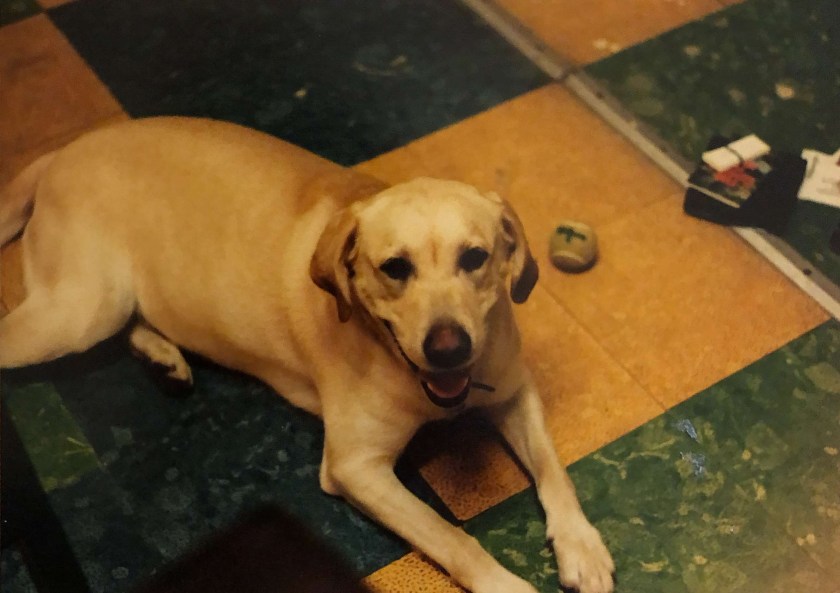
Gabriel is my first dog after I graduated from college, started working at Bell Labs and moved out of an apartment into a house I shared with my friend Jim. He had a beautiful Irish Setter named Shannon. If I got a dog, they could keep each other company. I worked days and Jim worked nights, so the dogs would have plenty of human company, too.
So what kind of a dog did I want to get? I wanted something energetic and active, big enough to run with. This was 1980. Want to do research? You go to the library. It didn’t take me long to decide on a Labrador Retriever. I had seen black ones before, but now I knew they also came in yellow. That’s what I wanted.
OK, so where do you go to get a yellow Lab? This is 1980. You look in the newspaper, under pets. Sure enough, there was an ad for yellow Lab puppies at a home somewhere in the pine barrens of southern New Jersey. I made a call, got directions, and headed out to pick a pup from the litter. I had a map, too. This is 1980. That’s how you navigate.
When I arrived, some kind folks took me down to their basement where about a dozen six week old yellow Lab puppies were running around a large enclosed area. I sat down in the middle of them and let them run around me, on top of me, in and out of my lap. Some chewed on my fingers, some watched carefully from a distance and some wrestled with each other. I learned from my research to watch the little for a while, to tell who was most aggressive and who was most shy. I picked one out that wasn’t the craziest, but seemed to have a good amount of energy. The owners marked a number on the tummy of the one I picked, and I would be able to take him home in a few weeks when he was weaned.
First night home.
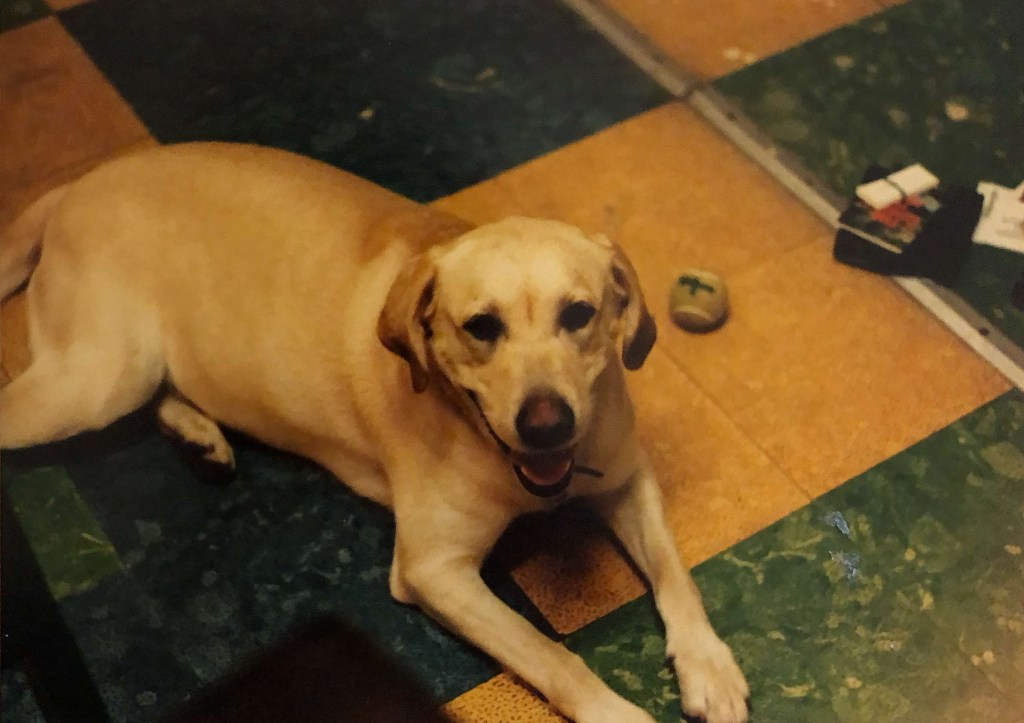
I named him Gabriel and I am pretty sure he cried all the way home. I’m pretty sure he cried all night, too, as pups do in their new home. But he quickly adapted to his new place. In those first few months, of course, he chewed out the backs of most of the shoes we owned, chewed up a few candles he got his teeth into and went through a bunch of rawhide.
Gabriel lived up to his retriever breed, naturally fetching anything and everything we would throw around the yard or out into the water of a nearby lake. On one occasion, he came back with a swan by the neck rather than the stick I had thrown! Had I been a hunter, I am sure he would have enjoyed retrieving ducks.
A couple of years later, I moved to Austin, TX for a new job offer. Gabe comfortably rode in the back of my Volkswagen Rabbit Diesel hatchback as we headed out for a new adventure. I rented a pretty nice house in Austin, just a few miles south of the capitol building, and just a short run from what was then called Town Lake (Now Lady Bird Lake). My work hours were such that I had to leave Gabe home alone for a long time each day, so I made sure we went for a run when I got home. Once we got across some busy streets and onto some lake side trails, I could let Gabe off his leash and he would run along side of me, or our ahead of me, or in and out of the water next to me. Four, six, even eight miles later, I would be tired but he would be ready for more.
If some folks were playing frisbee in the park, Gabe would join them even if uninvited. He would leap up and grab it midair, proudly bringing it to me. He could get some pretty good air!
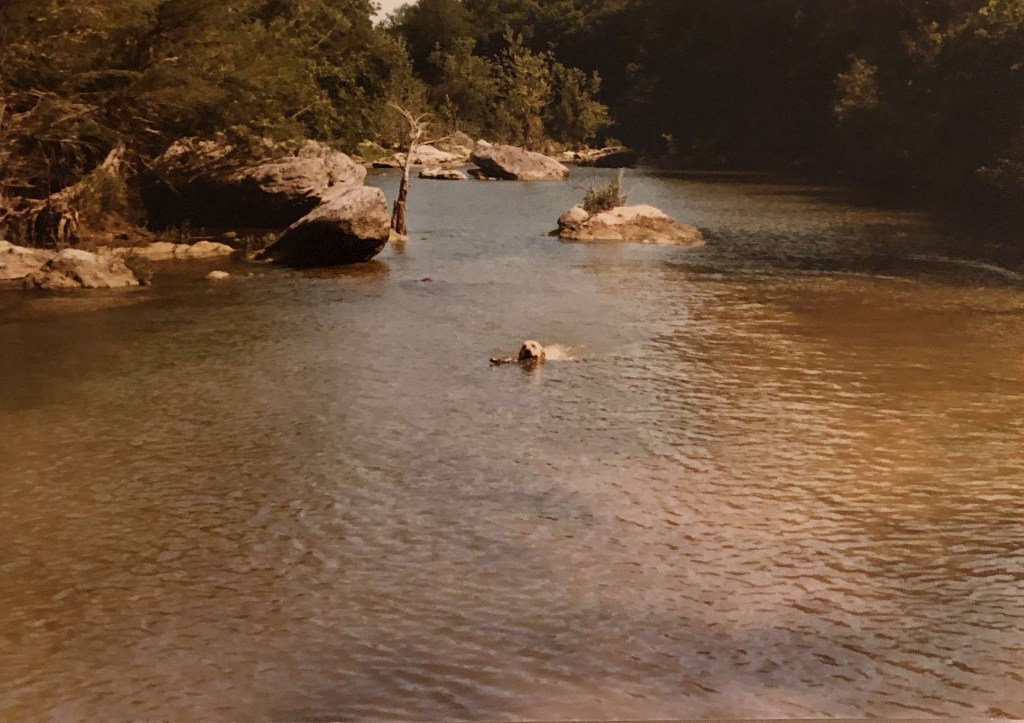
Gabe was a strong swimmer, churning through the after to go after a thrown ball or stick, almost leaving a wake behind him. He would spring from the land and sail out across the water before splashing in and powerfully dog-paddling out and back. He loved to get wet, even in the cold. To this day, I call any cold, rainy day “Labrador weather.”
Before that year was out, though, I had decided on a career change and was headed for the seminary. Unfortunately, dogs were not welcome in the dormitories, so Gabe would go to live with my dad for a couple of years. Dad was a dog lover, had a great fenced-in yard and even built a house for Gabe. Gabe and my dad’s dog Barney had a great time chasing balls and squirrels together.
When I met a classmate’s sister, who would later become my wife, one of the first things she noticed on my bulletin board was a picture of Gabriel. With a good looking dog like that, she knew I must be a pretty good guy! Gabe knew she was a keeper, too. When my wife-to-be came to Philadelphia to meet my parents, he not only welcomed her but climbed up in bed with her, too.
“She’s a keeper, Bill.”
After our wedding, my wife and I headed for Baltimore for my vicarage year. Inner city life would be very different that what either of us had experienced before, so having a big dog along was a good thing. In fact, on one of our first days in our house, Gabe had pinned a repairman up against the wall to protect us. I had never seen him do that before! He didn’t do that often, but it was reassuring to know he could.
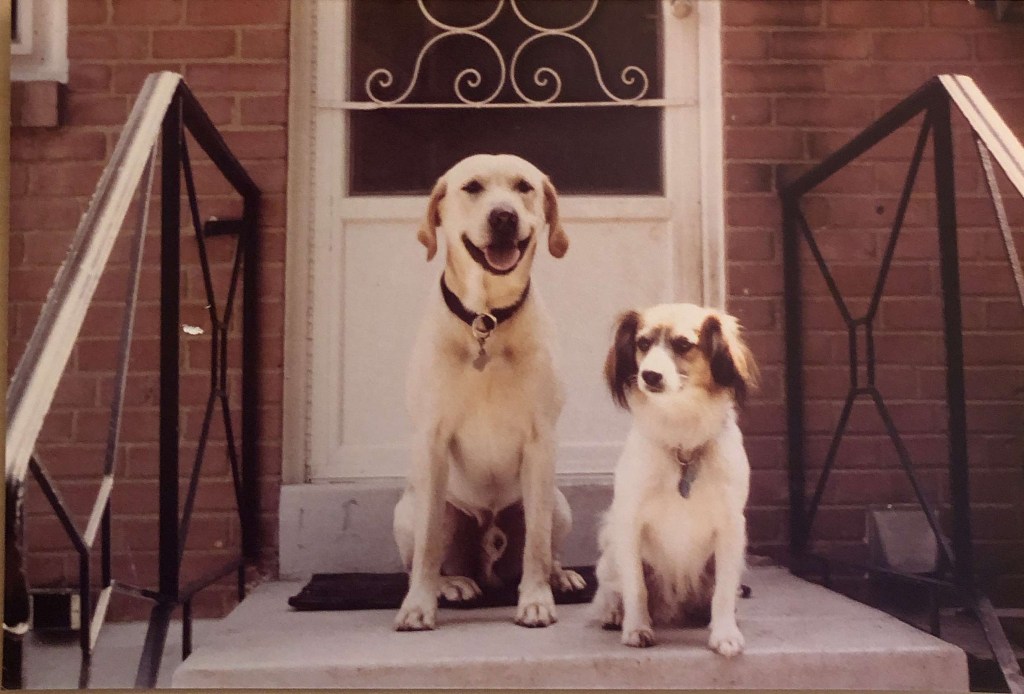
We got a companion for Gabriel that year, a chocolate Lab named Rachel. She was much more docile, just as good of a retriever, and had a beautiful shiny brown coat. Our two dogs were quite popular in Baltimore. Every day after school, kids from the neighborhood would be knocking at our door, asking, “Can we play with your dogs?” Dozens of kids would then chase our two Labs around our small yard. Everyone had such a great time.
I would take Gabe for runs with me early in the morning. Good exercise for him, and good protection for me to and from a nearby park with great running paths. During those runs, I discovered that Gabe had a sixth sense when it came to balls. We would be trotting down a path when suddenly, he would break for the woods of weeds on one side of us, and come out with a baseball or tennis ball. Somehow, he just knew it was there, and that it was there for him to take home. At home, he would chew the cover off and unravel all the string inside.
After vicarage, we moved back to the seminary for one last year of study. We had a house to live in and I put up a wire fence around the yard so the dogs could be outside. Winter was extremely cold that year, and the dogs provided much needed warmth in bed at night.
We moved to Connecticut after graduation for my first call in the ministry. The church was small, but they provided a huge house on four acres of property, a paradise for dogs who loved to run and fetch. I had a five gallon bucket of baseballs and softballs. I would hit them out into the yard and woods from our driveway for Gabe and Rachel to retrieve. We always let them run free, which sometimes meant they would be way off in the woods. But when I whistled from the back door, I could see them coming through the tall weeds of a nearby field, usually pretty muddy or dirty.
Our scariest moment came when my son was about two years old and eye level with Gabriel. Gabe felt assertive one day and snapped at him, scaring all of us. It was completely unexpected and reminded us to closely supervise their interactions.
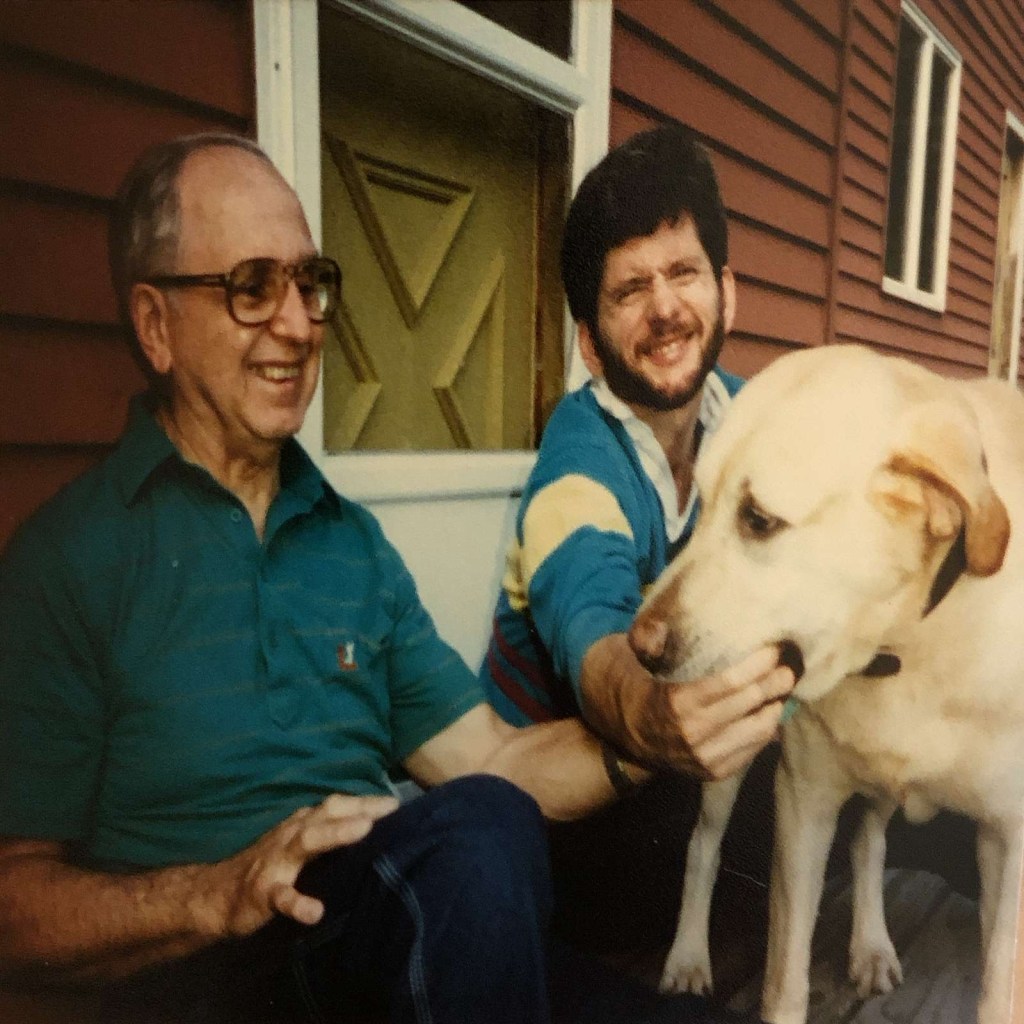
Dad loved dogs!
Once Gabriel got hold of a tennis ball, he sometimes didn’t want to let it go. When he was especially stubborn, I would insert a broom handle behind the ball in his jaws and pick up up with it. He would not let go if he didn’t want too Other times, I would stand about 10 yards in front of Gabe and throw the ball as hard as I could right at his head. He would catch it in his mouth every time.
When we moved to Iowa to serve a new church, Gabe was about eleven years old and had mellowed out. Our much smaller back yard was fine for him. We went for walks rather than runs.
As often happens with Labs in their teens, Gabe spent a lot more time sleeping on the couch and had a lot less pep. Finally, when he just couldn’t keep much food down, our vet felt a mass in his abdomen, and we knew Gabe’s time was up. He was almost fifteen and would always be the dog we would compare all our other pets to. I don’t know that I have ever bawled the way I did the day I came back from the vet without him. My daughter Katie hand drew a little book for me, to commemorate Gabe’s life and cheer me up. It still brings a smile to my face.
Just a few months later, Rachel would develop a limp which would be diagnosed a malignant tumor in her leg. Our time with her would be over, too. But we would not be dog-less for long. Michael would be next, and that’s a whole different story!
A recent Zoom meeting with a bunch of college fraternity brothers brought back a flood of memories from four decades ago. I had to write these down before I forget them.
The first involved Joe, a somewhat whiny and annoying brother, who lived in a back room on the second floor of the house. I am not sure what inspired me, but one day I suggested to my friend Gary that we nail Joe’s bedroom door shut, and then rappel out the window. This is not as far-fetched as one might think. Gary was a rock climber, had the necessary rope and harness, and as house manager, I had a hammer and nails.
One day, while Joe was in class or out somewhere else, Gary secured a rope on a radiator and hung it out a third floor window. Gary then used some big old nails to permanently attach the door to the frame from the inside. He rappelled out the window, ran back up to coil up the rope and the project was complete.
I wasn’t there when Joe discovered that he couldn’t open his bedroom door. I so wish I was. All I got to see was the smashed in door when he apparently threw all of his weight against it, breaking the door and frame to get in. It was well worth the cost and effort to replace that door!
A second memory was a lot bloodier, much less entertaining and very vivid. It happened in the kitchen where Bob and I often washed and dried dishes after supper. Don’t ask me why, but one night we decided that it would be fun to stab empty milk jugs with carving knives, like swashbucklers. It’s really not that easy to do. The knife isn’t sharp enough and the jug isn’t heavy enough to actually slice through. However, on one attempt, the knife caught the edge of the counter, Bob’s hand slid up the handle, and sliced through a few of his fingers. I don’t think it hurt that much, but there was a good amount of blood. That blood sport not only required a trip to the emergency room, but also some follow up surgeries so Bob did regain full use of his finger. No, we never tried that again.
A few other miscellaneous memories that sometimes flash through my mind:
Tossing an old refrigerator and sofa off the back porch
Parties that featured live bands, before the days of DJs.
“Blinkey” and trashcans of water dumped off the roof onto the pledges
Gary teaching me how to play guitar
Road trips to see Rocky Horror Picture Show with bags full of toast, rice, water, toilet paper, and playing cards – and absolutely trashing the theater
Eating BLTs and rare roast beef in front of some of the more kosher Jewish brothers – and of course, pizza during Passover
Coming and going via the fire escape through a third floor window outside my room
Drinking some of the worst beer I ever had in my life from a keg far past its prime
I have so many vivid memories of my fraternity brothers from over forty years ago. The bond of the sphinx, as we called it, is strong indeed.
The symptoms were obvious and ominous. High temperature, coughing, a feeling of weakness. After a week of this, on-again, off-again, he decided he needed to go to the emergency room. My wife was working, so I grabbed a mask, hopped in the truck and headed down to pick him up.
He was ready to go when I got to the house. But he could barely stand up and walk. It’s was a good thing that we were going that night. Had we waited a day, things might have been much worse. Somehow, as I was gathering up hearing aids and a list of medications, he made it out and into the passenger side of my truck. Without his hearing aids, our conversation was limited. I called my wife, working in the ER that night, and told her we were on the way.
After I pulled up to the ER entrance, I walked around to the passenger side to help him out. He could barely stand, much less walk the twenty or so yards to the door. A tech by the entrance heard me say, “I’ll see if I can get a wheelchair” and brought one out. With some difficulty, we transferred him to the chair and got him inside. He had a few questions to answer, I got a visitor tag, and the guard handed me an N95 mask to wear, “If you’re going where I think you are going.”
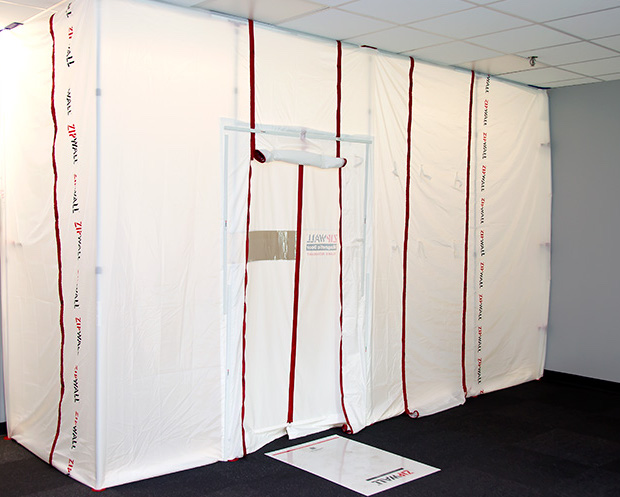
They took him back right away while I parked the truck. I had to wait a bit before my wife came out and said, “Come on back.” We turned left and went down the hall to a part of the ER that was draped in plastic with zippered entrances, an isolation unit for suspected Covid-19 patients. My wife looked at me and said, “If you go back there, we probably won’t be able to go on our trip.” I said, “I know.” But he wouldn’t be able to hear and I couldn’t just let him go back there alone.
So that’s when I went… behind the zipper.
It wasn’t all that exciting. In fact, it was eerily quiet. Because fresh gowns, masks, face shields and gloves were required of the doctors, nurses and techs every time they came in the room, their appearances were few and far between. I sat there in shorts, t-shirt and an N95 mask, wondering when I would get sick. Had we gone one day later, I would not have been allowed back there. Policies and procedures are subject to change, like the wind.
I stayed for about six hours, as we waited for tests, test results and the decision to admit him. He didn’t want to watch TV, and was finally able to snooze a bit, so I spent my time reading on my phone and keeping family up-to-date. I called his out-of-state son so they could talk. Finally they were ready to take him to another room, and it was time for me to head home. No one was allowed back in that part of the hospital.
As I write this, that happened a full eight weeks ago, and thankfully neither my wife nor I had any symptoms of illness. We did spend a couple of weeks staying further apart from family, just in case. It turns out he only had to stay in the hospital a few nights, and was discharged home. His wife had to do the ER thing later in the week, but she wasn’t admitted.
We were blessed. I am still careful. People are still getting sick. So far I’ve stayed healthy. I don’t take that for granted. I just give thanks each day.
The intersections in my community are clogged with campaign signs of every size and color, vying for my vote this fall.
Emails fill my inbox that used to be informative newsletters, but are now pleas for subscriptions to courses that will improve every aspect of my life. Once they have your contact info, you will hear from them for the rest of your life, and I believe, from beyond the grave!
I get text messages from anonymous sources who seek my vote in this fall’s elections. Interestingly, the emails are often addressed to my wife’s name or my son’s name. He doesn’t even live in this state anymore.
About half of my social media feeds are sales pitches for T-shirts, subscription boxes, testosterone supplements, fitness programs, how-to-preach-a-better-sermon courses, IQ tests, and of course, your candidate for office.
Phone calls at church offer me endless resources for youth curriculum, audio-visual technology, text-the-whole-congregation and web site design services.
Pretty much all of my mail consists of large campaign postcards or offers for home and auto warranties. Oh, and of course, lot and lots of bonus mile credit card offers.
Every realtor in a ten-mile radius lets me know of houses they’ve sold. Every independent insurance agent has already worked the numbers and covets my business.
Auto dealers in a seventy-five mile radius bend over backwards in emails offering to help me find the vehicle I am looking for.
People knock at my door to give me quotes for window replacements, security systems, trimming my palm trees and cleaning my roof.
And every time – and I kid you not – every time I go to Home Depot, a gentleman approaches me and askls me if I drink bottled water. Duh. Doesn’t everyone? He is there to harvest leads for water tries water purification systems. I got to Home Depot about once a week. Fifty-two times a year. Every week the very same person approaches me. My radar is on. I’ve learned to quickly walk walk away from the obvious question. From adjacent aisles I overhear female and male voice lament, “You talked to me last week.” Or in a nastier tone of voice, “You talk to me every week!” It. Never. Stops.
Everyone is trying to get my attention, my vote, and of course, my money. I know, none of this would happen if someone somewhere didn’t have some modicum of success or earn some cash. It’s a numbers game.
I have never been so popular in my life! Everyone wants to talk to me, help me, encourage me, improve me and enhance me. I’m at my wits end. I am not seeking any of these things. But everything that I have ever even dreamed about is now relentlessly pushed on me. I’m so glad you all want the best for me.
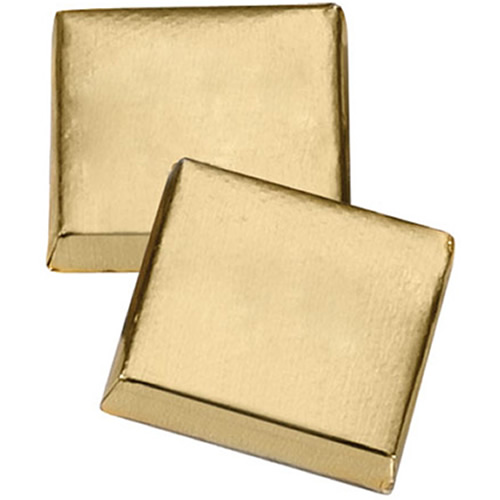
As my friend and I chatted over the last of our coffee, I absent-mindedly peeled open one of the foil wrapped chocolates the waiter had left on our table and popped it in my mouth. “Wow, that’s delicious!” I said. “Want yours?” He shook his head, so I went ahead and enjoyed the second one.
The breeze gently rustled the umbrella over our poolside table. Our waiter took our plates and left the check. I picked it up, quickly glanced at it, but then took another, longer look. Seventy dollars? That can’t be right. Oatmeal, omelette, side of bacon and a couple of cups of coffee. There must be some mistake. When our waiter passed by I asked, “Are you sure this is right?” He took a quick look and pointed out that the chocolates were $25 each! Really? They were good, but not that good! I thought they were free, just like the little Andes mints at Olive Garden.
When I took the check up to the register to pay, I mentioned that the price of those chocolates was a bit steep. The manager pointed to a little sign by the register in very tiny print, “Chocolates, $25 each.” Fine. I handed him my card. He slid it through the machine, handed it back to me, and then said, “Uh-oh. I’ll have to slide that again.”
“Not so fast,” I said. I pulled out my phone and opened up my bank app. “No way I’m going to pay for this meal twice!” I want to see if that charge was on my account before I let him try again.
And then I woke up. Yes, it was another of my recent, vivid, unusual dreams. I think taking melatonin to help me sleep also revs up my mind’s dream factory. But I’m always going to check twice before I eat some chocolates!
I usually do. I get up early on purpose, because I want to have the room to myself. I want to practice my sermon in an empty sanctuary before I deliver it to a living, breathing congregation. I need to hear my voice. I need to listen to the stories. I have to know what it sounds like before worshipers gather to sing, pray and receive my message.
I’ve got my routine. Unlock the doors, turn on a few lights, fire up the sound system, and fill up my water glass. I could do it in my sleep.
Five minutes into my rehearsal, I saw him. Back row, left side, on the aisle. Who in the world would be here this early? The musicians aren’t even here yet. I didn’t stop. I continued making points, adding illustrations and pointing out applications.
As I finished, I turned off the timer and walked back to meet this predawn arrival. Before I could say, “Hi,” he said, “I need you to open the safe.”
If was still a little sleepy before, I was wide awake now. “Well,” I said, “First of all, we don’t have any money here. Second, I don’t even know the combination.”
As you can imaging, my answer was not well received. He growled, “Well then, you better call someone who does!” I didn’t see a weapon. Maybe he had one in his pocket. I was still about ten feet away. No one else would arrive for at least half an hour. What were my options? Run? I can run. I would leave this guy in the dust. Give him my wallet? Sorry, no cash in there either. Stall? Sometimes the local deputies meet in our parking lot. When I glanced out the window, though, I didn’t see any cars. Call someone from the congregation who knew the combination and use a code word so they would call for help? I don’t think we have a code word.
Startled, I woke up. First the buzzing then the soft thudding my my phone alarm was going off. I reached over and turned it off. 4:30 am. My heart was racing. But it was a dream.
For the next several weeks, I carefully scanned the parking lot before I got out of my car in the predawn hours of a Sunday morning. I kept all the doors locked while I prepared for morning worship. I thanked God for the deputies conversing under the portico. I was also grateful for those long days of summer, when the sun arrives before I do.
Why were my dreams filled with such images in the middle of the night? I’ve never had a problem, never been threatened, never even thought about the possibility of being in danger. I’ve probably been watching too much police and detective TV, where such things happen daily in the lives of innocent people.
Anyway, if you were going to rob a church, wouldn’t you do it after the offering?
On my recent trip to Israel, I encountered two very different styles of selling. One bugged the heck out of me. The other got me to purchase something.
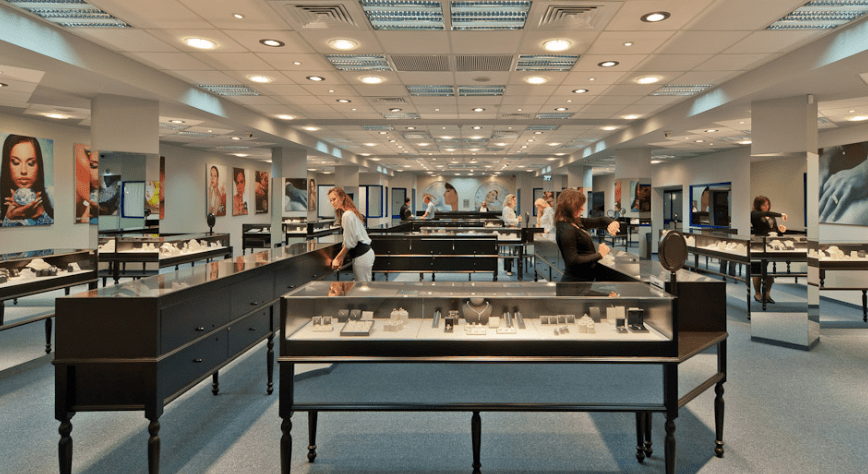
After one full day of touring near the Sea of Galilee, our group was dropped off at a diamond store just down the hill from our hotel. We were assured that this was the best place to go if we wanted to purchase jewelry since Israel is one of the world’s leading exporters of diamonds. One of the store managers gave us a quick quick presentation on diamonds on the lower level. He then took us upstairs to the showroom.
A very kind gentleman with a clipboard immediately became my wife’s shadow as soon as we walked into the showroom. There were at least a dozen more like him, all of whom attached themselves to other members of our group. My wife simply wanted to look at what they had to offer and see what kinds of settings they had. Our friend followed us from display to display, from one side of the room to the other, just waiting for a nanosecond pause that might reveal interest in an item. It wasn’t five minutes before she said, “How do we get out of here?”
Later in the week we went to Bethlehem. Upon entering the city, we had an excellent falafel lunch, and then went to the olive wood store next door. We were told that this was the best place to get anything olive wood. It was genuine, handcrafted right there, and was far better than anything we’d see in the markets, which probably came from China.
After a little talk about the different products there, the same person who had waited on us in the restaurant gifted me an olive wood covered bible. Then we were free to look around. The selection was amazing, as were the prices. Once again, we attracted a number of folks who pressed hard for a sale. Each time we paused to look at something, someone was right there to make sure we got something off the shelf. They upped the ante by offering me the special pastoral 25% discount. Time was of the essence, too. When another tour group came in, we were herded towards the door. We bought some Christmas ornaments for the grandkids and headed for the bus.
I wasn’t surprised by those two experiences. I’ve been there, done that before. It’s just annoying. It makes us want to get out as soon as possible.
We had a totally different experience in the markets, though. Strolling through the Arab market in old city Jerusalem, we came across a different kind of store, one that sold antiquities. This store had everything from coins to oil lamps to pottery and other items found at archeological digs. The owner of this store was still opening up his store as he welcomed us. As my wife looked at some of the coins from the time of Jesus, I asked him how long he had worked in this store. “I am fourth generation,” he proudly explained, “And my son works here, too.” When his son walked in a few minutes later, we got to meet him.
He asked where we were from and when he learned we weren’t far from St. Augustine, told us his brother owned a pizza restaurant there. (I found the place on TripAdvisor, but we haven’t been there yet.) My wife had a few questions about some of the coins, and he pulled out a reference book that explained when each was used and where. He never asked us once to buy anything, but had a story about each item that caught our eye.
My wife not only purchased a coin mounted in a pendant, but also bought another as a gift for her mom. Our friends came in and bought something, too. We stayed in his little shop for about an hour altogether.
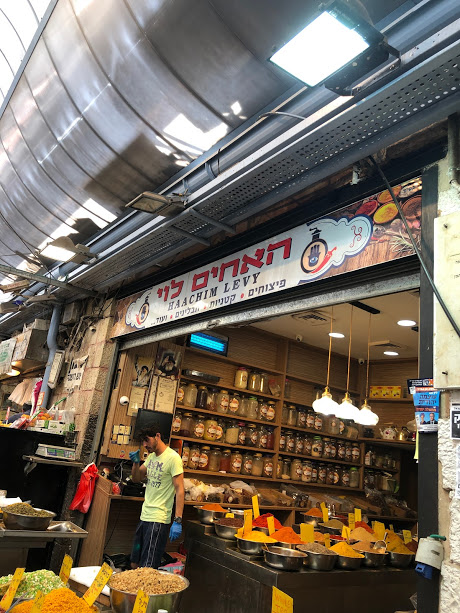
Later, as we walked by the many, many booths of Menahen Yehuda market, we paused at one booth with an amazing display of spices and dried fruit mixes. The smells coming out of that booth were amazing. When we pointed and asked, “What’s this?” he explained what the dried fruit mixture was, explained how it could be used to make tea or added to wine or eaten as is, and then gave us a generous taste. He did this over and over, working through the sweet and then the savory side of the booth. He told us how long each could be stored. He explained how he would wrap it up to take home. I bought four different kinds of dried fruit mixes, about two pounds in all.
I asked him if he was the person who’s name was over the booth, and he told us that he was almost family, but not quite! I then asked where to find the best coffee and baklava in the market, since there were so many stores. He thought for a moment, then pointed out where we needed to stop next.
Where we stopped next was a little coffee shop. Basket after basket of coffee was on display, and the young man working explained where each came from and which blends were his favorites. He gave us a little sample. You don’t have to work very hard to sell me coffee. I picked out the coffee labeled “Tanzania” and he told me they roasted that one right there. He scooped up some beans, ground them and brewed a nice long espresso for me. Delicious.
Not many steps from there was an impressive display of baklava. No one else was at the shop when we arrived, so the owner explained each variety. and which ones he liked best. He let us try one, too. Delicious! Could we take some home? Absolutely, he said. He handed us a box to fill up, then he wrapped it securely to pack in our luggage.
I’m fascinated between these very different experiences. I couldn’t wait to get out of the first two stores. But I could have hung around all day at the last three places. I’ve read a lot recently about how to promote your business or sell your product by telling your story. I got to see that method in the markets of Jerusalem from some vendors who did it extremely well!










 Waite for it...