Posted in Life

I finally finished the game

I just assume there are plenty of Boomers like me who played the license plate game while traveling as kids. With no phones, tablets, DVD players, or much else to do in the car except fight over window seats, mom made us play the game before my dad had to “turn the car around and go back home.” We hadn’t even gotten an hour down the road.

Since each state only had one license plate, with distinctive colors and design, they were easy to pick out at a distance. Home state was easy. Neighboring states were common. I grew up in the northeast, so plates from the west coast were really exciting.

We never expected to get to fifty. After all, who’s going to drive here from Hawaii?

The other day, I got to fifty. There in front of me, in Palm Coast, Florida, I saw a license plate from the Aloha State, Hawaii. How cool is that?

How many people transport their car from Hawaii to the mainland with the license plate intact? More than I thought. Today I learned that there are several companies that do just. Average price is a couple thousand dollars. Not too bad. It costs more to ship a car to Hawaii. According to websites, it’s probably cheaper to do that than sell there and buy here.

So I’d have a better chance of completing the license plate game in California than Florida. It only took me about 55 years to finish here on the east coast.

Posted in Life

Is the fire ready?

“Are we going to roast marshmallows?”

Absolutely. The weather was a little cooler, a perfect night to gather around a fire supper. In preparation, I crumbled up newspaper, covered it with small tree branches I had gathered up in the yard, and stood up a pyramid of firewood over the whole thing.

The sky was just beginning to darken as we finished up supper. I headed out to the fire pit and lit the paper. As the first flames flickered, a grandson with a marshmallow and a stick behind me asked, “Is the fire ready?”

For Christmas, we bought other grandchildren a rock tumbler. A great idea for aspiring rock hounds. Until my son read the instructions. Tumbling takes four weeks!

We certainly don’t like to wait, do we? Less than a second after the light turns green, the car behind me leans on the horn so I’ll get step on the grass. A fifteen minute wait for a restaurant table? No thanks, we’ll go somewhere else. Don’t you pick the shortest checkout line at the store?

Five minute oil change. One hour air conditioner repair. No wait emergency room. Instant potatoes. Now, that’s more like it.

Lol. It rarely works that way. An hour on hold to talk to a person at the bank. A minimum of three to four hours in the emergency room. A week for seeds to germinate in the garden. Seven to ten business days for the refund to show up in your bank account. Nine months for the baby to arrive. A lot longer for a doctor appointment.

Is there any benefit to waiting? Maybe. Pausing when the light changes to green avoids a collision with the guy running the red light. More time in wide comfortable airport seats before spending three hours in a cramped middle seat between two strangers. Coffee from a freshly brewed pot. Holding a newborn in your arms. Flames that light up and warm up a chilly night. The smell of freshly baked bread. A gooey marshmallow.

Posted in Life

Justice

I saw the small black car coming in my rear view mirror. He had to be traveling twice as fast as I was. He didn’t slow until he was right up on my tail.

I don’t know why, but I could tell he was looking for an opening, an opportunity just big enough to slip through and pass me. He found one. He vanished, only to reappear two lanes to my left on the tail of another car.

I knew he wouldn’t stay there for long. Sure enough, as soon as a few inches appeared, he came across both lanes again and cut right in front of me. I hardly had time to touch the brakes before he was gone again, accelerating ahead of the truck next to me.

I lost sight of him for a moment. Then I caught a glimpse of him weaving back and forth across all three lanes before suddenly turning into Dunkin.

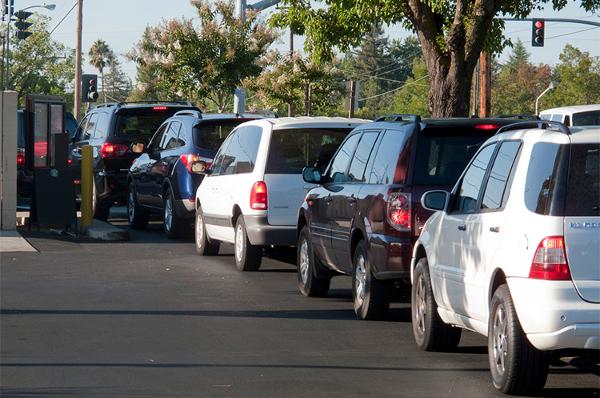
Much to my delight, he pulled in behind an unusually long line of drive through cars that wound around the building, through the parking lot, and out into the street.

A little justice always brings a smile to my face.

Posted in AI, Life

Would you rather talk to a person or a machine?

Photo by charlesdeluvio on Unsplash

That’s a really interesting question. Some days I would rather hear the voice of a living, breathing person. Other times, I would rather log on to a website to take care of business. Why one rather than the other? Ironically, when I want to speak to a human, it’s hard to get someone on the line. But in those moments when I just want to get in and out digitally, I have to go through a human.

The phone tree begins with a choice of English or Spanish. Once that is settled, I can choose the extension of the person to whom I wish to speak, which I never know. Then I must listen to all the recently changed menu options, often eight or nine items long. Only after none of those choices suits me can I stay on the line to talk to a real, living, breathing man or woman. How long will that wait be? That is the question. And I am already several minutes into the call. Thank goodness for the speaker on my phone so I can do something else while I wait.

Too often, the reason I am waiting to speak to someone is that I can’t find a way to cancel something on the website of a product trial I signed up for. It’s easy to try out a new product, subscribe to a publication, or install a new app on your phone for free. But after a week or two, you start paying for it, unless you have the presence of mind to cancel before the trial runs out. Lol, like that ever happens.

But many vendors conveniently fail to include a “cancel my subscription” to their menus. To cancel, you have to talk to a person. That means you have to negotiate the phone tree to finally talk to a person whose sole job is to get you to stay longer and pay more.

How much time have I wasted texting back and forth, when all I needed to do was make a simple phone call? Plenty. How many times have I been thankful I could send a text message or an email when I can’t get someone on the phone? Lots. Human or machine? It depends.

I’ve had to call people I really didn’t want to talk to. As the phone rang, I mentally hoped a machine would pick up. Then I could leave a message and get out.

And then there are those who I really need to talk to who never answer. Phone wasn’t on? Dead battery? Didn’t want to talk to me? Who knows? I’ve actually written a note and mailed it to someone I was trying to get in touch with. Maybe they will give me a call.

If I ask Siri to take me to a certain address, she never asks, “Why do you want to go there?” If I order my pizza through an app, no one questions me when I add extra cheese. It’s just so much easier.

Soon I won’t be able to tell if I am talking with a real person or a machine. That’s scary.

Posted in Today I learned

Lessons from “The Burglar”

Photo by Kay Ingulli on Unsplash

I really enjoyed Thomas Perry’s 2019 mystery novel The Burglar. In a nutshell, it’s about a twenty-four year old woman who steals for a living. When she breaks into a house and discovers the scene of a murder, she finds herself involved in a much bigger crime. Though fiction, I learned much about what to notice as I am walking around my neighborhood.

No one will notice you if blend in. The protagonist, Elle, made sure she looked like someone who lived in the neighborhood she was casing. If it was an upscale area, she made sure she wore nicer workout clothes. Even if the residents didn’t know her, they wouldn’t really worry about her presence as she went for a morning run.

What makes someone in my neighborhood stand out? If I see someone walking around wearing a suit, a dress, or a company polo shirt, they are going door-to-door. I take notice of a car driving slowly by, pausing in front of houses or undeveloped lots. But anyone in shorts and a t-shirt, walking a dog, blends right in.

There are signs that no one is home. Two or three newspapers in the driveway are a giveaway that someone is away. A few cards in the front door left by the door-to-door salespeople announce the same. Lights in the house on at unusual times during the day could be a sign of extended travel. No trash can on the curb on collection day? Someone is on a trip. A family loads suitcases into the back of their car? That house will be unoccupied for a while.

Some houses are easy to get into. As Elle ran through neighborhoods, she noticed who had security cameras or door and window alarms. She noticed windows that were not entirely closed. Some windows were behind bushes or in fenced-in yards. Second story windows were often not alarmed or closed. Louvered windows were not hard to enter. A home with a large dog might have a large dog door that she could squeeze through.

In the story, she’s good at picking locks. But it’s always better to be out of sight if that’s how you’ll enter a home.

She knew what was worth taking. Once inside a house, she passed over art, TVs, computers, and other items that were harder to sell. Cash was the best thing to take and she knew exactly where most people kept cash. Jewelry was OK, but it better be really valuable because you would only get pennies on the dollar for its worth. Guns might be worth something, but since they are usually registered, they are hard to sell.

I have no aspirations of breaking, entering, and taking anything that’s not mine. I’m just fascinated by what you can learn simply by watching. And I am much more aware of who is watching me.

Posted in Life

Do you hear what I hear?

Photo by Dex Ezekiel on Unsplash

Rob Walker (The Art of Noticing) recently suggested spending time noticing what you hear around you. There are words that describe and classify the sounds I hear.

Biophony refers to the sounds of living organisms. Geophony are non-animal sounds like those made by the wind or ocean waves. Anthrophony is about the sounds that people or their creations make. This would include the sounds made by technology, which I noticed this morning.

It’s dark. The sun has not yet risen. No one has arrived work on the house being built across the street. No cars or trucks are driving through the neighborhood. My wife and dog are still asleep. I am sitting still.

But it’s not quiet.

Freshly frozen ice cubes drop in the freezer. The thermostat gently clicks and I hear cool air blow from a vent. I hear the gentle rush of water heating up in the coffee maker. A ceiling fan creates a gentle audible rhythm. The refrigerator hums. A partially dimmed lightbulb buzzes. The world may not be awake, but my technology is.

Unless I stop and listen, I don’t pay much attention to these sounds. I’m used to them. But when a hurricane blows through and the power is out, I miss them. That’s when the quiet is the loudest. I’m aware of all the sounds I don’t hear. I wonder when the power will come back on. When it does and I hear everything again, I relax and fall back to sleep.

What do I notice more: the sounds I hear or the sounds I don’t hear? I always hear water running or dripping somewhere in the house. (I think that’s a dad thing.) The heating element in the oven has a distinctive sound I notice when we have accidentally left it on. When I hear the garbage truck around the block, I’ll remember to get my trash can out to the street.

But when I wake up feeling too warm, I’ll wake and immediately notice I don’t hear cool air blowing from a vent. I know something’s wrong when my maps app isn’t telling me my exit is coming up soon. Parents notice if the kids are too quiet in another room. It’s not good when someone takes a bite and you ask, “What do you think?” and they say nothing. When laryngitis hits, I’m aware of my absent voice. It’s not unusual for one of us to say, “I didn’t hear you get up this morning.”

Pause for a moment. What do you hear?

Posted in Life

“Would you like to leave a tip?”

Photo by Blake Wisz on Unsplash

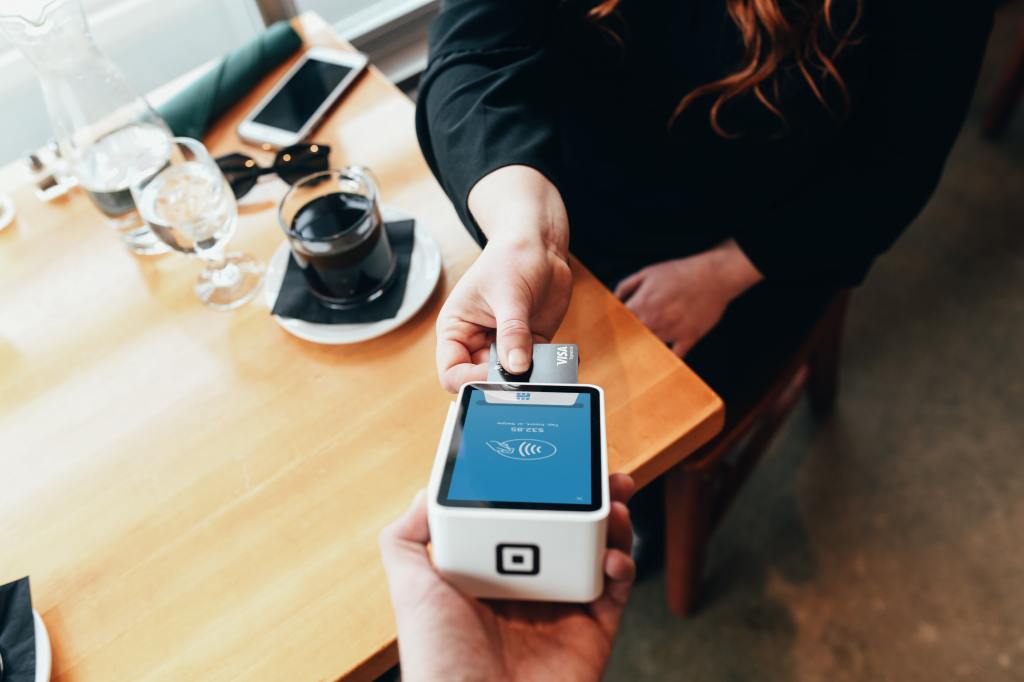
Those are the words of a touch screen, not a person. Pretty much every touch screen now. For a long time, the only places I tipped were sit down restaurants and bars, barber or hair stylist, pizza delivery, and a cab ride. But now, just about everyone expects a tip.

  • The coffee shop where you place an order and pick it up right there at the counter.
  • Restaurants where you order your food at a kiosk and pick it up from the counter when your pager vibrates.
  • Anyone who delivers anything to your house, from groceries to packages to furniture.
  • Shuttle drivers for airport parking and rental cars.
  • Picking up clothes at the dry cleaner.
  • Uber and Lyft drivers.

I never read the free shopping newspaper someone throws in my driveway each Friday morning, yet they give me an envelope for an annual Christmas tip.

If that’s not enough, I get suggestions of how much I should tip the mail carrier, lawn guy, bathroom attendant, exterminator, poker table dealer, garbage collector, tour guide, tree trimmer, housekeeper, valet parking, and tattoo artist.

There are places where a tip is not expected and is sometimes not allowed. But in place of a tip, I’m asked to donate to the charitable cause of the week. “Would you like to round up your total to support the local…” humane society, homeless shelter, comfort dog charity, disease research, canned food drive, or veteran’s center? All worthy causes. All so easy to give to. All hard to say no to.

I’ve started saying no. Not everyone gets a tip. And I started asking, “Where is this money going?” Unless I hand cash to a server, I have no idea how many workers divvy up the tip. I don’t know if a store is simply pocketing the money donated to a local charity. I don’t know how much employers are paying their workers. Probably not enough. I don’t know how long it takes for the tip added to my credit card to get to a server’s paycheck.

But when I do say yes, I will be generous to those who are working hard, aren’t being paid much, and do a good job.

Posted in Life

Too many choices?

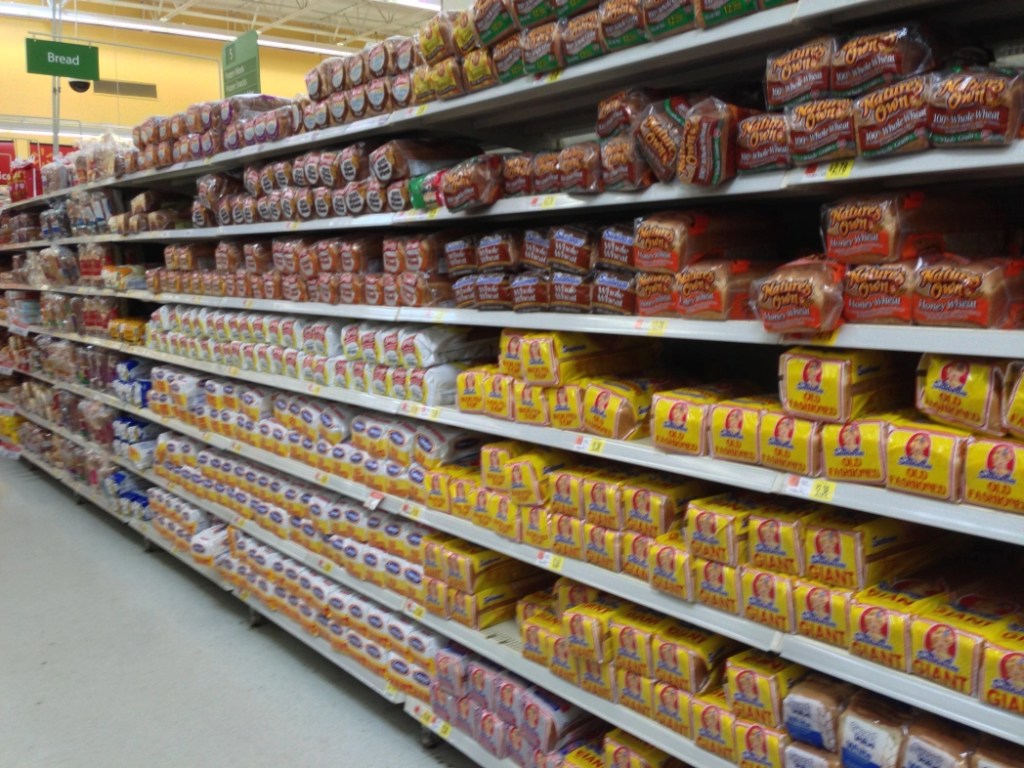
All I wanted was one jar of peanut butter. But the peanut butter section was all the way at the other end of the bread aisle in Walmart. In between me and that one jar were people pondering the hundred foot selection of bread. Everything was in stock that day: white bread, wheat bread, raisin bread, double fiber bread, butter top, sour dough, marble rye, high protein, low carb, and gluten free.

Blocking my way down the aisle were two types of people. The first couldn’t find what they wanted. The second couldn’t decide what they wanted. As I circled around an adjacent aisle to get to the peanut butter, I wondered, “Is it good or bad to have so many choices?”

On the one hand, it’s great. No matter what  flavor, texture, shape or nutrients you prefer, there is something for you. Want to try something different? No problem. There is always something new. On a tight budget? There are lower priced items on the bottom shelf. Counting calories? Some loaves have thinner slices.

On the other hand, it can be paralyzing. You only wrote the word bread on your shopping list. Will the store brand taste the same as name brand? Will the kids eat it if they see the word wheat on the wrapper? High fiber is good for you, right? Cracked wheat sounds good, but isn’t all bread made from wheat? I didn’t know they made oatmeal bread! Oh, wow, I haven’t had pumpernickel in ages. Look, there’s a buy one get one free. Before you know it, you’ve spent ten minutes pondering your bread purchase.

I am not one of those people. I know what I want, I’ve got a list, and I get in and out of the store as quickly as I can. I squeeze my way past many just wandering through the store overwhelmed by the selection.

Posted in Life

Seeing with our eyes

“When did we stop seeing with our eyes?”

This is a quote from Lisa Unger’s murder mystery Under My Skin. “It’s been a year since Poppy’s husband Jack was brutally murdered during his morning run.” The story takes us through her journey to find out what really happened to her husband and to her. She’s a photographer who prefers to view the world through the lens of a camera.

In a number of places she explains why that is. She has forgotten some of the things that happened to her. To remember she sifts through photos. If she can capture it on film or in a camera memory, then it’s real. “If I can capture the image on my phone, then it’s real.”

With a camera in front of her face, she can blend into a scene and not be noticed. She can watch people, observe their faces and feelings, and actually see more than if she were looking at them face to face. “People are more knowable when they think they’re unobserved.” Rather than being what others expect, they are more like themselves.

With a camera, you can also freeze a moment. With each second, the light changes, expressions change, people come and go, things move in the breeze. Those moments come and go. A camera captures an instant.

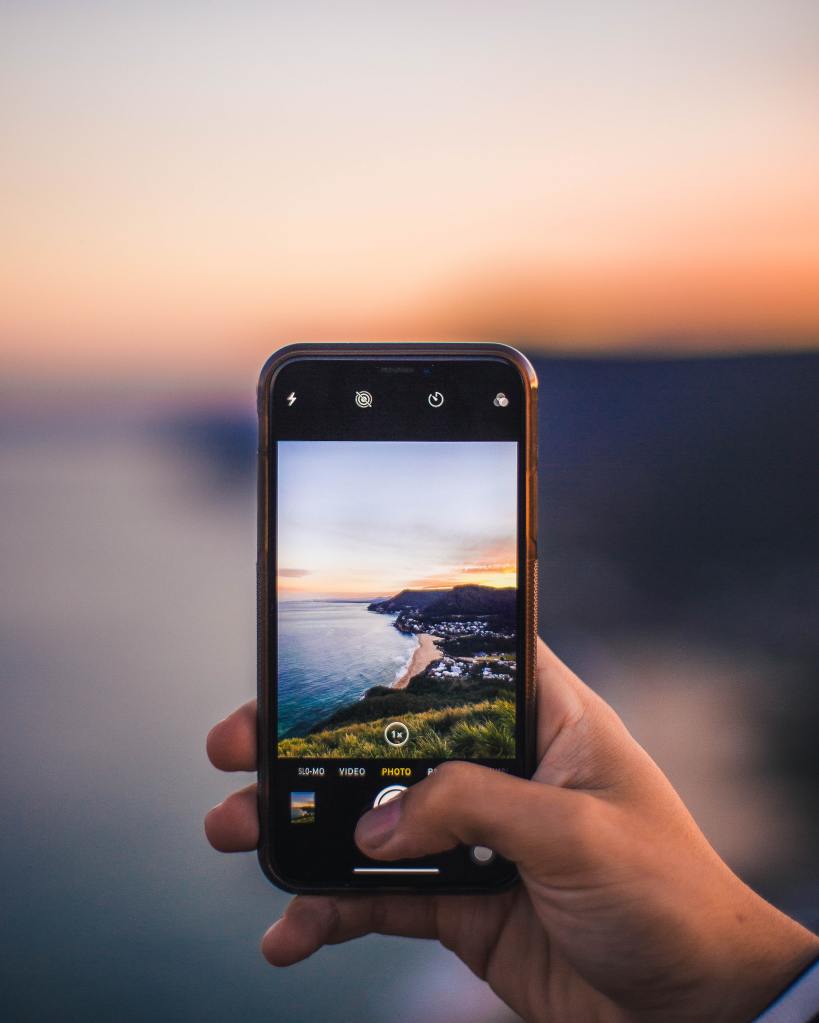
While pondering this preference, she wonders, “When did we stop seeing with our eyes?” That’s a profound question for our time. We attempt to capture every moment of our lives with the camera on our phones. If you are watching through a lens of a camera, are you really watching the person, the place, or the thing? What about the lens of your eye?

With our eyes, we see a bigger picture. We see the rest of the team, not just our grandchild taking a shot. We see other people watching, reacting, crying, laughing, and cheering. We see what’s on the periphery, on the edges, not just in the center. We see the raw, untouched, naturally lighted sight in front of us, rather than a perfect and flawless image. With our eyes, we see what is real, not a fictional photoshopped image of a person who doesn’t even exist.

With our eyes, we miss a lot, too. We don’t notice that person over on the side that we later see in a photograph. We blink and a moment is gone. An illusionist distracts us so that we don’t see what he is really doing with the cards.

How many photos have we taken in which we no longer know who the people are, no longer remember when or where we took the picture, or remember why we took that picture?

When we see with our eyes, we can then share our description of what we saw, which will include what captured our attention, sparked an emotion, and made us linger to watch for more than just a moment.