Posted in Advent devotions

Is it hot in here, or is it me?

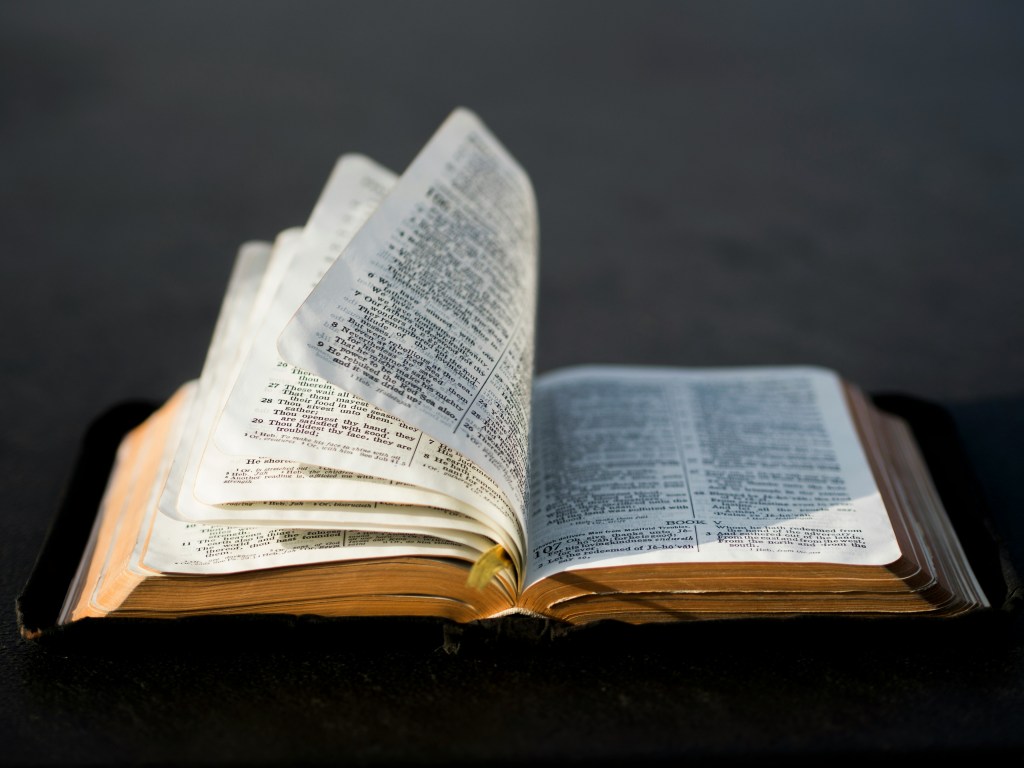
Photo by yasin hemmati on Unsplash

Didn’t you hate it when your parents flipped your argument and used it against you? When you got in trouble for doing something, you justified your actions by explaining, “Everyone else was doing it.”

Your parents may have replied, “If everyone else was jumping off the top of a building, would you join them?”

Of course we want to say, “No,” but you and I know that it’s hard to swim upstream and not do what everyone else is doing. It’s hard to be Shadrach, Meshach, and Abednego when the music starts playing and everyone falls down to worship the giant golden statue King Nebuchadnezzar set up. It’s especially hard when the consequence for noncompliance is the fiery furnace (Daniel 3:4-6).

I’ve often wondered if the Chaldeans had a dedicated furnace they kept on simmer for moments like this. I suppose it might have been a kiln that no one was using to fire pottery.

It couldn’t have been easy, but these three wouldn’t do it. They had no doubt that God was able to save them the furnace. But even if he didn’t, they were not about to worship anyone but him.

Nebuchadnezzar was so furious at their response that he turned up the heat seven times more than normal and tossed them in. When he and his advisors looked in, they were walking around the furnace with a fourth, most likely Christ himself in an Old Testament cameo. The one true God is not just someone you bow down before. He is someone who come alongside you in good and horrible situations.

Hundreds of years later, the devil would pressure Jesus to bow down and worship him. If Jesus would do that, for just a moment, the devil promised to relinquish all the kingdoms of the world and their glory. Jesus refuses. First of all, those were already his. Second, God’s word is clear: “You shall worship the Lord your God and him only shall you serve” (Matthew 4:10).

Since most of my readers live in the United States, where we have freedom of religion, we most likely will never be threatened with fire for our beliefs. But we will be influenced by what everyone else is doing.

So it’s a good idea to make every effort to be influenced by the best influencer of all, Jesus.

Shadrach, Meshach, and Abednego get an ornament on the Jesse Tree, reminding us of the one who comes to save, Jesus Christ,.

Posted in Advent devotions

You can run, but you can’t hide

When God gives Jonah the task of calling the city of Nineveh to repentance, he does his best to run away.

It turns out that it’s not that easy to run away from God. God sends a storm that threatens to capsize his ship. God sends a fish to swallow Jonah to keep him from drowning when he’s tossed into the sea. And when Jonah prays from the belly of the fish, God is there to answer him. Like David said in the psalm, no matter where you go, God’s already there (Psalm 139:7-10).

(My friend Gene from Denver believed Jonah said, “I never knew a fish had tonsils!”)

So Jonah taps out. He goes to Nineveh to warn them of God’s judgment. Believe it or not, the entire city repents. What a great reminder of the power of God’s word!

And what a great image of who Jesus will be. When religious leaders demanded that Jesus do a sign to validate his claim to be the Savior, he responds, “The only sign you’ll get is the sign of Jonah.” Just as Jonah returned from the depths after three days and nights in the belly of the fish, so Jesus would come back to life on the third day.

Jesus, God’s word in the flesh, also turned many from their sins back to God. His mercy and kindness moved many to repentance. His words brought those dead in sin back to life.

Jonah gets an ornament on the Jesse Tree because he’s a lot like the one who will save us from our sins: Jesus.

Posted in Advent devotions

Let ‘er rip!

What’s your reaction when you hear scripture being read? You know, like when you’re in church and the pastor reads a passage before a sermon.

Or what about this: how do you respond when you read the bible? You know, in the early morning when you are doing your devotions?

Do you laugh? Cry? Get angry? Feel guilty?

None of the above?

Do you feel anything?

That’s a penetrating question. It’s a bit convicting. I read scripture a lot. Every day, first thing in the morning. I read through the entire bible once a year. I’ve read the bible cover to cover at least three dozen times. I hear scripture read every Sunday in worship services. I listen to the bible through an app on my phone. I hear verses read aloud on Christian radio.

You know what? Most of the time I don’t feel anything. Most of the time, it’s an intellectual encounter with God.

Okay, so let’s compare that with how King Josiah reacted to a scripture reading. When workmen repaired the temple and found the scrolls of God’s Word, the king’s secretary read it to him.

“When the king heard the words of the Book of the Law, he tore his clothes” (2 Kings 22:11).

In Old Testament culture, that means he felt convicted. Josiah was distraught. Devastated. He was so upset that he tore his clothes, the ultimate expression of confession and repentance before God.

So maybe I should ask a different question when I encounter God’s Word. Instead of asking, “What does this mean?” or “How should I apply this?” or “What should I do (or stop doing)?” I could ask, “How does this make me feel?” Does these verses or chapter spark joy? Or do they make me want to throw my bible across the room? Should I be dancing? Or should my eyes tear up?

My dog’s tails betray their feelings. Depending on my tone of voice, their tails might be wagging with delight or be tucked under in submission.

Josiah gets a Jesse Tree ornament because he responded to God’s promises of a Savior. He knew he needed grace. I do too.

Posted in Advent devotions

Instead of

Sixth, seventh, or eighth on the bench? You’re not a starter. You can wait to sub in to show what you can do on the court.

A substitute teacher? That’s got to be one of the toughest jobs ever. It takes a special person to take on students you don’t know for little pay.

“Playing the part of…” The audience is disappointed that an understudy will be performing. The understudy is thrilled.

When the menu states, “No substitutions,” will you still ask for fruit instead of fries?

“Alexa, what can I substitute for buttermilk?” Answer: milk with vinegar; or sour cream.) Since we’re in the kitchen, you can also substitute granulated sugar and some molasses if you don’t have brown sugar for a recipe.

When God tells Abraham to sacrifice his only son Isaac, Abraham is confident that “God will provide for himself the lamb for a burnt offering” (Genesis 22:8). When “Abraham lifted up his eyes and looked, and behold, behind him was a ram, caught in a thicket by his horns. And Abraham went and took the ram and offered it up as a burnt offering instead of his son” (Genesis 22:13). Just as promised, God provided a substitute for his son.

That is faith. Abraham has confidence. His obedience demonstrates absolute trust. In this story, God paints a picture of who his son Jesus will be. He’ll be a substitute for us, suffering and dying in our place on the cross, suffering the punishment for sin.

Advent is about the coming of a substitute. You could shoot spitballs at him in an unruly classroom. You can cheer him on when he step onto the court. You can applaud when he finally has a chance to take the stage. You can thank God that there are substitutions in his kingdom. You can worship him as the one who stood in for you and took the wrath of God for your sin.

Two words to sum up the gospel? “Instead of.” Forgiveness instead of punishment. Life instead of death. Joy instead of sadness. Hope instead of despair. Light instead of darkness.

And a ram instead of Isaac. Another image of Jesus. Here’s one for the Jesse Tree:

Posted in Advent devotions

From Stump to Savior: An Advent Devotion

There shall come forth a shoot from the stump of Jesse,
    and a branch from his roots shall bear fruit.

And the Spirit of the Lord shall rest upon him,
    the Spirit of wisdom and understanding,
    the Spirit of counsel and might,
    the Spirit of knowledge and the fear of the Lord. (Isaiah 11:1,2)

Where I live in Florida, winter means cooler temperatures, but certainly nothing like the cold I’ve experienced when I lived further north. The temperature might dip below freezing one or two days in January or February. When it does, all the leaves fall off my Hibiscus, Mandeville, and Bougainville plants.

That’s my cue to get to work. I cut everything down to the ground and fill up bags for the trash guys to haul away on Wednesday.

Within a week, though, small green shoots with leaves will begin to grow from the stumps I left behind. As the weather gets warmer those shoots will grow inches overnight until a new vine is reaching towards the sky. I gather the new vines and use some twine to keep them close to the backyard fence.

It’s not a wintry blast of cold air that freezes God’s people in the Old Testament. It’s the loving discipline of the Lord for his people who have forsaken him to worship idols. Foreign nations and kings destroy and disperse God’s people.

When God decided that someone with a heart like his needed to be on the throne of Israel, he chose David, the son of Jesse. Not only would David be king, but his descendants would always be king over God’s people.

But once a pagan ruler exiles the people to a pagan place far away from Jerusalem, there doesn’t seem to be much hope. All that’s left to hold onto is the promise that “a remnant will return (Isaiah 10:21). And “there shall come forth a shoot from the stump of Jesse,” a king descended from David infused with the Spirit of the Lord (Isaiah 11:1,2).

This is a messianic promise. That shoot would not be just any king. “The Lord God will give to him the throne of his father David, and he will reign over the house of Jacob forever, and of his kingdom there will be no end” (Luke 1:32,33).

That’s right, it’s not over till it’s over. God has the final word, and his word becomes flesh to rule and reign over his people. From that dead stump of disobedient and unfaithful people would come the one who would save his people from their sin, overcome death, and defeat the adversary, Satan.

When Jesus is born, a fresh green shoot starts to grow from the stump of Jesse, rooted in the promises of God. All that Jesus comes to be and do results in life, growth, and fruit. And guess what? By grace, you’ve been grafted into his family by faith. This isn’t just his story. It’s yours. You are part of God’s family.

In the song “Made for More,” Josh Baldwin sings, “I know who I am ’cause I know who You are.” Did you ever stop to think what a wonderful Christmas gift it is to know who you are? By grace you’ve been adopted into his family by faith.

If you’ve forgotten your identity, don’t just get out your wallet and look at your ID. Remember the shoot that comes forth from the stump of Jesse!


Since it’s December and Advent, I thought it would be fun to write some devotions for the season. Some decorate a Jesse Tree in the month leading up to Christmas, so I thought it would be interesting to write about the symbols that hang from its branches to remind us that Christ’s coming begins a long time before his birth in Bethlehem. In fact, we know that God had that day on his calendar before creation. “[God the Father] chose us in [Jesus Christ] before the foundation of the world, that we should be holy and blameless before him. In love he predestined us for adoption to himself as sons through Jesus Christ” (Ephesians 1:4,5).

When I searched online for a list of Jesse Tree symbols, I found many variations. These devotions are based on one list I found from Martin Luther College in New Ulm, Minnesota. You can find more here: mlc-wels.edu/publications/the-jesse-tree.

I really want to up my readership, so please share this post with anyone you think might be (or needs to be) blessed by some Advent devotions!

Posted in Through the Bible Devotions

Name after name after name

A “through the bible” devotion from 1 Chronicles 1-9. (1 Chronicles? Yep.)

One of the more time consuming administrative tasks in a church office is keeping records of congregational membership and official acts. Weekly updates reflected the transient nature of the community. Families joined, members died, couples got married, moms gave birth, youth were confirmed, young and old were baptized, families moved away or joined other churches, and individuals moved, changed phone numbers and email addresses. We constantly updated the membership database, a spreadsheet to record the changes, mailing lists, and a directory for the congregation.

From time to time I would look through the list of names. Some brought back wonderful memories. I didn’t remember some. A few joined and left within months. Some disappeared without a trace. A small collection of names were charter members.

This information came in handy. A mother came in one day to get a copy of a misplaced baptism certificate so her son could enroll in a parochial school. Another was surprised that they were not an official member of the congregation. The lists highlighted those who hadn’t been to worship for a while, who had stuff going on in their lives.

The first nine chapters of 1 Chronicles are not action-packed. They are endless lists of names, from Adam to the flood to the exile and back again. Yes, my eyes glazed over as I skimmed the pages til I got to the words, “So all Israel was recorded in genealogies” (1 Chronicles 9:1). This was their version of membership records.

Those who returned from exile needed to connect with God’s people of the past. They needed to know they belonged. They were blessed to be a part of a chosen people, a holy nation, a royal priesthood, and a people belonging to God. We’re blessed to be a part of those people, too, saved by grace through faith in Jesus Christ. Imagine page after page of names, including yours.

And maybe someone you will tell about the Savior.

Posted in Through the Bible Devotions

Where’s my bible?

Photo by Aaron Burden on Unsplash

Josiah was a good king.

That’s saying a lot, since his grandfather Manasseh and father Amon were kings who did what was evil, worshiped idols, and brought on Judah the certainty of God’s judgment.

Josiah ascended to the throne at the age of eight. When he was twenty-five, he initiated repair of the temple.

Guess what they found?

Hilkiah the high priest said, “I have found the Book of the Law in the house of the Lord” (2 Kings 22:8).

I’ve always thought it amazing that they could lose their bible, which would have been the Pentetuech (the first five books of our bible). Clearly it hadn’t been read in a long, long time.

Imagine someone asking, “Where is your bible?” And you have to say, as you rummage through boxes of books, “I know it’s around here somewhere.”

In some churches I go to, most people have a bible with them. In others, hardly anyone does. I wonder why?

In some churches they project the bible passages on a screen. In others, they print out the readings in a handout. So I guess it’s not essential to have a bible with you at a worship service.

But it’s helpful. Here’s why:

You can easily read the context of a passage of scripture. Context is so important. The before and after of a verse makes a verse come to life!

  • You can underline, circle, highlight, and make a note in the margin to read later.
  • You can look at other notes, highlights, circles, or underlines you’ve made in the past.
  • You can quickly look at other verses that come to mind or are mentioned in a sermon or by a teacher. Yes, you can do this digitally, but I find it easier to do with paper pages and a thumb to keep my place.

I find it amusing to imagine a couple scrambling around, trying to find their bible so they can leave it out on the coffee table when the pastor comes to visit. Have to make a good impression, right?

Posted in Through the Bible Devotions

Get some rest

Photo by Shane on Unsplash

A “through the bible” devotion from 1 Kings 19.

The puppies and small grandchildren who run around our house seem to have limitless energy. They run full out until I tuck them into bed. That’s when they crash and immediately fall asleep.

After the fire of the Lord consumes Elijah’s sacrifice and he slaughters the prophets of Baal (1 Kings 18:38,40), Jezebel threatens his life (1 Kings 19:2).

After a day’s hike in the desert, Elijah prays, “Lord, take away my life” (19:4). I’ve had it. I quit.

He falls asleep and wakes to find an angel encouraging him to eat. After a second nap and meal, he takes a forty-day trip to a mountain called Horeb. Here, God speaks to him in a low whisper instructing him to anoints kings and a successor to be prophet in his place (19:15,16).

I think this is a great example of what we would call “self care.” Of course, it’s God who provides the physical and spiritual restoration. It was a great day on Mount Carmel. But even a prophet crashes when the adrenaline wears off. We weren’t designed to run full throttle forever. We were created needing rest. Without it, we get sick or our bodies break down. So will our souls, unless we take some time to rest.

Never feel guilty about taking care of yourself. Never feel guilty when God sends someone else along to care for you. He knows you need it.

Posted in Through the Bible Devotions

The God of free refills

A “through the bible” devotion from 1 Kings 17.

The amount of food my friends and I could eat in college was impressive. Since meals were only served during the week at the fraternity house, we had to fend for ourselves on Saturday and Sunday. One favorite spot was Roy Rogers, a burger and fried chicken restaurant which I’m surprised to learn is still in business in the PA-NJ-MD area. Our go-to order was the all you can eat chicken and fries plus a bottomless drink.

I don’t think they offer that deal any more, but there are other places where you can eat as much as you want (or can). Olive Garden offers a never-ending bowl of pasta from time to time. You can go back as often as you like at a Asian buffet. When Chick-fil-a opens a new restaurant, the first customers can get a free weekly meal for a year. In 1981, American Airlines sold a lifetime first class ticket for $250,000. Some who bought that flew over 10,000 times.

The original “free refill” story is from scripture, when a widow in Zarephath uses the last of her flour and oil to make bread for the prophet Elijah. During that time of severe famine, the Lord promised her, “The bowl of flour shall not be used up, nor shall the jar of oil become empty, until the day that the Lord provides rain on the face of the earth” (1 Kings 17:14). And that’s exactly what happened.

If I give away what I have, I won’t have it anymore, right? Not necessarily. God’s promise of provision is described as “daily bread.” There’s more tomorrow. Just like there was yesterday. His mercies are new every morning (Lamentations 3:23). He’s the God of free refills.