Posted in Devotions, Lent

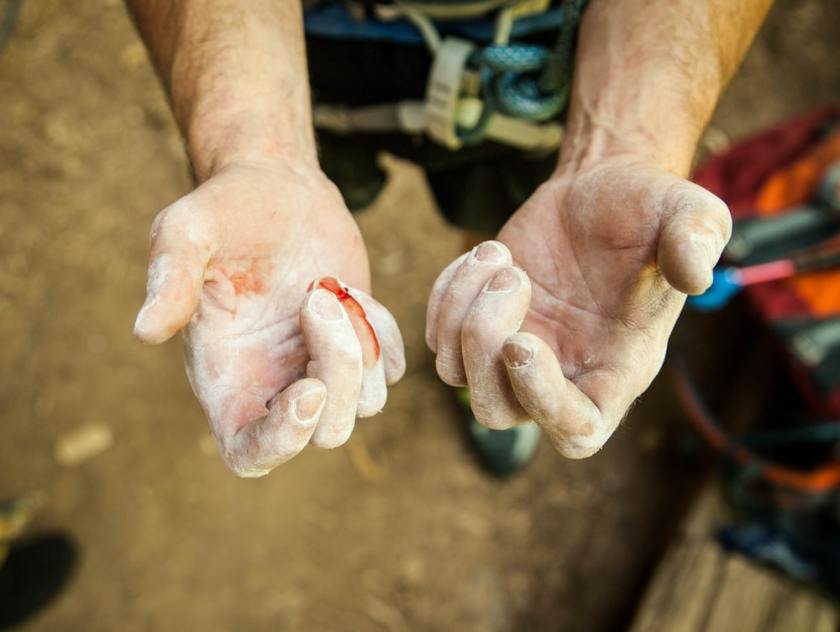
2020 Lent devotion #25 – Hands that shed innocent blood

by Brook Anderson on Unsplash

There are six things that the Lord hates,
    seven that are an abomination to him: haughty eyes, a lying tongue,     and hands that shed innocent blood, a heart that devises wicked plans,     feet that make haste to run to evil, a false witness who breathes out lies,     and one who sows discord among brothers. (Proverbs 6:16-19)

Want to get on God’s bad side? Be arrogant. Dishonest. Stir up trouble. Make wicked plans. Or, take the lives of innocent people. “Shed innocent blood.”

Nothing on this list is surprising. Most people would agree that a person shouldn’t live like that. Whether someone is a person of faith or not, they advocate honesty, getting along with each other, trying to make a positive difference and helping out your neighbor. Those who shed innocent blood ought to be locked up for life, or even executed.

Jesus was innocent. The Holy one of God, the righteous one, was like us in every way, yet without sin. They killed him. The Jewish crowds called for his execution. The Roman soldiers whipped him and hammered the nails into his hands and feet. Innocent blood was shed at Calvary. 

So God hates all those people? Nope. “God so loved the world…” God loves those who put his own son to death. 

Since it was my sin that brought Jesus here to this earth to suffer and die, I guess I would have to admit that I’m the reason for his death. And so are you. We are the reason he died. Our hands were complicit in his innocent death. We had a “hand” in his death.

Does God hate me? He should. But he doesn’t. God so loved me and you that he gave his one and only son, that whoever believes in him should not perish but have everlasting life. Jesus’ innocent suffering and death turn God’s hate into love. 

Maybe he can turn my hate into love, too. 

Thank you, Lord, for your amazing love for me. Amen. 

Posted in Devotions, Lent, Ministry

2020 Lent Devotion #24 – Drink offerings of blood

Photo by Sam Moqadam on Unsplash

As for the saints in the land,
they are the excellent ones,
in whom is all my delight.
The sorrows of those who run
after another god shall multiply;
their drink offerings of blood I will not pour out
or take their names on my lips. (Psalm 16:3-4)

“Drink offerings of blood” smack of pagan practices that were common in biblical times, but were absolutely excluded from Hebrew worship. Whether animal or human blood was involved, there is no way that David, the author of this poem, would even talk about this practice, much less engage in it. 

On the other hand he was a big fan of the “saints in the land,” those who trusted and followed the commands and promises of God. They were the ones who not only provided a good example, but encouraged David along “the path of life” (Psalm 16:11). 

How often does our attention wander to less than wholesome habits and pastimes in our culture? Much more often than we’d like to confess. Surrounded by those who run after the gods of success, power and possessions, we find ourselves jumping into the race. Those folks always look happier, like they are having more fun and lead more exciting lives than we do. At least they look like that on the outside. Or that’s what they put out on social media for everyone to see. 

Are there others in whom we should delight? Who are the saints in our land, the excellent ones surrounding us? They quietly and faithfully love the Lord with their worship and prayers. They just as quietly and faithful love their neighbors with friendship and mercy. Not very exciting. But they are essential in the fabric of our lives. 

Lives that bestow all honor and glory and blessing to the Lord will never be flashy, popular or even noticed. But those lives will draw us into the worship of myriads and thousands of thousands who know and worship the one on the throne. (Revelation 5:11-12). 

Thank you for the excellent saints who remind me of your power and presence, Lord. Amen. 

Posted in Devotions, Lent

2020 Lent devotion #23 – Too much blood

 [David said,] “But this word of the Lord came to me: ‘You have shed much blood and have fought many wars. You are not to build a house for my Name, because you have shed much blood on the earth in my sight.’” (1 Chronicles 22:8)

I wonder how David felt as he spoke these words to his son, Solomon? He had worked so hard to unify the kingdom of Israel, defeat their enemies and be a man after God’s own heart. His psalms still inspire our hymns and praise songs to this day. Yet, he never worshiped in a temple. He never even got to see the temple. And God wouldn’t let him build the temple. Too much blood. He was a shepherd, a warrior and a king. But he would not be a builder. At least not the builder of God’s temple. 

Before he was king, throngs of people would sing, ““Saul has struck down his thousands, and David his ten thousands.” That’s what David was known for. He was a hero. But that is a lot of blood. Tens of thousands of enemies killed. And that was before he ascended to the throne. For better or worse, that is his legacy. 

It’s not like David had a choice. There were many battles he had to fight. Victories and defeats. It was a violent, bloody period of history. The enemy was ruthless. You either kill them or they kill you. Peaceful moments were few and far between. 

A thousand years later, the son of David, Jesus, would be hailed as king. He would not take a single life. In fact, he would heal and restore many lives. The only blood shed would be his own, on the cross. And he would build a temple. The temple he would build would be made of believers, built on the foundation of the prophets and apostles, and he would be the cornerstone. 

Building projects often involve blood. I should know. Most of my projects mean cuts and blisters on my hands. Nothing as bloody as the wounds in Jesus’ hands and feet, though. Because he bled and died for me, I’ve been bought with a price and I not only belong to him, but my body is a temple of the Holy Spirit. God dwells in me and in his people, the church!

Thank you, Lord, for coming to dwell in me and my brothers and sisters in Christ. Amen. 

Posted in Devotions, Lent

2020 Lent devotion #21 – Blood on the water

When all the Moabites heard that the kings had come up to fight against them, all who were able to put on armor, from the youngest to the oldest, were called out and were drawn up at the border. And when they rose early in the morning and the sun shone on the water, the Moabites saw the water opposite them as red as blood. And they said, “This is blood; the kings have surely fought together and struck one another down. Now then, Moab, to the spoil!” But when they came to the camp of Israel, the Israelites rose and struck the Moabites, till they fled before them. And they went forward, striking the Moabites as they went. (2 Kings 3:21-24)

What a great story! All of Moab, every available soldier, is ready to fight against Israel. Then get up in the morning and the water they see before them looks like blood. What could have happened? Obviously their enemies have turned against each other. This is our chance. Let’s go in and plunder whatever is left. 

Nope. It’s just an illusion. It’s a trap to draw Moab in. Israel is ready, waiting for them. God’s people win a great victory!

Here’s the thing. God said he would do this. He said he would give them both water and victory. And he did! 

So what do you and I have? We’ve got the water of baptism. We’ve got his blood in the sacrament. We’ve got the victory. So when the odds seem against us, we should be confident. We are more than conquerors through him who him who loved us!

Thank you, Lord, for the water, the blood and the victory!

Posted in Devotions, Lent

2020 Lent devotion #20 – Blood flowing from the chariot

“And the battle continued that day, and the king was propped up in his chariot facing the Syrians, until at evening he died. And the blood of the wound flowed into the bottom of the chariot.” (1 Kings 22:35)

Ahab, the king of the northern kingdom of Israel and Jehoshaphat, the king of the southern kingdom of Judah, have forged a rare alliance to go to battle against the Syrians, to help Ahab retake the town of Ramoth-gilead. All the Syrians want is to kill Ahab, so he wears ordinary clothes, while Jehoshaphat wears his royal robes to distract the enemy. Their scheme works until a random arrow finds a way through Ahab’s armor, and he is mortally wounded. Ahab is propped up in his chariot to inspire his troops. But eventually, he bleeds out and dies. 

I don’t remember learning that story in Sunday School! And I know why. The horrors of war are horrible. We want to keep them from our children as long as possible. The thing is, God’s people are often at war in the pages of scripture. ln those wars, thousands of lives are lost. Sometimes they win. Sometimes they lose. But battle is never pretty. And it is always bloody. 

Later, Jesus would speak about war, violence, persecution, famine and pestilence. His depiction of the world before his return is terrifying. But if you think of the cross as Jesus’ chariot, where he does battle with sin, death and the devil, it all comes together. The blood flows from that chariot until the battle is done. The king is willing to give it all up for us, so we can win this battle. 

Thank you, Lord, for the blood and the victory! Amen. 

Posted in Devotions, Lent

2020 Lent devotion #19 – The prophets of Baal

photo by SoFuego on pixabay

Then Elijah said to the prophets of Baal, “Choose for yourselves one bull and prepare it first, for you are many, and call upon the name of your god, but put no fire to it.” And they took the bull that was given them, and they prepared it and called upon the name of Baal from morning until noon, saying, “O Baal, answer us!” But there was no voice, and no one answered. And they limped around the altar that they had made. And at noon Elijah mocked them, saying, “Cry aloud, for he is a god. Either he is musing, or he is relieving himself, or he is on a journey, or perhaps he is asleep and must be awakened.” And they cried aloud and cut themselves after their custom with swords and lances, until the blood gushed out upon them. (1 Kings 18:25-28)

The contest between Elijah and the prophets of Baal is a bloody affair. Apparently, according to their custom, the way to get your pagan god’s attention was to cut yourself again and again. What a mess! And it was all for nothing. No one answered. No one paid attention.

We all do things to get someone to pay attention to us. Little kids call out, “Watch me!” Or they’ll act out. Just to be noticed. We’ll raise our voices, do silly and outrageous things, pick a fight or reach out to touch someone so they’ll pay attention to us. 

We don’t have to do that with God. We’re never off his radar. He never slumber or sleeps. He’s keenly aware of our desires, needs, wants and fears. He knows our thoughts, hears our cries, listens to our prayers and goes to search for us when we wander off and get lost. 

Christ’s mission to seek and save the lost meant that his blood would be poured out for us on the cross. A soldier would shove a spear into his side to make sure he was dead. Blood and water poured out. That’s the one true God!

Lord, you made me, you saved me, you hear me. You are my God. Amen. 

Posted in Devotions, Lent

2020 Lent devotion #16 – Once again, do not eat the blood

Photo by Brooke Lark on Unsplash

The people pounced on the spoil and took sheep and oxen and calves and slaughtered them on the ground. And the people ate them with the blood. Then they told Saul, “Behold, the people are sinning against the Lord by eating with the blood.” And he said, “You have dealt treacherously; roll a great stone to me here.” And Saul said, “Disperse yourselves among the people and say to them, ‘Let every man bring his ox or his sheep and slaughter them here and eat, and do not sin against the Lord by eating with the blood.’” So every one of the people brought his ox with him that night and they slaughtered them there.  (1 Sam. 14:32-34)

This scene takes place during some of Israel’s intense fighting with their classic enemy, the Philistines. As the battle goes on, Saul has commanded his people to keep fighting rather than stopping to eat. They were exhausted and starving, so when they win some victories, they begin slaughtering and eating some of the plundered cattle on the spot, clearly in violation of God’s law. In one of his moments of faithfulness, Saul supervises them so that all is done in order, and the people are not sinning by eating the raw meat filled with blood.

In times of stress or fatigue, our will power can fail us, and we might just revert to unwise behavior. When you haven’t had a chance to eat all day, you’ll eat whatever’s in the house, even if it’s not good for you. That’s why you really don’t want bags of chips or boxes of donuts in the pantry or containers of ice cream in the freezer. But even better is someone who will help keep you on track. Someone who will encourage you, hold you accountable and walk that healthy lifestyle with you. Don’t get me wrong. Chips, donuts and ice cream are definitely good gifts from God to be enjoyed from time to time. Just maybe not all the time.

Get enough rest, plan and prepare healthy food, enjoy a treat once in a while. That’s some of the best wisdom I’ve received. I’m pretty sure that wisdom can be found in scripture, too. And do it with those you love and care about. Supporting each other is both a gift to be received and to give.

Thanks Lord, for those who help me stay on track. Amen. 

Posted in Devotions, Lent

2020 Lent devotion #15 – The avenger of blood

Photo by Devin Avery on Unsplash

Then the Lord said to Joshua, “Say to the people of Israel, ‘Appoint the cities of refuge, of which I spoke to you through Moses, that the manslayer who strikes any person without intent or unknowingly may flee there. They shall be for you a refuge from the avenger of blood.” (Joshua 20:1-3)

Along with the conquest of Canaan and the division of the land between the twelve tribes was the establishment of refuge cities. These were places you could go to make sure you got a fair hearing if you were guilty of manslaughter. Before the kings, the justice system in Israel was different than what we are used to. It sounds to me like folks were apt to take matters into their own hands. The Lord put some limits on that and required these places of refuge.

Our sinful nature urges us to not only get angry but also get even when we’ve been wronged or hurt. Payback tends to escalate until someone is “out for blood.” However, shedding more blood can’t bring someone back from the dead. Neither can a big settlement. Vengeance always seems appealing, but never delivers the satisfaction we hope and believe it will.

A little time to cool off, some conversation about what happened, and compassion might just bring about a better resolution. Those who accidentally kill don’t feel good about what happened either.

These cities of refuge are shadows of the infinite mercy of God where we flee for refuge when we have sinned. The wages of sin should be our death. But Christ has already died for our sin. Justice has been served.

Thank you, Lord, for being that refuge where I can flee for infinite mercy. Amen.

Posted in Devotions, Lent, Ministry

2020 Lent devotion #14 – Purification after birth

Photo by CDC on Unsplash

The Lord spoke to Moses, saying, “Speak to the people of Israel, saying, If a woman conceives and bears a male child, then she shall be unclean seven days. As at the time of her menstruation, she shall be unclean. And on the eighth day the flesh of his foreskin shall be circumcised. Then she shall continue for thirty-three days in the blood of her purifying. She shall not touch anything holy, nor come into the sanctuary, until the days of her purifying are completed. But if she bears a female child, then she shall be unclean two weeks, as in her menstruation. And she shall continue in the blood of her purifying for sixty-six days. (Leviticus 12:1-5)

This idea of postpartum infant care makes sense to me. Conventional wisdom says you don’t expose your newborn child to too many of the world’s germs until they’ve got some immunity from breast feeding and a first round of vaccinations. So too in the ancient world, some weeks of seclusion gives the baby a better chance of survival.

This law provided a reminder that we are born into this world spiritually unclean. God graciously provides for purification through those rituals and sacrifices that pointed to his own Son, who would “purify us from all unrighteousness.” That is a gift you never want to take for granted. This time of separation reminds each parent and the community of that truth.

But then what a wonderful day when the family reenters the worship community! What a wonderful reminder that our uncleanness does not keep us away from God forever. Instead he has made a way for us to worship him forever, here in time and then in eternity. I believe God is just as anxious for that time to pass, to welcome a mother and child back to the sanctuary, back to worship and back to their church family.

There will be days when all of us will have to stay home from church, recovering from illness. It’s better not to share our germs with the body of Christ. How good to know that our Lord misses your presence there as much as you miss being with your brothers and sisters in Christ!

Thank you, Lord, for making a way for me to be there with you – forever. Amen.