Posted in church, Through the Bible Devotions, worship

Temple duties, worship jobs

When King David handed the throne over to his son, Solomon, he organized all the Levites around future temple duties (1 Chronicles 23). Previously, the Levites had been busy transporting the tabernacle and furnishings from place to place in the wilderness.

David had thirty-eight thousand ready for temple duty. Eight thousand would serve as officials and judges. Four thousand would be gate keepers, and another four thousand would play instruments for worship.

Other duties included taking care of courtyards and rooms, purification of everything used only for worship in and around the temple, and mixing and baking the bread.

As worshipers, we don’t always think about all that has to be done in preparation for worship. Besides the musicians and pastor, lots of people work behind the scenes to make a Sunday morning happen:

  • Cleaning the sanctuary/bathrooms/front walk
  • Cutting the lawn, trimming shrubs and trees
  • Preparing worship folders, newsletters, and projections
  • Working the audio/visual for the service
  • Unlocking/locking the doors
  • Purchasing wine and bread for communion
  • Setting up/cleaning up communion
  • Setting up for baptisms
  • Assisting with distribution of communion
  • Setting up the altar with color for the season, linens, and candles
  • Setting out the flowers
  • Ushers
  • Greeters
  • At some churches, parking lot attendants and traffic direction
  • Counting and depositing offerings
  • Watching children in the nursery
  • Someone to turn on/off the lights
  • Someone to light/put out the candles

There are no doubt more jobs not mentioned here. I haven’t actually done the math, but I’ll bet it takes twenty people to make worship happen for every 100 in attendance. And every job is important.

Posted in church, Through the Bible Devotions

Small, medium, and large

Now I am about to build a temple for the Name of the Lord my God…The temple I am going to build will be great, because our God is greater than all other gods…the temple I build must be large and magnificent” (2 Chronicles 2:4, 5, 9).

Those are King Solomon’s words to Hiram, the king of Tyre. Hiram is like the manager of the biblical Home Depot, supplying all kinds of wood and contractors for the work.

The words that caught my attention this time around were “large” and “magnificent.” I’ve worshiped in some really small, simple chapels. I’ve also been in some beautiful, expansive sanctuaries that took my breath away. I’ve worshiped in spaces that had no windows but lots of stage lighting. I’ve preached in windowed churches where the sunlight blinded me for a few minutes as it moved across the sky.

Even Solomon acknowledges you can’t put God in a box. So why even try? Why build a place at all? Why a big, medium, or small worship space?

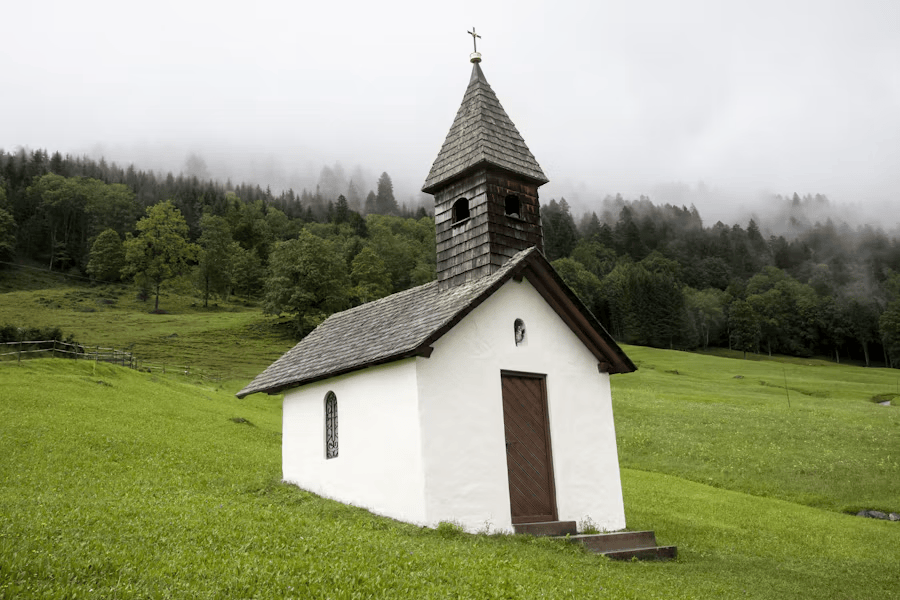
Every worship building, from tabernacle to temple to cathedral is a reminder of God’s presence, power, and protection. God doesn’t need a place. But we need to remember that he has come to dwell with us. And every building is a space that illustrates that truth.

Posted in pastor

Don’t you have a key?

I walked into the church fifteen minutes before my bible class was to begin. My arms were full with a bible, bible class handouts, bottles of water for a children’s sermon, and my alb and stoles for the next few weeks.

The door was open and I met Robert in a church t-shirt. Anne, the previous but now retired secretary, was there too. I asked, “Where should I put my stuff?”

She said, “Don’t you have a key?”

“Um, no, I don’t.” While I’ve been worshiping here for about six months, this was my first time filling in as worship leader and preacher. I assumed that they would be ready for me. That was not a good assumption.

Anne let me in the pastor’s office with the warning, “The door will lock behind you.” Maybe I should just leave it open. “Another pastor did that; someone came and took all of his stuff.” Ok. Not going to repeat that mistake.

A minute later, Anne came with a key. “Here’s a spare.” Awesome. I’ll take good care of it. I hung up my alb and stoles, then went to get ready for bible class.

I knew there wouldn’t be coffee prepared. That only happens on the first Sunday of the month. This was the fourth of five Sundays. I set out my handouts and got ready for the class to arrive.

After a lively bible class, I put my bible in the pulpit and headed back to the office to get ready. I found the microphone and beltpack, but no batteries. Hmm. I asked numerous people where I might find batteries. No one had a clue. Finally, Anne said, “I think we have some in the office.” She found a couple of AAs, and I was ready to go.

The service went well. Afterwards, everyone quickly left, and I hoped that someone was there to lock up. In the past, as the pastor of a church, I checked doors, set alarms, and was usually the last one out. In this context, none of that was my job.

This congregation has been in search of a full time pastor for three years. In the meantime, interim pastors have filled in. Who’s in charge of making sure everthing that happens on a Sunday morning happens on any given Sunday morning? Elders? Ushers? Anyone?

Sometimes it’s good to be on the other side. Now I can help them make sure they are ready for others who may fill in until they have a full-time pastor.

Posted in worship

How was church today?

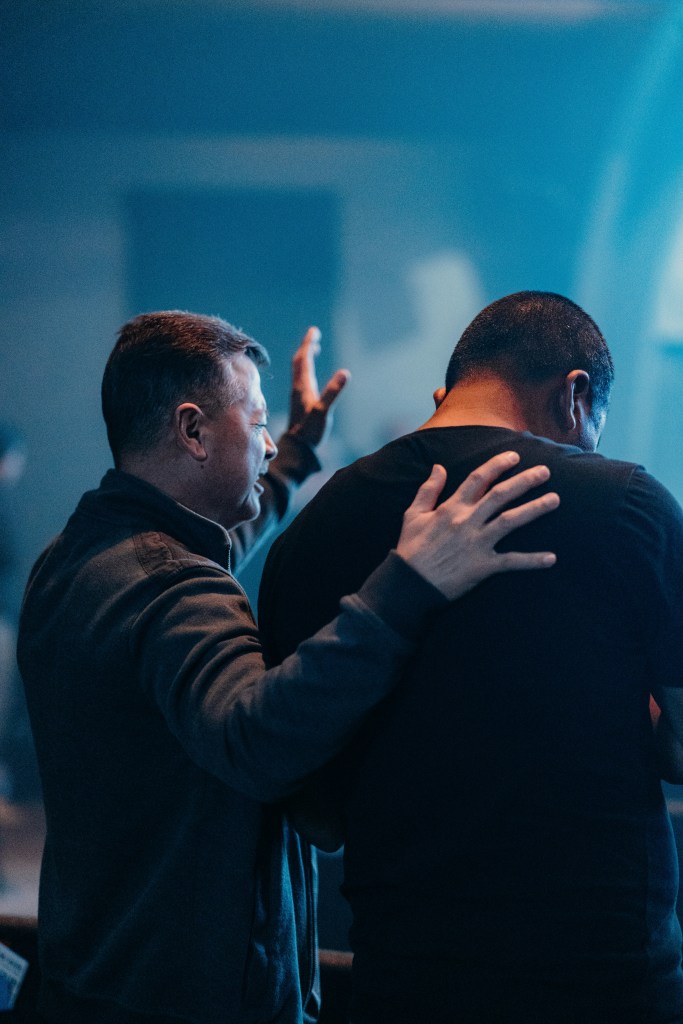
Photo by City Church CA on Unsplash

“How was church today?”

I’ve asked that question. Others have asked me that question. Just as we review a product or business, we evaluate worship experiences.

  • “I enjoyed the music.”
  • “It was too hot/too cold in the sanctuary.”
  • “The sermon was long.”
  • “Why so many announcements? They’re printed right here.”
  • “I love those banners.”
  • “I love/hate it when people bring babies to church.”
  • “Not many/lots of people attended today.”

News alert: God isn’t trolling for a five-star review. His feelings are not hurt if you weren’t inspired, challenged, or fed during the worship service. He will be the same tomorrow as he was yesterday whether you praised or criticized Sunday morning experience.

All God wanted was to be with you. If you were there, it was a five-star moment for him. If you heard his life-giving word, it was a win. If you believed the good news, it was a good day.

If I wouldn’t give Sunday morning worship five-stars, who needs to improve? The preacher? The musicians? The custodians? Late arrivers? Ushers?

Or is it me? What’s going on with me that made worship seem blah, so-so, and forgettable? Why was I distracted, unenthusiastic, non-responsive, preoccupied, comatose, uninterested, and critical?

Instead of reviewing worship after the fact, perhaps I should ask myself a few questions in advance.

  • Do I believe God will speak to me today? Am I ready and prepared to listen?
  • Will I be amazed by God’s grace today? Why would I ever take that for granted?
  • What will I learn about God today? What new thing will he reveal to me?

Someone suggested praying these petitions before any private or collective encounter with God:

  • Give me knowledge, wisdom, and understanding.
  • Teach me something new about you.
  • Direct my steps according to your word.

Maybe worship will be convicting, eye-opening, and instructive. Maybe it will reinforce truths you’ve always known. Maybe it will bring you to tears. Or put a smile on your face.

Posted in music

Back in the balcony, back on the horn

It’s been four years since I played trumpet for Easter Sunday. After that hiatus, I’m at a new church that has a pipe organ in the balcony with a talented organist. I introduced myself and said, “If you a trumpet player for Easter, I’m willing to play.” She immediately accepted my offer, got me some music, and we set up a rehearsal time.

As we ascended the steps into the loft, I thought, “It’s been fourteen years since I played in a church balcony.” That was for my son’s wedding. In the meantime, I usually played hymns and descants for Easter worship. But since my retirement, I didn’t have those opportunities. Until this year.

I started getting into shape after Christmas, hoping I’d have the chance to play. Playing at home is different than playing in a church. At home, my sound easily fills the bedroom where I practice. In an empty sanctuary, standing in a balcony, in front of ranks of organ pipes, it’s different.

As a rehearsal begins, I fight the temptation to over blow, thinking I have to fill the room with sound. I forget how far the sound of a trumpet carries. I’m behind the sound, not out in the space. It’s hard to relax, getting used to a new accompanist.

But after a few minutes, it feels familiar. Air fills horn and the pipes. Music fills the air. I can feel the vibrations from the big pipes. From the corner of my eye, I follow the head and shoulders of the organist. The notes fit together. It’s thrilling and motivating. I love this.

What an enjoyable gift from the Lord to be able to make music. What a gift to give it back to the Lord, too!

Posted in Through the Bible Devotions

Evaluating Churches: Insights from Revelation 2 and 3

Some “through the bible” thoughts from Revelation 2 and 3.

When I look at a church, whether my own or another, I tend to notice different things than God does.

  • I look at it’s size. How many gather for worship? I think most of us assume that bigger is better. They must be doing something right, right?
  • I evaluate the style. What kind of music do they have? What’s the quality of the music? What message does the music communicate?
  • I pay attention to the demographics. Is it just a bunch of old people? I like to see a multi-generational gathering, with lots of families with children.
  • What about their programming? Do they have a lot of things going on? How full is the weekly calendar of events? Is the congregation reaching out to the local community as well as supporting mission efforts around the globe?

As John writes to the seven churches, we learn that God looks at the church in an entirely different way.

  • Is that church’s activity fueled by love (Ephesus)?
  • How does the church respond to difficulties and challenges (Smyrna)?
  • What false teaching does the church tolerate (Pergamum)?
  • What false teachers does the church tolerate (Thyatira)?
  • What programs have stalled out (Sardis)?
  • Is the church pursuing opportunities for ministries in the immediate area (Philadelphia)?
  • Does the church care about people, the community, and the world? Or are they indifferent, isolated in a bubble (Laodicea)?

How can anyone not be convicted when they read these chapters of Revelation? No church is perfect. No church checks all these boxes. Every church has something to work on.

Every church needs to repent.

Any church can dig in and declare, “We’re right and they’re wrong!” How many churches will admit, “We have a lot to work on”? How many will commit to being the kind of church that the Lord wants us to be?

Posted in Through the Bible Devotions

Under construction

Some “through the bible” thoughts from the Old Testament book of Haggai.

“Is it a time for you yourselves to dwell in your paneled houses, while this house lies in ruins?” (Haggai 1:4)

In post-exilic Jerusalem, everyone’s time is consumed working on their homes. Of course they need a place to live. But they haven’t gotten around to rebuilding the temple. The focus on day-to-day living left them little energy for their spiritual lives.

Working a job, raising a family, and maintaining a home demands much time and energy. Getting everyone up and out the door for an hour of worship is no simple task. Even when you do it for a living (like a pastor), squeezing God into life is challenging.

God knows this. Ultimately he builds his temple out of people, “a dwelling place for God by the Spirit” (Ephesians 2:22). Instead of waiting for us to make room for him, God makes room for us in his church. Instead of God being a part of what I’m doing, I’m a part of what he’s doing. Rather than waiting for me to invite him into my life, he invites me into his. Pretty clever, huh?

Posted in Through the Bible Devotions

Going to church with Jesus

Some “through the bible” thoughts from Zephaniah 3.

Sing aloud, O daughter of Zion;
    shout, O Israel!
Rejoice and exult with all your heart,
    O daughter of Jerusalem!
The Lord has taken away the judgments against you;
    he has cleared away your enemies.
The King of Israel, the Lord, is in your midst;
    you shall never again fear evil.
On that day it shall be said to Jerusalem:
“Fear not, O Zion;
    let not your hands grow weak.
The Lord your God is in your midst,
    a mighty one who will save;
he will rejoice over you with gladness;
    he will quiet you by his love;
he will exult over you with loud singing. (Zephaniah 3:14-17)

The book of Zephaniah begins with disturbing descriptions of “the day of the Lord,” world wide destruction that includes Judah and Jerusalem. Rampant idolatry will come to an end with distress and anguish, ruin and devastation, darkness and gloom (1:15).

But the final chapter ends with singing, shouting, and rejoicing. The most amazing part? The Lord is right there in the middle of it all, rejoicing, exulting, and singing. In other words, the Lamb who is at the center of praises in John’s visions of heaven (Revelation 5) is right there with his people in worship.

It makes perfect sense. Our great high priest is like us in every way. He is fully human in our world, going to synagogue on the Sabbath and festivals in Jerusalem. I really like the image of Jesus going to church with his people.

I truly believe Jesus would love to be in church, at home in every form of worship found in any and every denomination. From quiet moments of prayer to joyful singing, Jesus wouldn’t miss a moment.

Churches have long been divided by worship style, language, and meeting place. The presence of Jesus in each and every place destroys those distinctions.

I just hope you like being with him as much as he enjoys being with you!

Posted in church, Life, Ministry

How Technology Transformed My Ministry Experience

Daily writing prompt
How has technology changed your job?

I’ve been retired for nearly three years now, but as a parish pastor, technology had a huge effect on how I did ministry in a local congregation.

When I started working in my first congregation in the mid-1980s, there were three ways to keep in touch with church members. You either sent a letter in the mail, called them on the phone, or knocked on their door.

By the time I retired in 2022, I had mastered many electronic ways to communicate with the church. While I still sent letters and made phone calls, I also sent email, text messages, messages through social media platforms, and broadcast an electronic newsletter each week. I never went to someone’s home without an appointment. People either weren’t home or just didn’t answer the door.

That being said, all that technology failed to silence the lament, “people don’t know what’s going on!” People just had more noise to ignore.

When I graduated from the seminary, I had a modest collection of books that I used for sermon and bible study preparation. That collection grew when I was at a church that gave me a generous annual book allowance. By the early 2000’s I found most of the information I needed on the internet, so I sold and gave away most of my printed books.

The Covid pandemic closed down in person worship services for our congregation. We were forced to learn how to broadcast worship from an empty church to members’ homes. I started with an iPhone propped up on some hymnals, moved up to my laptop balanced on a stack of bibles, until we invested in some digital camera technology. It was only a few weeks before we resumed worship in the sanctuary, but once we started, we just couldn’t stop broadcasting weekly services. As a result, people watched from all over the world. Some viewers financially supported the ministry, folks I would never meet.

When it was time to choose the next pastor, the leadership was not limited to a written resume. The selection committee interviewed every candidate via Zoom. Every prospect had a collection of online sermons to listen to. The process demanded a lot of time and energy.

Technology has been a blessing for the church since not every generation embraces new technology. But it’s also been a blessing. The church is here to communicate good news, and technology has helped her do that in so many ways.