Posted in Through the Bible Devotions

Another look at the most familiar psalm

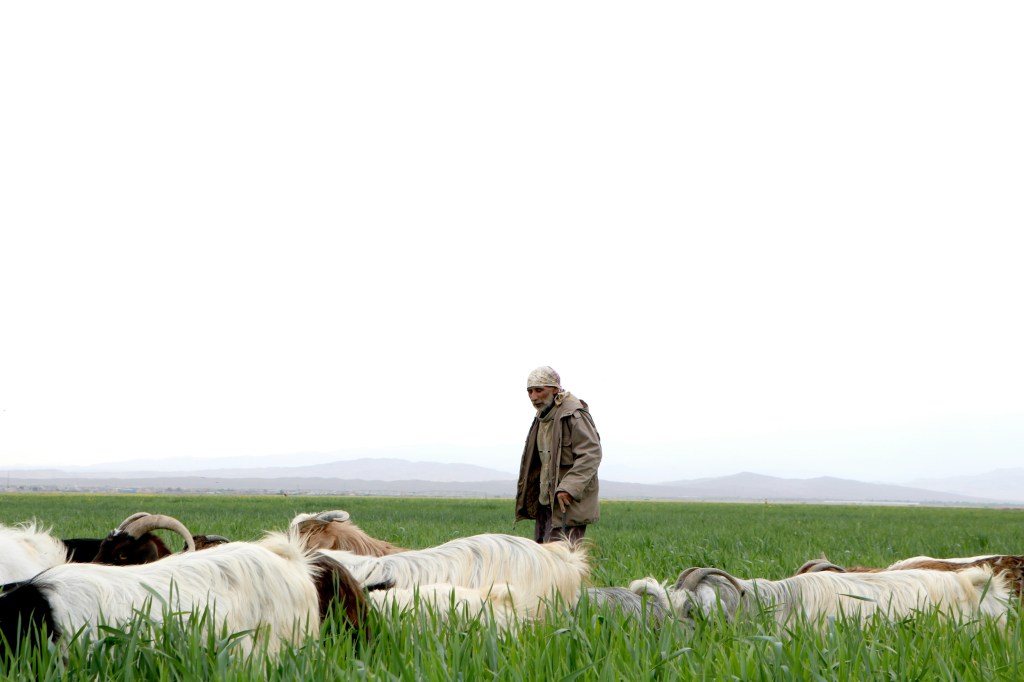
Photo by hani Pirzadian on Unsplash

A “through the bible” devotion from Psalm 23.

Here’s a few reflections on what may be the most well-known chapter of the bible.

“The Lord is my shepherd.” In an ancient culture, the job of shepherd was considered the lowest of occupations. It was the bottom rung, similar to an entry level position in the mailroom of a large corporation

That’s the job the Creator chooses to identify with. He chooses the minimum wage position in a world where everyone is scrambling to get ahead.

“I shall not want.” That could be confidence in God’s provision. Or it could be a choice, to be content with what God has provided. It’s not easy to put coveting aside in a world that continually markets new products.

“He restores my soul.” Soul restoration isn’t easy. It’s not just feeling better about yourself or about life. It’s about confession, repentance, and forgiveness. A restored soul is one drenched in God’s grace, covered in Christ’s blood, and restored to wholeness.

“For his name’s sake.” He doesn’t do this because of your performance or potential. He does it purely out of Fatherly goodness and mercy without any merit or worthiness in you or me.

“Through the valley of the shadow of death.” Death is not a destination. It’s just part of the journey. It’s not the end of the road. By the grace of God, it’s the doorway to life.

“I will fear no evil.” Evil will always be present. Fear will not be, not when we know the one who is with us.

“Your rod and your staff.” These are the weapons of the shepherd. They ward off predators. They also discipline us sheep when we get off the path.

“Goodness and mercy shall follow me.” The shepherd leads us, but his goodness and mercy bring up the rear, too.

“I shall dwell in the house of the Lord forever.” That’s our home. There’s a place for us.

No matter how many times I read this psalm, there’s always something new to meditate on.

Posted in Through the Bible Devotions

Facial recognition

Photo by cottonbro studio: https://www.pexels.com

You have said, “Seek my face.”
My heart says to you,
    “Your face, Lord, do I seek.” (Psalm 27:8)

As a newborn’s eyes begin to develop, he or she will seek out the face of a mother or father. Their eyes will fix on your eyes. It’s is an amazing moment when our eyes meet for the first time, and we both smile.

I’ve been going to a lot of my grandson’s basketball games lately. I love it when one of the players gets the ball and looks into the stands to see if mom and dad are watching. Of course they are, and they’re shouting, “Shoot the ball!”

Some cell phones come to life with facial recognition. The phone sees your face and grants you access to all your apps. It’s an amazing part of the technology.

I was always taught to look at the person who was speaking to better understand what they were saying. It’s just part of being an active listener.

So it makes sense to seek God’s face. We want to feel connected, we love to know he’s watching us, it feels good to know that he knows us, and we don’t want to miss anything he has to say.

So if you feel your heart telling you to seek his face, do it! Listen, look at what he’s doing all around you, and connect with his promises.

Posted in Through the Bible Devotions

Night school

Photo by Shane on Unsplash

A “through the bible” devotion from Psalm 16.

This is my favorite psalm, so I could write lots of devotions on this, but this time I’ll focus on the words, “In the night my heart instructs me” (Psalm 16:7).

I recently read this insight: “Our spiritual life doesn’t go on hold when we sleep.” That makes sense. We breathe and our hearts beat. We move around a lot when while we sleep. Mentally, our brains sort out all the information we’ve taken in, sometimes causing us to dream.

What about our spiritual lives?

Maybe you’ve had this experience. You went to bed with a lot on your mind. You may have tossed and turned with thoughts about what you had to deal with the next day. But in the morning, things didn’t seem so bad. Life seemed manageable. The new day was filled with new possibilities.

Here are some awesome lessons to learn here:

  • Fill you heart with solid truth. Make sure it is infused with God’s Word. If your heart is going to be your instructor, make sure it went to a good school. Before you close your eyes, read God’s promises.
  • Just go to sleep. I believe one of the most faithful things a believer can do is go to sleep at night, trust God to take care of everything, and look forward to a new day in the morning.
  • When you wake up, take inventory of how you feel. Does the day ahead feel overwhelming or manageable? I usually experience the latter. God has indeed been faithful!
  • Did you dream? Write it down! Immediately. If I don’t, I forget it. Will it mean something? Who knows?

God’s up all night taking care of things. I can rest securely in him.

Posted in Through the Bible Devotions

Are you kidding me?

Photo by Jonathon Burton: https://www.pexels.com

A “through the bible” devotion from Psalm 2.

There is always a clash of kingdoms going on in the world.

  • Abram faces an alliance of kings in Genesis 14.
  • Saul faces off against David.
  • David fights off a lot of Philistines.
  • Israel finds itself at odds with Egypt, Assyria, Babylon, and Rome.

The psalmist wonders why the nations rage and the kings of the earth set themselves against the Lord. None of this concerns God in the least. It’s one of the few places in the bible when the Lord chuckles and reminds everyone, “I have set my King on Zion, my holy hill” (Psalm 2:6).

Jesus said that nations would rise up against nation, and kingdom against kingdom. That’s just the way this world is. Always has been. always will be.

He’s not worried. All authority on heaven and on earth has been given to him (Matthew 28:19). The kingdom of this world has become the kingdom of the Lord (Revelation 11:15). Nothing happens outside of his control or permission. Everything is in good hands – his hands.

So we shouldn’t be worried, either. “Blessed are all who take refuge in him” (2:12).

Posted in Through the Bible Devotions

So do you trust, really trust, him?

Photo by Dane Deaner on Unsplash

A “through the bible” devotion from Job 1 and 2.

In the opening chapters of Job, we know what’s going on. Job doesn’t have a clue.

We know that God appreciates Job’s faithfulness. We know that Satan has asserted that Job is faithful only because his life is good. God allows Satan to take everything from Job: animals, children, and his health.

What is Job’s response to all this? “The Lord gave, and the Lord has taken away; blessed be the name of the Lord” (Job 1:21). Job says to his wife, “Shall we receive good from God, and shall we not receive evil?” (2:10). Job only sees the hand of God in everything he has experienced, both the good and the bad.

What do you think of that? What do you think of Job’s assessment of God? How do you feel about a God who takes life away. What do you do with a God from whom we experience bad things?

In the Old Testament, God floods the earth, wiping out all life that isn’t safely on board the ark.

God lets his people get hungry and thirsty in the wilderness. Why? To get their attention. So he can show them that he provides what they need.

When King David calls for an unnecessary census, the consequences from God are a plague that kills thousands of people.

In Revelation, disastrous things happen when the wrath of God is unleashed on an unbelieving world.

Many will ask, “Why does God allow bad things to happen?” What about asking, “Why does God cause bad things to happen?”

It’s not an easy question to answer. And I doubt I’ll be able to answer it very well here. But I’ll share what I’ve learned and how I’ve worked through this. I’ve got a logical brain, so this works for me.

God is good, all-powerful, loving, and sovereign. If he allows something to happen, even if we think it’s bad, it’s for a good reason or purpose. Nothing happens outside of his control or his knowledge. Nothing surprises him or catches him off-guard.

Think about it. In hindsight, you learned a lot from and even benefitted from experiences you thought were terrible in the moment. You’ll never figure it out in that moment. Only later will you understand.

God sees the much bigger picture. And he cares. He knows how much it hurts, how unfair it is, and what it’s like to weep. He’s been here. He’s done that. That’s what Jesus did.

The bottom line is, “Do you trust him?” You have faith, but do you trust him? Do you trust him to bring you through a flood, or fire, or “the valley of the shadow of death” to a new, different, and better place?

For the next 36 chapters, Job and his friends will try to figure all this out. In the end, there is no other path than trusting God.

Posted in Through the Bible Devotions

Not everybody who wants to be your friend should be your friend

Photo by NONRESIDENT on Unsplash

A “through the bible” devotion from Nehemiah 6.

My dog Winston (the White Westhighland Terrier) believe that everyone is his friend. His tail is up and wagging for the vet, the vet tech, the front desk receptionist at the vet, the Rottweiler who often walks by our house, the three little terriers who walk down the street, grandkids, in-laws, our small group, and anyone else who will let him jump up in their lap.

Nehemiah has gone out on a limb to ask for time off from his cupbearer job in Susa to go to Jerusalem to rebuild the walls. It was a huge project, made more challenging by enemies who did everything they could to stop the work. Rather than taking an allowance, he fed hundreds of people at his own expense.

As the walls and gates near completion, a few of Nehemiah’s enemies try to buddy up to him. Four times Sanballat and Geshem invite him to a little get-together, and all four times, Nehemiah declines, answering, “I’m busy. I have a lot of work to do.”

He knows. He knows “they intended to do him harm” (Nehemiah 6:2). Nehemiah was loyal, brave, hard working, and discerning. He knows that not everyone who wants to be your friend should be your friend.

That last statement is hard. I don’t like that truth. I’ve always operated under the notion that if you want friends, you should be a friend. So if someone befriends you, you ought to welcome their friendship.

Many of you reading this have learned the hard way that this doesn’t always work out.

  • Some befriend us to take advantage of us. It’s just a matter of time before they ask for money.
  • Others want to be our friends so they can tell others that they are our friends. These folks will broadcast their relationship with us in their promotional material. Yes, I’ve had people join the church so they can add that to their resume.
  • Some will be friends for a while, but at some time and for some reason they will turn. They will turn on you, to make you the bad guy, so they look like the good guy.
  • There are those who jump into friendship, but immediately disappear into the ether. They literally disappear, and you never see them again.

By this time you’re thinking, “Wow, he’s gotten cynical.” You are right. And you’re thinking, “Yeah, I’ve had friends like that.” You’re also wondering, “So who should I be friends with?”

That is a very good question.

  • Don’t let betrayal, disappointment, or threats deter you. Just be a friend with anyone and everyone. The only way to know is to dive in and do it. You can’t predict who’s going to be a keeper and who you throw back.
  • Don’t expect too much from a friend. They will not live up to your expectations. No human does. They will let you down. Just remember: they are your friend.
  • Do invest a lot in friendship. You be the one who is there, who cares, who gives, who gives, who goes beyond expectations.

It’s a lot easier to make friends when you are in school. The friends I remember the best are from elementary, junior high, high school, and college. After that, it’s a lot harder. Why? I don’t know. It’s different when you’re an adult. But it’s no less important.

Must you be friends with everyone who befriends you? No. Be discerning. Be open to new friends. Be a friend. But sometimes it’s okay to walk away.

Posted in Through the Bible Devotions

The best party ever!

Photo by Nik on Unsplash

A “through the bible” devotion from 2 Chronicles 35.

What would make you exclaim, “This was the best Christmas (or birthday or other celebration) ever”? It might be the presents you received. Or the people gathered with you. Maybe the food was outstanding. A live band, fireworks, or an open bar could make an occasion the best ever. How about the amount of debris left to clean up the next day?

“Josiah kept a Passover to the Lord in Jerusalem” (2 Chronicles 35:1). Boy did he ever! “No Passover like it had been kept in Israel since the day so Samuel the prophet” (35:18).

What made this Passover so memorable?

First, the numbers are amazing. 37,600 lambs and young goats were slaughtered and roasted, along with 3,800 bulls. It’s close to twice as big as the Passover King Hezekiah kept, which was best one since Solomon was on the throne (2 Chronicles 30:23-26).

Josiah kept this Passover “according to the word of the Lord by Moses” (35:4). Those repairing the temple discovered the Book of the Law of the Lord. A convicted but repentant King Josiah made sure they followed God’s instructions to the letter.

Finally, the king kept the best Passover ever during the decline of the southern kingdom of Judah. In just a few decades after Josiah’s reign, Babylonians would capture and burn Jerusalem, and take whoever was left into an exile that would last seventy years. Those whom God loved rejected him and every messenger he sent to warn them. He had no choice There was no remedy (36:16).

What’s the best worship event you’ve ever experienced? Anyone who’s been to church has a story about an amazing service. The more I think about it, the more I add to my list. Mine would have to be my call service at the seminary, my son’s ordination, baptizing my children and grandchildren, and my father’s funeral. They were all very different but powerful moments.

Posted in Through the Bible Devotions

From hopeless to hopeful

Photo by Brad Barmore on Unsplash

A “through the bible” devotion from 2 Chronicles 20.

King Jehoshaphat was in a tight spot. A huge army of Moabites and Ammonites are poised to attack Judah, and he feels helpless against this great hoard.

So he prays. He prays, “We do not know what to do, but our eyes are on you” (2 Chronicles 20:12).

It’s a great prayer. Simple, faithful, desperate, hopeful, and honest. No fancy words. From the heart.

Life is filled with “I don’t know what I’m going to do” moments. If we focus on the unexpected expense, the hurtful words we can’t take back, the doctor’s grim diagnosis, or the loss of a job, our mind takes us to hopeless places.

But if we simply remember to look to God, everything looks different. That simple shift of our eyes takes us to a hopeful place.

Peter took his eyes off Jesus and started to sink in the water. Bad move. But Jesus was there to save him.

Elisha’s servant could only see enemy armies. Until Elisha points out the armies of God surrounding their enemies.

The disciples’ hopes are dashed as they mourn Jesus’s death. But when they see the risen Lord, the future suddenly looks bright.

When you don’t know what to do, fix your eyes on him in prayer and in the scriptures.

Posted in Advent devotions

Instead of

Sixth, seventh, or eighth on the bench? You’re not a starter. You can wait to sub in to show what you can do on the court.

A substitute teacher? That’s got to be one of the toughest jobs ever. It takes a special person to take on students you don’t know for little pay.

“Playing the part of…” The audience is disappointed that an understudy will be performing. The understudy is thrilled.

When the menu states, “No substitutions,” will you still ask for fruit instead of fries?

“Alexa, what can I substitute for buttermilk?” Answer: milk with vinegar; or sour cream.) Since we’re in the kitchen, you can also substitute granulated sugar and some molasses if you don’t have brown sugar for a recipe.

When God tells Abraham to sacrifice his only son Isaac, Abraham is confident that “God will provide for himself the lamb for a burnt offering” (Genesis 22:8). When “Abraham lifted up his eyes and looked, and behold, behind him was a ram, caught in a thicket by his horns. And Abraham went and took the ram and offered it up as a burnt offering instead of his son” (Genesis 22:13). Just as promised, God provided a substitute for his son.

That is faith. Abraham has confidence. His obedience demonstrates absolute trust. In this story, God paints a picture of who his son Jesus will be. He’ll be a substitute for us, suffering and dying in our place on the cross, suffering the punishment for sin.

Advent is about the coming of a substitute. You could shoot spitballs at him in an unruly classroom. You can cheer him on when he step onto the court. You can applaud when he finally has a chance to take the stage. You can thank God that there are substitutions in his kingdom. You can worship him as the one who stood in for you and took the wrath of God for your sin.

Two words to sum up the gospel? “Instead of.” Forgiveness instead of punishment. Life instead of death. Joy instead of sadness. Hope instead of despair. Light instead of darkness.

And a ram instead of Isaac. Another image of Jesus. Here’s one for the Jesse Tree: