Posted in holy week

Thoughts on Holy Saturday: resting and thinking

Photo by Hannah Busing on Unsplash

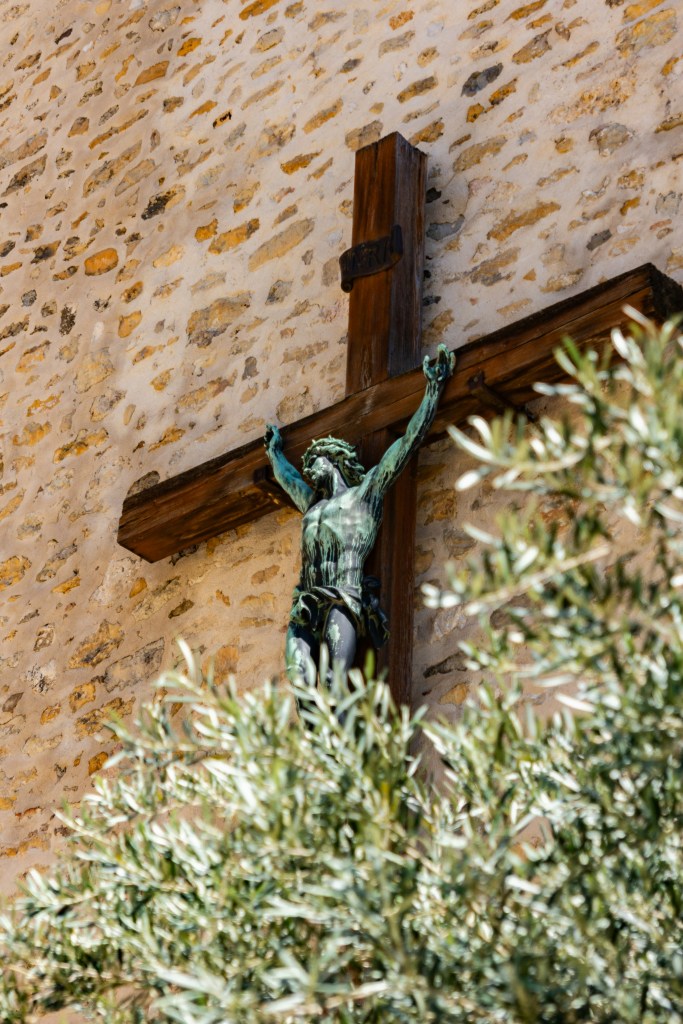
It was the Sabbath. As God’s people had always done, they rested. Jesus rested, too. God had rested on the seventh day when the work of creation was finished. Now his son rested the ultimate rest of death after proclaiming “It is finished” from the cross and breathing his last. His sacrifice for sin was complete.

It is Saturday. The tomb has been sealed. Soldiers stand guard in the garden. There’s nothing you can do.

This is when you start second-guessing. Maybe we should have done something differently. Maybe we should have kept an eye on Judas. Maybe we shouldn’t have let Jesus go to Gethsemane. Maybe we should have brought more swords and fought harder when the mob showed up. Maybe we should have stayed in Galilee, fishing.

A lot of life is like Saturday, isn’t it? Dealing with loss, asking questions, second-guessing ourselves, and second-guessing God. And sometimes there’s nothing you can do.

So it’s good to have time to rest, to think, and to remember what he’s done.

Posted in holy week

Thoughts on Thursday of Holy Week: the hardest prayer?

Thursday is a busy day. After he eats the Passover and institutes the Lord’s Supper, Jesus prays in the Garden of Gethsemane.

“And going a little farther [Jesus] fell on his face and prayed, saying, ‘My Father, if it be possible, let this cup pass from me; nevertheless not as I will, but as you will.’” (Matthew 26:39)

Sorrowful and troubled, Jesus prays one of the hardest prayers anyone could speak: “Father…your will be done.” (Matthew 6:9,10)

We pray those words without hesitation or struggle anytime we speak the Lord’s Prayer. Do we consider the gravity of those words? Is that what we really want? Are we willing to set aside our desires and let God map out our future? Are we willing to let the Lord fill up our calendars?

It depends. Do you trust him? Do you trust that he cares about you and will take care of you? If so, then go for it. Pray these words boldly.

If not, then consider Jesus’s prayer that night. He yields to his father’s will because of his great love for you. There is no greater expression of love than Jesus giving up his life for us. Yes, he cares.

Just pause before you pray, “Your will be done.” Think about Jesus’s words. Think about how much he cares. Think about how much he wants you to live.

Posted in holy week

Wednesday of Holy Week: the let down

In the middle of Holy Week, Judas makes a deal to betray Jesus.

Then one of the twelve, whose name was Judas Iscariot, went to the chief priests and said, ‘What will you give me if I deliver him over to you?’ And they paid him thirty pieces of silver.” (Matthew 26:14-16)

Jesus knows Judas is going to do this. If you’ve been through a season of Lent or two, you know Judas is going to do it.

But the other disciples didn’t. They had no reason to not trust Judas. They even trusted him with the money purse. In our world, I guess he would have their Venmo on his phone.

I think the hardest lesson from Wednesday is the reality that people close to us will let us down. Some of you have already experienced this from people in your own family, in the church, or at work.

And guess what? You’ve hurt them, too. They thought they knew you. They thought they could trust you.

But something else got in the way. What was it? Money? Pride? Selfishness? Busyness? Suddenly someone you cared about wasn’t important anymore.

Ok, enough of that. Who can you trust? Jesus. Other stuff doesn’t get in the way. He gives it all, his life, for you.

Posted in holy week

Tuesday of Holy Week: Trick questions

Do you like trick questions? Riddles like these are fun to think about and figure out:

  • What goes up but never comes down?
  • How can someone go twenty-five does without sleep?
  • What has a head and a tail, but no body?

(See the end of this post for answers.)

On Tuesday of Holy Week, Pharisees, Sadducees, and a lawyer have trick questions for Jesus. Their questions are fashioned to embarrass Jesus, to cut into his popularity by getting him to say something they can use against him.

  • Should we pay taxes to Caesar?
  • Who are you married to in heaven if you’ve had more than one marriage in this life?
  • What is the most important commandment in God’s law?

Jesus is good at this game. He should be. He wrote the rules. His listeners were impressed. Jesus knows what he’s talking about.

  • Pay your taxes and give to God, too.
  • Don’t worry about it. Marriage is for this life, not the next.
  • Here is a short list of commandments to worry about: Love God and love people.

Lots of people have told me they are looking forward to that day when they get to ask Jesus some questions. Questions like

  • Why didn’t you prevent bad things from happening?
  • Why didn’t you answer my prayer?
  • Why did you create insects I don’t want in my house?

From what we know about Jesus, he’ll probably answer your question with a question like:

  • “What did I tell you?” (That is, “What’s in the bible?”)
  • “Don’t you trust me?”
  • “Who do you think I am?”

Those are not trick questions. And I’ll bet you already know the answers.

Answers: Your age; people sleep at night; a coin.

Posted in holy week

Thoughts on Monday of Holy Week: Can you believe he did that?

Photo by Jon Tyson on Unsplash

So what happens on Monday of Holy Week? Jesus returns to the temple in Jerusalem where he heals and teaches, overturns the tables of the moneychangers, and spends the night with Lazarus.

When Jesus was twelve years old, his parents found him in the temple. Back then the he impressed the teachers of the law with his questions, knowledge and understanding. I wonder if any of those teachers were present that day when Jesus drove everyone out, including the animals.

I often hear people describe Jesus as being angry that day, even though anger is not mentioned in the bible. With a whip of cords in his hand, chasing man and beast out, he may have been angry. He certainly was passionate.

I think of this scene when I walk into church buildings. On the way to worship, I pass offering kiosks, donation boxes for mission offerings, and youth selling tickets to a fund-raising event. Not much has changed.

What do you think happened after Jesus left the temple that day? Everyone gathered up the money, set up the tables, rounded up all the animals, and got back to work. After all, it’s the week of Passover. The city is packed with people from all over Israel. It’s similar to race week or bike week in Daytona Beach. This is when businesses make most of their money for the year.

So what’s going on here? I don’t think the temple was restored to a house of prayer for all the nations. At least not until Pentecost. Jesus’s actions and stories provoke the religious leaders to get serious about getting rid of him. It’s like lighting the fuse on a stick of dynamite.

And that’s exactly what Jesus intends. He is not caught up in a chain of events over which he has no control. He’s written the script. He’s playing the lead. He’s poking the bear. And everything is going according to plan.

Imagine a visitor to your church deliberately bumping the snack table hard enough to scatter donuts and coffee cups everywhere on a Sunday morning. That would stir things up, wouldn’t it?

Welcome to holy week.

Posted in Jesus

Palm Sunday thoughts

Image by Travel2h from Pixabay

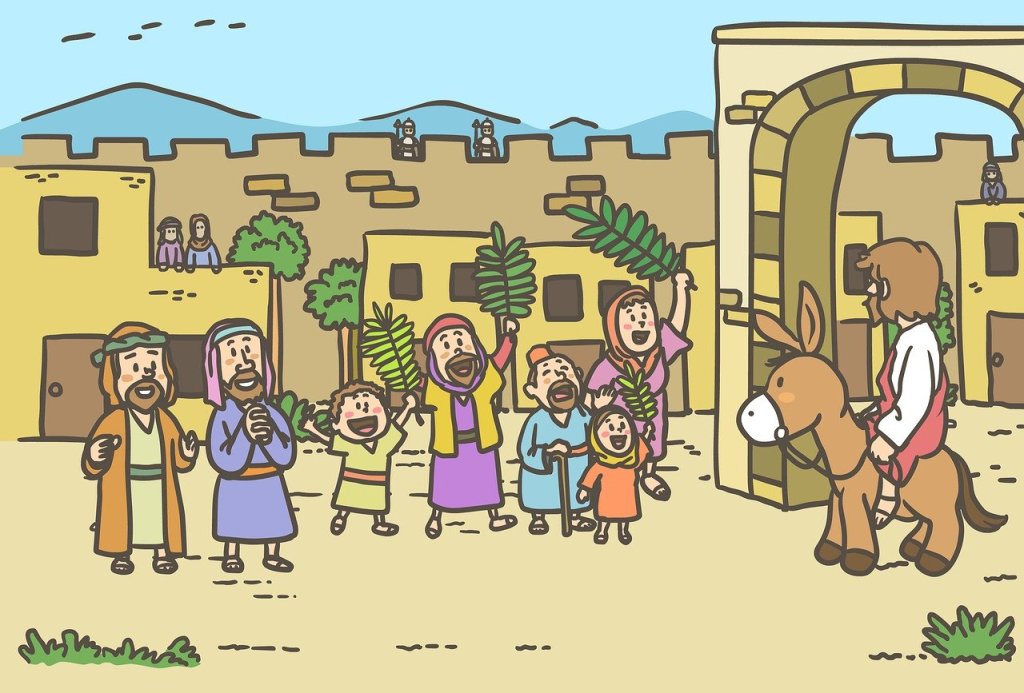
Today is Palm Sunday, and I thought I’d just take a few minutes to reflect on the prophecy Jesus fulfilled when he rode into Jerusalem, setting into motion the events of Holy Week.

Rejoice greatly, O daughter of Zion!
     Shout aloud, O daughter of Jerusalem!
Behold, your king is coming to you;
     righteous and having salvation is he,
humble and mounted on a donkey,
     on a colt, the foal of a donkey. (Zechariah 9:9)

He comes.

Woody Allen once said that 80 percent of success in life is just showing up.

My five-year-old grandson just finished up his first season of recreation league basketball. At this level, it’s just taking turns running the ball up the court to take a shot at a six-foot high basket. Every player did the same thing after they took a shot. They looked and smiled at mom and dad in the stands. It didn’t matter whether they made the shot or missed completely, the most important thing was the presence of their parents.

While I was a pastor, I did my best to see anyone in the congregation before their surgery. That meant a lot of early morning drives to hospitals. The twenty-second prayer before prep was important. But so was being there.

One amazing thing about our God is that he shows up. He’s walking in the garden when Adam and Eve are hiding in the bushes. He wrestles with Jacob. He talks to Moses from a burning bush.

And he shows up in Jerusalem just as the prophet said he would. He comes “righteous and having salvation,” that is, he’s here to rescue us. To save the day. To be our hero. To score the winning goal in overtime. Go with whatever image works for you.

Jesus knows that showing up like this will stir up the opposition that will lead to his betrayal, arrest, denial, conviction, and execution. But that’s why he shows up. He comes to give his life as a ransom for many. He shows up to save.

He comes as king.

No one has to tell the Palm Sunday crowd what is going on here. They’ve been waiting for over four hundred years for the words of Zechariah to come to life. When they see Jesus riding into town they shout, “Hosanna to the Son of David! Blessed is the coming kingdom of our father David! Blessed is the king who comes in the name of the Lord!” (Matthew 21:9; Mark 11:10; Luke 19:38)

For the people, it’s as much politics as it is religion. Roman rule will end once their rightful king assumes the throne. God promised that a descendant of David would be that rightful king. It looks like that moment has come!

Kings capture our imagination. The lion is the king of the jungle. Roger Miller sings about being “King of the Road.” The cowardly lion dreams about being king of the forest. Godzilla is king of the monsters. King Kong Bundy was a four-hundred fifty pound professional wrestler. Kids wrestle around to see who is “king of the hill.”

But I think we have a hard time thinking of Jesus as our king. We like to vote for our leaders. We like a government with checks and balances. We like term limits. We like the possibility of growing up to be king someday.

Sorry, you don’t get any of those things with a king. You don’t get any of that with Jesus. In fact, you don’t get much at all when Jesus rides into Jerusalem.

He comes with humility.

Rather than enjoying all the trappings of divinity, Jesus empties himself. He becomes a servant. He humbles himself and becomes obedient to the point of death (Philippians 2:6-8).

When Jesus pulls up to the gates of Jerusalem, he’s not flexing his muscles. And if anyone has impressive guns, it’s Jesus. He shushes the storm, parts the seas, and walks on the water. But today, he rides on a donkey. He’s undefeated against every challenger, from demons to disease and even death. But now he will submit to the spiritual powers of evil in the world.

Sometimes we think of Jesus’s entrance into Jerusalem as a biblical ticker-tape parade. But such parades follow victories and championships. This procession is a prelude to being despised and rejected, pierced and crushed, wounded and slaughtered (Isaiah 53:3-7).

It’s kind of like watching a movie in which the good guy doesn’t realize there’s a explosives or kryptonite or spiders behind a door. We want to yell, “Don’t go in there! It’s a trap!” But of course, they can’t hear us.

I know the story really well. Judas is going to sell you out, Jesus. The religious leaders want to kill you. The crowd is going to choose Barabbas. The disciples are all going to run away. They are going to treat you like a criminal.

Jesus knows the story, too. In fact, you could say he is the story, from beginning to end. But it’s not all about him. He makes it about us. He comes to be one of us, so we’ll never have to be away from him.

Posted in Life

The holy week experience

When I was growing up, attending church for all the services of holy week was a given. On Thursday we remembered the institution of the Lord’s Supper. On Friday, we came at both noon, remembering the time Jesus spent on the cross, and again in the evening, as candles were extinguished and the church became eerily dark. On Sunday, we were up for a sunrise service and then another service later in the morning.

It’s always a challenge for me to remember that many have not grown up with these traditions, so it does not occur to them to come to church on any day other than Sunday. I have to remind myself to walk them through the passion of our Lord, rather than assuming they know it, for many just don’t know the story. If we don’t get a chance to pause and think of the agonizing prayer in the garden, the betrayal and denial, the false charges, the cries and “crucify him,” and the cruel nails of crucifixion, we may miss some of the impact of the resurrection, too.

I owe my parents and the church I grew up in a debt of gratitude for making sure I got the complete experience of holy week. I hope I get a chance to pass that along to others.