Posted in Through the Bible Devotions

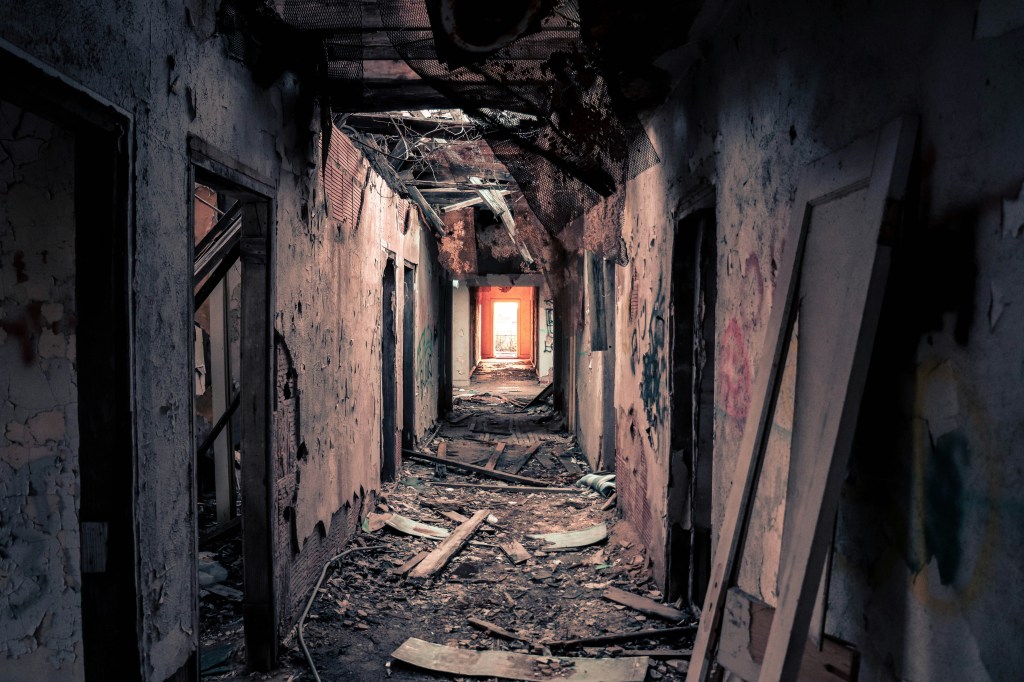
The house where you grew up

Photo by Scott Webb on Unsplash

Some “through the bible” thoughts from Luke 2.

To his parents, who had been searching for him for three days, Jesus said, “Why were you searching for me? Didn’t you know I had to be in my Father’s house?” (Luke 2:49).

Something has changed. After Passover, the family was on their way home from Jerusalem to Nazareth. But now as a young man, Jesus refers to the temple as his father’s house. He has begun to understand his unique relationship with God the Father.

All the fullness of God may have been in Christ, but he also had to grow up. Just like you and I, he learned language, customs, and a trade from his parents. On this trip to Jerusalem he began to understand that he was here for something more than carpentry.

As we grow, we continually learn what it means to be a child of God. Our perspective changes when we become parents and grandparents. Seeing the next generations helps us understand our relationship with a heavenly Father. Just like us in every way, Jesus learned what it meant to be the Son of God.

I love hearing people talk about the house where they grew up. That location occupies a treasured spot in our hearts. Jesus had two of those, a home in Nazareth and the temple in Jerusalem.

Posted in Through the Bible Devotions

Imagining the temple

Some “through the bible” thoughts from Ezekiel 40-42.

To be honest, I don’t find chapters 40-42 of Ezekiel inspiring. There’s little devotional material here.

Twenty-one years ago, as my church made plans to build a new sanctuary, the architect included a thick volume of specifications for the construction along with the blueprints. It was not inspiring either. But we had one man, retired from construction, who took them home and digested them!

However, the architect also supplied us with artist renderings of the finished building, along with a scale model to display in the entryway of the church. That was inspiring! That got everyone excited. That fueled the fund-raising which made the new building possible. Not only could we see the finished structure, but we could picture ourselves worshiping there.

So I figure that these chapters from Ezekiel helped his audience picture the restored temple when God brought them back to Jerusalem to rebuild what the Babylonians had destroyed. It was intended to inspire and excite those who would undertake that effort. They would once again be worshiping there.

A few years after, our church attempted a capital campaign to pay down debt and reduce our mortgage payment. It was a flop. No one gets excited about debt reduction.

But a building program? Everyone loves that! Maybe Ezekiel’s description encouraged the hearts and minds of the exiles waiting to go home.

Posted in Through the Bible Devotions

Alone

Photo by Jamison Riley on Unsplash

Some “through the bible” thoughts from Lamentations 1.

“How lonely sits the city
    that was full of people!” (Lamentations 1:1)

Left behind after most of the people have been taken into exile, Jeremiah sees a deserted Jerusalem.

It must have looked like a once vibrant shopping mall that sits empty as people shop online or on the streets of trendy town centers. It was as deserted as my evacuated county when wildfires raced towards our homes. It was as empty as a closed Wally World when Clark Griswold and his family arrive in “National Lampoon’s Vacation.” Or like the church when everyone stayed home because of Covid-19.

When someone dies, family and friends gather to mourn, comfort, and support their loved ones. When they leave, and you’re alone, the house feels especially empty. It’s so quiet. Your voice echoes. You’re never felt so alone.

Jeremiah knew it would happen. In distress he groans, “You have brought the day you announced” (1:21). But he didn’t know his stomach would church and heart would be faint as he witnessed the faithful justice of the holy God.

Posted in Through the Bible Devotions

Severe consequences

Photo by Gene Gallin on Unsplash

A “through the bible” devotion from Ezra 6.

In anger, a parent might threaten their child, “If you do that again, you’ll be grounded for life!” Everyone knows that’s not going to happen. Young people might lament, “My parents are going to kill me!” But that never happened to any of my friends, even the ones who were always getting into trouble.

The bible includes examples of extreme justice. Like the decrees in Daniel to throw offenders into a fiery furnace or a den of lions. Those monarchs were serious. They really did it.

In the book of Ezra, when the Jews who have returned from exile are trying to rebuild the temple, the locals do their best to shut down the project. The matter ends up in front of King Darius, who searches the royal archives for a solution to the conflict. He discovers that Cyrus had decreed the house of God to be rebuilt in Jerusalem. All costs would be paid from the royal treasury.

Darius reissues the decree, prescribing severe consequences for any who fail to abide by it. “If anyone alters this edict, a beam shall be pulled out of his house, and he shall be impaled on it, and his house shall be made a dunghill” (Ezra 6:11). End of discussion.

There is no biblical record of anyone punished in this way. Maybe that’s because they knew from history that those kings were serious. These royal decrees insured everyone followed orders.

But would you turn in a neighbor who was interfering with the rebuilding of the temple if meant you’d end up with a dunghill in the lot next to yours. I know I wouldn’t.

Anyway, the project was completed on time. The Jews finished the reconstruction of the temple and worship was restored in post-exilic Jerusalem.

Posted in Jesus

Palm Sunday thoughts

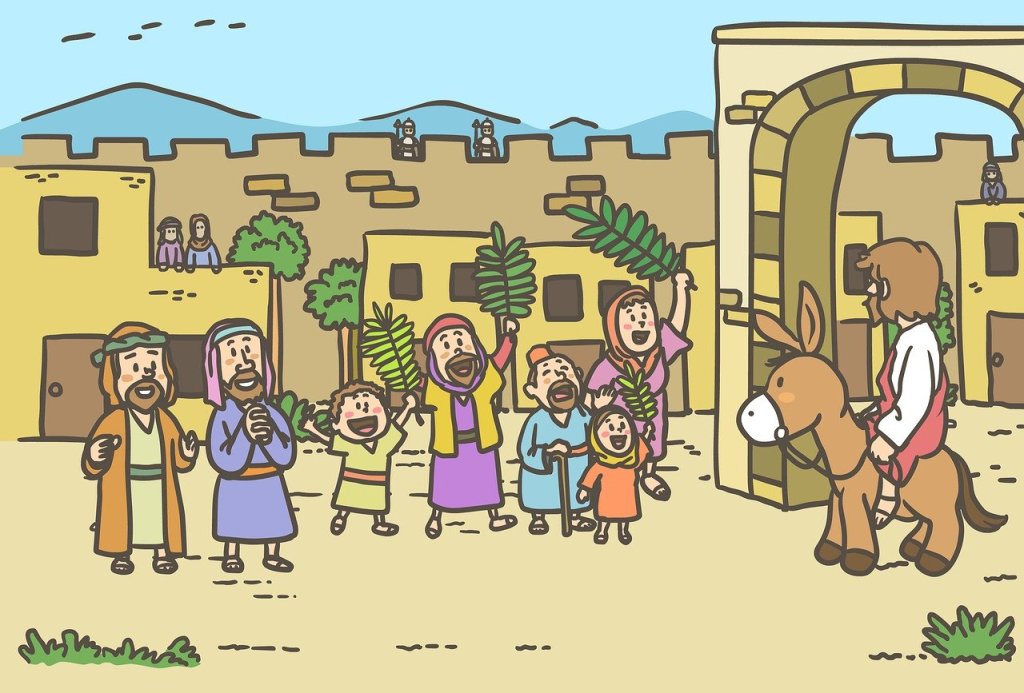
Image by Travel2h from Pixabay

Today is Palm Sunday, and I thought I’d just take a few minutes to reflect on the prophecy Jesus fulfilled when he rode into Jerusalem, setting into motion the events of Holy Week.

Rejoice greatly, O daughter of Zion!
     Shout aloud, O daughter of Jerusalem!
Behold, your king is coming to you;
     righteous and having salvation is he,
humble and mounted on a donkey,
     on a colt, the foal of a donkey. (Zechariah 9:9)

He comes.

Woody Allen once said that 80 percent of success in life is just showing up.

My five-year-old grandson just finished up his first season of recreation league basketball. At this level, it’s just taking turns running the ball up the court to take a shot at a six-foot high basket. Every player did the same thing after they took a shot. They looked and smiled at mom and dad in the stands. It didn’t matter whether they made the shot or missed completely, the most important thing was the presence of their parents.

While I was a pastor, I did my best to see anyone in the congregation before their surgery. That meant a lot of early morning drives to hospitals. The twenty-second prayer before prep was important. But so was being there.

One amazing thing about our God is that he shows up. He’s walking in the garden when Adam and Eve are hiding in the bushes. He wrestles with Jacob. He talks to Moses from a burning bush.

And he shows up in Jerusalem just as the prophet said he would. He comes “righteous and having salvation,” that is, he’s here to rescue us. To save the day. To be our hero. To score the winning goal in overtime. Go with whatever image works for you.

Jesus knows that showing up like this will stir up the opposition that will lead to his betrayal, arrest, denial, conviction, and execution. But that’s why he shows up. He comes to give his life as a ransom for many. He shows up to save.

He comes as king.

No one has to tell the Palm Sunday crowd what is going on here. They’ve been waiting for over four hundred years for the words of Zechariah to come to life. When they see Jesus riding into town they shout, “Hosanna to the Son of David! Blessed is the coming kingdom of our father David! Blessed is the king who comes in the name of the Lord!” (Matthew 21:9; Mark 11:10; Luke 19:38)

For the people, it’s as much politics as it is religion. Roman rule will end once their rightful king assumes the throne. God promised that a descendant of David would be that rightful king. It looks like that moment has come!

Kings capture our imagination. The lion is the king of the jungle. Roger Miller sings about being “King of the Road.” The cowardly lion dreams about being king of the forest. Godzilla is king of the monsters. King Kong Bundy was a four-hundred fifty pound professional wrestler. Kids wrestle around to see who is “king of the hill.”

But I think we have a hard time thinking of Jesus as our king. We like to vote for our leaders. We like a government with checks and balances. We like term limits. We like the possibility of growing up to be king someday.

Sorry, you don’t get any of those things with a king. You don’t get any of that with Jesus. In fact, you don’t get much at all when Jesus rides into Jerusalem.

He comes with humility.

Rather than enjoying all the trappings of divinity, Jesus empties himself. He becomes a servant. He humbles himself and becomes obedient to the point of death (Philippians 2:6-8).

When Jesus pulls up to the gates of Jerusalem, he’s not flexing his muscles. And if anyone has impressive guns, it’s Jesus. He shushes the storm, parts the seas, and walks on the water. But today, he rides on a donkey. He’s undefeated against every challenger, from demons to disease and even death. But now he will submit to the spiritual powers of evil in the world.

Sometimes we think of Jesus’s entrance into Jerusalem as a biblical ticker-tape parade. But such parades follow victories and championships. This procession is a prelude to being despised and rejected, pierced and crushed, wounded and slaughtered (Isaiah 53:3-7).

It’s kind of like watching a movie in which the good guy doesn’t realize there’s a explosives or kryptonite or spiders behind a door. We want to yell, “Don’t go in there! It’s a trap!” But of course, they can’t hear us.

I know the story really well. Judas is going to sell you out, Jesus. The religious leaders want to kill you. The crowd is going to choose Barabbas. The disciples are all going to run away. They are going to treat you like a criminal.

Jesus knows the story, too. In fact, you could say he is the story, from beginning to end. But it’s not all about him. He makes it about us. He comes to be one of us, so we’ll never have to be away from him.

Posted in Israel

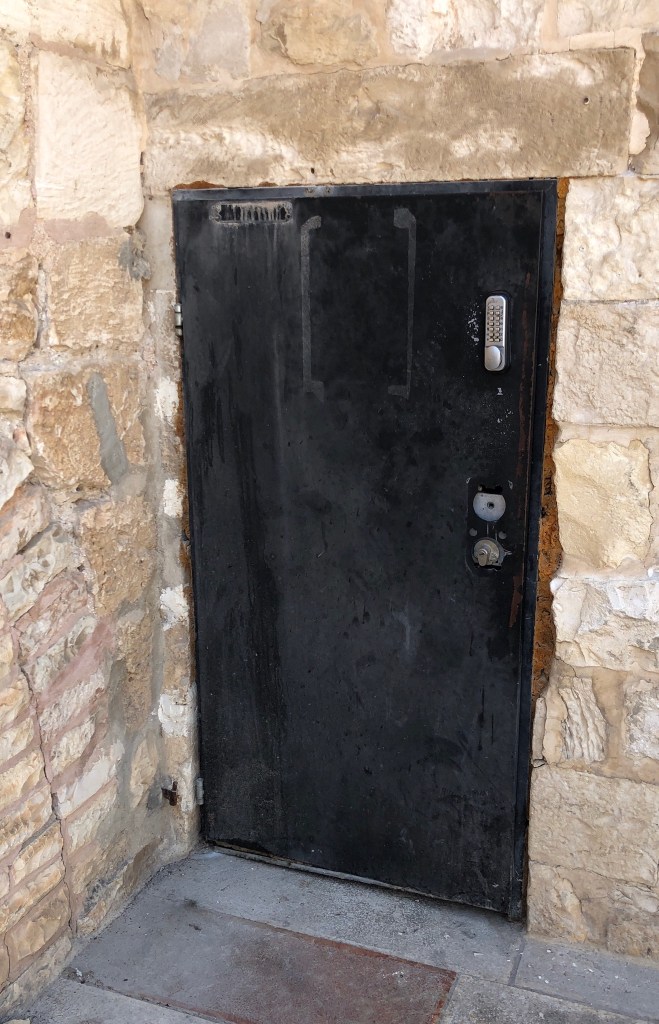
What’s behind that door?

This door in Jerusalem fascinated me. I believe the door was cut into this mix of older and newer stones after these walls were built. The original handle must have been replaced by a key lock and later by a fourteen- button keypad. There were some signs on that door at one time, too. I have no way of knowing, but I can’t help wondering, “What was behind that door?” In hindsight, I could have knocked. Who would have answered? Or I could have tugged on the handle. Maybe someone left it open. I didn’t. I wasn’t feeling that brave that day.

Judging by it’s location on mu photo roll, it was on the way to or from the upper room of the last supper, a well-traveled route through the city. It’s got a lot of wear and tear, used by many over the years.

  • It could be as simple as the entrance to a residence. Just as in St. Augustine, FL, many live right where thousands of tourists explore historic streets and alleys. There’s no peephole, though. If you were leaving you might just open that door right into the face of someone like me who stopped to take a picture. Ouch.
  • Maybe it’s a plain, almost unnoticeable private entrance for after-hours entertainment. One that required a secret knock and/or code for admission. No one would know it was there unless you were told.
  • Some kind of storage closet? A place to keep brooms and cleaning supplies, signs and banners for special celebrations, trash cans and traffic cones? I really hope it’s something more exciting than that.
  • It could open to a flight of steps down below the street level. The streets of Jerusalem are built layer upon layer of history. The steps might lead to underground tunnels and passageways that can take you to different parts of the city. Or the steps might lead up, onto the rooftops. From there you could look down upon the streets, or move from one building to the next.
  • Or an elevator. I doubt it, but you never know. Someone might have had to install one after the fact.
  • What a surprise it would be to open that door and discover…a brick wall! A passageway that had been sealed up. But what – or who – was behind that wall? And how long had they been there?

Maybe someone will see this picture and tell me what it really leads to.

Posted in Israel, prayer

Expressing your faith

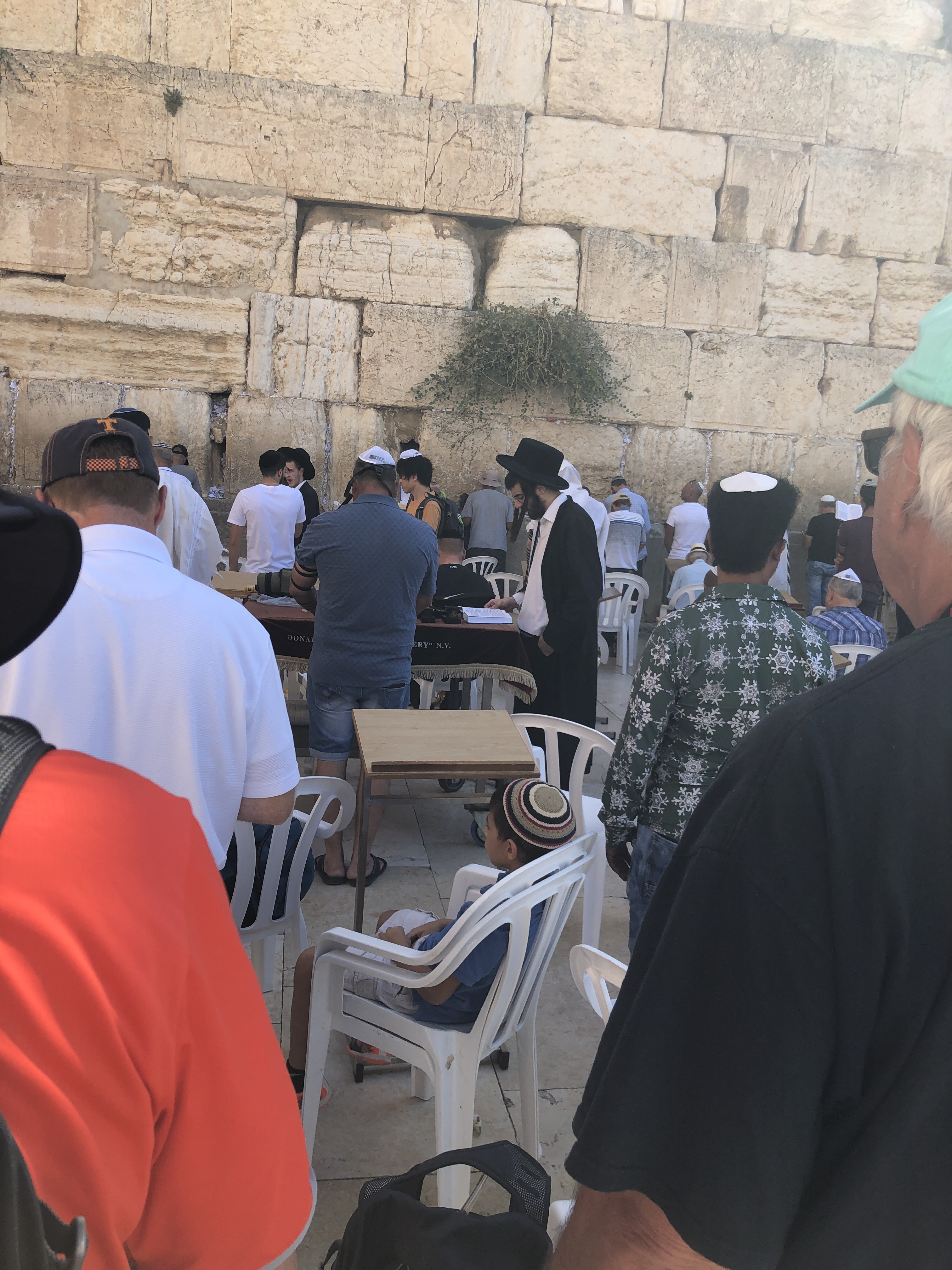
One of the places we really enjoyed visiting recently in Jerusalem was the Western wall of the temple. As i am sure it is everyday, the space in front of the wall was filled with people praying. Many were Hasidic Jews. Some were bowing in rhythm. Some were bowed over prayer books, prayer shawls over their heads. Some were leaning against the wall. Many tried to find some microscopic niche in which to slip a tiny slip of paper filled with prayers.

And no one blinked an eye. Business as usual. Overt expressions of worship and devotion from any and every religious tradition were simply business as usual.

My wife commented, “If we did this back home, everyone would think we were strange.” How true. Even though we live in a nation of unprecedented religious freedom, we are pressured to keep the expression of our faith to ourselves. We might get away with bowing our heads over a meal at a restaurant. Or a fish magnet on a car. Perhaps some religious jewelry. Just don’t get carried away.

On the streets of Jerusalem Muslims roll our their prayer mats in public at the call the prayer. Many businesses shut down for Sabbath. Souvenir vendors and art dealers blatantly cater to Christian tourists. Orthodox Christians, Hasidic Jews, and many in Islamic garb walk the streets together in plain sight. They live, worship and work together, free to express their faith.

Interesting.

Posted in Israel, Travel

Mahane Yehuda Market

Our last day in Israel was the “go do whatever you want day.” My wife and I and a few friends decided we wanted to return to the Jewish quarter of Old City Jerusalem and then check out the highly recommended market, Mahane Yehuda.

When we started out, we didn’t even know the name of the market. But a shop owner said, “You are probably looking for Mahane Yehuda” and he wrote down the name for us. Great. Now, how do we get there? “Oh, it’s easy. You have to go deep into the Arab market, out the Jaffa gate, and head towards Jaffa road and St. George.” We thanked him as if we knew what that meant, and headed towards the Jaffa gate, where our taxi had dropped us off early that morning.

We got to the Jaffa gate. Now what? Aha, there’s a tourist center here. He sent us out the gate and up the hill to where we could catch the tram, a light rail train that would take us to the market. We saw the tracks in the road, and waited for the next train to come so we could see where the stop was. Once we got to the stop, it looked like we would need to buy a ticket. Not quite sure how to do that, a random guy simply directed us to a machine that had an English option. As I fiddled with the buttons and my debit card, a train came and left. Finally the machine spit out five tickets for us, and we boarded the next one.

I think this is the first time my wife and I have set out to explore a city on our own without a translator or guide with us. I really enjoyed the adventure! As we were told, everyone we asked for direction was extremely gracious and helpful.

Sitting on the train, I looked up and saw a sign announcing the next stop – in Hebrew. I can figure out some Hebrew, but now quickly. Before I knew it the announcement changed to Arabic. Not helpful. Finally came the English. We reached the stop specially designed to bring traffic to the market, and started down the street.

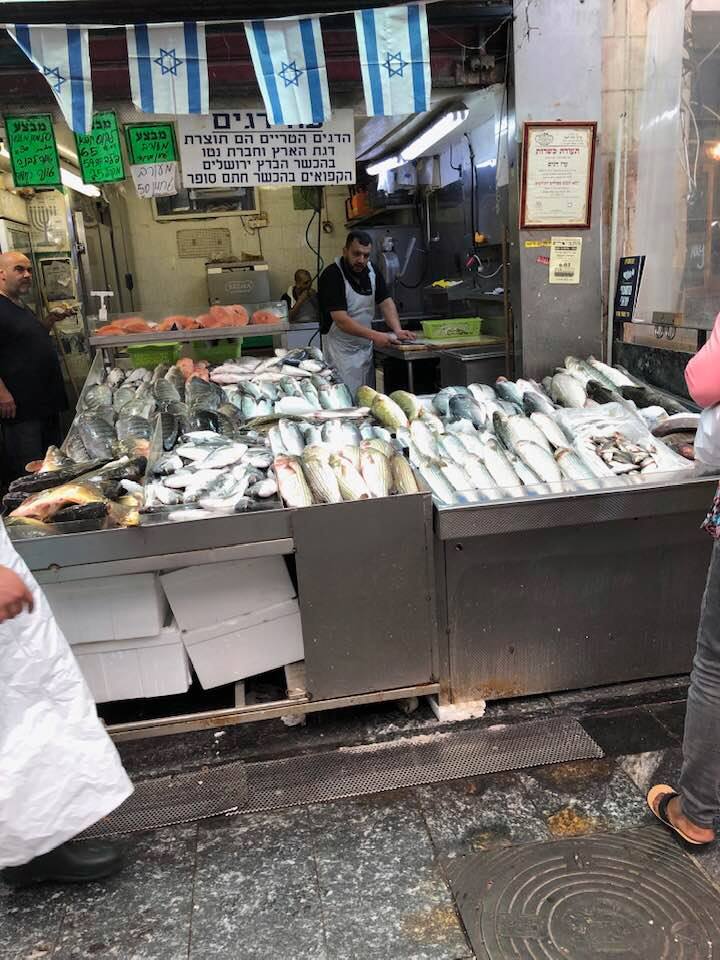
There is a lot of information on Mahane Yehuda Market on Wikipedia. Over two hundred and fifty vendors lined the streets, some out in the open, some under cover. There were fruits and vegetables, fish and meat, bread, halva, baklava, coffee shops, spiced and dried fruit, olives, and candy as far as my eye could see.

Turning into one of the covered areas, we came across Haachim Levy spices, teas and fruits. The young man working the booth enthusiastically described and let us try many of the blends of dried fruits out front that could be used to make tea, infuse drinks, or mixed into oatmeal. We bought three sweet and one savory blend from him.

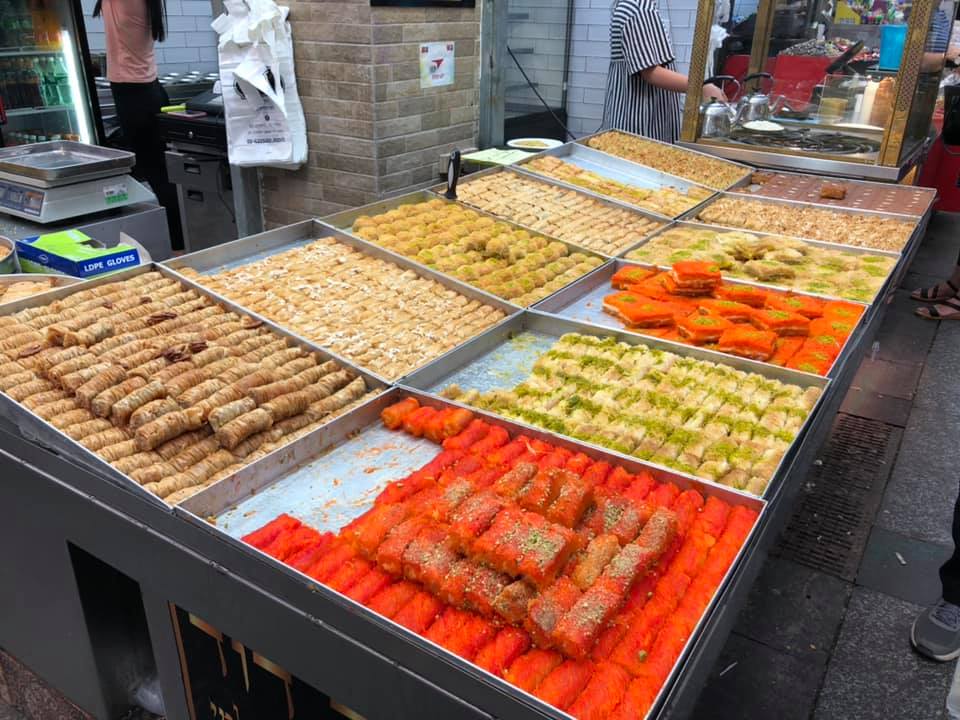
Baklava, anyone?

We asked him where to get the best baklava and coffee in the market. With booth after booth selling those items, we wanted a recommendation. He directed our eyes down the long row of booths past several signs his favorite coffee roaster. “Just past that you’ll see an old man – that’s where you want to buy your baklava.” At the coffee roaster, I got a delicious long espresso made from a Tanzanian blend. Sure enough, just a few booths down we found a huge display of baklava. We loaded up a box with one of each that was sealed up so we could take it home with us.

As we continued to walk through the market, I couldn’t help but wonder how many in Jerusalem did their food shopping here. Throughout all our travels, we hand’t seen any grocery stores or Walmarts in Jerusalem. Maybe we just didn’t go through those parts of town. After a little research, I learned that there are some grocery chains there. But most people talk about the markets.

The experience reminded me of the markets in Baltimore when my wife and I lived there. The best thing is you buy everything fresh! I suppose after a while you would have your favorite vendors and be able to get exactly what you wanted in season and for special events. I could get used to a great selection of fish, meats and vegetables. I am too often disappointed with the grocery stores near me.

One cool thing about the market is that you get to talk to the person working the shop. Everyone was very proud of their booth and products, encouraged me to try samples, and loved to talk about their product, their family and the market. The few farmer’s markets near us give us a bit of that, but it just wasn’t the same.

I think I could have spent the whole day there!

Posted in Israel, Travel

Israel (Day 7)

Dome of the Rock

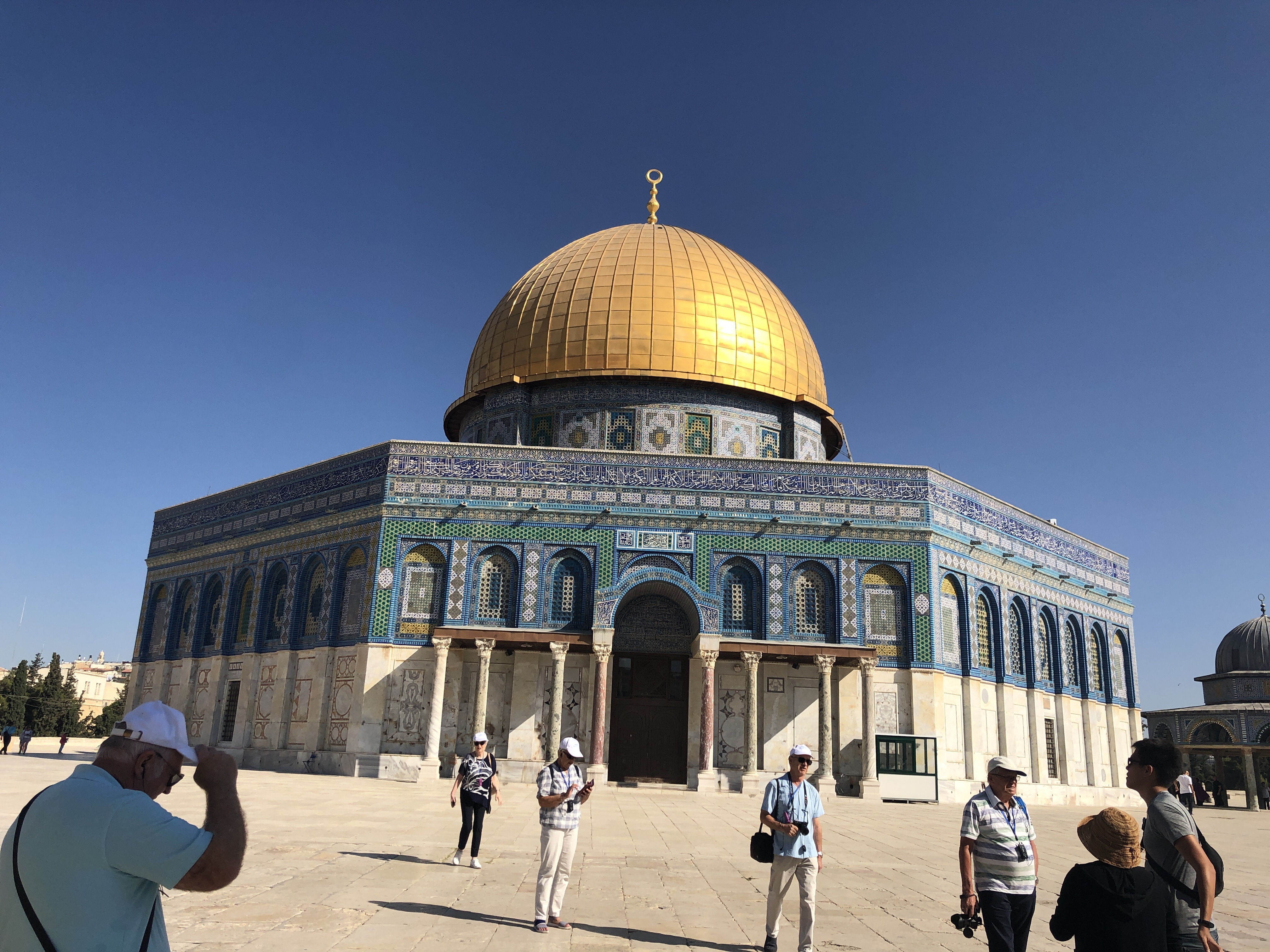
We really covered a lot of ground today. Our group left the hotel about 8 am. Our first stop was Temple Mount. The security line was short and the crowds were few, but we also couldn’t go inside due to remodeling work being done today. Even so, the Dome of the Rock was beautiful under clear blue skies.

At the Western wall

We next headed to the Western wall of Herod’s temple to join many others in prayer. I went to the left with the men, while the women went to the right. The crowd was still small when we arrived.

I watched with interest as many sang psalms and said prayers while others place their carefully written prayers into the cracks in the wall.

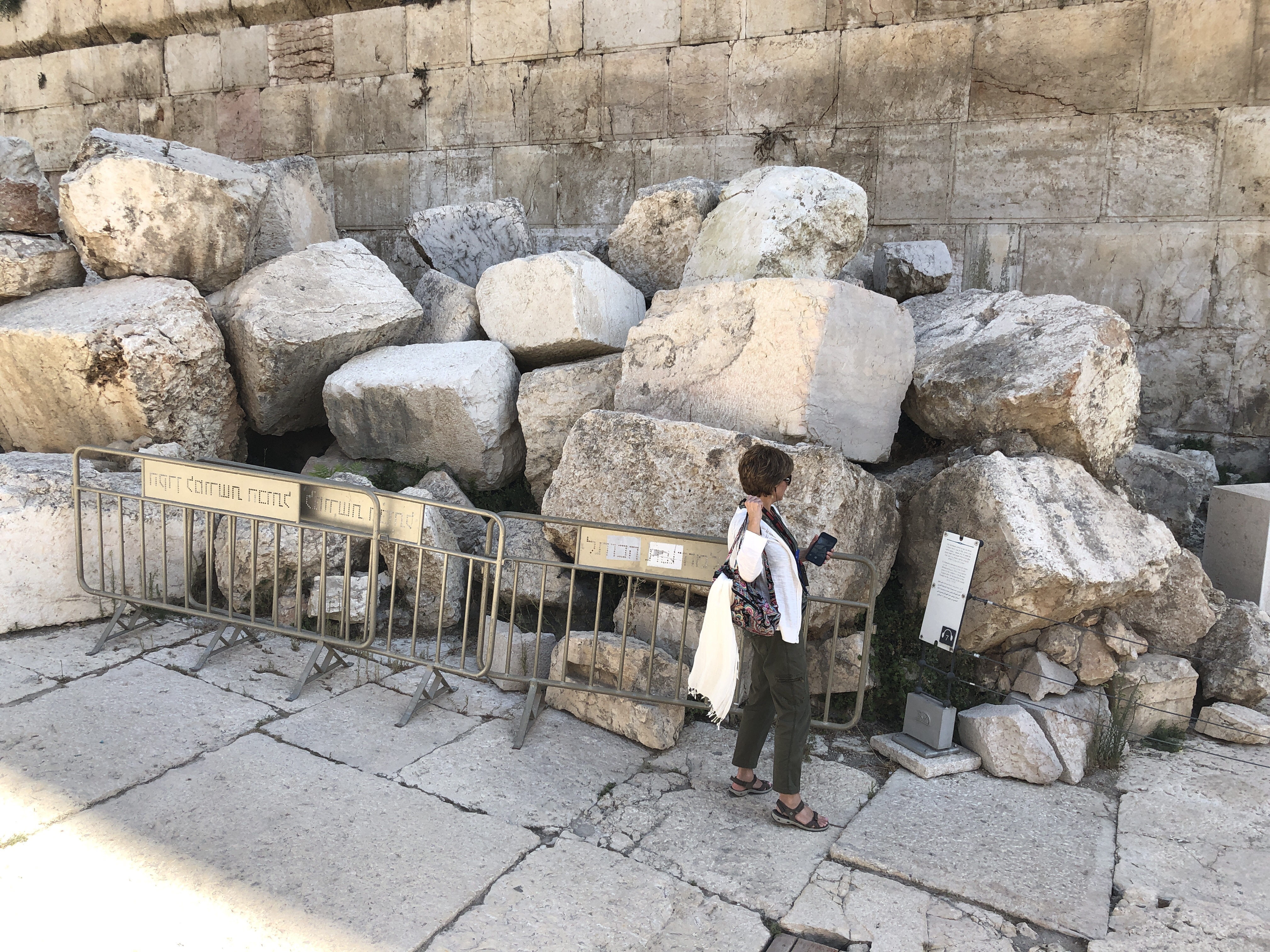
We walked further down the western side of the wall and marveled at the size of the stones used to build the wall over 2,000 years ago.
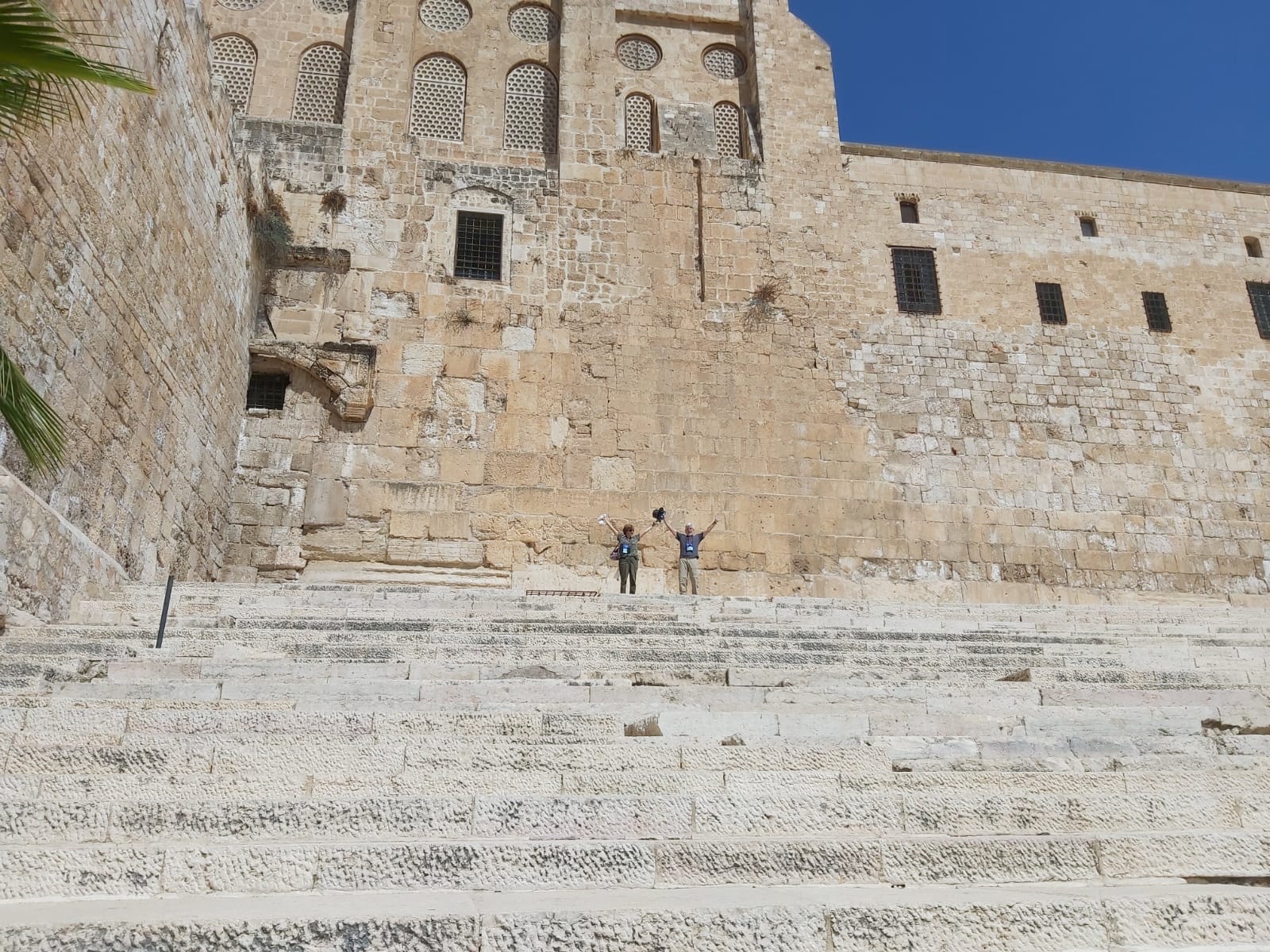
Rounding the corner, my wife and I ran up the southern steps as had many pilgrims before us. The steps are different widths, to keep folks from running too fast.

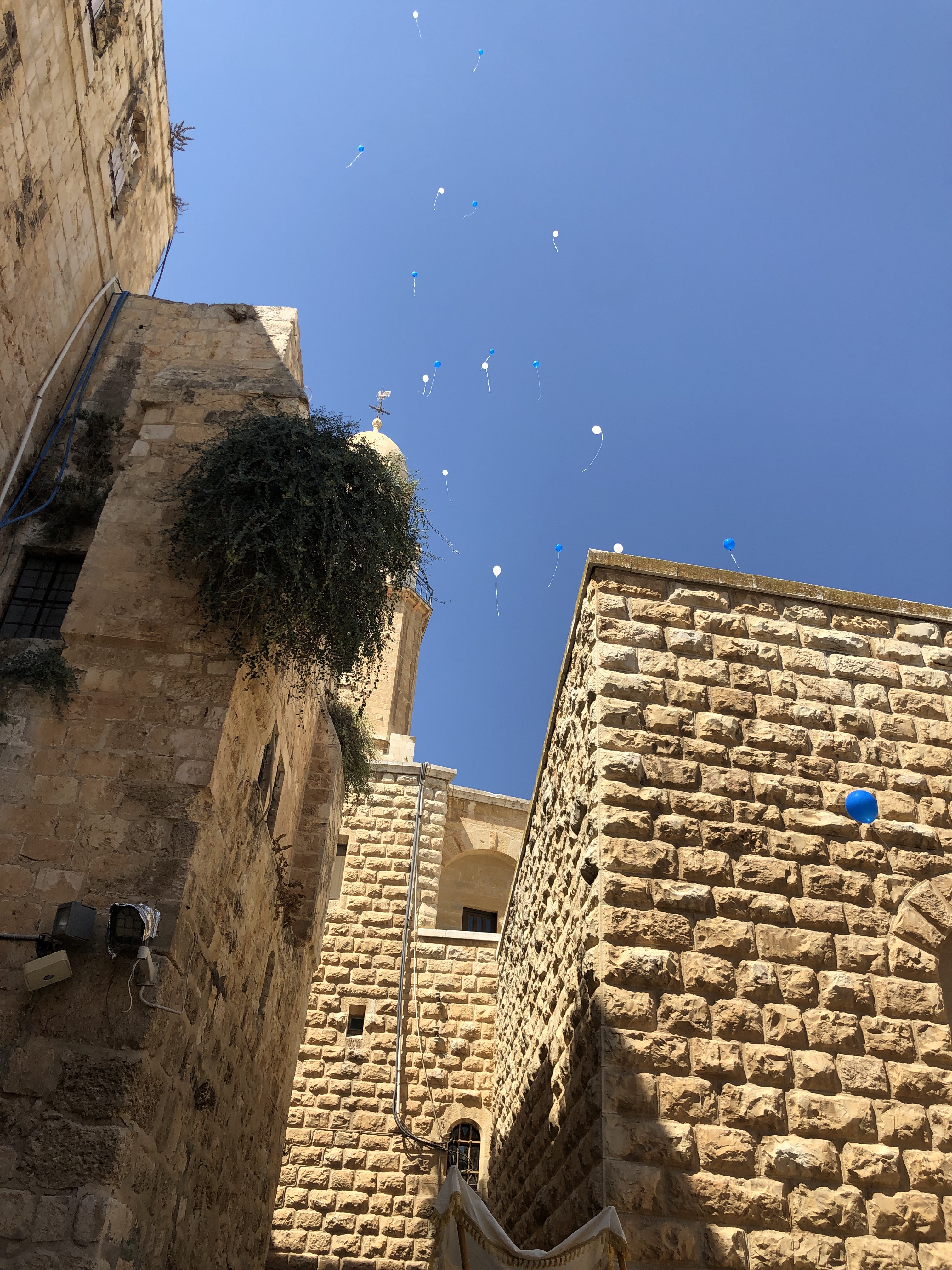
On the way to King David’s tomb, we ran into a special Jewish family celebration. A little three-year old boy was about to get his first haircut! He didn’t seem too happy about it, but the family and many bystanders joined in songs, cheering, and a blue and white balloon release.

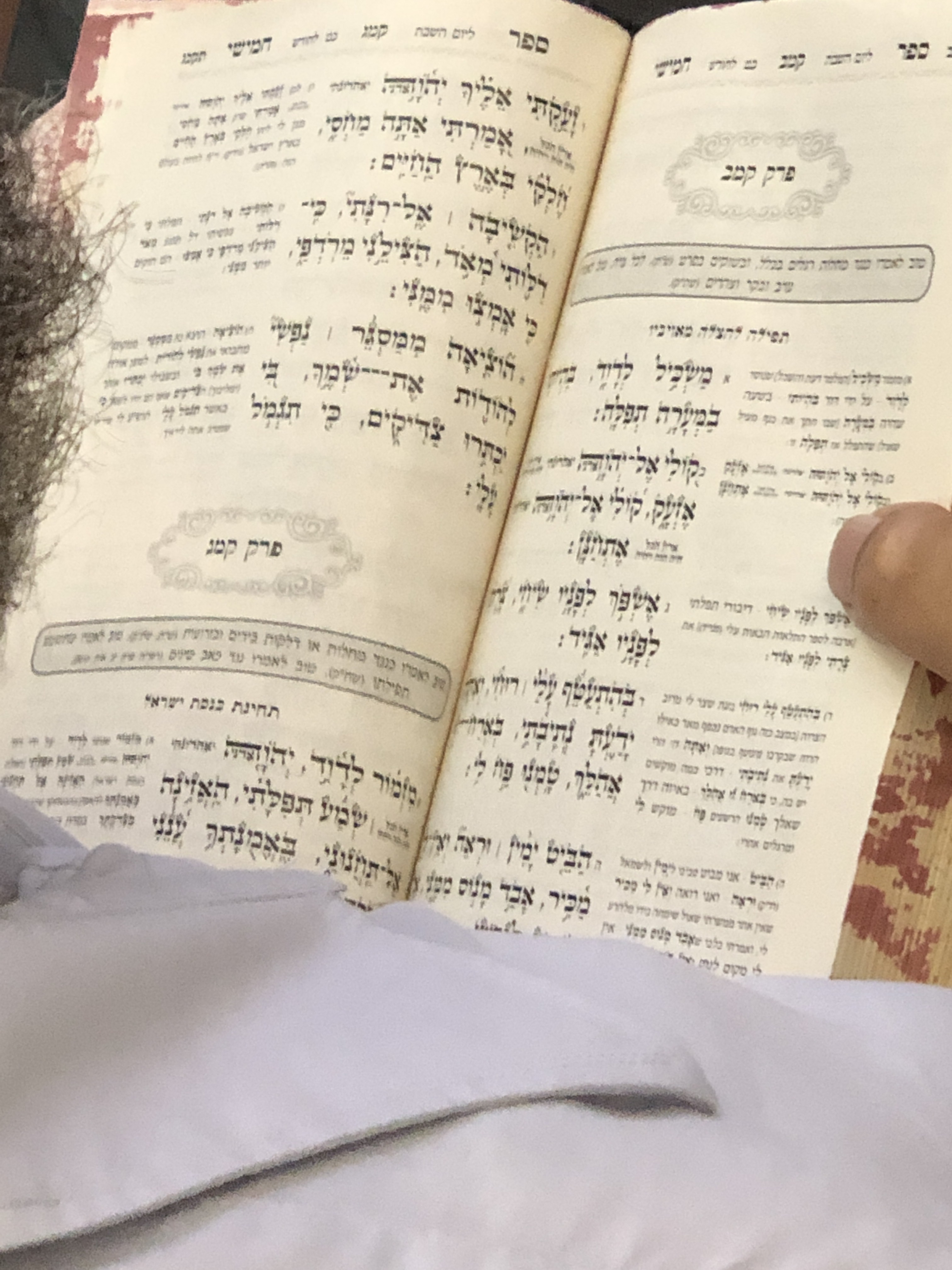
Even though King David probably isn’t buried there, I was fascinated by the location of his tomb. Men and women entered on separate sides. Chairs were filled with men praying and reading psalms. I appreciated the reverent atmosphere of that room.
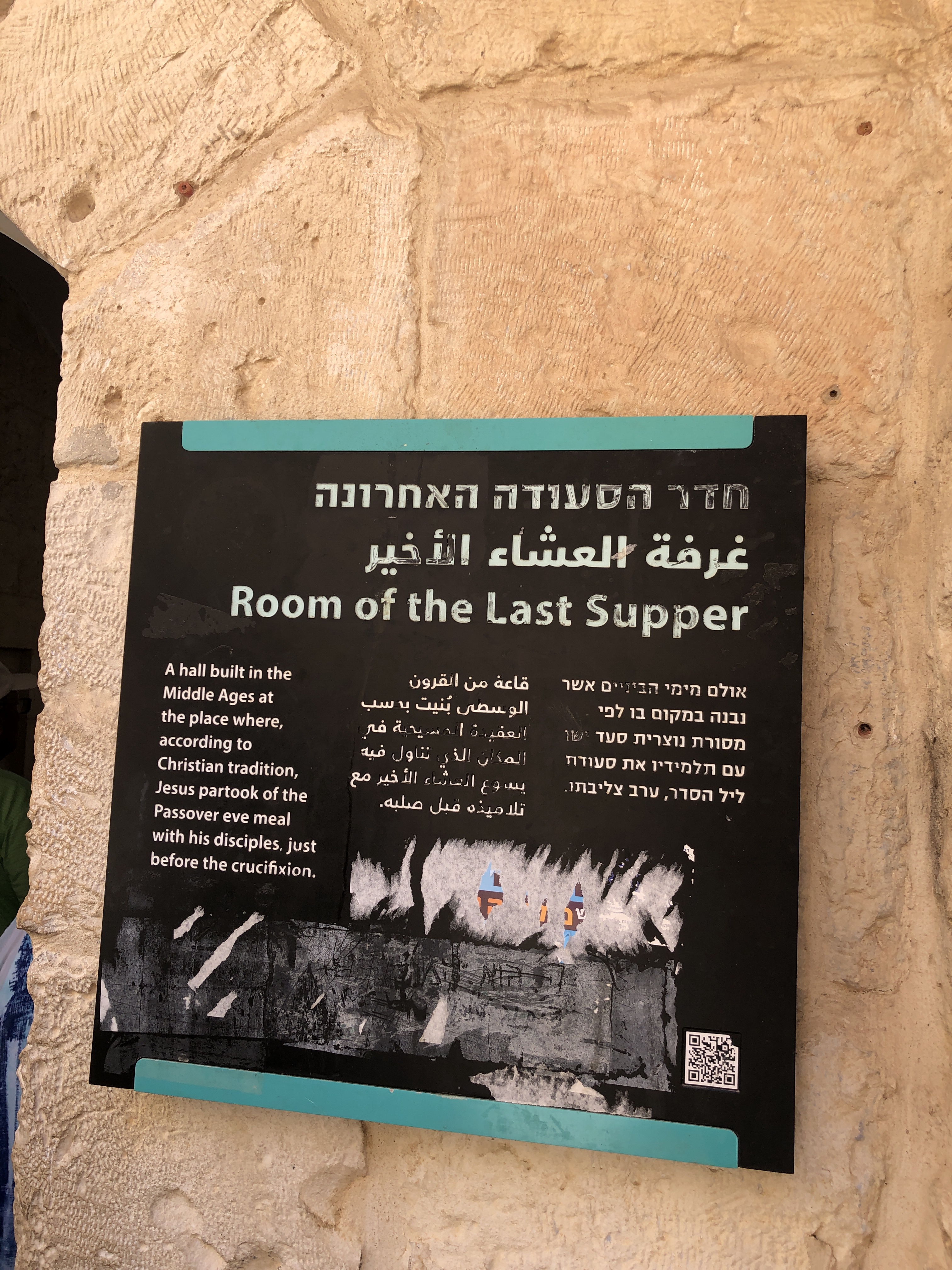
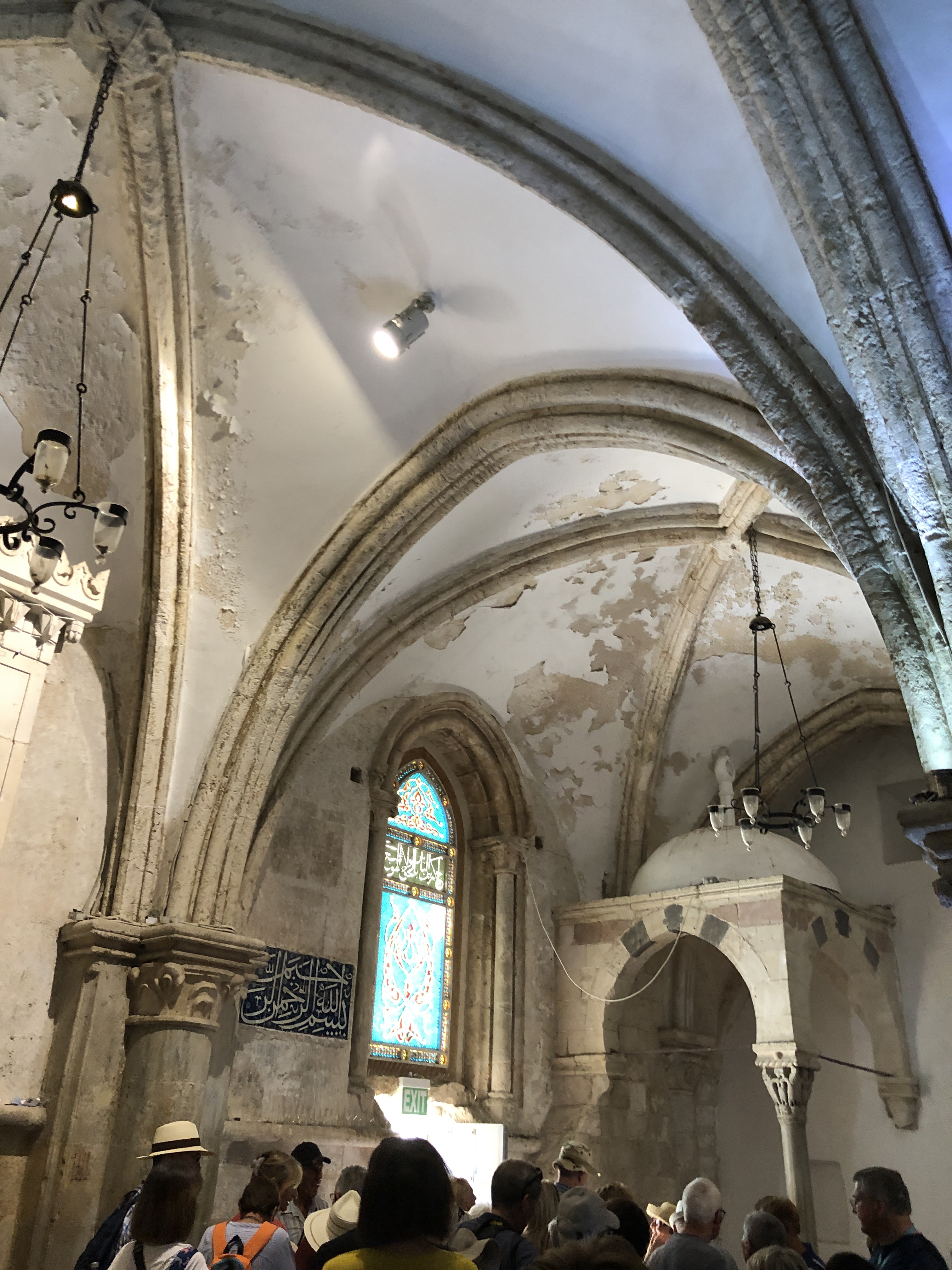
The upper room we visited probably wasn’t the site of Jesus’ Passover meal with his disciples, but we went to that place as well. More Muslim than Christian in design, it was much larger than I would have expected it to be.
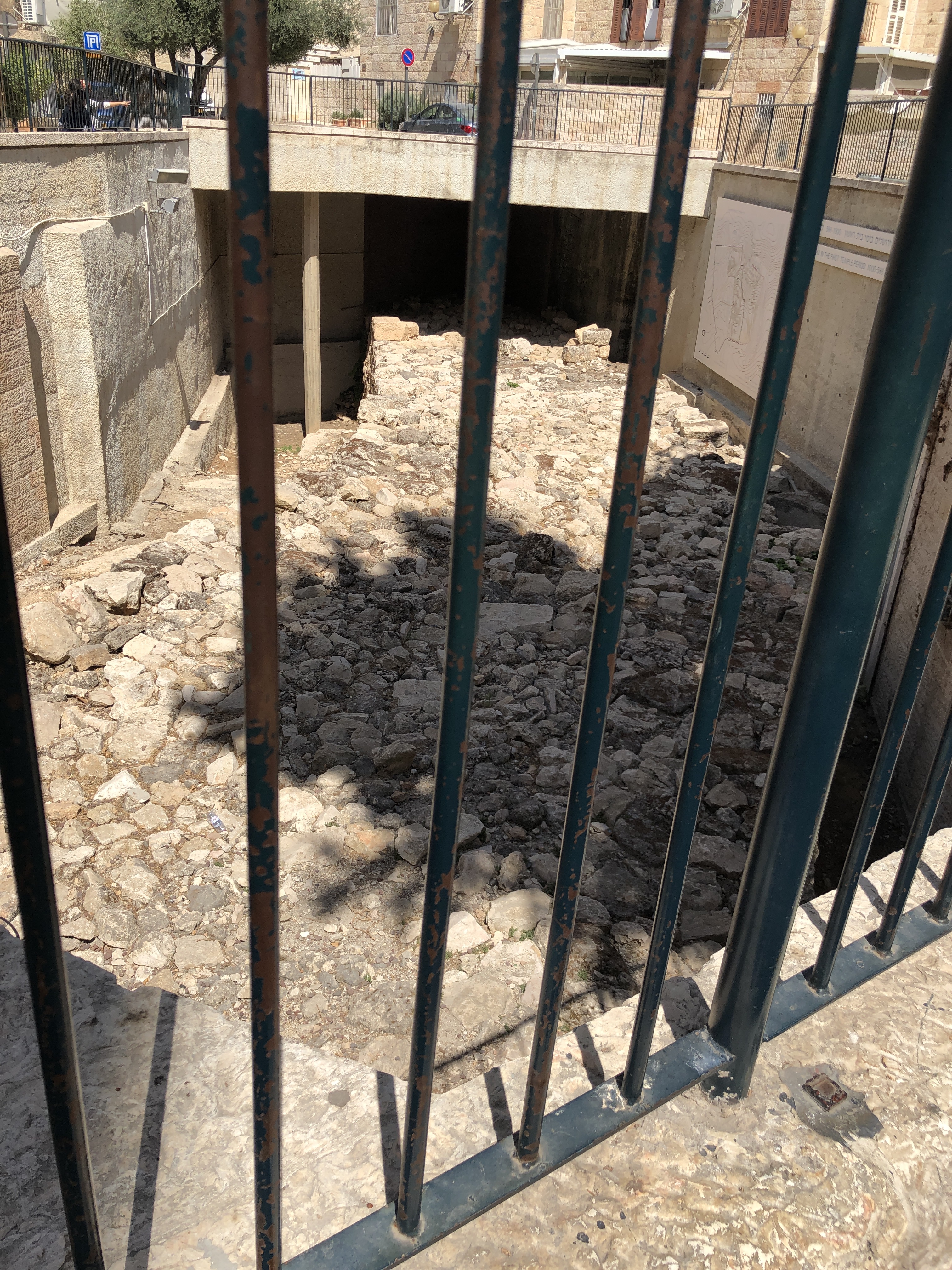
As we walked through the Jewish quarter, we paused to look at some of the old wall of Jerusalem, from the time of Solomon. There isn’t much from the first temple period, so I appreciated this ancient site.

Caiaphas’ house is where Jesus was taken after his arrest in the Garden of Gethsemane and where Peter denied knowing Jesus three times. The house include some deep pits where Jesus May have been held prisoner before his trial. I read Psalm 88 to our group, and we thought about the only One we can cry out to for help when we’re “in the pit.”

Golgotha

Waiting to go into the tomb

Inside the tomb

The very last place on our tour was Golgotha and the Garden Tomb. This place was simple and was more like a place where Jesus could have been crucified, buried and the resurrected. We met for communion and a chorus of “Jesus Christ is Risen Today” before we rode back to our hotel.

Tomorrow is a free day. I think we’re going to go back and wander around the Old City again, and spend some time at the market.