Posted in Through the Bible Devotions

Moving from doing to being

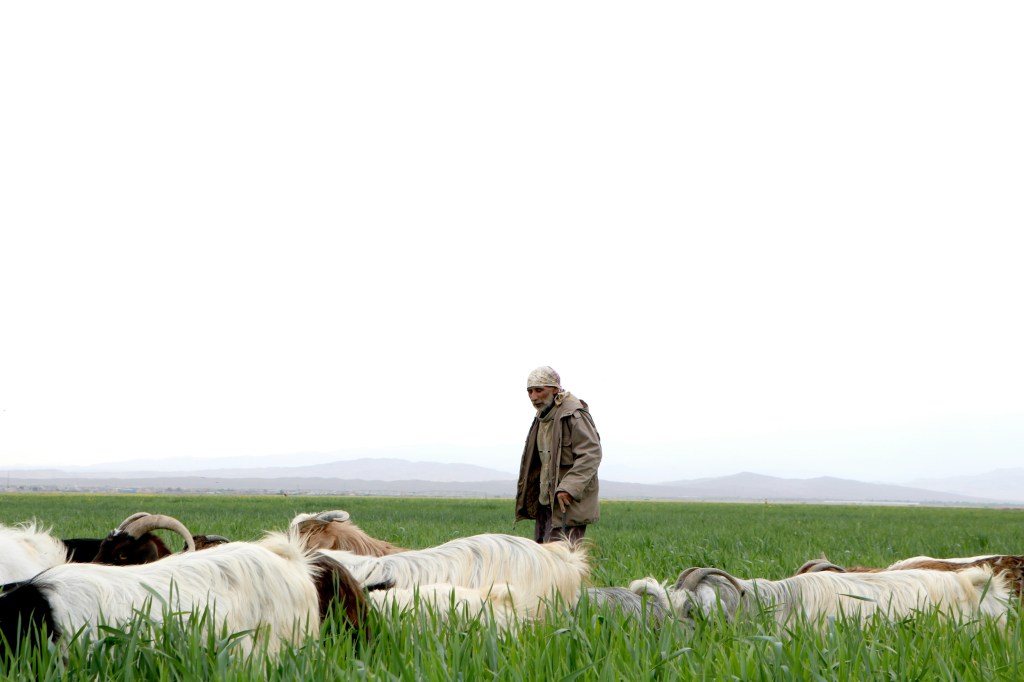
Photo by Miguel Bruna on Unsplash

A “through the bible” devotion from Psalm 50.

When something goes wrong, the first thing we ask ourselves is, “What do I need to do?”

The AC’s not cooling the house. The car engine is making an unusual noise. A patch of grass in the yard is dead. An electrical outlet in the house isn’t working. There’s always something to fix.

In Psalm 50, God’s not looking for more ritual. He’s concerned about the relationship. He doesn’t need more sacrifices. The people offer up plenty of those. Instead,

Offer to God a sacrifice of thanksgiving,
    and perform your vows to the Most High,
and call upon me in the day of trouble;
    I will deliver you, and you shall glorify me.

Rituals have a way of making us feel like we’ve done enough. Receiving God’s gifts with gratitude, faithfulness, and trust reminds us that’s he’s done enough. Here the psalmist helps us move from “what do you want me to do?” to “who do you want me to be?”

Posted in Through the Bible Devotions

You’re forgiven. Now what?

Photo by CDC on Unsplash

A “through the bible” devotion from Psalm 32.

Blessed is the one whose transgression is forgiven,
    whose sin is covered.
Blessed is the man against whom the Lord counts no iniquity (Psalm 32:1,2)

I acknowledged my sin to you,
    and I did not cover my iniquity;
I said, “I will confess my transgressions to the Lord,”
    and you forgave the iniquity of my sin. (32:5)

Forgiveness is an amazing thing. Life is good without shame, regret, and guilt hanging over your head. By the grace of God, all that is off the table when we’re forgiven.

Now what?

Your transgression is forgiven, your sin is covered, and the Lord doesn’t count any iniquity against you. What’s next?

In Psalm 32, David takes us to the next step.

I will instruct you and teach you in the way you should go;
    I will counsel you with my eye upon you. (32:8)

We learn a lot from our mistakes. We resolve, “I’m not going to do that again,” “I’m going to think before I speak,” “I’m not going there anymore.” But we will. We’ll drift back into old habits, let our words fly, and make the same stupid mistakes.

I’m grateful for God’s instruction and teaching. I’m thankful he’s keeping an eye on me, to counsel me, and lead me in the way of life. A lot of things look good that really aren’t good for me. His scriptural guidance is always for my benefit and blessing.

Forgiven? Yes! Now go back to class.

Posted in Through the Bible Devotions

It’s okay to ask for help

Photo by youssef naddam on Unsplash

A “through the bible” devotion from Psalm 31.

How many times have you not asked for help or accepted an offer of help?

I’ll go first. Too many times. More than I want to admit. Far more often than I should.

“Can I help?” “No, I’ve got it.”

“Need any help?” “Not right now.”

“Here, let me help you.” “I’m okay.”

The world is filled with people who are entirely self-sufficient and more than willing to help in any situation. Which means we’re paralyzed. We all want to help, but there is no one who needs our help. Everyone is doing just fine.

David never hesitates to cry out for help in the psalms.

Incline your ear to me;
    rescue me speedily!
Be a rock of refuge for me,
    a strong fortress to save me! (Psalm 31:2)

Be gracious to me, O Lord, for I am in distress;
    my eye is wasted from grief;
    my soul and my body also. (v9)

Make your face shine on your servant;
    save me in your steadfast love! (v16)

David is a trained soldier. He’s got victories over lions, bears, Goliath and ten of thousands of Philistines under his belt. He’s definitely a number one draft pick.

And yet he cries out to God for help. He’s under attack, experiencing grief, and in distress. I believe one lesson we ought to learn from the psalms is to never, ever, be ashamed to ask for or accept help.

I know, in a culture that admires strength, independence, and fortitude, we don’t want to look weak. We don’t want to appear helpless. We want to be an asset, not a liability. We want to contribute, not be a drain on resources. We want to be strong, not weak.

Guess what? You are dependent, weak, and a liability. We all are, whether we admit it or not. We need the Lord. We need each other. We need help.

Those truths are the first step towards truly depending on, trusting in, and worshiping God. It’s good news. I don’t have to have it all together. He does.

Posted in Through the Bible Devotions

Another look at the most familiar psalm

Photo by hani Pirzadian on Unsplash

A “through the bible” devotion from Psalm 23.

Here’s a few reflections on what may be the most well-known chapter of the bible.

“The Lord is my shepherd.” In an ancient culture, the job of shepherd was considered the lowest of occupations. It was the bottom rung, similar to an entry level position in the mailroom of a large corporation

That’s the job the Creator chooses to identify with. He chooses the minimum wage position in a world where everyone is scrambling to get ahead.

“I shall not want.” That could be confidence in God’s provision. Or it could be a choice, to be content with what God has provided. It’s not easy to put coveting aside in a world that continually markets new products.

“He restores my soul.” Soul restoration isn’t easy. It’s not just feeling better about yourself or about life. It’s about confession, repentance, and forgiveness. A restored soul is one drenched in God’s grace, covered in Christ’s blood, and restored to wholeness.

“For his name’s sake.” He doesn’t do this because of your performance or potential. He does it purely out of Fatherly goodness and mercy without any merit or worthiness in you or me.

“Through the valley of the shadow of death.” Death is not a destination. It’s just part of the journey. It’s not the end of the road. By the grace of God, it’s the doorway to life.

“I will fear no evil.” Evil will always be present. Fear will not be, not when we know the one who is with us.

“Your rod and your staff.” These are the weapons of the shepherd. They ward off predators. They also discipline us sheep when we get off the path.

“Goodness and mercy shall follow me.” The shepherd leads us, but his goodness and mercy bring up the rear, too.

“I shall dwell in the house of the Lord forever.” That’s our home. There’s a place for us.

No matter how many times I read this psalm, there’s always something new to meditate on.

Posted in Through the Bible Devotions

Facial recognition

Photo by cottonbro studio: https://www.pexels.com

You have said, “Seek my face.”
My heart says to you,
    “Your face, Lord, do I seek.” (Psalm 27:8)

As a newborn’s eyes begin to develop, he or she will seek out the face of a mother or father. Their eyes will fix on your eyes. It’s is an amazing moment when our eyes meet for the first time, and we both smile.

I’ve been going to a lot of my grandson’s basketball games lately. I love it when one of the players gets the ball and looks into the stands to see if mom and dad are watching. Of course they are, and they’re shouting, “Shoot the ball!”

Some cell phones come to life with facial recognition. The phone sees your face and grants you access to all your apps. It’s an amazing part of the technology.

I was always taught to look at the person who was speaking to better understand what they were saying. It’s just part of being an active listener.

So it makes sense to seek God’s face. We want to feel connected, we love to know he’s watching us, it feels good to know that he knows us, and we don’t want to miss anything he has to say.

So if you feel your heart telling you to seek his face, do it! Listen, look at what he’s doing all around you, and connect with his promises.

Posted in Through the Bible Devotions

The apple of his eye

Photo by Ion Fet on Unsplash

A “through the bible” devotion from Psalm 17.

“Keep me as the apple of your eye” (Psalm 17:8).

I’m sure I’ve glossed over that phrase dozens of times. I kind of know what it means, but I really don’t know what it means. Do you know what it means? Let’s find out.

It is actually a reference to the pupil of your eye. It’s small, round, and of great value. Your eyelids reflexively close if anything comes near your eye, protecting the aperture that lets in light. It is valuable, protected, and a treasured part of your body.

So if you’re the apple of God’s eye, you are treasured, valuable, and something that he’ll protect no matter what. This is one of the ways David pleads for God’s surrounding presence and powerful protection. Isn’t that a poetic way of submitting yourself to God’s loving protection in the presence of enemies?

How do we protect those things most valuable to us? We lock them away. We insure them. We keep them close to us. We install cameras and an alarm system. We ask someone to keep an eye on it. We put a chain on it, like a wallet. Or we just don’t let it out of our sight.

So this is like praying, “God, don’t let me out of your sight. Protect me like the most precious part of you.” God sees everything. Nothing escapes his eye. His eyes go way beyond the miracle of sight that we know. So the pupil, or apple, of his eye, is precious beyond measure.

And so are you and I. God treasures us as the apple of his eye, his most valued possession. He never lets us out of his sight. Nothing is getting close to us unless he allows it. He’s our personal bodyguard, security system, and guard dog all in one.

Posted in Through the Bible Devotions

Night school

Photo by Shane on Unsplash

A “through the bible” devotion from Psalm 16.

This is my favorite psalm, so I could write lots of devotions on this, but this time I’ll focus on the words, “In the night my heart instructs me” (Psalm 16:7).

I recently read this insight: “Our spiritual life doesn’t go on hold when we sleep.” That makes sense. We breathe and our hearts beat. We move around a lot when while we sleep. Mentally, our brains sort out all the information we’ve taken in, sometimes causing us to dream.

What about our spiritual lives?

Maybe you’ve had this experience. You went to bed with a lot on your mind. You may have tossed and turned with thoughts about what you had to deal with the next day. But in the morning, things didn’t seem so bad. Life seemed manageable. The new day was filled with new possibilities.

Here are some awesome lessons to learn here:

  • Fill you heart with solid truth. Make sure it is infused with God’s Word. If your heart is going to be your instructor, make sure it went to a good school. Before you close your eyes, read God’s promises.
  • Just go to sleep. I believe one of the most faithful things a believer can do is go to sleep at night, trust God to take care of everything, and look forward to a new day in the morning.
  • When you wake up, take inventory of how you feel. Does the day ahead feel overwhelming or manageable? I usually experience the latter. God has indeed been faithful!
  • Did you dream? Write it down! Immediately. If I don’t, I forget it. Will it mean something? Who knows?

God’s up all night taking care of things. I can rest securely in him.

Posted in Through the Bible Devotions

A mindful God

Photo by Lesly Juarez on Unsplash

A “through the bible” devotion from Psalm 8.

“What is man that you are mindful of him, and the son of man that you care for him?” (Psalm 8:4)

Mindfulness. It’s a buzzword. It’s a noble goal in a world where everyone is competing for my attention. With phones in our hands we’re distracted from the people or the traffic around us. We walk into a store and buy a cart full of end-cap items, forgetting the one thing we went there for. With minds full of noise, we have to ask the person across from us, “What did you say?” Ten pages later, we don’t remember what we just read. Somehow you got distracted, performed an assortment of mindless tasks, and didn’t get anything from your to-do list done.

It takes a lot of effort to be mindful. I have to deliberated turn off everything to concentrate on one thing. I have to do one task at a time rather than trying to juggle several. I have to make a list and stick to it. I have to recognize what is important rather than what appears to be urgent.

The bible ascribes many attributes to God, but here the psalmist marvels at the mindfulness of God. In a creation so vast that I feel insignificant, he’s mindful of me, he notices me, he cares about me, and he grants me with significance.

Mindfulness begins with God. What do you notice about his creation? What do your senses tell you about your Creator? You can learn much about him from creation (Romans 1:20). What’s going on with your body? Every breath, every heartbeat points us to the God who gives us life and breath and all things.

What about all those people around you? They aren’t paying attention are they? Blocking the store aisles, drifting into your lane, not moving when the light turns green.

Don’t be that guy or gal. Decide in advance to pay attention. To notice. It’s an art. It’s a discipline. And it’s part of being created in God’s image. You can be mindful and notice.

Posted in Through the Bible Devotions

Therapeutic prayer

Photo by Ben White on Unsplash

A “through the bible” devotion from Psalm 6.

When David begins his prayer, he’s physically and spiritually troubled (Psalm 6:2,3). His nights are filled with grief and weeping (v6,7).

But by the end, he’d confident that God has heard his prayer and will take care of all his enemies (v10). His prayer has transported him from anguish to assurance.

How did that happen?

That is the power of prayer. It may or not change a situation, but it will always change us.

Prayer connects us with God. We may feel alone, scared, worried, or disconnected, but prayer refocuses us on his presence, protection, and power. It brings to mind his promises, puts everything into perspective, and powerfully calms our minds. It’s kind of like saying, “Amen,” nothing has changed, and yet everything has changed.

So even if it’s a terrible, horrible, no good, very bad day, just pray. Just tell God how you feel. Let the process open the door for him to do his thing and create a new spirit in you.