Posted in communication

Can we talk?

Bloganuary writing prompt
In what ways do you communicate online?

Carefully

I carefully choose my words. How many times has my online communication been misunderstood? Recipients hear emotions in my texts that I never intended. A missing exclamation point means I’m not excited. A delayed response is interpreted as disinterest. One cannot be too careful when communicating online.

Inefficiently

Everyone has a preferred means of online communication. Some send texts. Others use Messenger. Many turn to email. A few respond immediately on Telegram or Google Chat. Still others are only found on social media. Ironically, with so many ways to communicate, it is harder than ever to contact someone. If you want to reach a lot of people, you’ve got to be on a lot of different platforms.

Ineffectively

“Did you get my text?”

“No.” Or, “I did, but forgot to reply.” Or, “I did but thought it was spam.” Or, “No, my phone was dead.”

When I was working, I sent out a email newsletter opened by less than half of the recipients. Important weekly updates were lost in sea of spam.

Less frequently

More and more, I call. Online communication has lost it’s appeal.
Posted in Life

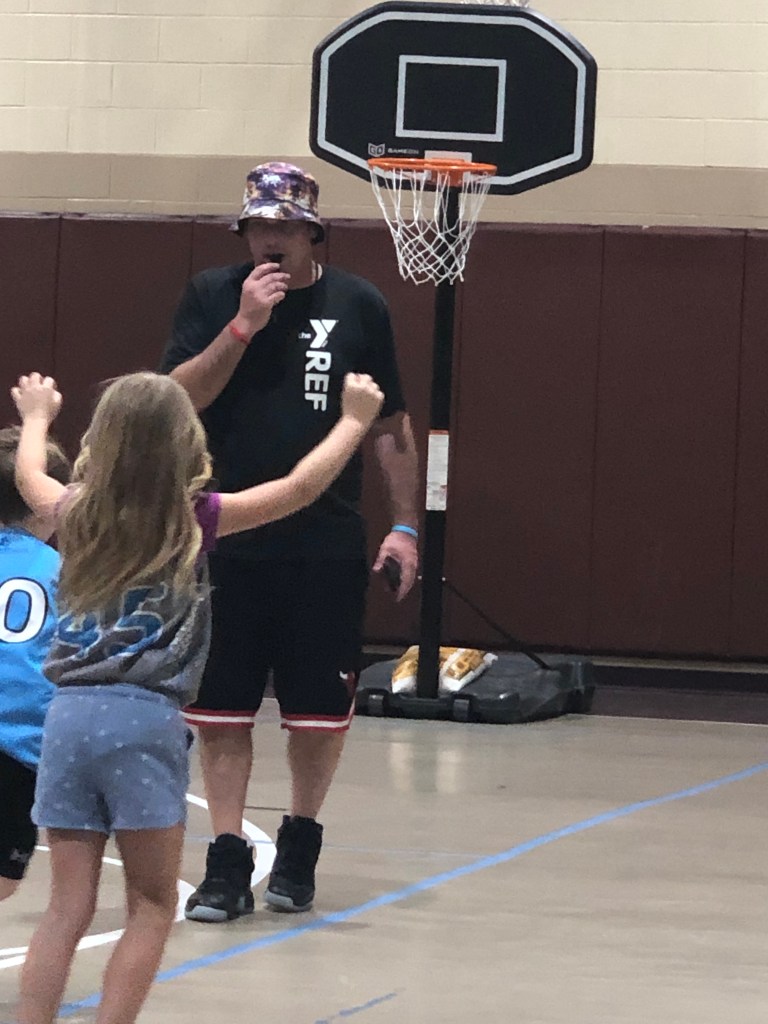
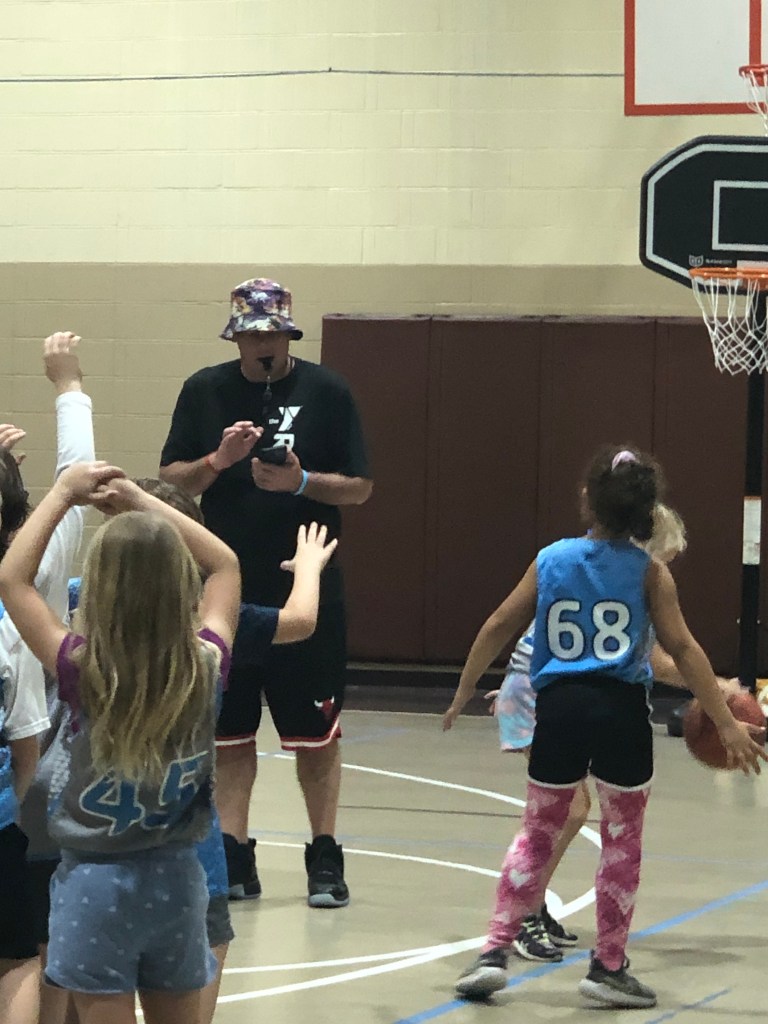
Ref on the phone

In between whistles, this ref had a lot of texting to do.

My seven-year old grandson is playing his first season of basketball at the YMCA. I’ve enjoyed going to his games and watching him and lots of other six and seven-year olds run up and down the court, occasionally dribbling, sometimes shooting, and once-in-a-while making a basket. At this level there’s no stealing the ball, you’re not out of bounds if you’re not really out of bounds, and the referees don’t call traveling.

At this week’s game, the ref was preoccupied with something or someone on his phone. Even though he had a whistle in his mouth and was standing right in the middle of the court, he didn’t get to see much of the game. He was texting someone on his phone the whole time.

I know, I know, the whole world is on the phone all the time. Even with laws prohibiting it, most of the drivers I see are on their phones. Everyone in the store is talking to someone on the phone. Worshipers in church are texting referring to their bible apps. The guys and gals in the gym, grunting to finish a set of flys, are on their phones in between sets. Who’s not on their phone in a restaurant?

I thought to myself, “I wonder if he’s supposed to do that? Will he be in trouble if someone from the Y sees him?” When I mentioned it to my daughter, she said, “He’s the director of the program.” I guess he won’t get in trouble.

To be fair, he probably had a good reason he needed to be on the phone. Maybe someone in his family was sick. He’d be off to the hospital right after the game. Maybe he needed to line up refs for the next few games. It’s part of his job. Maybe he was on hold waiting to talk to a real person at the bank (like that ever happens). Maybe he was consulting an online rulebook to be sure he called the game correctly. I probably don’t know the whole story.

Hey, he probably isn’t making much money running this program and reffing the game. He might even be a volunteer. So I’m just going to be thankful that the kids can have fun learning to play the sport.

But what about the hat? I don’t know. That’s a story for another day.

Posted in Life

Real conversation, real relationships

In Lisa Unger’s mystery novel Under My Skin, the protagonist Poppy glances at her phone and reflects on what has happened to her relationships because of texting. “Relationships scrolling out in bubbles, text disembodied from voice and body, language pared down to barest meaning” is “far less meaningful than actual conversation.”

Even though these words are fictional, they ring true. They resonate. We have replaced real conversation and real relationships with a poor digital imitation. They are like products with artificial flavoring or colorized movies or cheap laminated furniture materials.

In the Star Trek series and movies, the replicator made it possible to enjoy any food or drink you wanted from any planet or culture or era. But space travelers treasured real ale from some alien race or a real apple from planet earth. There was nothing like the real thing.

No one says, “I wanted to see your words.” We say, “I just wanted to hear your voice.” We save and replay voice messages again and again.

Bubble relationships are convenient, but two-dimensional. The words have no actual feelings though we try to extract emotion from them. Text messages may be adorned with emoji, but they lack the hint of a smile, shifting of an eye, the furrow of a brow, or a subtle chuckle. Most texting is quick and efficient, with little thought to grammar, vocabulary, or spelling. (Unless it is a lengthy text, and who reads all the way through those?)

In an actual conversation, eyes tear up. Legs nervously bounce. Fingernails have been chewed. Breath smells like alcohol. Some words come quickly. Other sentences are punctuated with long pauses. Lips purse. Fingers drum on the table. Hands fold.

What has happened to our relationships?