Some “through the bible” thoughts from Luke 9 and 22.
Jesus said to them, “Take nothing for your journey, no staff, nor bag, nor bread, nor money; and do not have two tunics” (Luke 9:3).
Jesus said to them, “When I sent you out with no moneybag or knapsack or sandals, did you lack anything?” They said, “Nothing.” He said to them, “But now let the one who has a moneybag take it, and likewise a knapsack. And let the one who has no sword sell his cloak and buy one” (Luke 22:35,36).
So should you pack light, or take everything you need?
Those who aspire to international mission work in our world must raise enough support to last three years. The sending organization wants to make sure they have enough funding for housing, food, transportation, and health insurance. Support comes from family, friends, churches, and church groups. It can take as long as a year raise enough support to embark on the mission.
Does anyone go with nothing but the clothes on their back, a bible, and a zeal to reach the unsaved? I suppose. But to travel to and stay in another country usually requires a visa, passport, cash for those who enforce entry points and transport your from one place to another.
Jesus was sending out the twelve to other towns in Israel, to Jewish communities where hospitality was the rule rather than the exception. They spoke the language, shared a heritage, and would know someone who knew someone who would have a place for them to stay.
Later, the apostles would face the same opposition Jesus did. So they needed to be prepared to fend for themselves in a hostile world. They would be hated and rejected just like Jesus. Equip yourselves with a sack for money, extra clothes, and a weapon. It’s going to be rough.
When my wife first went to Haiti just weeks after the 2010 earthquake, she followed instructions to pack as lightly as she could. Upon arrival, she watched people unpack ginormous luggage packed with clothing, food, fans, and other first-world comforts. The definition of “minimal packing” varies greatly from person to person.
We learn a lot about what we need with every trip we take. Basically, lay out everything you think you’ll need. Put half of it back in the closet, and pack the other half in the suitcase. You’ll still have packed way more than you need.
Spirit Airlines charges extra for carry on bags as well as checked luggage. You can bring on personal item, no more than 18x14x8 inches in size. I bought a backpack exactly that size, and am amazed at how much I can pack in there. I love the challenge of traveling that lightly!
This is a great prompt. My wife and I are tying to figure out the answer to this question.
We want to visit the British isles. We are going to Ireland next year. We’ll do Britain and Scotland after that. Our family trees both trace back into England, so that is on our bucket list.
We would love to visit Greece (especially Santorini), and some other Mediterranean spots, including Italy and Spain.
I know it is a long, long trip, but I would love to go to Australia and New Zealand. I would love to see places where Lord of the Rings was filmed on New Zealand and snorkel at the great barrier reef off the n northern coast of Australia.
Germany and Austria are on our list of places to visit. We want to see (and spend the night in) castles. Lots and lots of castles.
I’ve only been in Canada for a moment. After an Alaskan cruise, we flew out of Vancouver. I would love to visit the maritime provinces. I would also love to see the Canadian rockies, too.
There are many places we’d like to return to. We’d like to spend more time in Israel, exploring Jerusalem. We have connections in Haiti, and we would love to see them again. We would love to return to Africa, to stay at the Giraffe Lodge and revisit the elephant orphanage in Kenya.
I prided myself at picking decent Airbnbs for our trips. After booking a dozen locations over the past five years, I thought I had it all figured out. This current trip to Texas had me agreeing, “We need to figure out how to choose better places.”
Here’s a description of the two homes we stayed at this current trip to visit my son and his family.
It was cold!
We arrived on the coldest February day of the season, with lows dipping into the teens. When I walked into the first home, the heat wasn’t on and the thermostat reported an indoor temperature of 38 degrees! I turned it on, but it took an entire day to get the home up to the mid-sixties. The checkout instructions read, “Turn off the thermostat before you leave.” I texted my host, “Are you sure?” and set it down to 60.
Because we drove out a few days earlier than planned, we only stayed in that home a couple of nights. When we arrived at the second home, where we would spend the next week, guess what? The heat was off. It was 47 in this home. I turned on the heat and we went to a coffee shop. My host replied to my text about this, “Some of our guests get claustrophobic when we leave the heat on.” What’s that supposed to mean?
A minimalist’s dream
Both places looked just as pictured and were very clean. But both were very spartan. Not a dish towel to be found in the kitchen. No hand towels or washcloths in the bathrooms, just bath towels. No side table lamps in any of the rooms, only bright overhead lighting. No ironing board or iron. No instructions for the television and no binder with information about local places to eat or shop.
To the hosts’ credit, each place was exactly as pictured in the listing. They were clean and the beds were comfortable. However, each was located in neighborhoods with older homes, some in disrepair. Since I don’t get the location until I book, I had no way of evaluating that community. Both looked a little sketchy when we pulled in, but turned out to be safe.
A flawed review system
What about the reviews from others who stayed there? They were almost all five (out of five) stars. Everyone found them clean, comfortable, and convenient. Who wouldn’t want to stay there?
By the same token, I usually give a place five stars, four at the very least. If I have suggestions for improvement, I send them privately to the host rather than griping in the public review. Why? I don’t to jeopardize getting a good review from them. I guess that makes the reviews pretty much useless.
I’ve resolved to be a little more honest in my reviews. I am going to express the realties of a place in the best way I can, helping others who might be considering staying here in the future.
I’m going to expand my price range, too. Lately I’ve been searching for places to stay that cost less than $100 per night. I get what I pay for. It’s a good deal, but I’m not going to get as many amenities as a $150 or $200 dollar-a-night home.
So here’s a few tips and tricks for picking or passing on your next Airbnb.
While the insides of the homes have been nicely remodeled, the outsides will usually be a little worn. Don’t be overly concerned when you pull up for the first time. Go inside and give it a chance.
Most of the pictures will make the insides look much bigger than they are in real life. It’s all about the camera angles.
I don’t spend a lot of time in the Airbnb. We use it mostly for relaxing in the evening, sleeping at night, and breakfast the next morning. I can overlook a lot of shortcomings when I’m not there much of the day.
Scour the pictures of the kitchen to learn what kind of coffee maker is in the kitchen, and then bring the appropriate coffee with you, along with filters. A host might give you a few pods or a few pots worth of ground coffee, but I always need more. And it’s usually one of the cheapest ones you can buy, so don’t expect too much.
If you plan on doing any cooking, bring cooking spray and seasonings. Sometimes you’ll find salt and pepper in the cupboard, but not always.
Generally, the ice makers in an Airbnb do not work. But they always have ice trays to make your own.
Bring a sponge pouf along with your own soap, shampoo, and conditioner. Those pretty wall pumps generally don’t work well.
As soon as you book a place and get a street address, check out the street view on Google Maps. If it looks a little too sketchy, you should be within the cancellation window.
Check the cleaning fee before booking. A cheap daily rate is often accompanied by a hefty fee for cleaning. That, plus Airbnb fees and taxes can double the price of your great deal.
If you follow the check-out instructions, you’ll get a good review. Take out the trash, don’t leave anything behind, and don’t break anything, you’ll be in good shape.
On this most recent trip, I’ve wanted to ask each host, “Have you actually ever spent a night here?” I suspect not. I truly believe someone else manages the property for them, which means they don’t necessarily know what’s lacking. So I’ll be more honest in my reviews to help them improve.
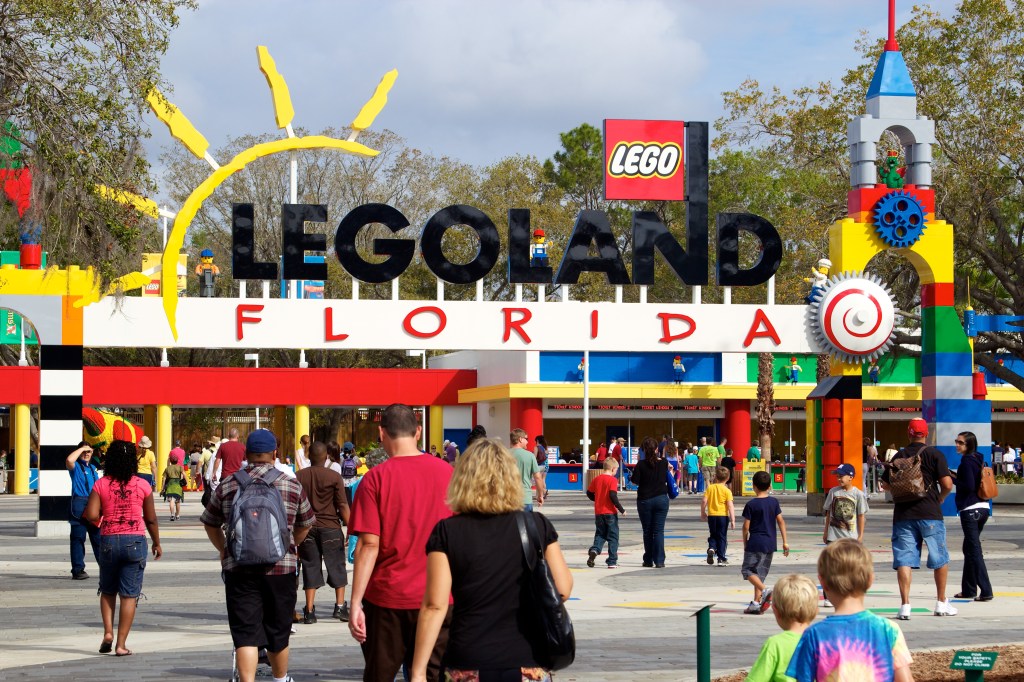
As part of their Christmas present, we took two grandsons to Legoland Florida in Winter Haven last Saturday. It was a fun day, a long day, and a Lego-filled day.
The park was a little further away than I expected. We live about two hours northeast of Disney World, and Winter Haven is another half-hour south of those attractions. Traffic was heavy for a Saturday morning. I can’t imagine navigating these roads on a week day. We passed through all the slow-down stretches I hear on radio “stress-saver” traffic reports.
I had prepaid for my parking. I saved $3 off the $35 standard parking fee. That’s more than Disney. I could have upgraded to a closer, covered spot for another $20, but I passed on that.
I saved $5 per ticket by purchasing my tickets online in advance. There were some days I could have gotten tickets for as little as $74, but not for the day we could go. Ours cost $114 each, after the $5 discount.
I also paid $15 each for the two grandsons to get a package of three minifigures. It cost the same in the store. They could trade those mini-figures for others that any park employee was wearing on their name badge, or at a 200 figure trading board in the coffee shop. The boys made a few trades during the day. That was cool.
As expected, the park is filled with giant Lego structures. Some are made from standard bricks, while others were built with huge Lego pieces. The park offers many places where you can just sit and build with Legos of all kinds.
A phone app shows you a map of the property as well as wait times for all the rides. There are three what they call “pink-knuckle” roller coaster rides, two shooting type rides, and one virtual reality movie ride. We only did The Dragon roller coaster. The one hour wait time for the others was too long for this family.
Masters of Flight was a cool movie with moving seats which made it feel like a flying trip through all sorts of worlds. There was so much to see I could have ridden it two or three more times. The Grand Carousel is a double-decker carousel ride on Lego horses. The Wave Racers, Royal Joust, Beetle Bounce, and a small train ride were fun but geared towards younger children.
The Lost Kingdom Adventure is a light shooting ride. The Ninjago ride as similar, except you fire with arm motions rather than a handgun. Both were lots of fun.
We brought our lunch, drinks, and snacks with us. The food prices were steep. We passed on the $7 green swirl soft ice cream cone and $15 snow ice cream sundae. We did splurge on a $11 bucket of popcorn and $9 soft pretzel late in the day.
The park is cashless. My wife was behind someone in line at the popcorn stand who didn’t understand that. Rather than extending the wait, my wife simply paid for the woman’s popcorn, gaining the admiration of a gentleman behind her.
I enjoyed Miniland USA the best. Miniland is a collection of U.S. cities built entirely with Legos. Cities included Orlando, Tallahassee, New York City, Las Vegas, Tampa, Daytona Beach, and the Kennedy Space Center. Lots of Christmas decorations and figures had been added to all the locations. So creative!
The stores are filled with every Lego set imaginable, along with the usual shirts, hats, mugs, and other Lego-themed merchandise. The most expensive set I saw was the Titanic, over 9,000 pieces for about $650.
Overall it was a fun day, although my wife and I agreed that if you’re going to spend this kind of money, you might as well spend a little more and do a Disney attraction. Other attractions are just wannabes in comparison. The atmosphere of Legoland seemed more relaxed than Disney. Since there are fewer things to do, you’re not trying to pack too much into a single day at the park. That being said, you probably need two days to do everything in Legoland.
We had a great day, but I’m not sure we’d go again. In addition to the theme park, there is a water park open in the warmer weather and a Peppa Pig park for the under six crowd. Legoland is adding an aquarium attraction, too, which should be fun.
We also looked up lodging on property at the resort. Over $600 per night. A little pricey for Winter Haven, but they wouldn’t charge that if someone wasn’t willing to pay.
So there you have my impression of Legoland Florida. Check it out if you want something a little less busy than Disney and lots of chances to see, play with, and buy as much Lego as you want.
I’m old enough to remember the days when friends would invite you over to see the slides from their most recent trip. For those not old enough to remember, slides were transparent photos you could shine a light through and project onto a screen so a room full of people could all see them. We do the same thing now but on a big screen TV or the little screen of a phone.
Not everyone found travel slides or photographs as interesting as those who took them. But they were an important record of travel. Once I get home, I begin to forget all the places I went and all the things I saw and did. I’m careful now to journal every day of a trip. Alongside photos, this has enabled me to remember trips to Alaska, Israel, Haiti, and most recently, Hawaii.
That’s what Moses does. “These are the stages of the people of Israel, when they went out of the land of Egypt…Moses wrote down their starting places, stage by stage” (Numbers 33:1,2). He writes down the places Israel traveled and camped from their departure from Egypt to their arrival Moab, on the east side of the Jordan River. It’s not exciting reading, but it’s an important chronicle of the journey.
Before my dad died, he showed me pages in a scrapbook that listed everywhere he went while in the United States Army-Air Corps in World War II. He kept a careful record of every school he trained at and every island and atoll he stopped in the south Pacific. I was able to locate all of the places using Google Earth. Some places are nothing more than half an island out in the middle of the ocean. Others are towns in the Philippine Islands. All of them were far from home.
I’m glad he wrote it all down. When his ninety-year old memory began to fail, his part of United States and world history remained intact. Just like the nation of Israel, who often forgot about God and the amazing things he had done for them.
Our July 12-24 Hawaii trip began with a 4 am drive to the Orlando airport. We left super early because Delta was still recovering from computer problems and we anticipated long wait times for check-in and security. Of course, when you give yourself lots of extra time, there will be no wait. We checked our backs at the curb, got through security in about fifteen minutes, so we had two-and-a-half hours before the first leg of our trip.
One of our traveling companions, the one who owned the house in Hawaii where we would be staying, got us into the Delta Sky Club with her diamond travel status. We got to enjoy the buffet breakfast and some great coffee while we waited.
Our first flight took us to Seattle, where we stretched our legs and split a roast beef sandwich and Caesar salad for lunch. For the next flight to the big island of Hawaii, I switched us to two aisle seats across from each other in the comfort plus section. A little more room was nice, and I read and snoozed while my wife watched a couple of movies.
The Kona airport wasn’t at all what we expected. It’s small (only eleven gates), and the baggage claim and waiting areas were outdoors. We were not met by hula dancers putting leis around our necks to ukulele music, either. And once we got our bags and rental car, we drove down the coast through desolate lava fields to the house. We picked up some food and found our way to the house.
Our view at sunset
The five bedroom, five bathroom pool home was on the side of a mountain with a breathtaking view of the ocean. The owners rented it out most of the year. But these next two weeks, we were there with another couple and the owner. During the busy season and for the annual Ironman, they would get $1,500 a night. Off-season was about half that. So it was a blessing we could stay there for free!
Electricity is expensive on the big island, so there was no central air conditioning. Each bedroom had it’s own cooling unit. Solar panels helped with electricity usage and heated the hot water.
On Saturday morning, Lisa and I walked about a mile-and-a-half down the hill to Kona Heaven Coffee, where we sat and enjoyed some 100% Kona with a nice view of the ocean. When we got back to the house, the other couple was ready to go to the Mountain Thunder Coffee Farm with us. (Read about that excursion here.) After that we found Benny & Finn’s in downtown Kona that had Hawaiian Purple Yam Dole whip, which was amazing!
On Sunday morning, we took the two-hour Blue Hawaiian helicopter ride past the volcanoes, up the Hilo coast, and then past the gorges and waterfalls on the northern part of the island. Each Eco-star helicopter held a knowledgable pilot/guide and six passengers. The lava floes made a lot more sense from the sky. Unfortunately, there were no active lava floes for us to see. We saw the recently vacated Mars dome in the middle of a place that might as well have been a different planet. After refueling at the Hilo airport (which is even smaller than Kona), we flew into some beautiful gorges to see waterfalls not accessible by land. Just before we returned to the Waikoloa heliport, we saw a circular rainbow, visible when the sun is above you but the clouds are below. After our flight, we had a quick lunch at the Lava Lava Beach Club and headed home.
Lava flows from the sky
Part of the circular rainbow beneath our helicopter.
On Monday, we went to the Kaloko-Honokohau National Historical Park, where we hiked to the ocean on rocky lava trails to see remains of ancient fish traps, ponds, settlements, and petroglyphs. One sea turtle was lounging on the beach, posing for pictures.
From there, we stopped by a seahorse farm, but decided that the $77 (!) entrance fee was too steep and instead had lunch at Big Kahuna in downtown Kona.
In the evening, I swapped out our Nissan Altima rental at the airport for a Jeep Wrangler, something more fun for exploring the island.
On Tuesday, Lisa and I hiked the Captain Cook trail, a steep, 3.5 mile round-trip trail to the ocean to see the Cook monument. With a 1,300 ft. elevation gain, the all uphill return hike was tough. As recommended, we had decent hiking boots. But we met quite a few other hikers in flip flops. They were either tougher or more foolish than us.
Captain Cook monument
In the afternoon, we drove to the Painted Church. The inside of this church is covered with hand-painted scenes of bible stories. Just about everyone who lives on this little road has a little fruit stand, coffee shop, or botanical garden, taking advantage of the traffic to and from the church.
On Wednesday, we took a quick flight to the Honolulu airport and took an Uber to the Pearl Harbor National Memorial. We spent time at the submarine museum and walked through the U.S.S Bowfin, toured the U.S.S. Missouri, and went to the U.S.S. Arizona memorial. There is more to do and experience at Pearl Harbor than we could do in one day, so we didn’t get to the Aviation museum. It was a moving experience, and I learned more about World War II.
U.S.S. BowfinU.S.S. Missouri
On Thursday, we took an ocean kayak and snorkeling tour. The ocean was fairly calm and the kayaks very stable. It was a beautiful day and I must have seen fifty different kinds of colorful fish in fifty-feet of absolutely clear water.
After we got home, Lisa and I took another walk down the hill to Kona. Once there, I started feeling light-headed while perusing the Lava Java restaurant menu. After I sat on the front steps, someone brought me some ice water, and I actually passed out. I woke up to EMTs who took me to the Kona Community Hospital to get checked out. My EKG and blood work were fine. With a little fluid in me, I felt better and we took an Uber back to the house. Even though I thought I was drinking plenty of water, apparently I got dehydrated. When I got back to the house, the rest of the group was waiting for me to get home so I could grill steaks for supper.
Friday was a busy day. We headed out about 7 am to get to Punalu’u Bake shop, the southernmost bakery in the United States, and also the place to get the best malasadas (Portuguese sugar-coated doughnuts). The Portuguese came here in the late 1800’s when sugar cane farming was a huge part of the island economy. Malasadas go down very easy. I ate four that day.
With cartons of malasada in hand, we drove to the green sand beach at South Point, the southernmost place in the United States. Rather than a five-mile round trip hike, we hired a driver to take us on a bouncy standing ride in the back of a four wheel drive pickup to the beach. It’s not a big beach, but it’s one of only four places in the world where the sand is green.
Green Sand BeachBlack Sand Beach
Next stop was the black sand beach, a little farther up the coast. It was unique, but not especially exciting.
From there we drove to Volcanoes National Park. This park is huge. When this volcano last erupted in 1959, lava shot up 1,900 feet into the air. That’s taller than the Empire State Building! We saw the crater from several vantage points. We could have spent a whole day here.
But we wanted to go to Mauna Kea to see the sunset. Unfortunately, the mountain was clouded in, so we couldn’t see anything.
We tried to do too much on Friday. We could have spent a day doing any one of those things. Plus, there were so many little coffee shops and bakeries along the road we could have stopped at!
On Saturday, we went back to downtown Kona. We had lunch at Java Lava, another Dole whip at Bubba & Finns, and bought ornaments for all the grandkids.
Hawaiian Purple Yam Dole whip!
On Sunday, we worshiped at Waikoloa Lutheran Church. After lunch at Lava Lava Beach Club, we drove to Waimae to visit a coffee shop and general store.
Who cares about lunch……when this is dessert?
On Sunday night we went to the luau at the King Kamehameha Courtyard resort. The food and entertainment were okay, but not as great as we expected. When you go to Hawaii, you have to go to a luau, right?
We celebrated by 67th birthday on Monday with a trip to Hilo on the other side of the island. We started with breakfast at Ken’s Pancakes, where I also got a souvenir coffee mug. The pancakes were good, but their famous macadamia nut pancakes were just pancakes with macadamia nuts sprinkled on top. The wait staff sang “Happy Birthday” to me and brought me another stack of pancakes with strawberries and whipped cream.
Akaka Falls – check out the rainbow at the base
Then went to Akaka Falls State Park. It’s only a short hike to the falls, which at four hundred feet are actually taller than Niagara Falls. After we toured the Mauna Loa Macademia Nut factory we took a tour of the Lavaloha Chocolate farm. I loved learning about the production of chocolate, from the cacao pods to a big selection of 70% cacao chocolates.
Our chocolate farm tour guideCacao pod right off the tree
We walked around down Hilo and visited a ukulele shop. The impressive selection of ukes was priced from $90 to over $1,500. The owner taught us a lot about the instruments, but we decided not to buy one on this trip.
We spent most of Tuesday packing up and cleaning up the house. Our flight home left about 8:30 pm Hawaii time, and we were back in Florida by late Wednesday afternoon.
It was a great trip, but Hawaii was much different than I expected. It wasn’t like Hawaii 5-0 or Magnum P.I. The coastline was mostly rock, not sandy beaches. Of course, we were on the big island of Hawaii, not Oahu which is more touristy. When we go back, we’ll hop and see what the other islands have to offer.
We took a morning trip to Mountain Thunder coffee roasters, just up the road from the house we were staying at on the big island of Hawaii. It’s on a hillside in the middle of the Kona coffee belt on the western side of Mauna Loa.
When we arrived we were invited to try samples of the different roasts, including light, French, espresso, and a blend of light and espresso they called “black and tan.” Before our coffee education, we were just glad to drink coffee. Later, we’d understand the different roasts and flavors of each. In other words, we were just steps away from becoming coffee snobs.
The free tour explained the whole process, from farm to brew. This roaster bought coffee beans from many nearby growers, all of whom harvested by hand. We got to see where the beans were sorted, rinsed and shelled, roasted, and finally packed for sale. We learned a lot.
Light roast has more caffeine than dark, which is roasted hotter and longer.
Most coffee beans grow two to a pod. The pods which only have one bean are called “peaberry.” The $70 per pound price of peaberry meant no free samples of that roast. But we bought dark chocolate covered peaberry beans in the gift shop. A nice caffeine boost without drinking a cup of coffee.
Kona blends (10%) are more common and affordable than 100% Kona coffee. the Starbucks in the Honolulu airport served Kona coffee.
Other regions (Ka’u, Puna, and Hamakua) boasted about their superior beans and roasts. We enjoyed the coffee in those places, too. We’re not that snobby.
I looked but never found a place to try a cup of peaberry coffee. I just wanted to find out if I could taste the difference. After the tour, I tried the samples again and did taste a big difference between light and espresso roasts.
This was one of our must-do activities in Hawaii. We could have spent a whole day visiting the coffee shops and shacks that lined the roads around the island. That would be a very good day!
Out of the corner of my eye I saw a nip hit the already full trash can next to the gas pump. It was a small bottle of E & J brandy, rather than the popular Fireball or Smirnoff. On the other side of the pump, a young man was lying in the bed of a pickup truck while another filled it with gas.
A voice said, “Good evening, sir.”
“‘Evening.”
I thought he then said, “It’s almost the weekend.” It was a Wednesday evening so I said, “Yup, hump day.”
He was very hard to understand and I thought he repeated, “It’s almost the weekend.” He must have seen the puzzled look on my face and spoke slower, but still slurring his words. After a third try, I finally figured out he was trying to say, “It’s almost Mother’s Day weekend.”
Unsure where the discussion was headed, I said, “My mom died about nineteen years ago.”
“I wish I could talk with you. Mine died a week ago.”
“That must be hard.”
“I was right there with her. A massive heart attack. I’m not sure what to do.”
I said, “I guess you’re not looking forward to this weekend.”
He went on, “Nope. But she was a good Christian woman.”
“It’s sad, but at least you know she’s with the Lord.”
He reached out his hand to shake mine and said, “God bless you, man.”
“God bless.”
And that was it. The pump clicked off and I closed the gas cap. As I drove away I saw three others standing outside the pickup truck. I didn’t catch the license plate, so I don’t know if they were local or passing through Daytona Beach.
Most people at the gas pump do their thing and drive off. Occasionally I’ll have a random conversation. The culture of convenience stores is interesting, including huge cups of coffee, tiny bottles of booze, and plenty of scratch off lottery tickets.
When we drive to Dallas to visit my son and his family, we typically spend the night at the Hampton Inn in Richland, Mississippi, a few minutes south of Jackson. It’s about two-thirds of the way there, so it’s a long first day. But day two is a pretty easy drive across Louisiana and east Texas.
On our last trip at the end of March, we stayed in a first-floor room all the way at the end of the hall. Walking back to get things from the car, I did a double take as I passed by the elevator alcove. I saw what looked like a bowl full of dog bones. When I went over to get a closer look, I found a dish filled with Milk-bone dog biscuits in a dish on a small table. They were the good ones, too, the big five-inch large breed variety. A sign on the table announced they couldn’t wait for your dog to spend the night there.
How the world has changed! I vividly remember driving from Iowa to Florida to start my new job there. Michael our chocolate Labrador Retriever rode in the back seat, tranquilized for the long ride. I don’t remember how far I got the first day, but I remember sneaking him up the back stairs after dark to a second-floor motel room. I didn’t ask, so I don’t know if dogs were permitted or not. We left before sunrise the next day so no one would see him. However, I’m sure that he left plenty of dark brown hair on the bed for someone to find.
Back to the Hampton Inn. I didn’t see any details about extra charges for a dog. I saw no size limitations, either. I would just love to check in with my Great Dane. King room? That should work. Breakfast at 6? I hope you’re serving bacon tomorrow morning! I can imagine her catching a whiff of the bone bowl, knocking over the table, and scattering bones across the lobby before eating them. How would you like to ride the elevator with us?
Chihuahuas and poodles stroll the aisles of Home Depot. People lined up in Walmart to take a picture of a guy with a mastiff in the meat section. They enjoy sitting under outdoor tables at restaurants. Pet stores have always welcomed them. I know our dog would enjoy a night at the Hampton Inn.