
Our last day in Israel was the “go do whatever you want day.” My wife and I and a few friends decided we wanted to return to the Jewish quarter of Old City Jerusalem and then check out the highly recommended market, Mahane Yehuda.
When we started out, we didn’t even know the name of the market. But a shop owner said, “You are probably looking for Mahane Yehuda” and he wrote down the name for us. Great. Now, how do we get there? “Oh, it’s easy. You have to go deep into the Arab market, out the Jaffa gate, and head towards Jaffa road and St. George.” We thanked him as if we knew what that meant, and headed towards the Jaffa gate, where our taxi had dropped us off early that morning.
We got to the Jaffa gate. Now what? Aha, there’s a tourist center here. He sent us out the gate and up the hill to where we could catch the tram, a light rail train that would take us to the market. We saw the tracks in the road, and waited for the next train to come so we could see where the stop was. Once we got to the stop, it looked like we would need to buy a ticket. Not quite sure how to do that, a random guy simply directed us to a machine that had an English option. As I fiddled with the buttons and my debit card, a train came and left. Finally the machine spit out five tickets for us, and we boarded the next one.
I think this is the first time my wife and I have set out to explore a city on our own without a translator or guide with us. I really enjoyed the adventure! As we were told, everyone we asked for direction was extremely gracious and helpful.
Sitting on the train, I looked up and saw a sign announcing the next stop – in Hebrew. I can figure out some Hebrew, but now quickly. Before I knew it the announcement changed to Arabic. Not helpful. Finally came the English. We reached the stop specially designed to bring traffic to the market, and started down the street.
There is a lot of information on Mahane Yehuda Market on Wikipedia. Over two hundred and fifty vendors lined the streets, some out in the open, some under cover. There were fruits and vegetables, fish and meat, bread, halva, baklava, coffee shops, spiced and dried fruit, olives, and candy as far as my eye could see.


Turning into one of the covered areas, we came across Haachim Levy spices, teas and fruits. The young man working the booth enthusiastically described and let us try many of the blends of dried fruits out front that could be used to make tea, infuse drinks, or mixed into oatmeal. We bought three sweet and one savory blend from him.
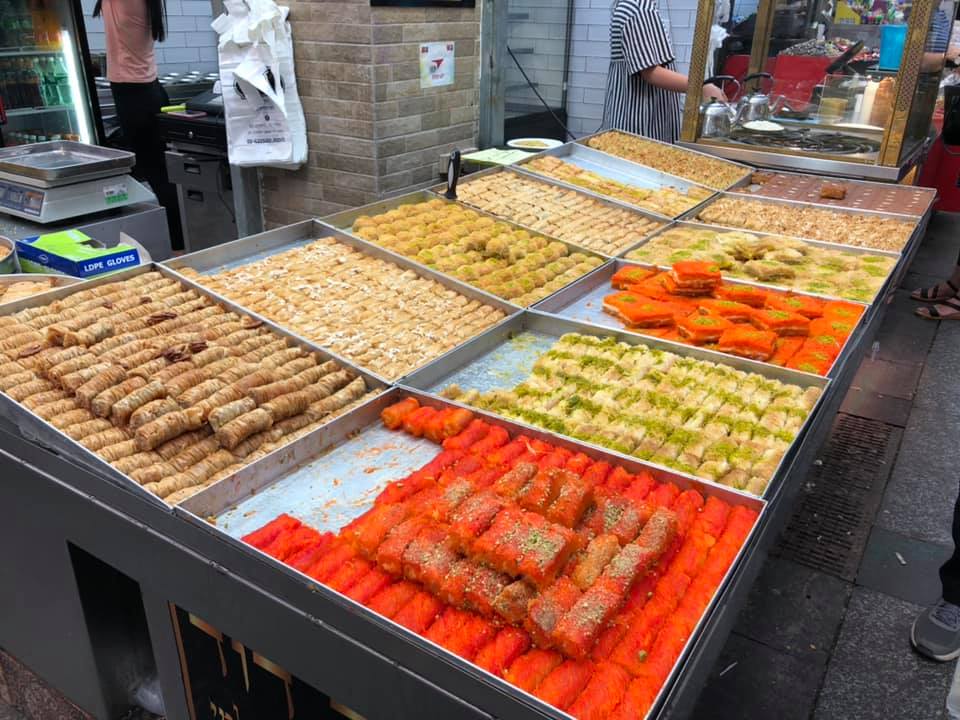
We asked him where to get the best baklava and coffee in the market. With booth after booth selling those items, we wanted a recommendation. He directed our eyes down the long row of booths past several signs his favorite coffee roaster. “Just past that you’ll see an old man – that’s where you want to buy your baklava.” At the coffee roaster, I got a delicious long espresso made from a Tanzanian blend. Sure enough, just a few booths down we found a huge display of baklava. We loaded up a box with one of each that was sealed up so we could take it home with us.
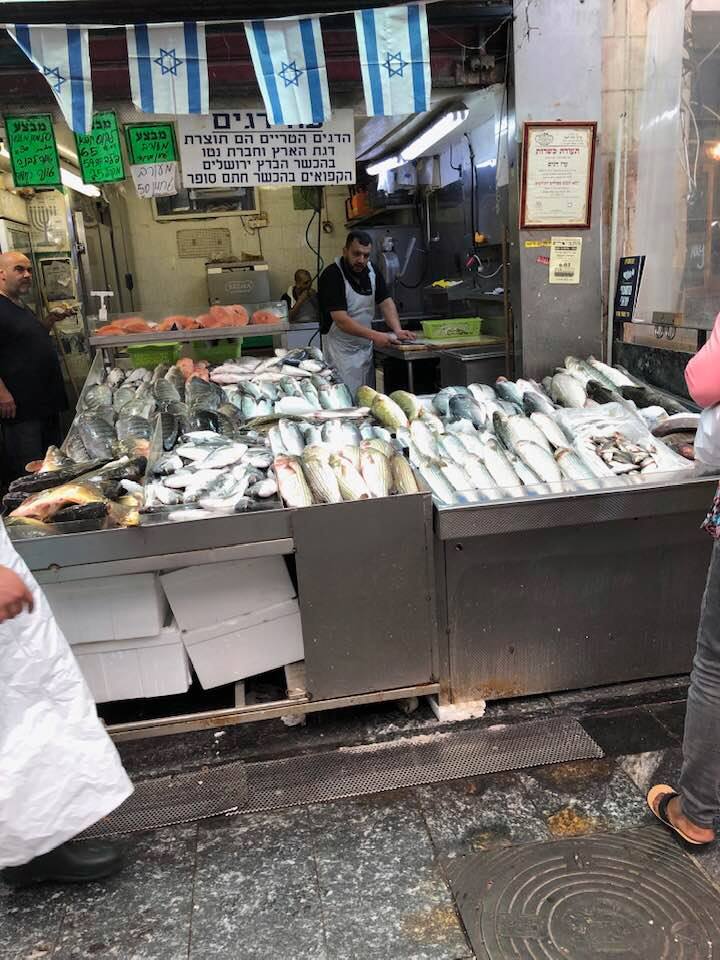

As we continued to walk through the market, I couldn’t help but wonder how many in Jerusalem did their food shopping here. Throughout all our travels, we hand’t seen any grocery stores or Walmarts in Jerusalem. Maybe we just didn’t go through those parts of town. After a little research, I learned that there are some grocery chains there. But most people talk about the markets.
The experience reminded me of the markets in Baltimore when my wife and I lived there. The best thing is you buy everything fresh! I suppose after a while you would have your favorite vendors and be able to get exactly what you wanted in season and for special events. I could get used to a great selection of fish, meats and vegetables. I am too often disappointed with the grocery stores near me.
One cool thing about the market is that you get to talk to the person working the shop. Everyone was very proud of their booth and products, encouraged me to try samples, and loved to talk about their product, their family and the market. The few farmer’s markets near us give us a bit of that, but it just wasn’t the same.
I think I could have spent the whole day there!


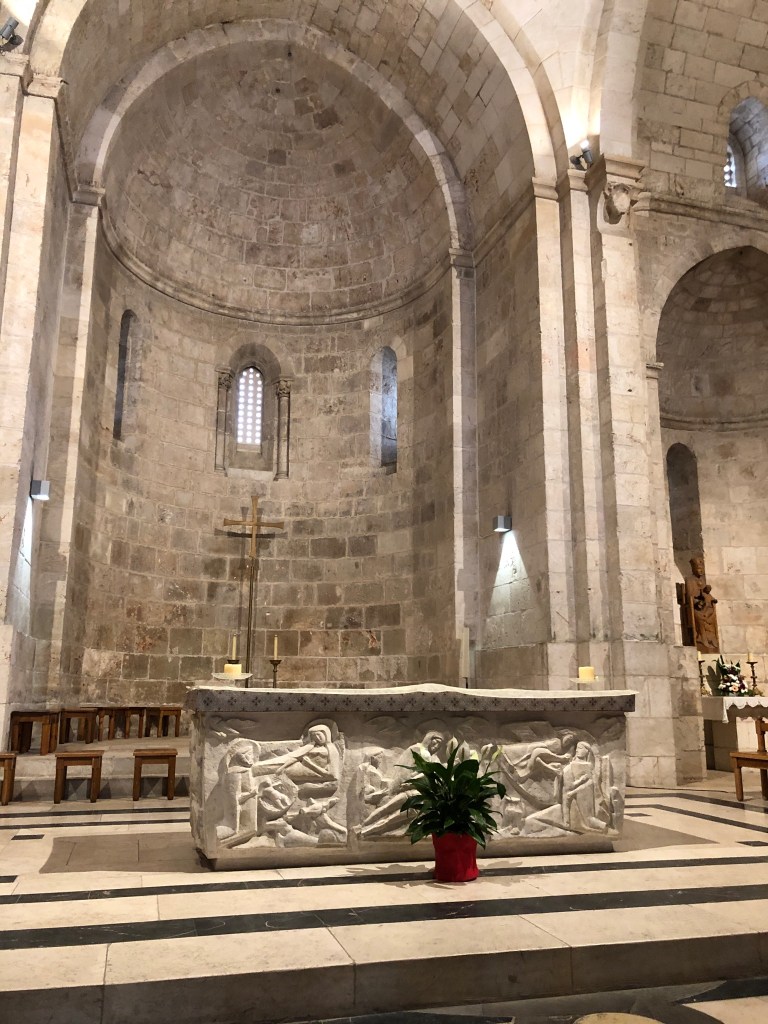

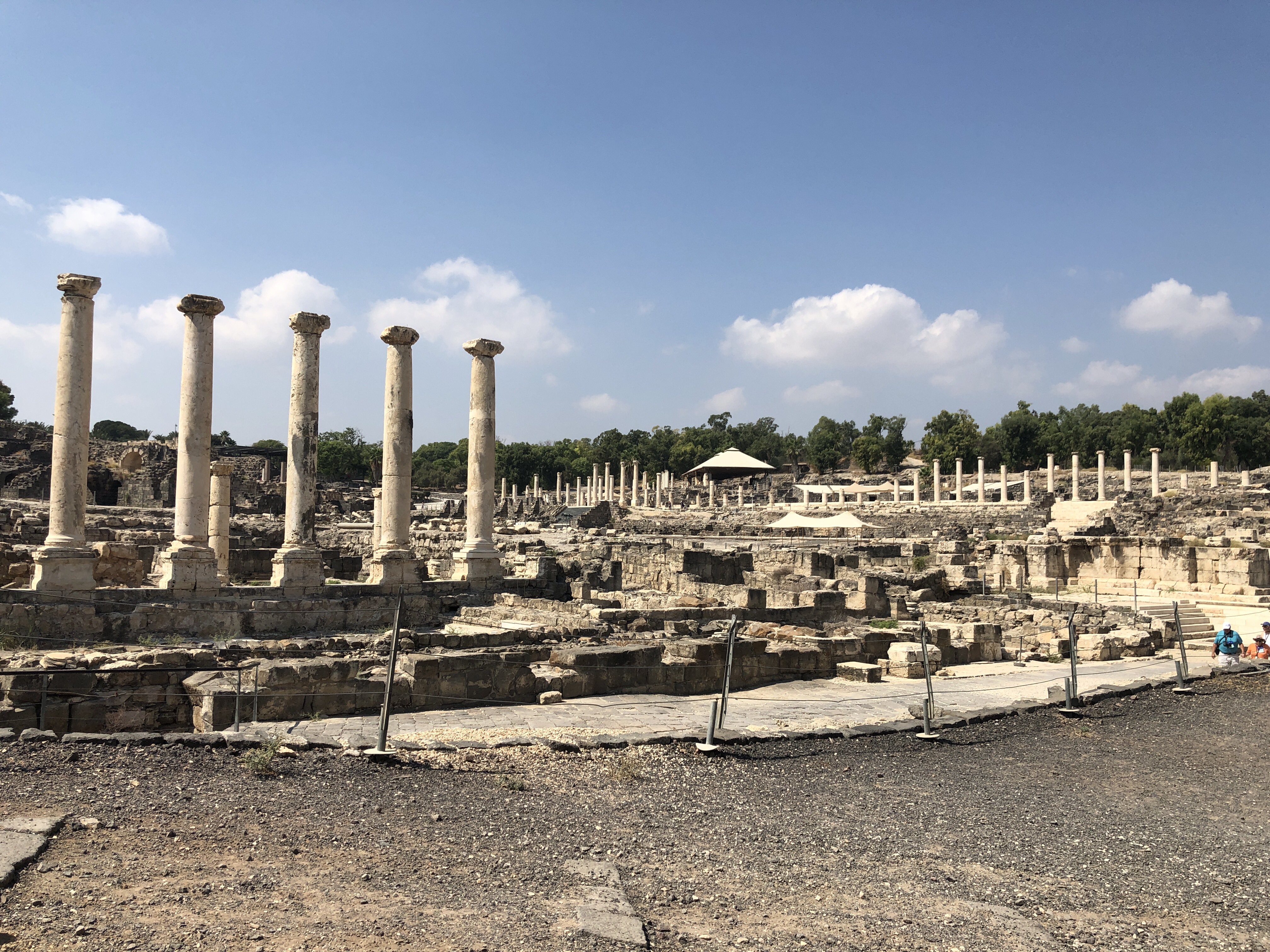
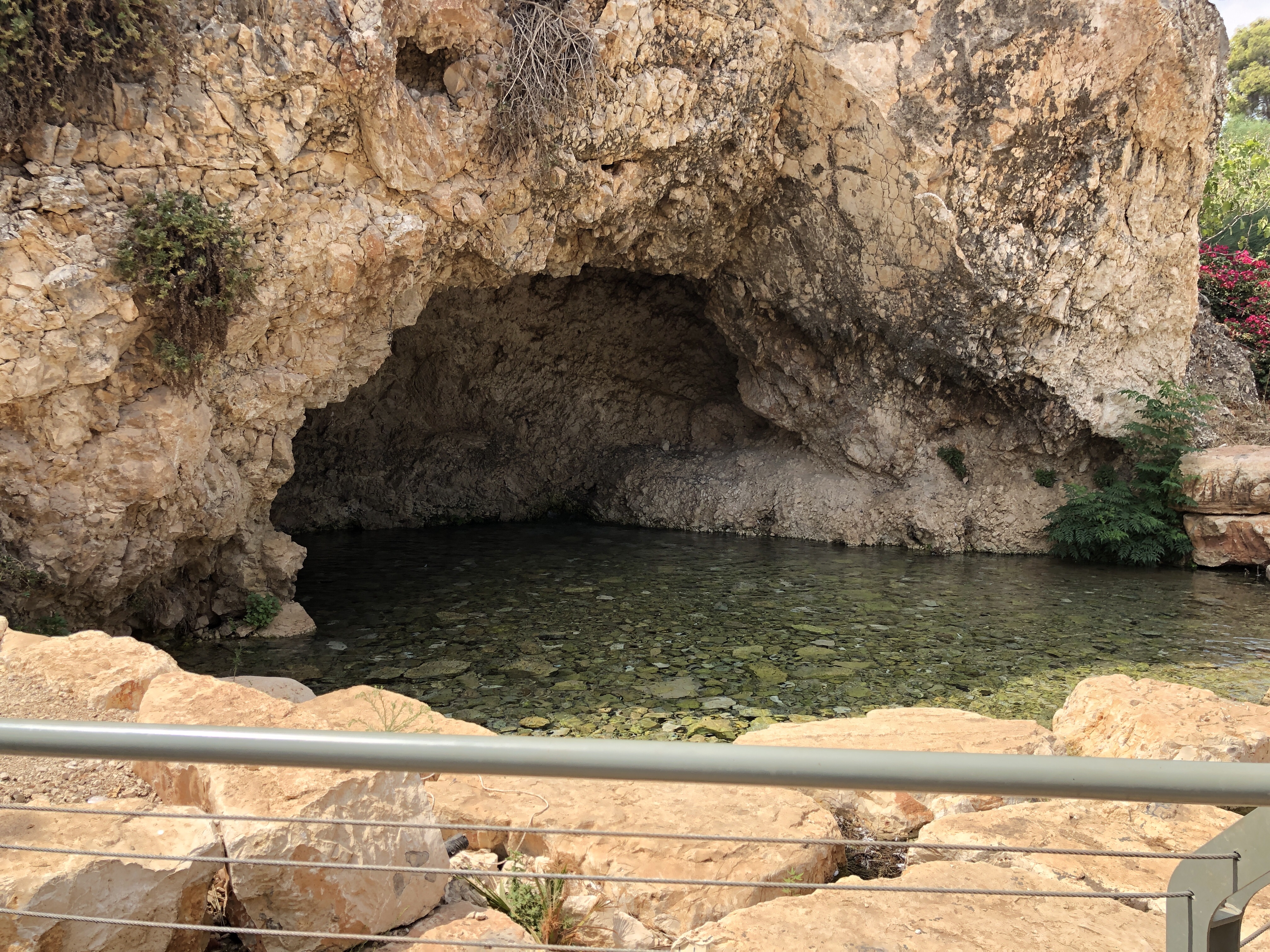
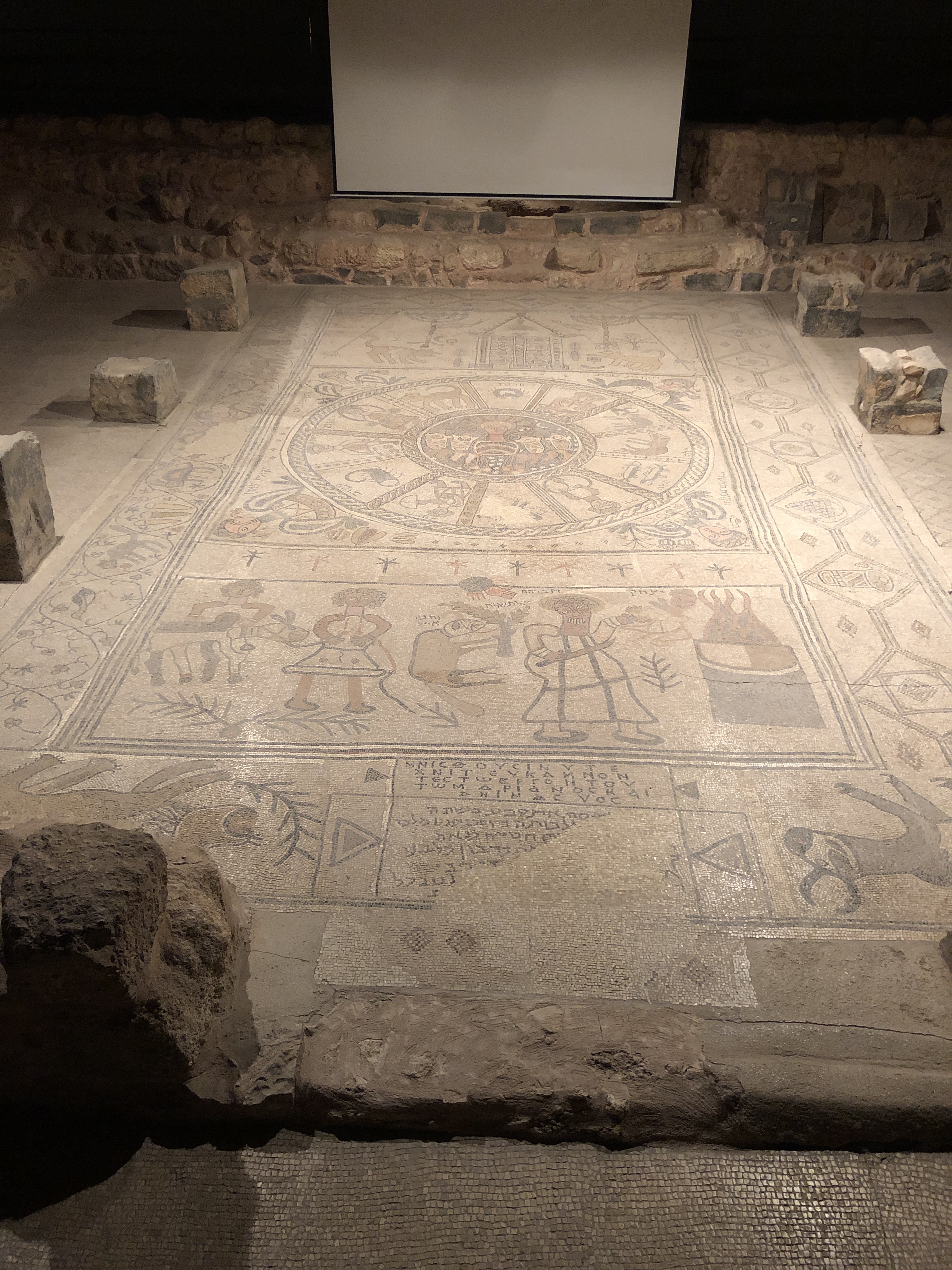
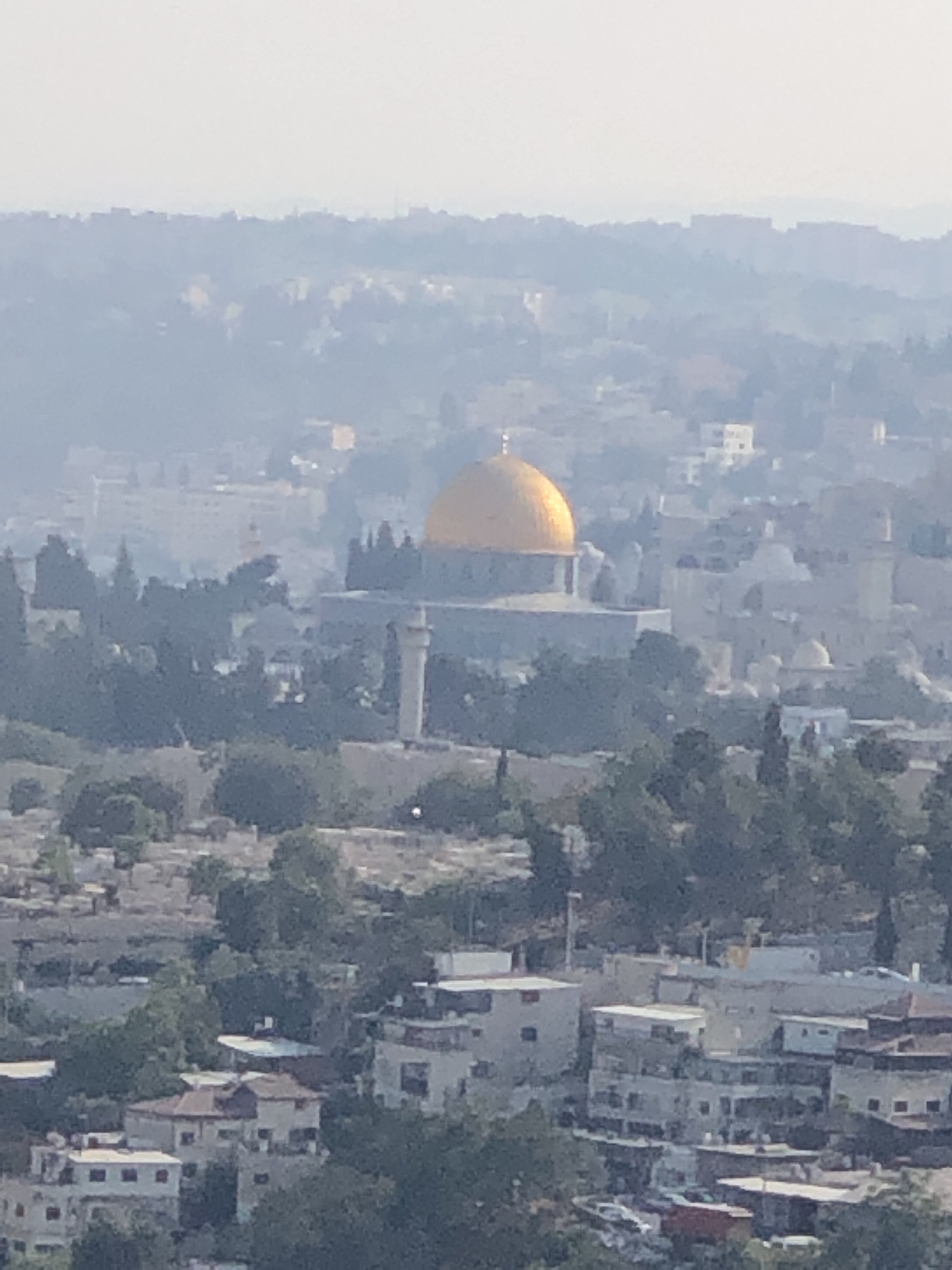

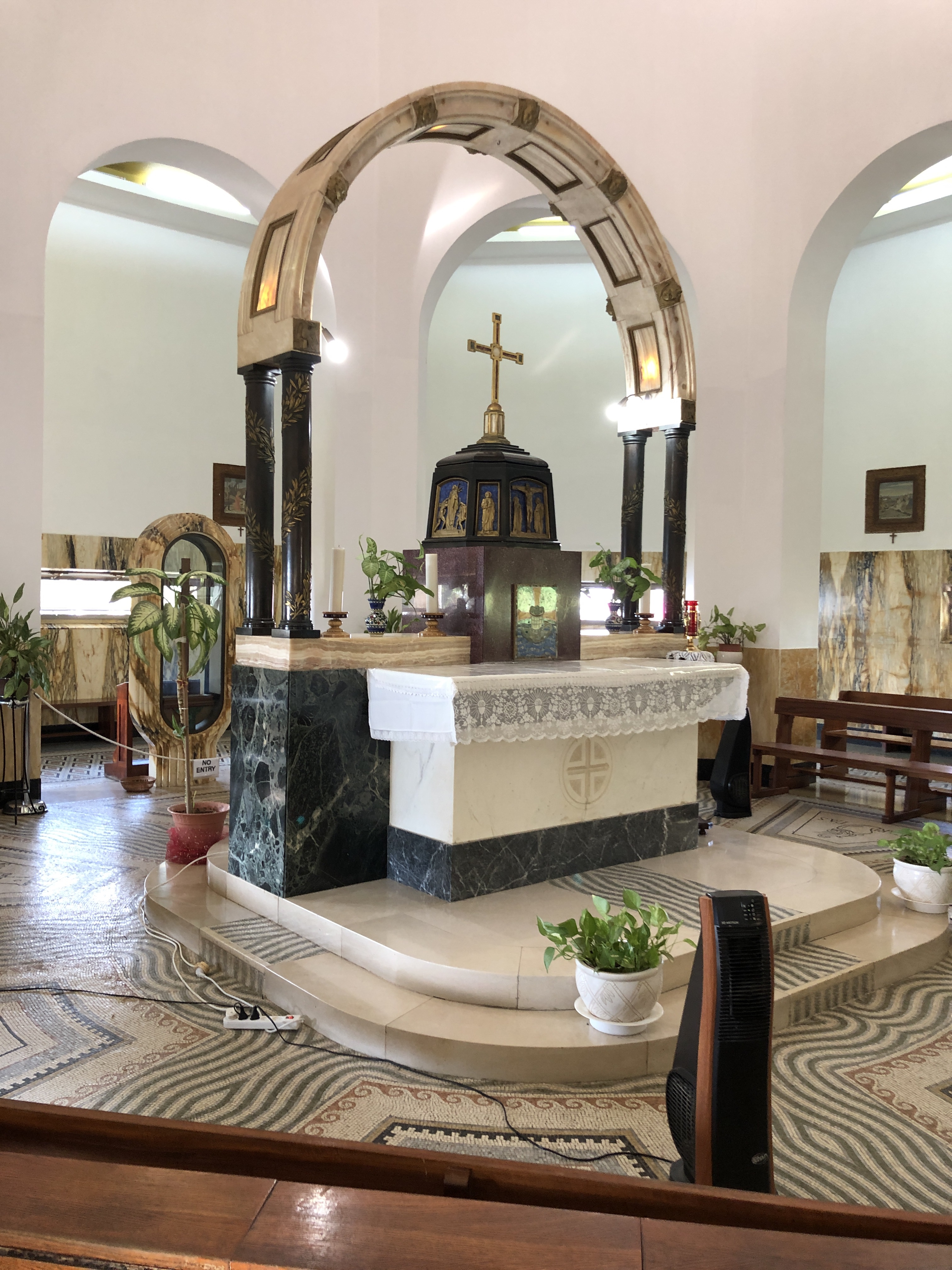 Our first stop was the Church of the Beatitudes and the site of the sermon on the mount. At a small shaded chapel area we read from Matthew 5 and talked a little about how differs Jesus’ kingdom is from any other.
 This site did a brisk business selling intentions for $15 and rosaries beginning at $20.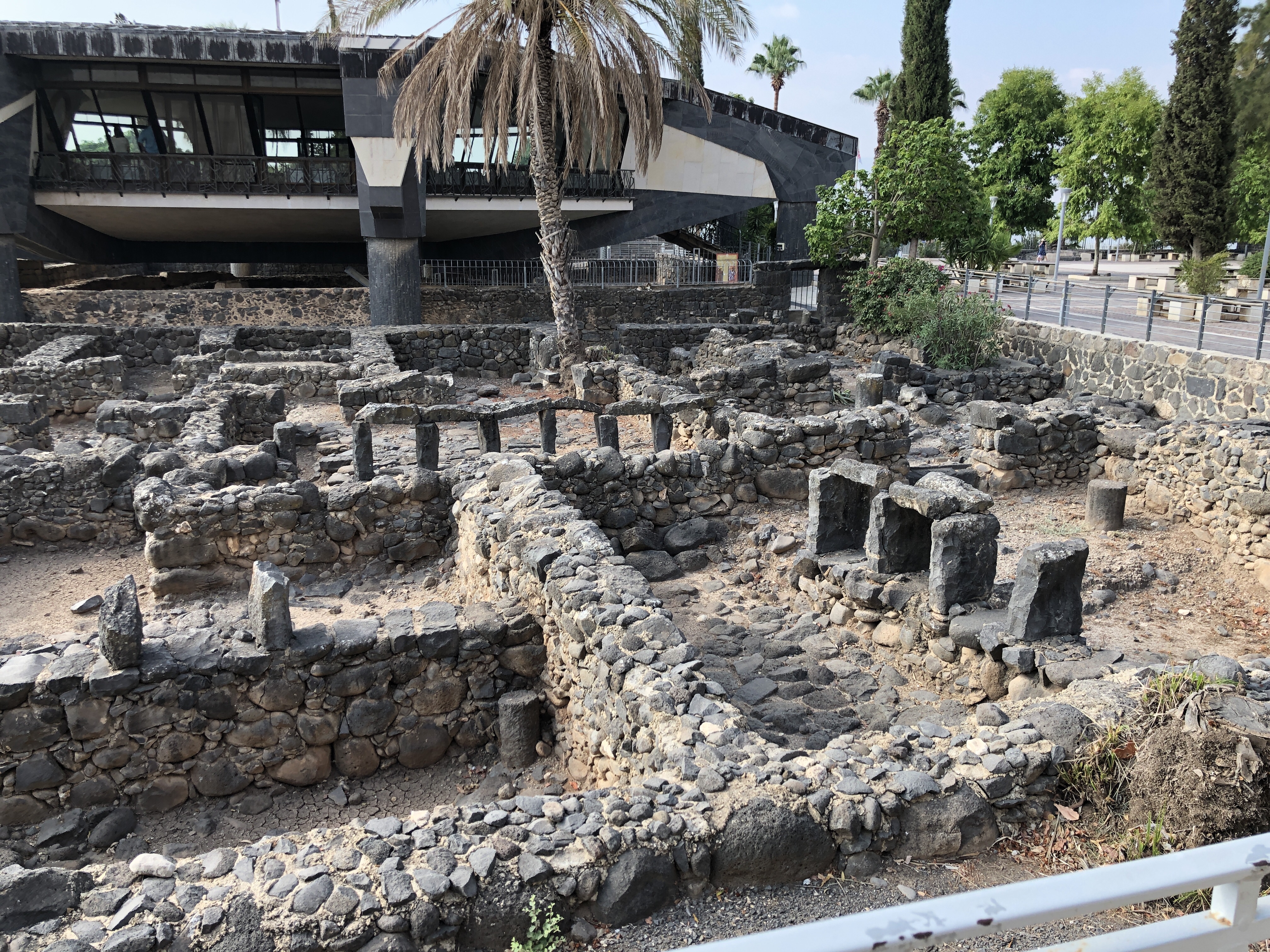
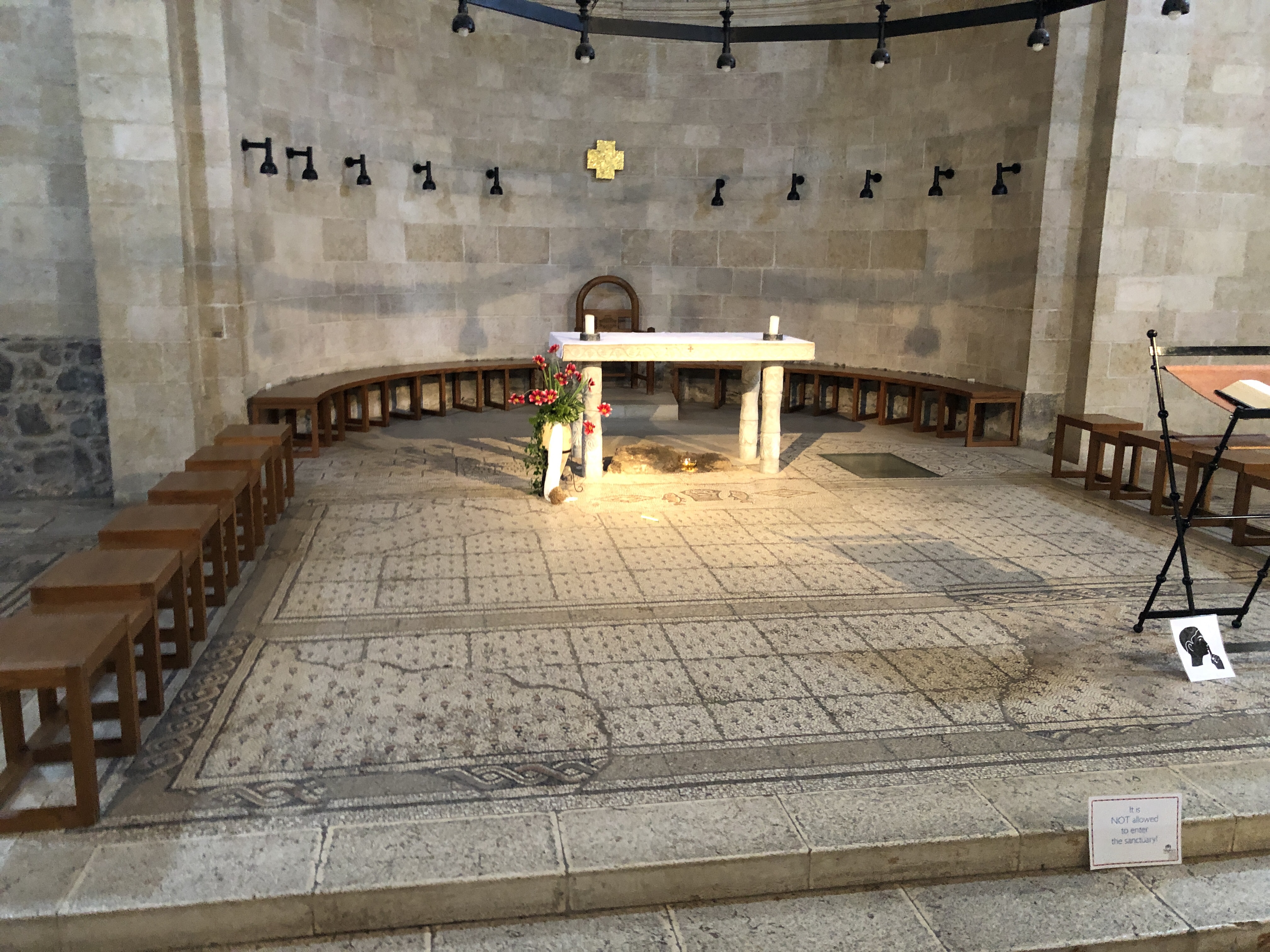
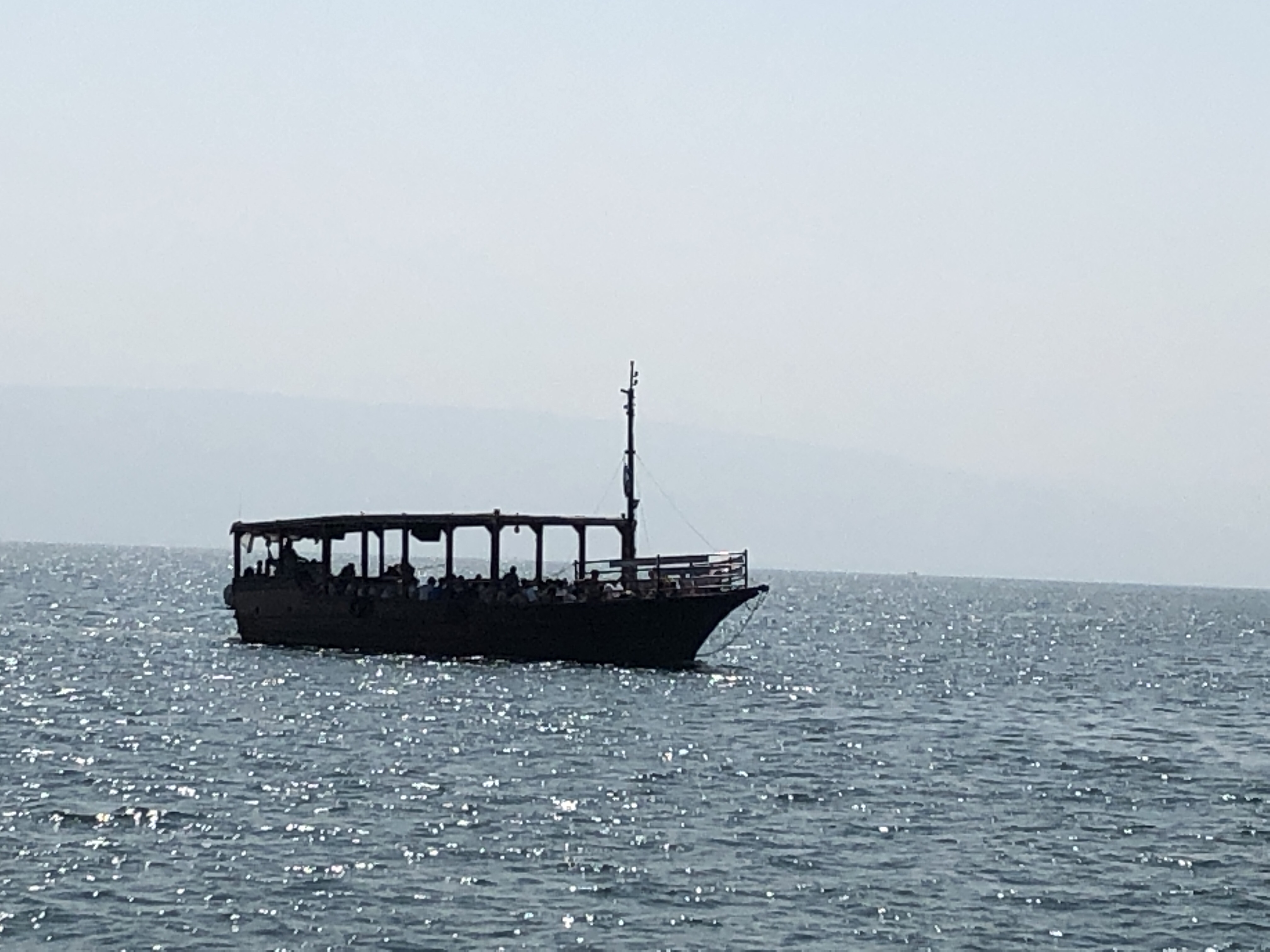
 Our last stop on this part of the trip was The Ancient Boat, a fisherman’s boat preserved from Jesus’ time. Here we also got to go out in a boat on the Sea of Galilee. We meditated on Jesus walking on the water, sang a few hymns, and enjoyed a breezy time on the water.
 A short distance away we stopped for lunch at Kitsa Halahal, a roadside Lebanese restaurant with some excellent tilapia. Washed it down with some Maccabee beer.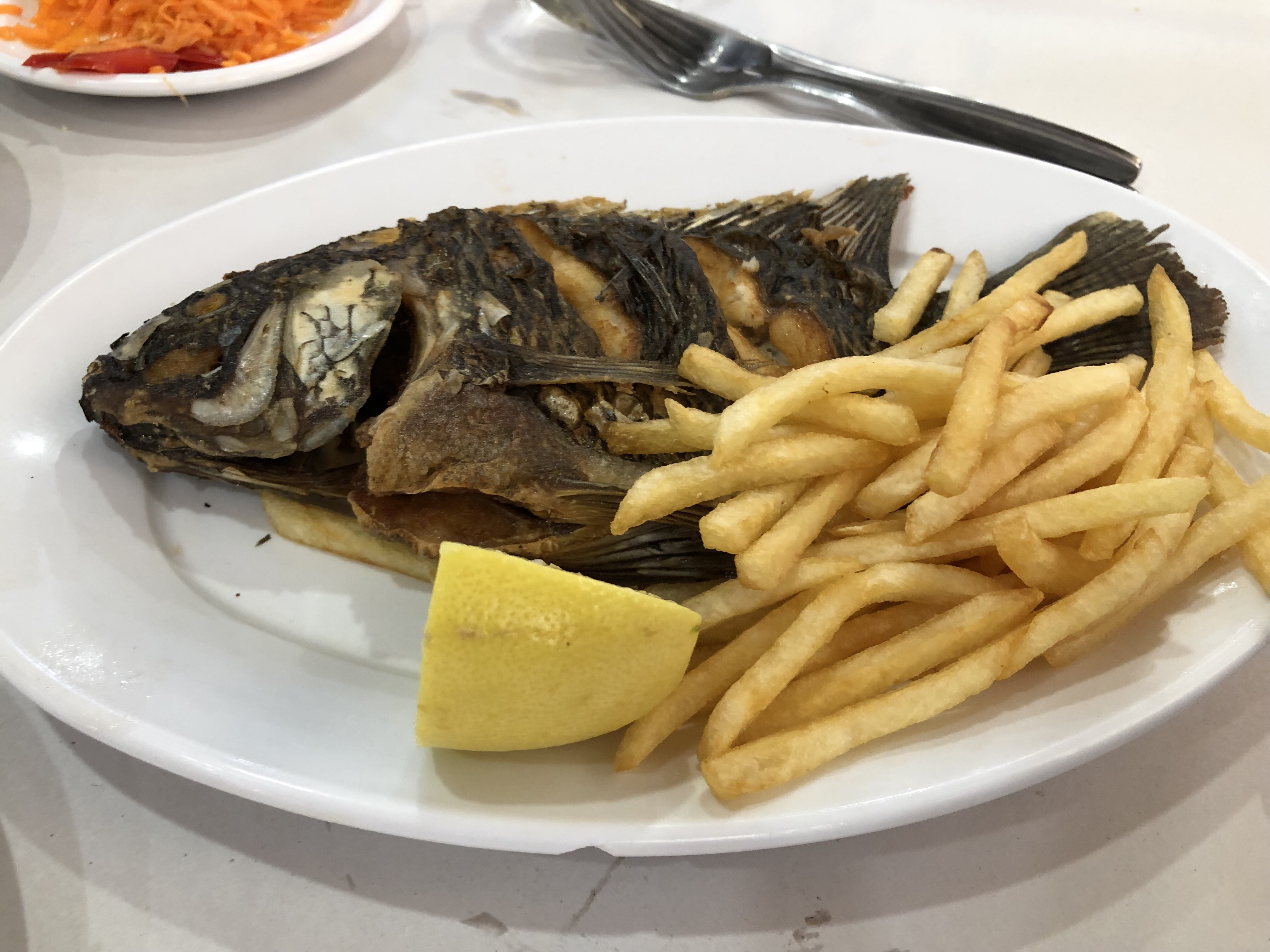

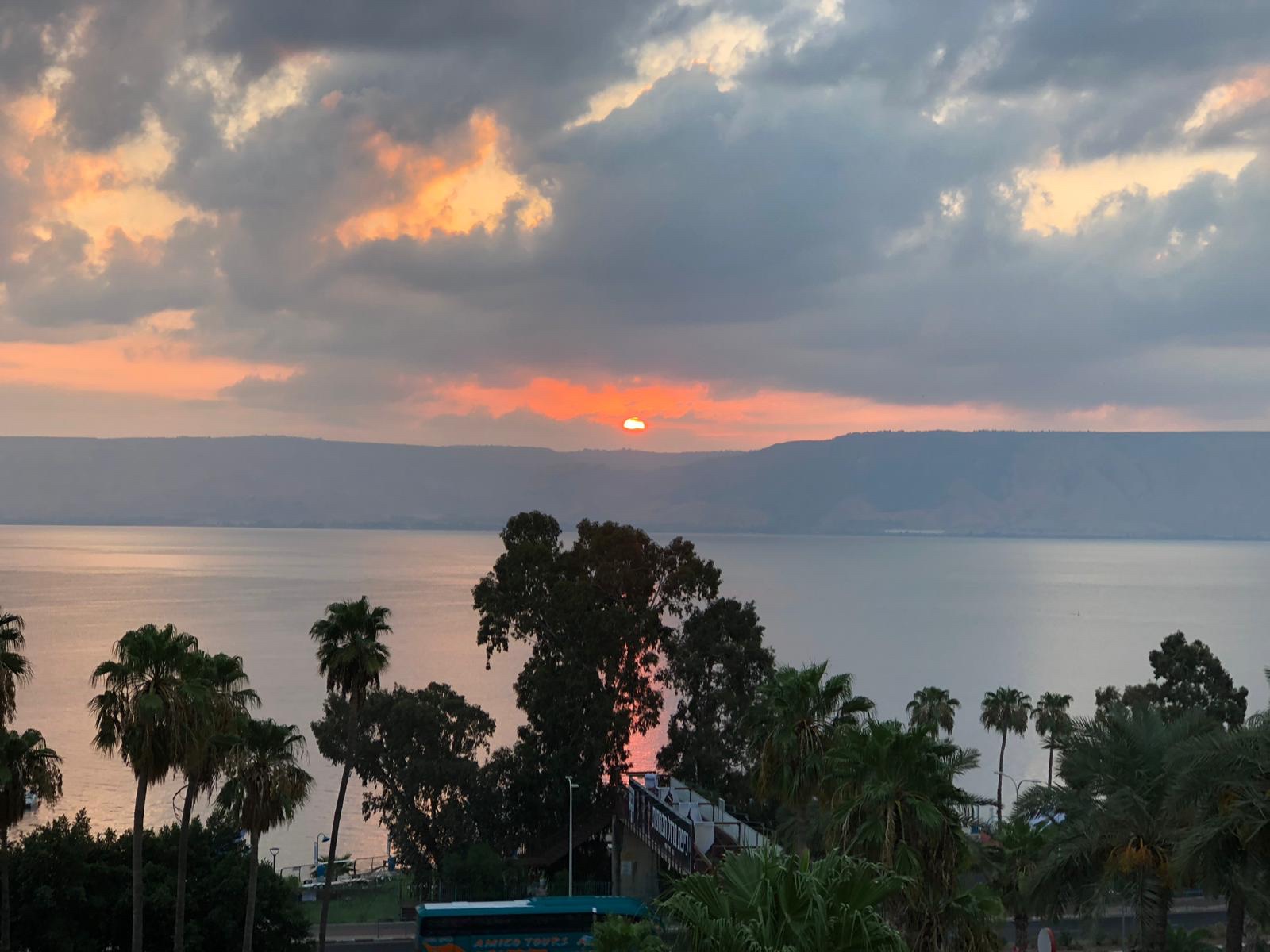
 Ruins at Caesarea

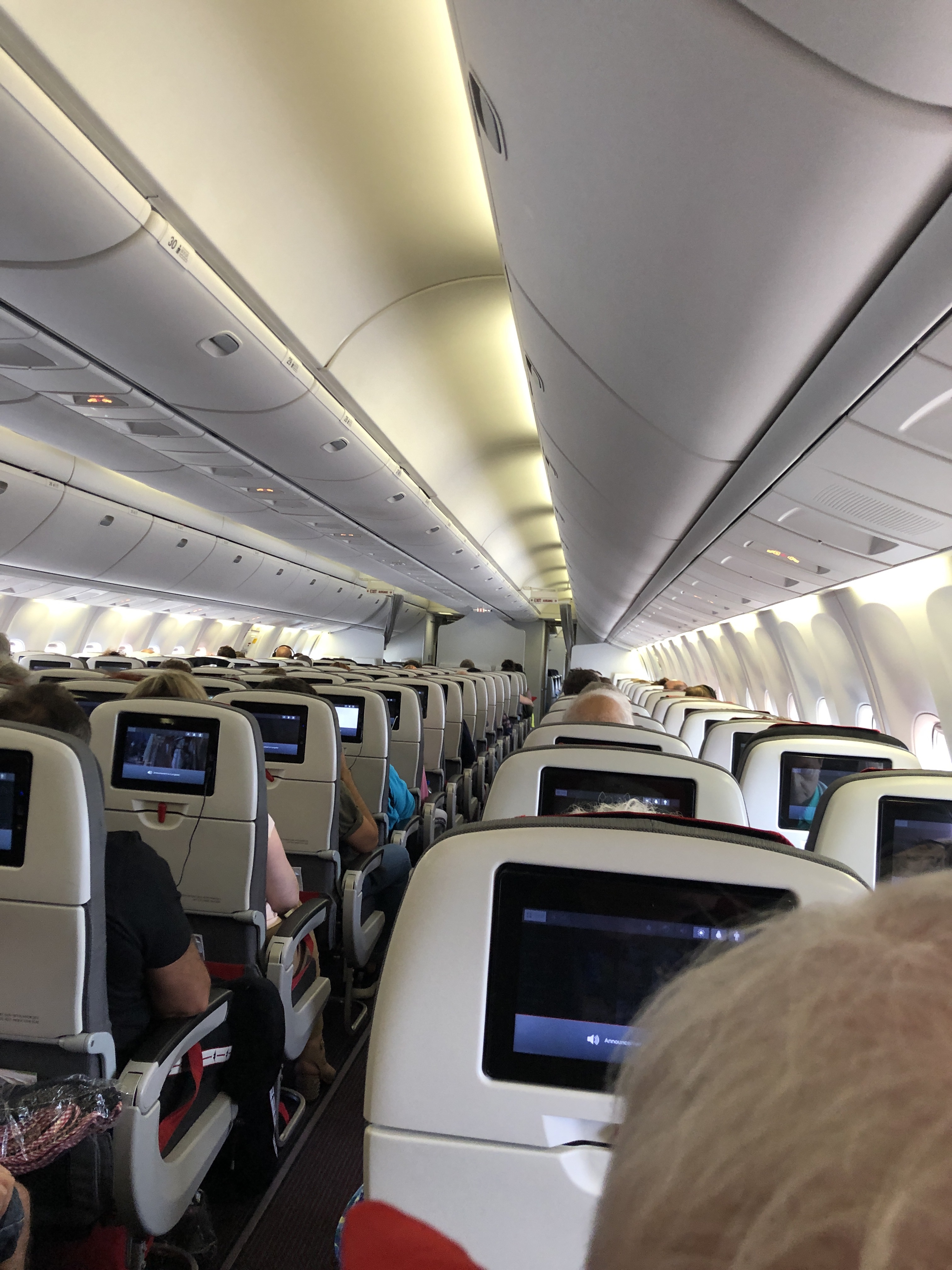 The official day 1 of our trip was spent mostly in the plane. Nine hours in the air from Miami to Vienna, then another three plus to Tel Aviv, both on Austrian Airlines. Smooth flights all the way.
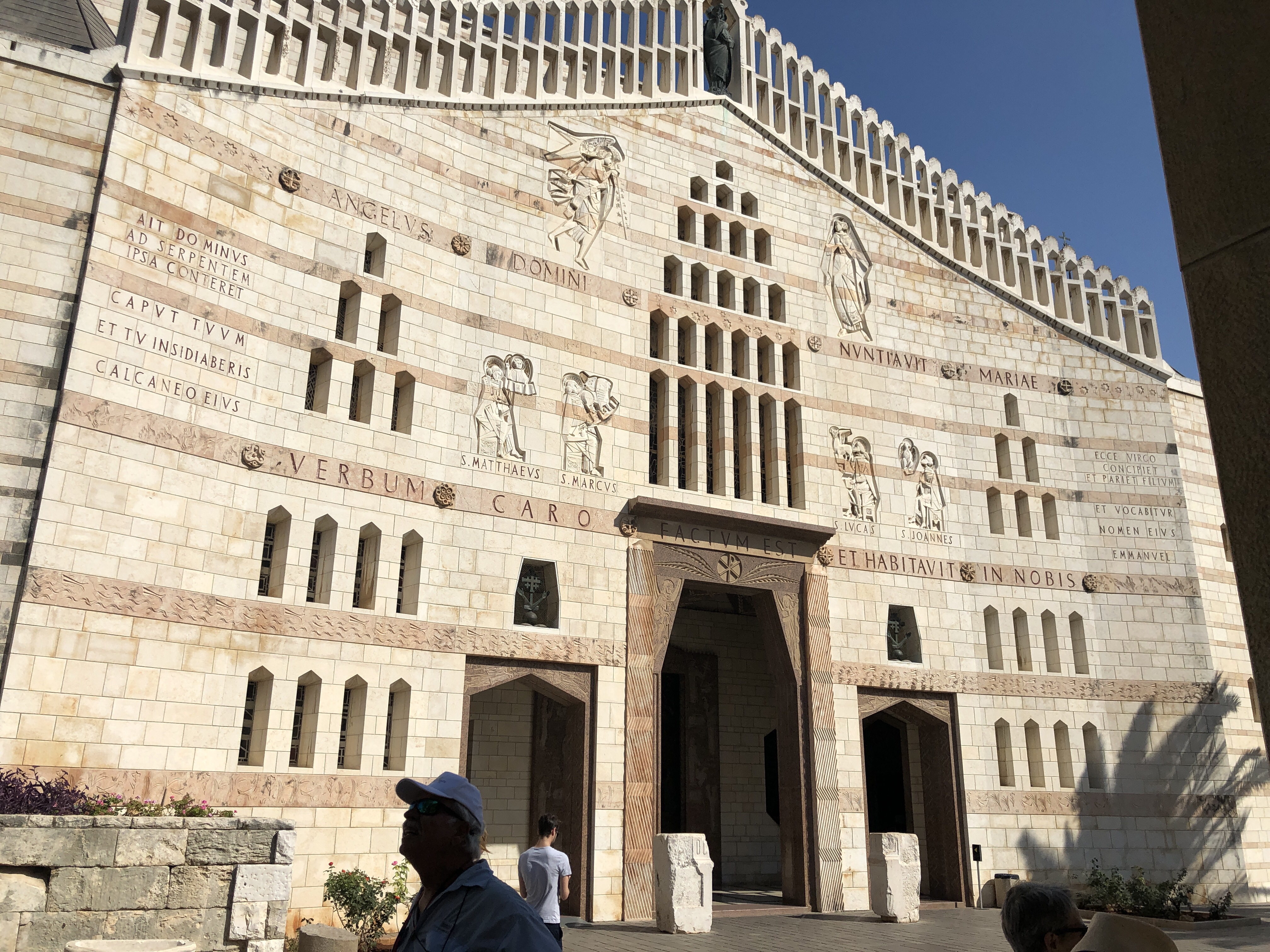
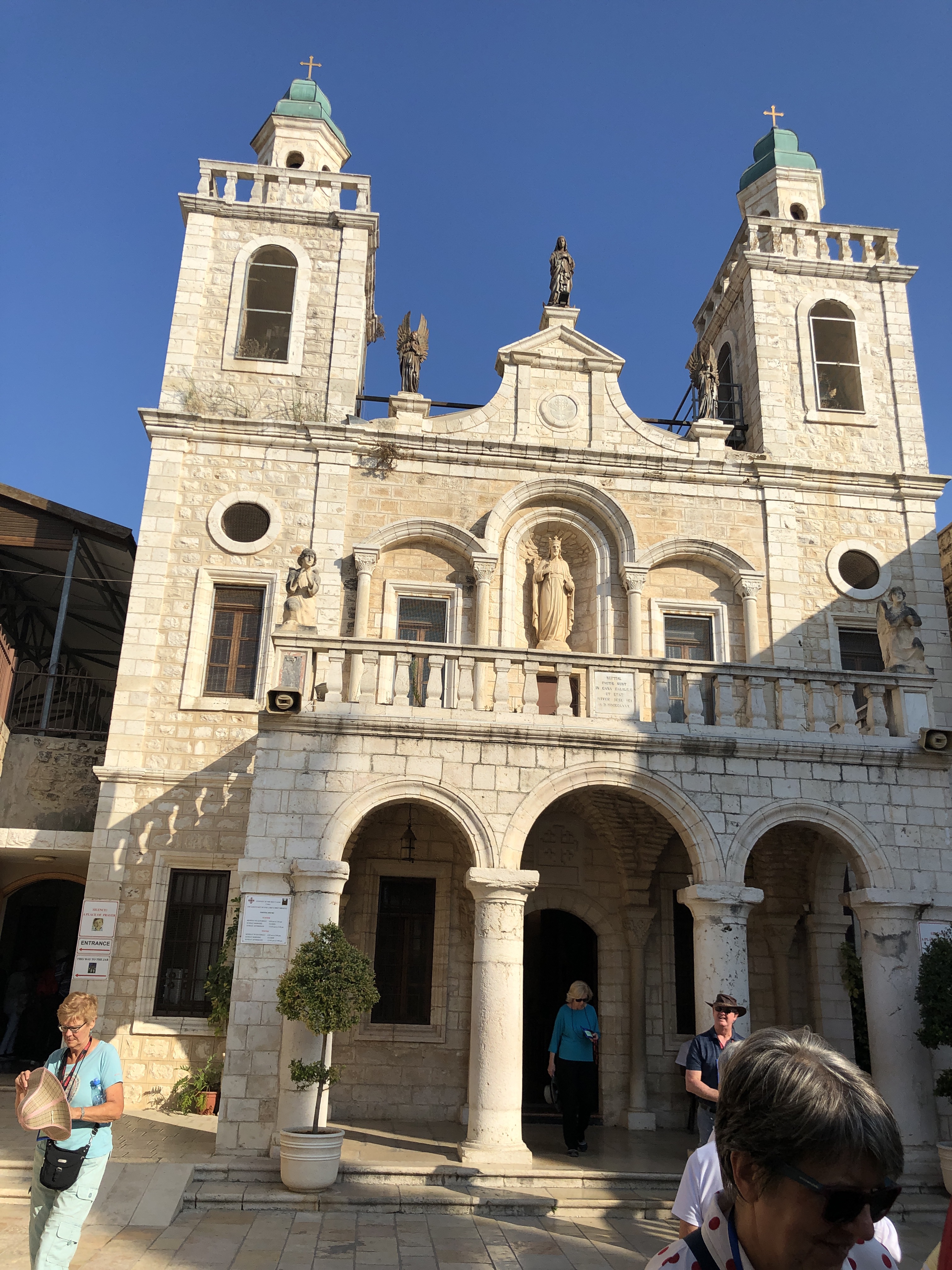
 Because it was rush hour, we had a two hour drive to our first hotel, the Lake House Kimberly in Tiberius. Our tour guide for the week, Tali, lives in Tiberius, and shared lots of info with us on the way. I think most of our group was dozing. She told us what to expect our first day out when we’ll get to Caesarian, Megiddo, Jezreel, Nazareth and Cana.
 First leg of our trip may have been the toughest: getting to the Miami airport. A five hour drive south on I-95 is rarely a good time. But today, it didn’t get exciting until the last twenty miles through the heart of the city. We were glad to get through that last pulse-pounding stretch.
 Waite for it...