Posted in Advent devotions

God’s building project

Photo by Di on Unsplash

Nehemiah didn’t have to say a word. The king could see it in his face. Nehemiah was upset about the ruined walls and burnt out gates of Jerusalem.

The king knew Nehemiah’s sadness wouldn’t go away all by itself. He asks Nehemiah, “What do you want?”

Nehemiah makes a big, bold ask. “Send me there to rebuild the city, and provide the resources to do it.” Amazingly, the king grants his request! Why? It was the hand of God (Nehemiah 1:8).

Despite the overwhelming task and local opposition, the people get the walls rebuilt in fifty-two days. I believe that’s pretty good when you consider they had no heavy equipment or power tools. Plus, they worked with tools and materials in one hand and a sword, spear, or bow in the other.

God tears down and repairs walls. In Ephesians 2, Paul describes how Jesus tore down dividing walls by his blood. Then, God puts up a new structure, a dwelling place for his Spirit, built with believers on the foundation of the prophetic and apostolic scriptures, “with Christ Jesus himself being the cornerstone” (Ephesians 2:20,21). Against all odds and opposition, God builds his church, a place where our lives are safe and secure.

Nehemiah gets an ornament on the Jesse Tree, reminding us of God’s amazing construction project. If you’ve read this far, be sure to go listen to Gold City sing “God’s Building a Church.”

Posted in Through the Bible Devotions

The walls came down

People are screaming, “Why didn’t you write about Jericho?” Relax. Here’s a “through the bible” devotion from Jericho 6.

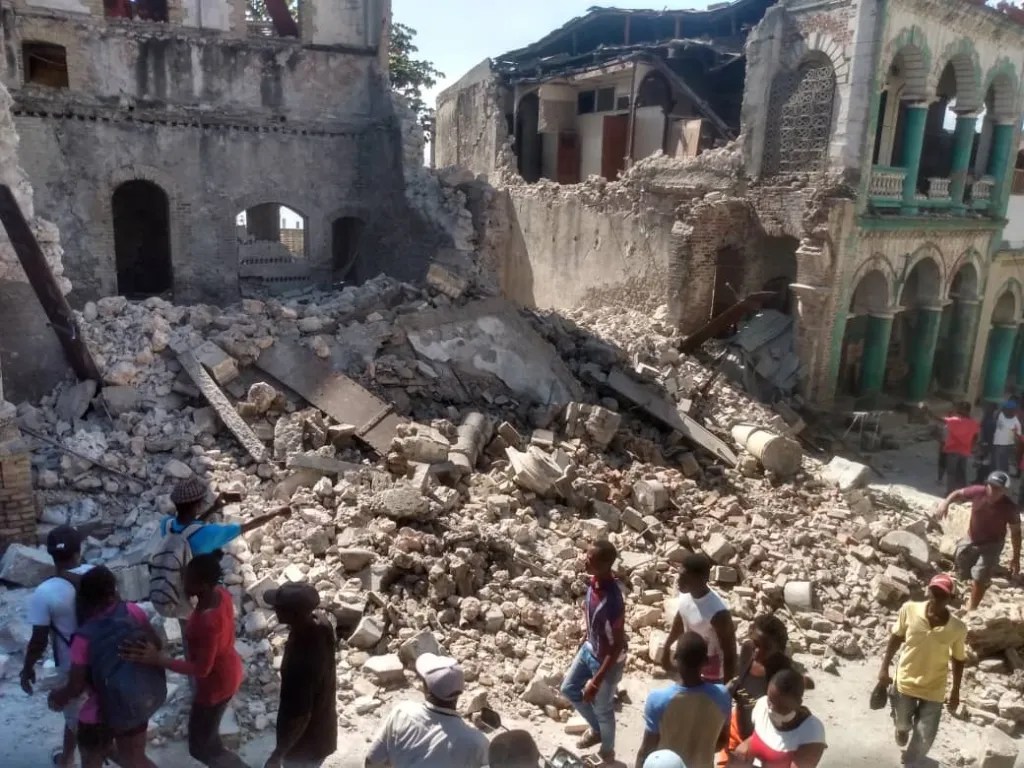
There are lots of walls in Port-au-Prince, Haiti. As we drove from the airport to our guest house, every home that could be lived in was enclosed in an eight-foot tall wall topped by shards of broken glass. Heavy iron doors were the only way in and out, and you had to call ahead of time so someone on the inside would open them.

Safe? Secure? Not really. All it took was a moment, a 7.0 earthquake, and many of those walls, gates, and homes fell into piles of rubble.

Jericho looked secure from the inside and the outside (Joshua 6:1). Safe? Secure? Not really. Not after seven laps around the city, when the priests blew the trumpets, the armed men shouted, and “the wall fell down flat” (6:20). A well-timed earthquake? A sonic-wave of destructive proportions? Who knows? The earth shook at Mount Sinai and at Jesus’s temporary tomb. The sound of many waters and loud thunder accompanies God’s presence. If the Lord can raise the dead with a cry of command and the sound of a trumpet (1 Thessalonians 4:16), then a few city walls are a cinch.

The fall of Jericho is Israel’s first victory in the promised land. They marched. They blew ram’s horn trumpets. They shouted. But God did the heavy lifting. He brought down the walls. Is there a lesson there for us? We go (to all nations), we lift up our voices and play our instruments in worship, and God “gives us the victory through our Lord Jesus Christ” (1 Corinthians 15:57).

Posted in Ministry

What’s your part of the wall?

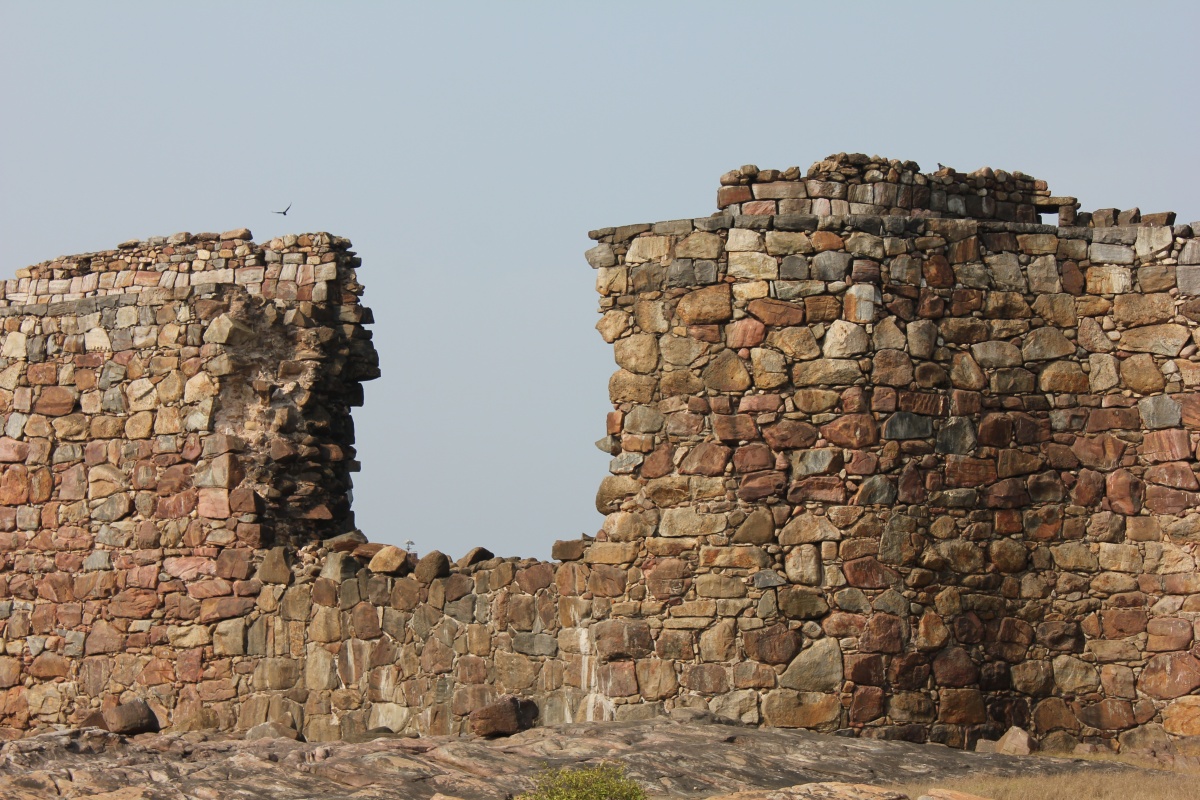
broken-rampart-wall-sindhudurg-island-fortIn his book He Walks Among Us, Rich Stearns, president of World Vision, mentions the daunting task tackled by Nehemiah and those who returned to Jerusalem after exile in Babylon. The walls of the city had been destroyed many years before, but Nehemiah set out to make sure they were rebuilt. How in the world would they accomplish such a enormous task? Stearns writes

Nehemiah understood that great walls are repaired just one stone at a time, so he organized the people to each do their part: “Above the Horse Gate, the priests made repairs, each in front of his own house” (Nehemiah 3:28). The impossible task of rebuilding the wall of Jerusalem was completed in fifty- two days because each person tackled the section of the wall that lay right in front of them (p. 40).

When there are billions of people living in poverty all over the world and thousands of children dying each day, what difference can any of us really make? Talk about a daunting task! Where would we even start?

Well, rather than feeling guilty or inadequate, we might want to ask the question, “What’s my part of the wall?” What opportunity has God placed before you to make a difference in what looks insignificant but is in reality a very important job? Who did you see with a need today? Whether in a far away place or across the street, that’s your part of the wall.

Stearns also quotes Oswald Chambers:

The great hindrance in spiritual life is that we will look for big things to do. Jesus took a towel . . . and began to wash the disciples’ feet.

A great way to start each day – to remind ourselves of both God’s mercy and the needs around us – could be to ask, “What part of the wall do you want me to work on today?” I am sure the Lord will let you know!