I knew it would be quiet. It usually is. Sixth commandment night at confirmation class: “You shall not commit adultery.”
The catechism’s explanation isn’t too risqué: “sexually pure and decent life in what you say and do” and “husband and wife love and honor each other.” But when you get down to the nitty-gritty, there’s plenty of giggles, shock and silence.
Where do we start? Right at the beginning. Male and female, be fruitful and multiply, hold fast, one flesh. God’s gift of sex is a good thing in the context of marriage.
However teacher and students live in a world where countless variations on that theme exist outside the marriage relationship. From pre-marital sex to same sex relationships to rape and incest, the discussion gets very real very quickly. As soon as we jumped in the deep end, one student remarked, “Pastor, you don’t have to talk this. My mom already tried. I told her we had teachers to explain it to us.”
I thought that was pretty interesting. From his point of view, this was a topic to be covered at school, not at home and certainly not at church! Though only a few wanted to admit it, I am sure they had all been exposed to the sexual variations I mentioned. Maybe more. They just didn’t want to talk about it.
Which is probably why we’ve got a lot of the problems we do. Teen pregnancies, chronic STDs, more charges of harassment every day. Maybe a few discussions with our middle schoolers can make a dent. Maybe a few discussions at home, too.
As I was tagging along with my wife, the day’s errands took us to Michael’s, a place filled with “arts and crafts, custom framing, home decor & seasonal products” and more than anything else: Christmas! Well over half the store was devoted to everything red, silver and gold on a green backdrop. According to the latest flyer, it’s all 50% off, too. You better get over there. And I mean now.
I started thinking about this thing called Christmas. This thing that has taken on a life of its own. This thing that now occupies two of the twelve months of the year. This thing that drives so much retail and online sales. This thing that we thought was a sacred holiday, but has long since been taken captive by our culture.
Church, I have sobering news for you. You are not going to get Christmas back. You’ve lost that battle. You’ve lost this culture war. There is nothing you can do to get Christ back in Christmas. It is now a fully secular event. You may participate in it, but it is not yours anymore.
But that’s OK. Really. Because we still have something. Something different. Something real. The nativity. That is still ours.
That’s the story. That’s the real story. And the world doesn’t want that. So it’s ours. It’s all ours.
So that’s what we’ll celebrate. That’s what we’ll proclaim. That’s the story we’ll tell. The nativity. That’s what you’ll hear me talk about. O, I like Christmas as much as the next guy. I’m in for trees, lights, songs, presents, cookies, snowmen, “Elf”, penguins, snow and fruitcake. But when it comes to church, we’re doing nativity. The festival of the nativity. The birth of the Savior, the King, the Christ.
That’s what you’ll be hearing me talk about. Not Christmas. Nativity.
My office assistant stuck her head in my door last Thursday to let me know that someone from a nearby by TV newsroom wanted to interview us on site for a story. Earlier in the week, we had invited a couple of deputies from our county sheriff’s department to stop by and just give us a few tips about how to keep our congregation safe when we gather for worship. We’re not a high risk target, but if we can reassure our folks that we’re safe, they can focus on worship rather than wondering about what might happen.
The next day, the sheriff’s department issued a press release, offering to come and talk to any congregation about security and safety. They mentioned our church by name, a reporter picked up on it, and called to come by and talk to me.
I knew the reporter, since she had both anchored and reported in our area for many years. We had a great conversation, a good interview, and her one-minute piece the evening news gave me my ten seconds of fame and had some nice shots of our campus.
The next day, another news channel contacted us and wanted to come by on Sunday to get a few pictures as we are honoring and thanking our veterans and also local heroes, the first responders of our sheriff and fire departments. I thought it was a great idea. We are very proud of our vets and local heroes, and am glad to give them recognition.
But then another phone call came from a reporter who wanted to come out the next day, having heard that we were having extra security at our church on Sunday morning. I was amazed at how quickly the story had morphed into a media event. I had to assure her that we weren’t doing anything extra or out of the ordinary. She replied, “But won’t the sheriff will be there?”
“Yes,” I replied, “he is going say a few words, along with the deputy fire marshal. But they are only there to thank and honor those who serve, not to provide any kind of extra security.”
She went on, “Are you having any kind of drills, any active shooter drills?”
“No, just a Sunday morning worship service.”
“Thank you, pastor.” And she hung up.
It’s fascinating how quickly we got drawn into a media frenzy, and how quickly we were tossed back, not big enough to keep. I know they’re jut doing their jobs. They need a story. They need ratings. They need a story people will watch. Yes, the mass killing in the church in Sutherland Springs, TX, is upsetting and a reality check. It could happen anywhere. But the story is already losing momentum replaced by other stories and scandals.
One of the deputies asked me, “What would you do? What would you do if someone walked in firing a weapon? Where would you go?” I only really have two choices: duck behind the altar or head out a side door. But as I thought about that, I don’t know that my first response would be to get me out of there. I would want to make sure everyone else was OK. My immediate concern would be them, not me. What else would a shepherd do?
It hasn’t been three days yet since Devin Patrick Kelley walked into First Baptist Church in Sutherland Springs, TX and opened fire during Sunday morning worship, killing 26 people and injuring about 20 more. You won’t browse the web, watch TV, listen to the radio or talk with family and friends for long before hearing about the incident. Though more information rolls out hourly, there are still so many questions.
“Who was this guy”
“How did he get a gun?”
“Why did he choose this place to kill?”
“What could we have done to prevent this?”
“What should have been done to prevent this?”
We could go on and on. Experience tells us it will take a long time to sort through all the information and unravel the mysteries behind this and so many other shootings.
Of course, we also have to ask, “Could this happen here? Are we safe when we gather for worship?”
I’m a math guy, and I believe the math gives us perspective. There are about 350,000 churches in the United States. Most meet on Sunday mornings for worship. How many had a shooting? Just one. Doesn’t sound like we need to worry about security, metal detectors and locking doors just yet.
On the other hand, 18,000 people are injured and die at home every year. Sounds like you better get out of the house and get to church, where it is much safer! But walk, don’t drive. 3,000 people die in car crashes every day!
Are we safe when we gather for worship? Of course not! “Your adversary the devil prowls around like a roaring lion, seeking someone to devour” (1 Peter 5:8). Don’t you think he knows where to find prey on a Sunday morning?
But that’s not where the greatest danger lies. To discover that, we ask a more penetrating question: how many people have you killed on Sunday morning?
Jesus said, “You have heard that it was said to those of old, ‘You shall not murder’…but I say to you that everyone who is angry with his brother will be liable to judgement; whoever insults his brother will be liable to the council; and whoever says, ‘You fool!’ will be liable to the fire of hell'” (Matthew 5:21,22). That’s terrifying. Our worship services, bible classes and council meetings are filled with serial killers.
I know Jesus is right, because I’m guilty of anger, gossip and name-calling on a weekly basis. So are you. And my attitudes and words aren’t just killing others. They are killing me. The wages of my sin is death.
What was the first sin outside the Garden of Eden? Murder. Cain kills his brother. Why mess with little sins? If you’re going to sin, you might as well make it a big one.
Here’s where it really gets interesting. How does God respond to this tragedy? How does God respond to the first mass murder? Think about it: Cain kills 25% of the earth’s population. God asks a question, “Where is your brother?”
God knows. He knows Abel is dead. He knows Cain killed him. What does God want? An admission. A confession. Why? Because if we confess our sins he is faithful and just and will forgive our sins and cleanse us from unrighteousness (1 John 1:8,9). Because God doesn’t despise broken and contrite hearts (Ps. 51:17). God doesn’t want the wicked to perish. He want them to turn to him and live (Ezekiel 18:23). He wants us to turn to him and live.
A church sanctuary might very well be the most dangerous place to gather for worship. Despite it’s name, it will never be our safe place. You see, our refuge isn’t a place. “God is our refuge” (Psalm 46:1). Only in the arms of his mercy and grace are we safe.
Last night was fifth commandment night in confirmation class. “You shall not murder.” So we ran through the gamut of the best known killing sins, from murder to abortion to euthanasia to suicide to manslaughter.
I guess my lesson gets pretty gruesome as I describe each, because several of the students bemoaned, “Do we have to talk about this?” “That’s horrible!” “Why are we even discussing this?” Which I find very interesting, because they are all gamers to some extent. They spend time in virtual worlds shooting people, crashing cars, blowing up zombies, and waging war. But when you actually sit down to talk about real killing, they get uncomfortable.
Perhaps that’s a good thing. We spend a lot of time in a virtual world of sorts, where shootings, explosions, fires, storms and epidemics fill our news feeds. Most of them don’t directly touch our lives, so it doesn’t bother us too much. It’s not till you sit down and talk about real killing — on your street, in your family, at the school — that we start to pay attention.
Maybe we need to talk about that more. We need to talk about what it really means to take care of someone in hospice, or with an unexpected pregnancy, or who has killed in war or law enforcement. Perhaps then we would understand the depth of this commandment and the importance of life to our Creator. We would better understand what we think are the “lesser” killing sins: anger, hate, bullying and hurtful language. We would better grasp what it means to take care of our lives, exercising, eating right, and getting enough. And maybe – just maybe – we would be moved to take care of others’ lives.
But if the class was uncomfortable talking about death, just wait. The sixth commandment is up next. Time to talk about sex!
Today we did something a little different for Reformation worship. Rather than two services with different styles, we had one service utilizing the musical talents from both at our usual later time. The praise team (guitar, bass, piano, vocals) led the first half of the service, and the organ, choir and bells stepped in after the sermon.
As usual, I was a bit reluctant to wade into the logistics of a blended service. I know that some of our worshipers attend one service or the other because of musical style. Others choose to come at a certain time. Pouring everyone into the same bucket means that we’ll be missing some families that day. It also means that some people won’t get to sit in their usual seat for worship, always a source of irritation for Lutherans.
As expected, attendance was down about 20%. We were missing a good number of families who usually come to the early worship service. Five cars pulled into the parking lot for the early service, somehow not knowing that this was the one service week. Despite three weeks of verbal announcements, emails, and text messages, they didn’t get the memo.
On the flip side, the church felt like it was full, we enjoyed the musical talents of all our musicians, and we were once again blessed with God’s gifts of grace. Not all, but most of the babies, toddlers and children were there, which is such a dynamic part of worship. They remind us that unless we become like little children, we’ll miss out on God’s kingdom.
It’s different for me. You see, I go to both worship services every week. I’m OK with worshiping early and later in the morning. I enjoy both styles of worship. I know everyone in the congregation. Each week I get to spend the whole morning there with our families, children, youth and seniors.
Unfortunately, in the back of my mind, I am always aware of the reality that if someone doesn’t like the worship experience, they might not be back. I know it’s not supposed to be that way, but it is a reality in our world and in the church. It certainly doesn’t honor the work of the Holy Spirit in believer’s hearts. It also doesn’t recognize the faith of those who gather not just to receive God’s grace, but to take it with them back out into the world.
Will we do it again? Probably. For some special occasion. Maybe for my last service. Ha! That got your attention, didn’t it?
It was the spring of 1982, a significant year for me. I had quit my job at Bell Labs in New Jersey and moved to Austin, TX to begin a new job with a friend of mine who was helping to start a new company. They were going to make deep oil well probes to check the pressure far below the surface. I would be the programmer, working alongside some engineers who would design the hardware. Coding is a hot topic now. Back then I was doing assembly language programming on 8086 Intel chips.
Within two months, the company dissolved and I found another job with Bausch and Lomb, a division of Houston Instrument, just before the advent of CAD/CAM. My division programmed these massive tabletop printers for architectural drawings. It was really cool to see the pens whip around a huge sheet of paper to render a drawing.
Anyway, it was during this time that I realized I enjoyed everything I was doing with the church more than anything I ever did with my job. The pastor who confirmed me told me I should become a pastor, but I never gave that any more thought. Till now, when a vicar at my Texas church said the same thing nine years later. Hmm. Is that even a possibility? After all, I didn’t study any theology as an undergraduate. Could I really do that? My vicar and pastor assured me I could. In fact, lots of seminary students were second career.
So I applied. I sent off my application to Concordia Theological Seminary in Ft. Wayne, IN, where there were more second career guys than system guys. “System” guys went to a Concordia undergraduate school and majored in pre-seminary studies. I wasn’t a “system” guy. I had a liberal arts degree in Math.
Well, if I was going to go to the seminary and study to become a pastor, I wanted to start doing things that pastors did. What could I do? I could go out and make evangelism visits. In the context of my south Austin church, this meant following up on Sunday morning visitors to worship. The evangelism committee consisted of the vicar and his wife, a couple of young women, another guy and me. I think we got together on a Tuesday night, divided up some index cards with contact information on them, and went out to knock on doors and thank them for worshiping at our church. Hopefully, this would lead to further conversation.
My memories are a bit hazy (and you’ll learn why in just a bit), but I think we had some good visits and good conversations. I’ll be honest, I really didn’t know what I was doing. I was just willing to learn. After we attempted our visits, we reconvened at a certain time and place to debrief. On some nights we would meet at a little Mexican cantina that served Everclear margaritas.
Some of you are thinking, “What’s that?” Others are thinking, “Whoa!” Everclear is 190 proof grain alcohol. (In college, I learned that grain alcohol was an ingredient in Purple Jesus punch.) As you can imagine, throw a shot of that into a margarita and it is definitely party time. I was told, you can only have one. Halfway through my drink, I knew they were right. No one needs more than one of those. Not even on evangelism night!
Few know it, but this is one of the factors that contributed to my deciding to pursue studying for the pastoral ministry. After knocking on a few doors and taking a few sips, I thought, “You know, I think I can do this.” Of course I had no idea all that would be involved in being a pastor, but this was certainly a plus.
I never got to be a part of an evangelism team like this again. I’ve gone out on plenty of visits with plenty of other people, but we never took the time to share our experiences over a delicious and potent beverage. Since I’ve been in Florida, I’ve had some fascinating theological discussions at Tiki bars and beachside wineries, but none of them were quite like my experiences in Austin. If you were to ask me who was most influential in my decision to become a pastor, these dear friends just might be at the top of my list!
We lived on the end of the row while I was doing my vicarage (internship) in Baltimore, so we actually had a yard in-between us and the church. It wasn’t a big yard, but was fenced in so the dogs could be out there.
We also lived right across the street from an elementary school. I was told that over six hundred children lived in the nine-square blocks about the school. I don’t doubt that estimate. There were always kids coming and going, running and laughing.
And knocking at our door. You see, we had the dogs. We brought the yellow Lab, Gabriel, with us. We brought home a chocolate Lab, Rachel, a few months after we arrived in the city. They were great companions at home, on walks and when I went for runs. They were great watchdogs, too. Right after we arrived, a repairman came to the house to fix a lock. Gabriel had him pinned against the wall with a snarl I had never seen before.
And the neighborhood kids loved them. It was not unusual to hear a knock at the door and find 18-20 kids on the front step asking, “Can we play with your dogs?” We would let them out in the side yard and the dogs would chase the herd of kids to one end of the yard, and then the kids would chase the kids to the other end. The smaller children would ride the dogs around the yard like ponies. The kids would throw balls and sticks, and then try to wrestle them away from the dogs.
I’m not sure who loved it more – the kids or the dogs. Finally the kids would tire or have to go home, and the dogs would collapse, exhausted and happy, panting with their tongues rolled out on the floor.
We were there over thirty years ago, yet I can still vividly remember the sound of gunfire from a passing car, the all night conversations and music passing by our window, and those excited little voices asking, “Can we play with your dogs?”
This one happened in Florida, late one morning when the intercom from the front office told me, “There’s a man on the phone who wants to talk to the pastor.”
I knew how these conversations usually went. But I wasn’t all that busy and was feeling fairly pastoral, so I said, “OK, I’ll talk to him.”
It was a little different than what I expected. He didn’t ask anything of me other than wanting to have lunch with me. I was free for lunch, so when he told me where he was, I told him I would meet him at the barbecue restaurant just a quick walk away.
When I arrived at Woody’s, I figured that he was the guy standing by the front door, so I introduced myself, we went inside and sat down.
I told him lunch was on me. I was fairly certain a request for help would eventually come, so I was prepared to pick up the tab. When the waitress came, I ordered a lunch special, but he only got a plate of fries and some ice water. Interesting.
As we waited for our food he did most of the talking and I mostly listened. He was an experienced truck driver and was on his way to St. Augustine for his next job. He didn’t have his own truck, but was meeting someone for his next haul.
The food arrived in a few minutes, and while I enjoyed some pulled pork and sweet tea, he launched into a lengthly monologue about driving truck, his experiences and what he hoped his future would look like.
“You know all those orange and blue trailers you see on the road? Those are all beginners. That’s their first job. Trust me, they aren’t making much money. Barely enough to get by. They are just learning how to drive, so when you see them, give them lots of room.” I took his word for it, though I didn’t know if that was a fact.
I did ask, “So how long do you have to drive before you are making good money?”
He said, “At least ten years. Until then, you aren’t making anything. Most drivers don’t last that long. You have to stay clean — no record, no drugs, no alcohol. Most can’t do it. Companies can’t find drivers who are clean and most guys who want to drive can’t get jobs.”
Our conversation went on for about an hour. Mostly about truck, a little bit about family, and of course a mention of church life, since I’m a pastor and all. Then he mentioned that he just need to get up to St. Augustine to pick up the truck for the next job.
I said, “I can give you a ride.” He was meeting someone at a place near the outlet mall. Half-an-hour away, not a problem. Of course, in the back of my mind a voice tried to tell me I probably shouldn’t do this alone. But I didn’t feel threatened and he seemed honest enough, so we headed up the interstate to his destination.
On the way we talked about where he had lived in Florida, his time in the military, his kids, who were grown and living somewhere, and of course a quick mention of wanting to get back to church. In fact, when he was in the area, he would probably stop in.
When we got to the motel, he told me his truck was arriving the next day. I wasn’t going to just leave him there, so I went inside and paid for a hotel room for him.
As I drove home, I marveled at how he chose to spend a couple of hours with me rather than just asking for some help. I don’t know if he had practiced that skill, or if it just worked out that way. But it was effective. I probably would have said no to an outright request, but was willing to help as the need unfolded. Pretty clever. I’ll bet anyone could use that strategy. Invite someone into your life, gradually unfold your need, and let them be a part of your story.
I didn’t come away from that encounter feeling used. Instead, I was fascinated how our lives had intersected for just a moment in time. I learned a lot. Every time I see one of those trailers on the highway, I remember that day and what he told me about those drivers. I also think often about my vocation, and how people seek out a pastor for help. I’m safe, often generous and usually compassionate. I didn’t do any preaching or teaching that day, just bought a guy lunch and gave him a ride. Ministry moments aren’t spectacular. Neither was Jesus. Maybe that’s the point.

 As I was tagging along with my wife, the day’s errands took us to Michael’s, a place filled with “arts and crafts, custom framing, home decor & seasonal products” and more than anything else: Christmas! Well over half the store was devoted to everything red, silver and gold on a green backdrop. According to the latest flyer, it’s all 50% off, too. You better get over there. And I mean now.
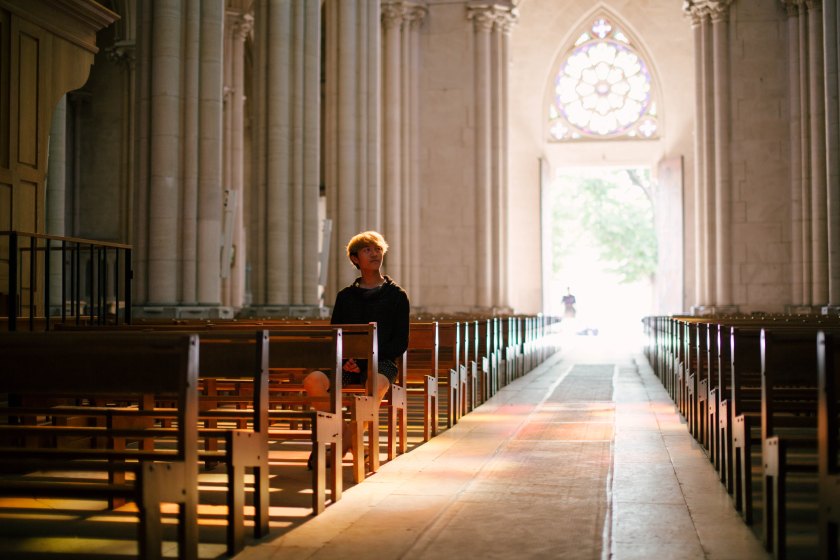 It hasn’t been three days yet since Devin Patrick Kelley walked into First Baptist Church in Sutherland Springs, TX and opened fire during Sunday morning worship, killing 26 people and injuring about 20 more. You won’t browse the web, watch TV, listen to the radio or talk with family and friends for long before hearing about the incident. Though more information rolls out hourly, there are still so many questions.
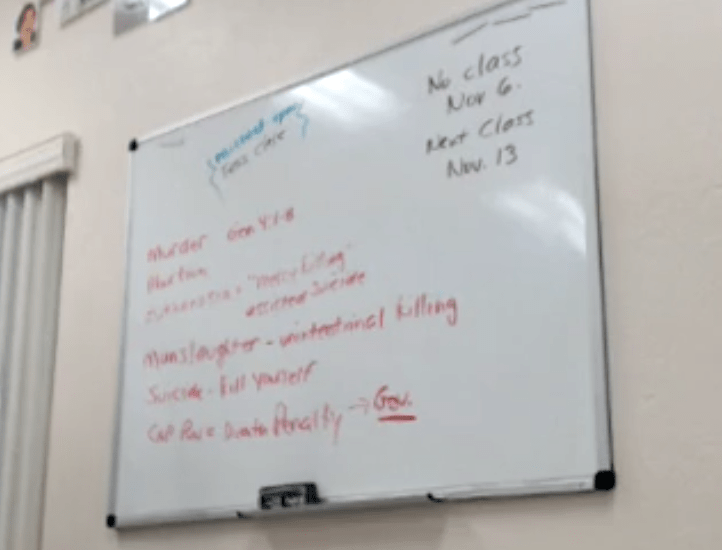 Last night was fifth commandment night in confirmation class. “You shall not murder.” So we ran through the gamut of the best known killing sins, from murder to abortion to euthanasia to suicide to manslaughter.
 Today we did something a little different for Reformation worship. Rather than two services with different styles, we had one service utilizing the musical talents from both at our usual later time. The praise team (guitar, bass, piano, vocals) led the first half of the service, and the organ, choir and bells stepped in after the sermon.
 It was the spring of 1982, a significant year for me. I had quit my job at Bell Labs in New Jersey and moved to Austin, TX to begin a new job with a friend of mine who was helping to start a new company. They were going to make deep oil well probes to check the pressure far below the surface. I would be the programmer, working alongside some engineers who would design the hardware. Coding is a hot topic now. Back then I was doing assembly language programming on 8086 Intel chips.

 “You know all those orange and blue trailers you see on the road? Those are all beginners. That’s their first job. Trust me, they aren’t making much money. Barely enough to get by. They are just learning how to drive, so when you see them, give them lots of room.” I took his word for it, though I didn’t know if that was a fact.
 Waite for it...