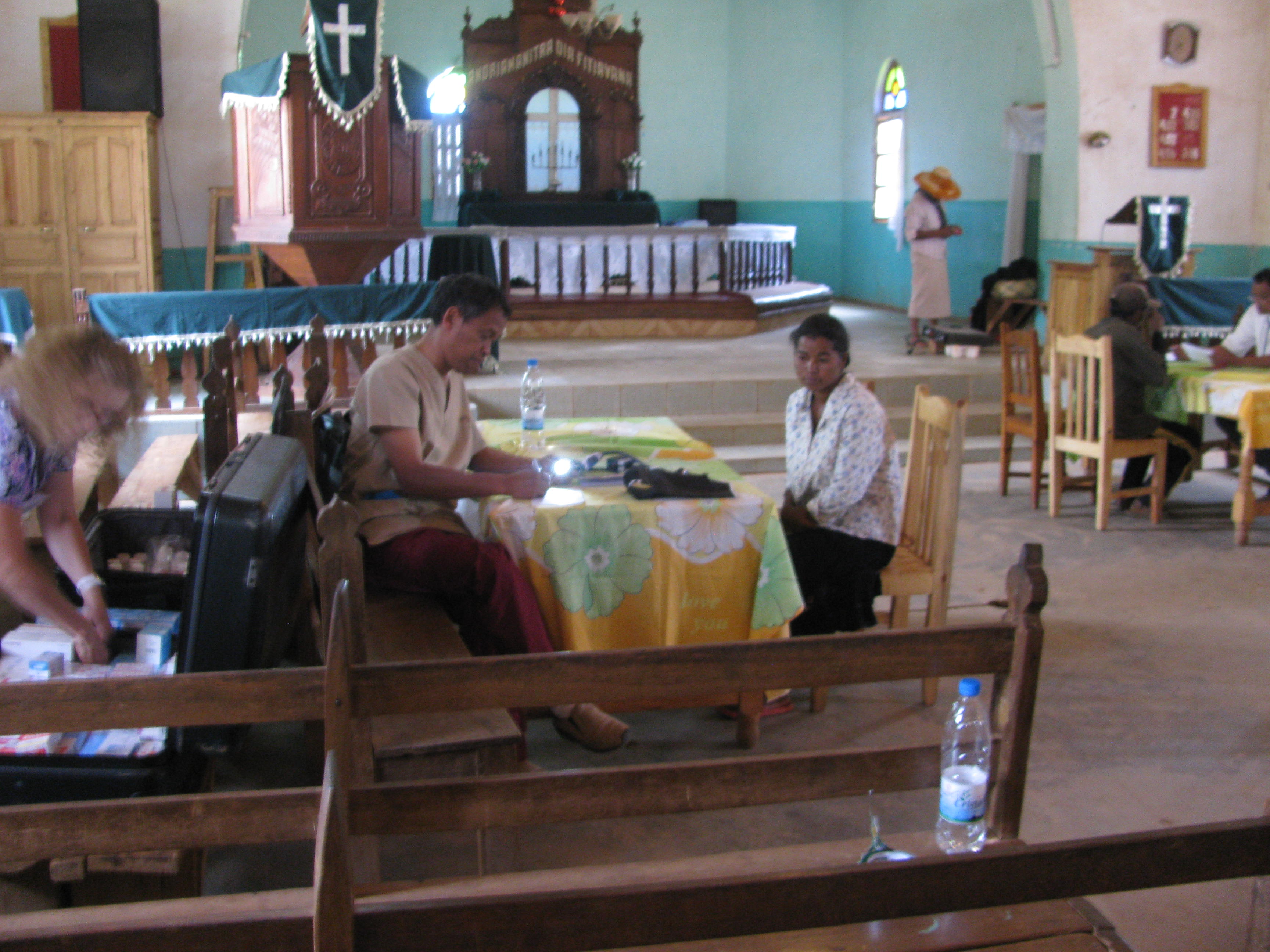
So many people were quietly waiting when we arrived at the fourth clinic site on Thursday, October 15. It felt calmer and less rushed, but we still saw more than 400 patients.
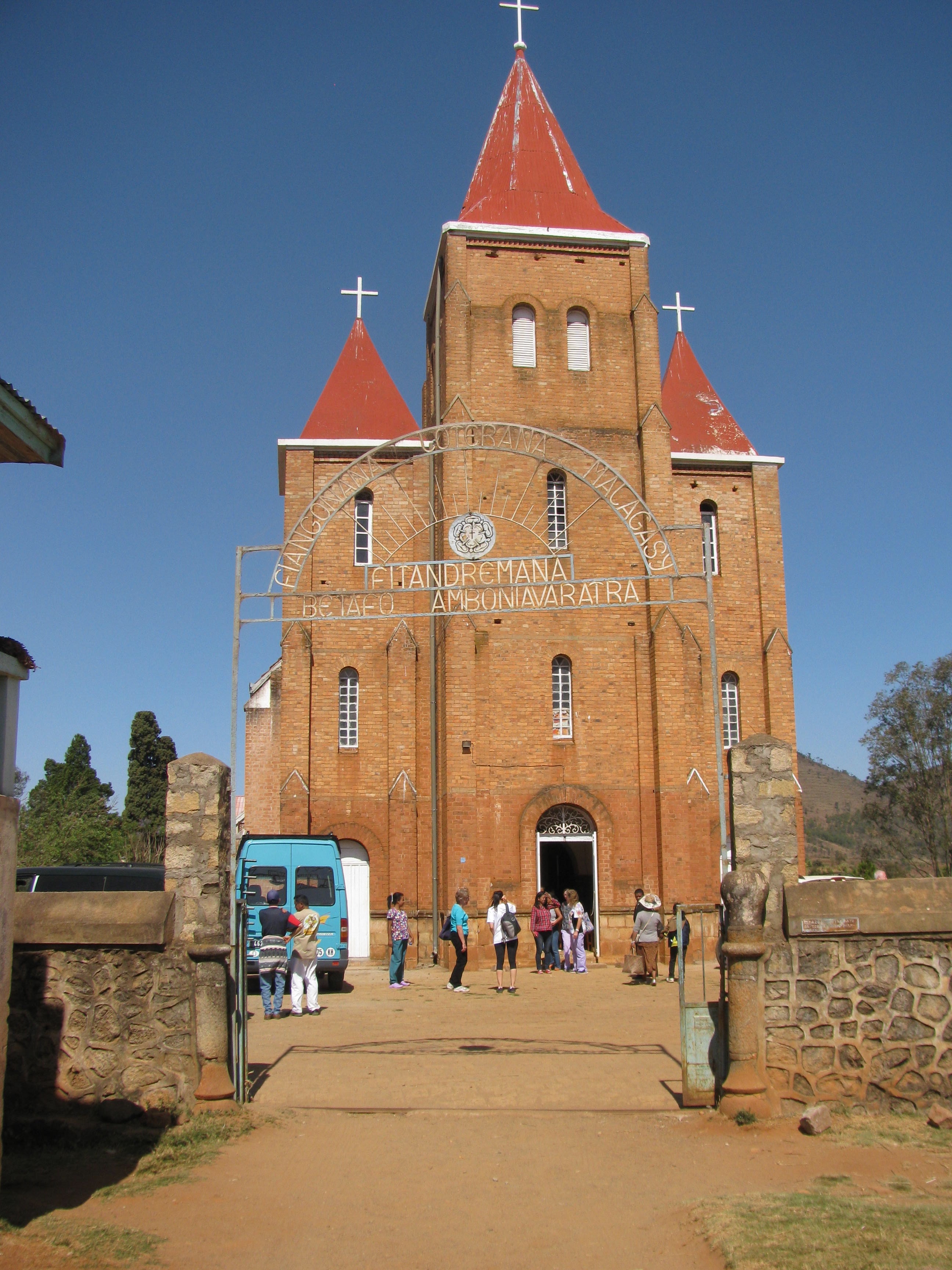
After clinic, we went to see the oldest Lutheran Chuch in Madagascar, established in 1867. They were in a sanctuary build in 1950. The front of the pulpit was a beautiful carved Luther rose. Every church has a Bible verse arching above the chancel.
Pulpit with Luther RoseOldest Lutheran church in Madagascar
We then traveled to a community that housed and cared for 140 mentally-ill, addicted and demon possessed people called Toby (TWO-by). Yes, demon-possessed, as described Pastor Bob Bennett’s book I Am Not Afraid. Some were in chains, to keep them from hurting themselves and others. We went in part to give them some rice and oil, but also to experience this unique situation supported by a number of churches. It was clean and well-kept, but not a place where you really wanted to spend time if you didn’t have to. The Church there was beautiful.
Church at Toby
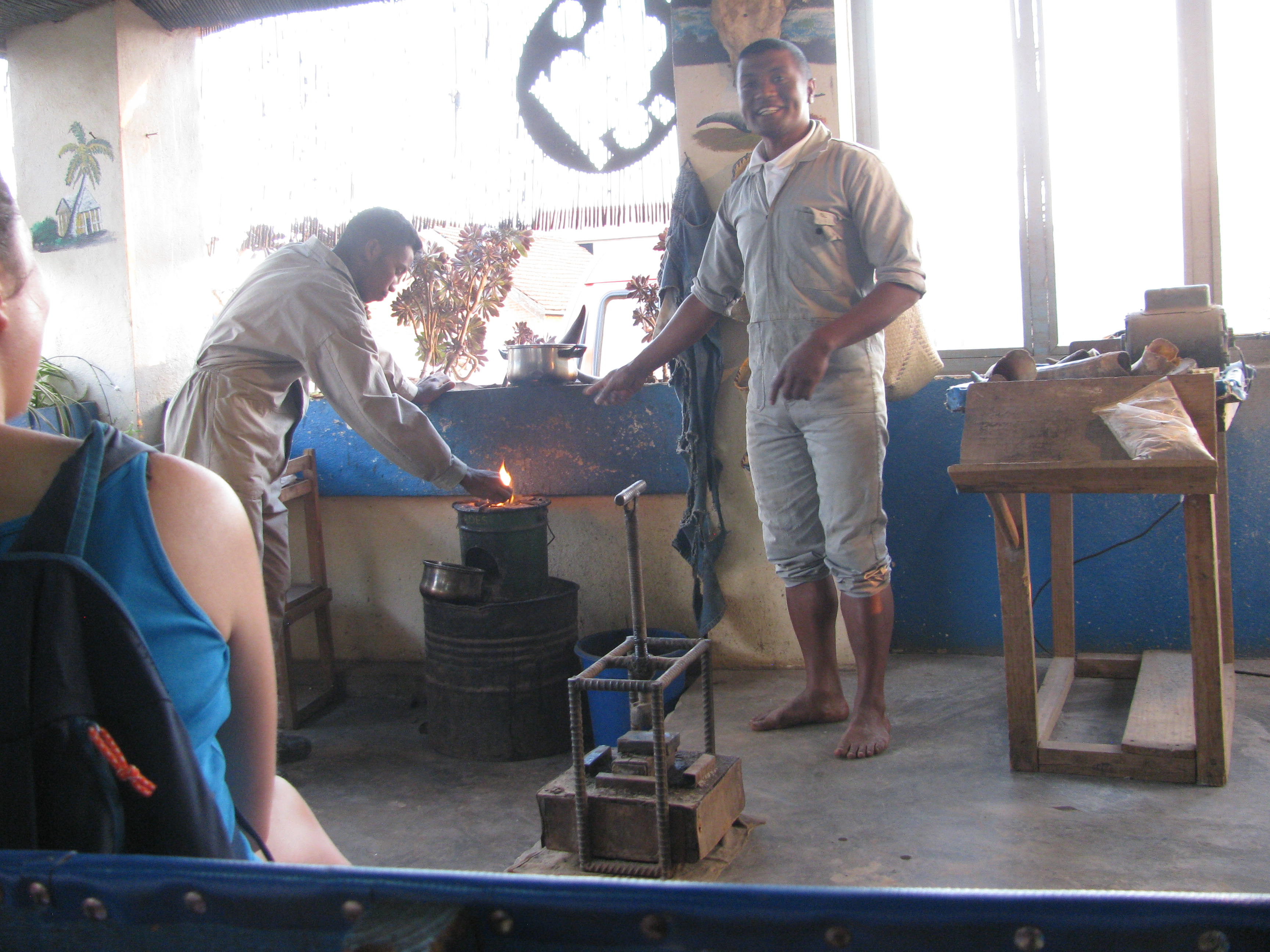
Our guides next took us to a small candy making shop where the owners mixed up some Bon Bon Gasy (“Madagascar candy”) for us. We brought home eight flavors.
Upon returning home, Dr. Harison provided a delicious barbecue for all, to say thanks and good-bye. Tomorrow we leave Antsirabe. Altogether we’ve seen over 2,000 patients over four clinic days!
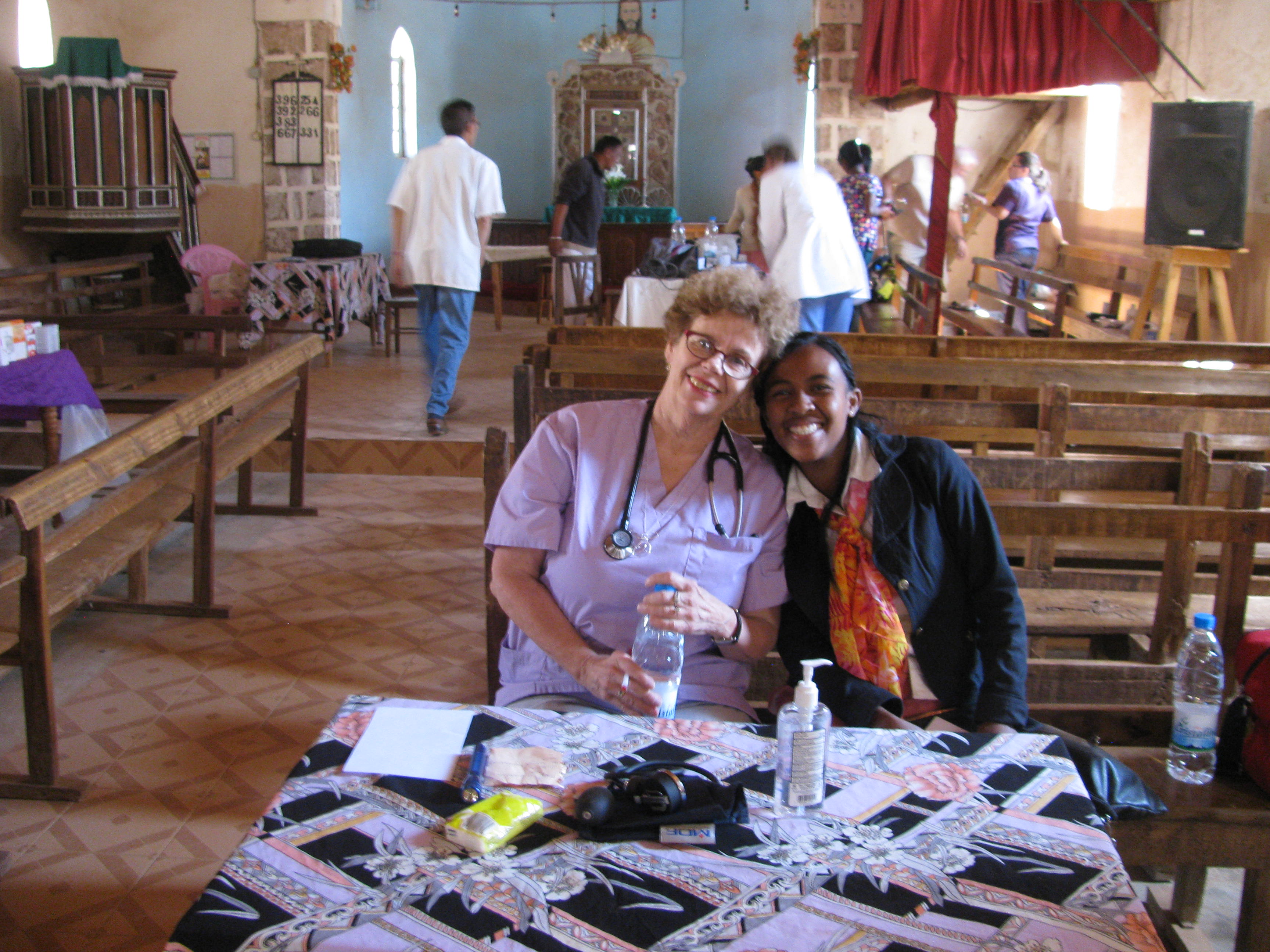
Jane with her interpreterLydia giving a breathing treatment
Tuesday’s clinic ( October 13) was at a Lutheran church in Ambano, only 30 minutes away, a location where a team hadn’t gone before. About 100 people were waiting for us. After a devotion by Pastor Andy, the local pastor, we opened the doors.
We saw 425 patients on day two. Janelle helped us set up a highly-efficient, high volume, assembly-line pharmacy, and we were able to keep up and fill every prescription, finishing up by 3 pm. On this day I had the chance to interact with some of the patients, especially children. Dr. Harison was amazed at how many patients with goiters came through his makeshift office, a concern he would communicate to the local health ministry. Molly had a chance to teach both tooth brushing and hand washing, giving out lots of tooth brushes, toothpaste and soap.
High volume super-efficient pharmacy
Since we got done a little earlier, we went to a Jewel market, a long row of little outdoor shops, all selling semi-precious gems. We really didn’t see anything we wanted to buy at this location.
Our next stop was a place where artisans made everything and anything you can imagine from the horns of zebu. We bought a few souvenirs here.
We then went to a little shop where a woman made her own paper which she then crafted into postcards and notecards. She also made silk thread and wove beautiful scarves. We did buy some items here.
Supper was a very well done pork tenderloin, noodles, rice and French fries, along with some watermelon and mango.
After supper, it was more pill packing then off to bed.
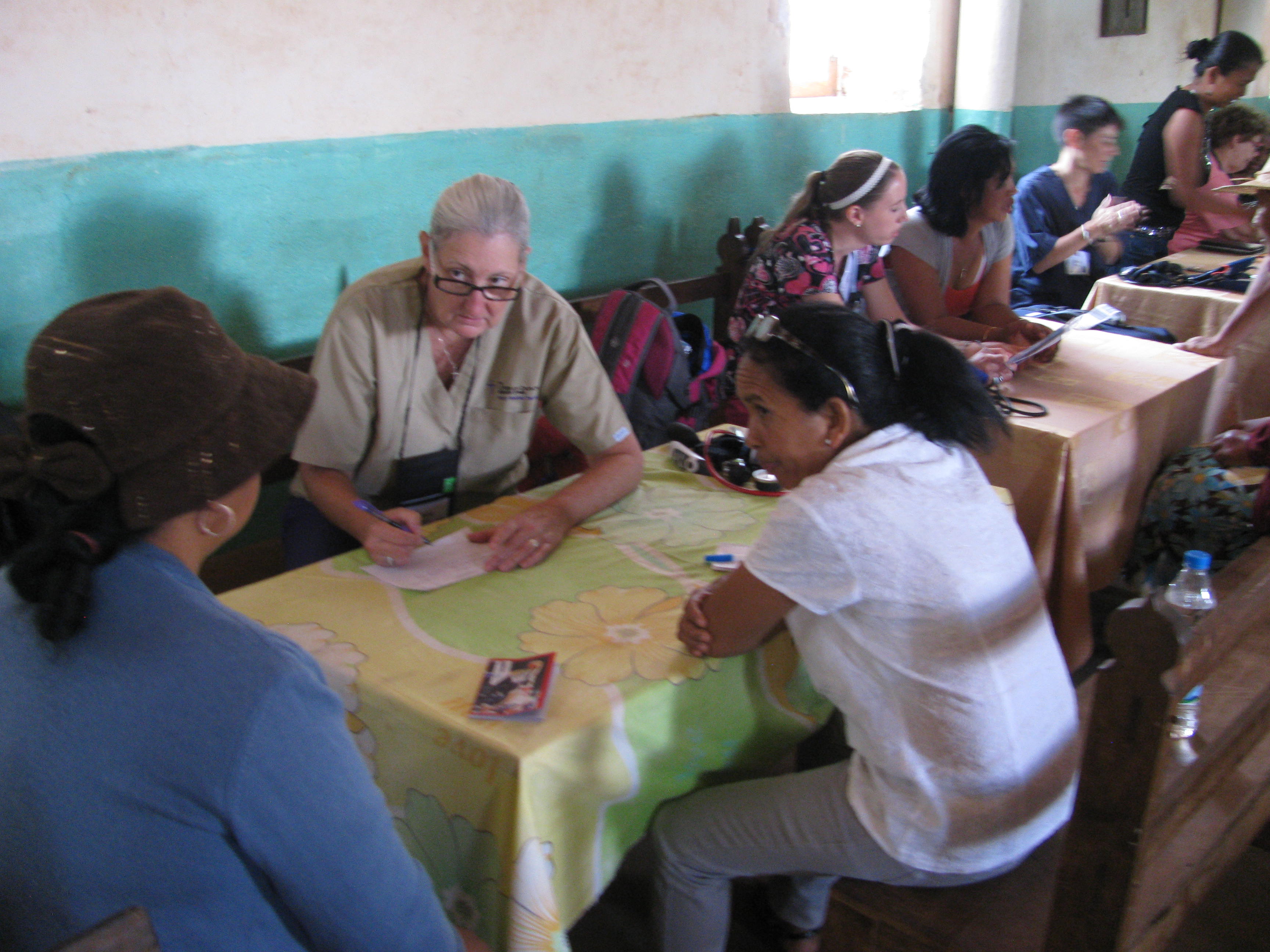
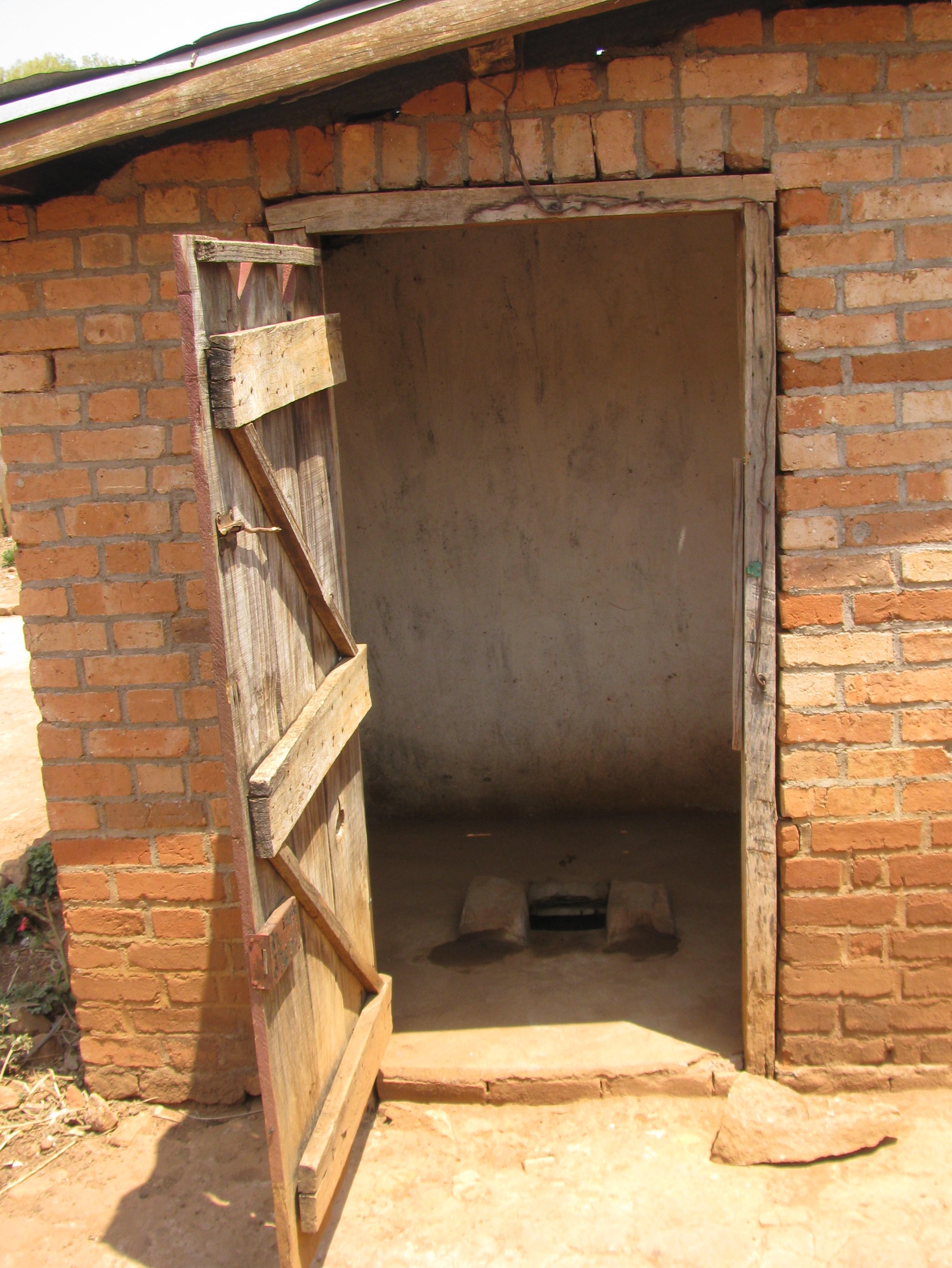
Donna at a triage stationMolly at a triage stationDr Harison at workThe facilitiesA demonstration of how to make just about anything from a zebu horn
Monday (October 12) was our first clinic day in Antsirirabe (not to be confused with Antsirabe, where the Lutheran Hospital is located). After a two-hour drive on OK roads, we went off-road for the last hilly and bumpy final 7 km that took us to a Lutheran Church where the local pastor said 800 people were waiting for us. A team had supplied a clinic here in September, so word must have gotten around. They were gracious and patient as we set up and began to see patients.
The basic flow: (1) sign in, with weight and age; (2) see a nurse for BP and triage (what’s your main concern today?); (3) see a doctor, or Joanna, the NP working here for the year; (4) pick up your prescription at the “pharmacy.” “Pharmacy” is a table with all of our meds spread out, waiting to be put into bags as prescribed. I think we had three triage stations, three providers, and seven of us working in the pharmacy. The other two pastors with us directed traffic from one station to another.
We saw 607 patients that day before we closed up shop at 4:30. I worked as a runner in the pharmacy, taking filled pill bags to Jeanelle, our pharmacist, for a final check, who handed them off to an interpreter to deliver to the patient. I helped restock all the stations where prescriptions were filled. We gave out antibiotics, antifungal cream, analgesics, and many, many, many vitamins.
I thought we were doing very well, until at the end of the day we still had a stack of unfilled prescriptions! Where did they come from? We would need a better system for the next few days. No worries – Jeanelle had a plan for tomorrow. Also, a team would come back next week to fulfill all those prescriptions.
The doctors and Joanna didn’t need interpreters, so we were able to see many patients in a short time. Plus, there weren’t too many severe cases. Mostly headaches, hypertension, asthma (all that dust we were breathing) and infections. A few were referred for further hospital care, but the hospital is several days walk away and fairly expensive. I’m not sure what happened to them.
We had some very well done zebu of supper that night, along with some Three Horses Beer, a native brew of Madagascar. After supper and devotions, we filled hundreds of bags with vitamins and other medications to help facilitate a speedier pharmacy in the morning.
It was not, however, so easy getting up at 6 am Sunday morning.
The Hotel Ivato, where we spent our first (short) night.
There was a little restaurant at the hotel so Lisa and I stopped in for some coffee. The table menu said a cup of coffee was 3,000. Three-thousand what? Ariary, the currency of Madagascar. The exchange rate is about 1 to 3150, so roughly a buck. Tasted like instant to me, but it was OK.
We loaded into the vans and drove about five minutes to a little breakfast place where we had juice, coffe, rolls and omlettes. Not too bad.
A Lutheran church in Antananarivo
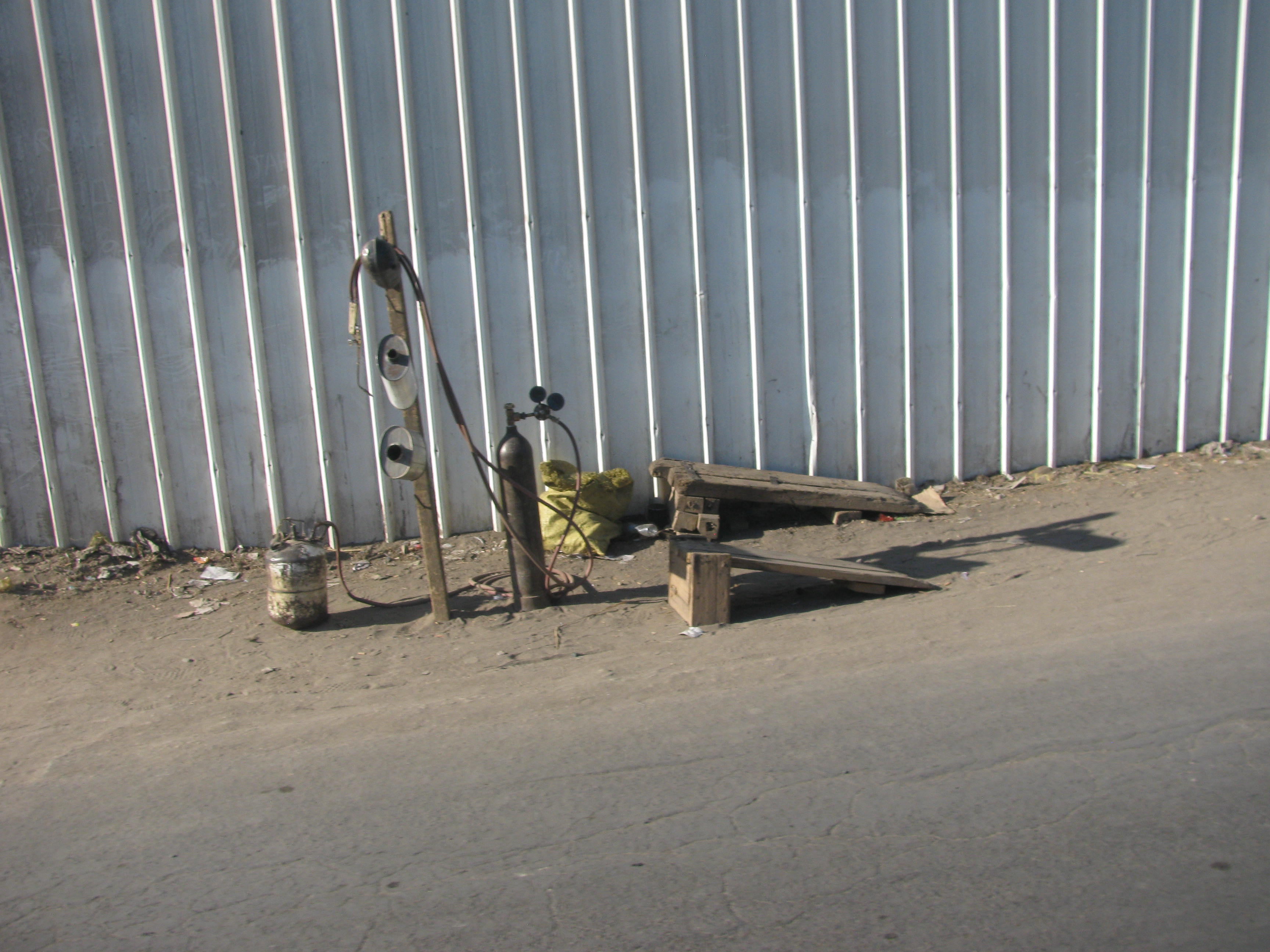
Muffler shop
Because of the drive ahead of us, we weren’t able to attend church. We did stop to peek into the back of a service to hear some of the singing at a Lutheran church. But only for a minute; we had to be on our way.
We headed out through the city and stopped at a service station close to the edge of town, where we discovered a clutch problem with one of the vans. Car repairs are typically done by the side of the road, by a guy with a couple of ramps, a few tools and a propane torch. They could have fixed it, but they didn’t have the right hose. No problem. Just squeeze everyone into two vans rather than three, and we’re on our way.
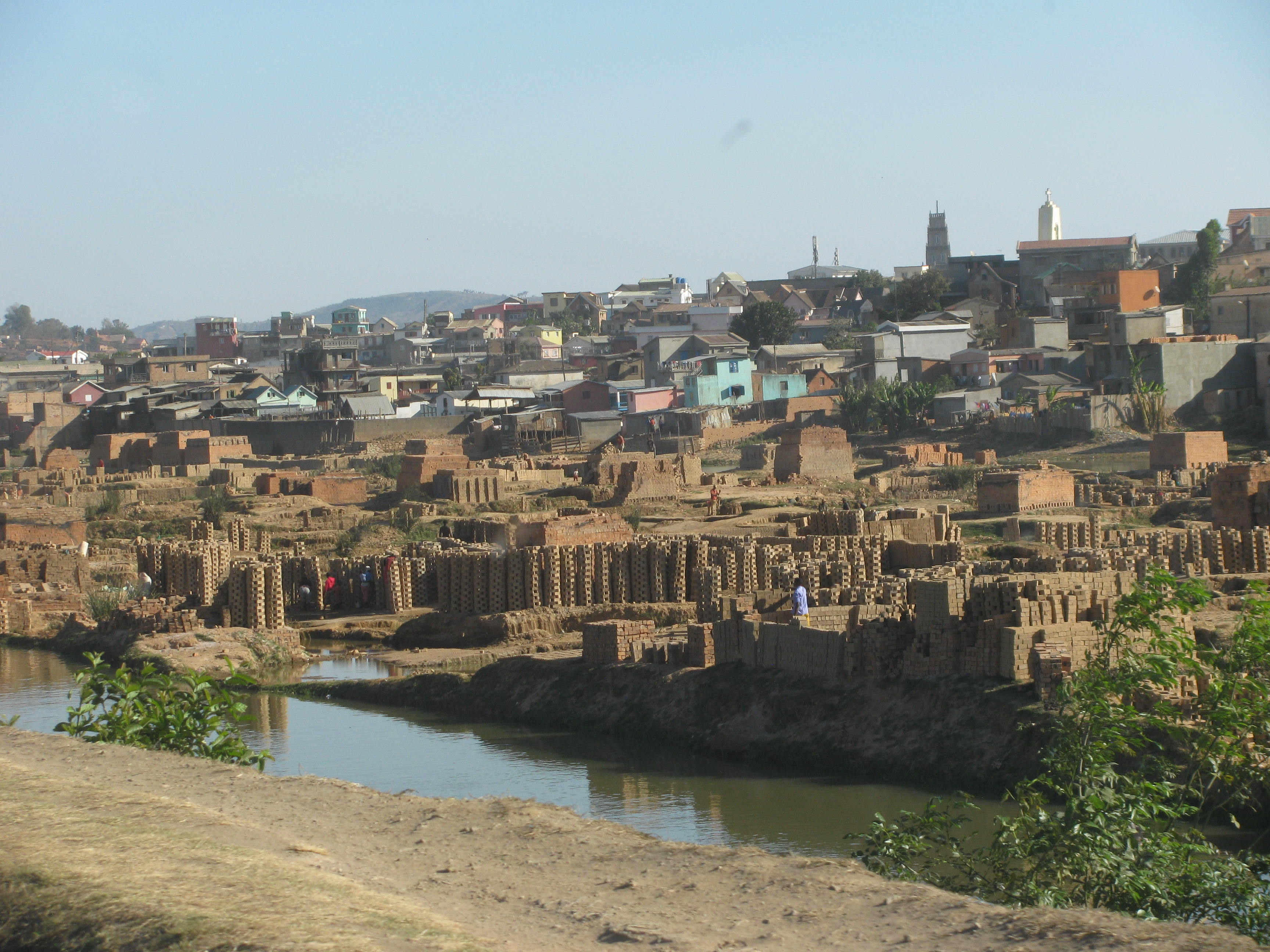
For the next few hours we drove through rural areas and small towns, filled with sights that reminded me of Kenya. But there were two noticeable differences. Every valley and hillside was terraced with rice paddies. The Asian influence is strong and everyone grows rice. Or, they make bricks. The landscape was lined with rows of bricks drying in the sun and stacks of bricks being fired over charcoal embers. A smoky haze hung in the air everywhere went went in the course of a week. Eventually we got used to breathing the mix of dust, smoke and diesel exhaust.
Bricks being dried and fired
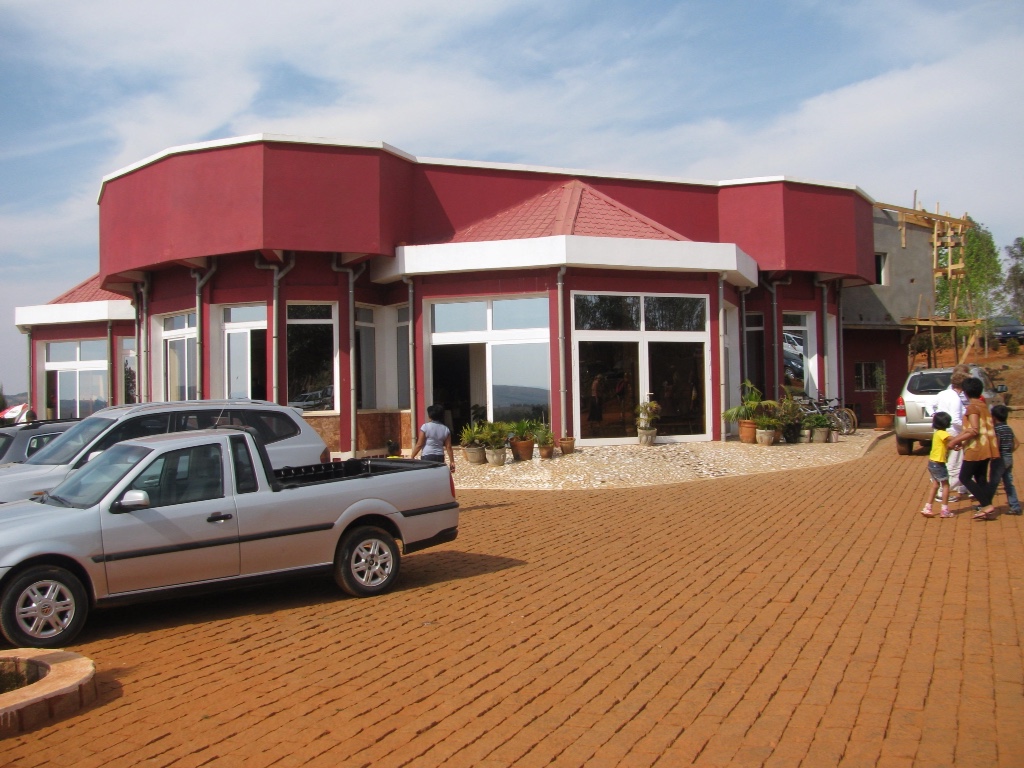
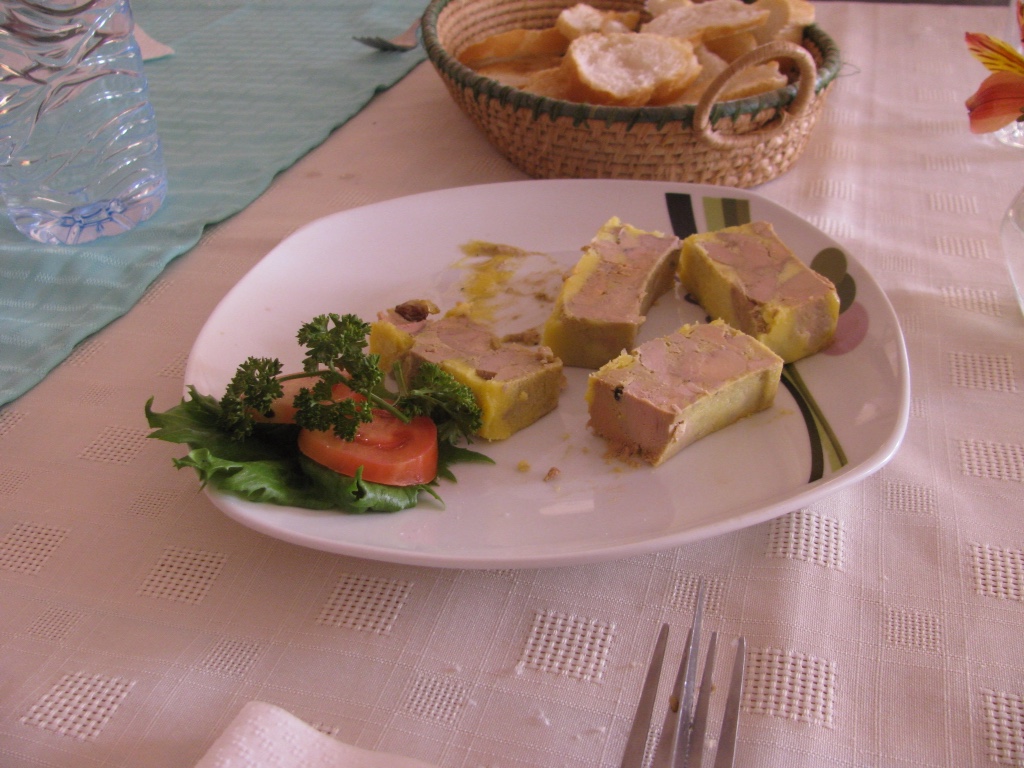
We stopped for lunch at a restaurant out in the middle of nowhere surrounded by a field full of pineapple plants. There was no sign out front, so I don’t know the name. We started with plates of foie gras (from ducks, not geese.) I tried some. Eh. Lisa chose to save room for some chicken fried rice. Much better.
The unnamed restaurant
Foie gras
On the road again
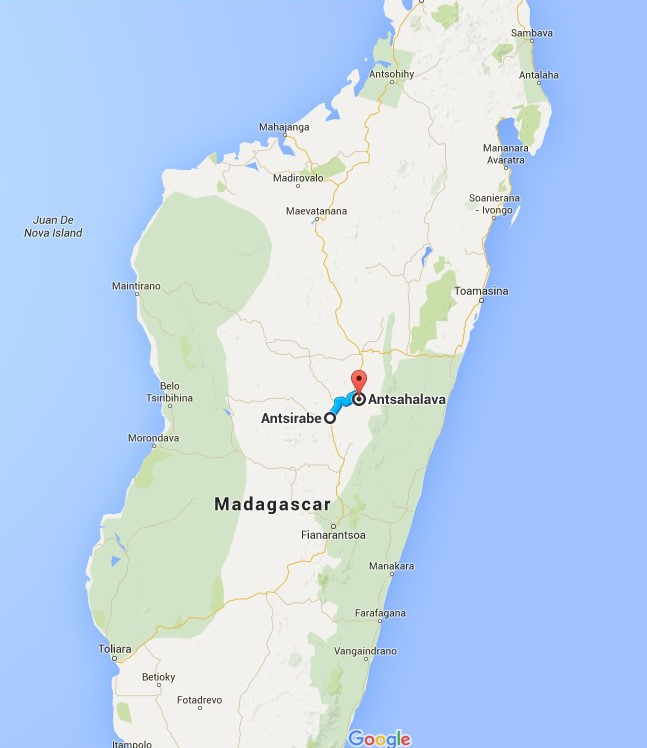
It took another two hours to get to the Lutheran Hospital in Antsirabe. Lisa and I sat in the front of th van with the driver for this leg of the trip, and it was terrifying. We passed eighteen-wheel truck both ways on curvy roads barely big enough for two cars. We held on tight; the driver didn’t ven break a sweat. He’d driven this road dozens of times. He knew when to slow down for every pothole. The basic rule for driving here: no brake, lots of horn. We arrived safely and unloaded all our bags into the guest house, cleaned up and gathered in the common room for a supper of some very well done skinny chicken, rice, French fries and ziti. The prepared a ton of food for us. After supper, Dr. Harison took us on a tour of the hospital.
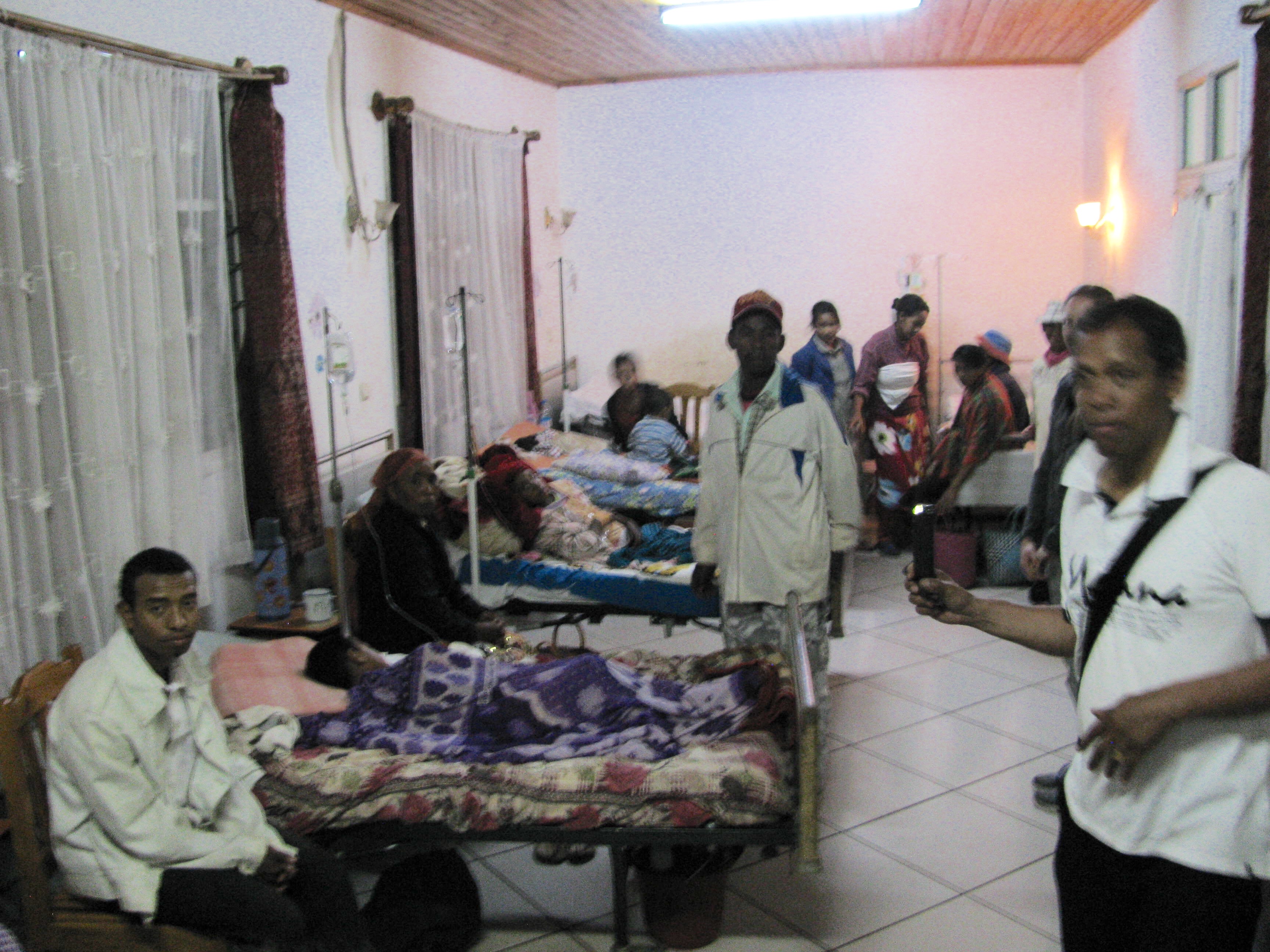
The hospital was rougher than anything I’ve seen for a while. The wards were filled with old beds, some without mattresses, and equipment. There were plenty of patients, many with family there to care for them. Lisa said that the hospital in Haiti was better than this one.
Private room at the hospital – for those who can afford it
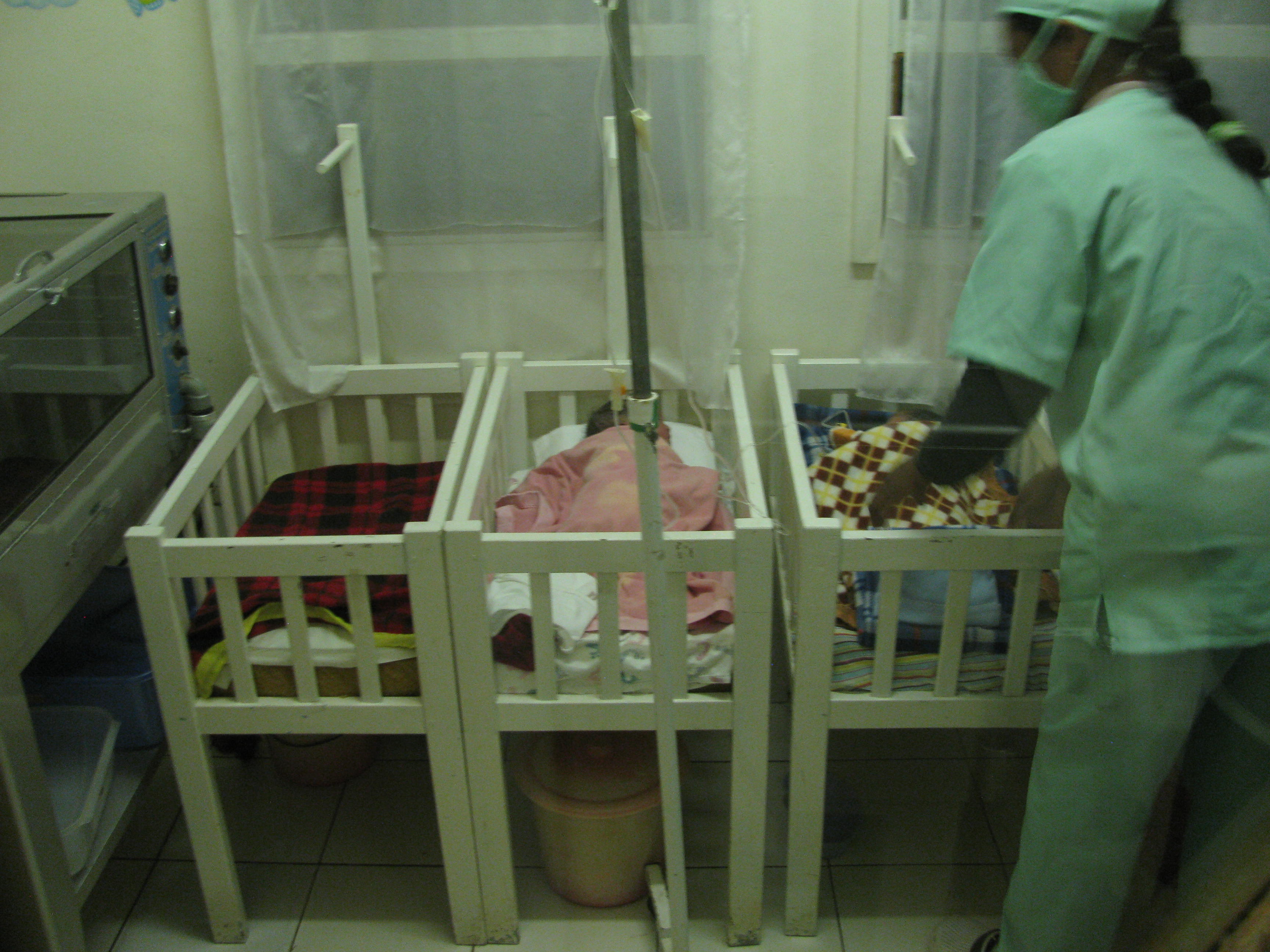
Nursery at the hospital
Pediatrics ward
Lisa and I got to room together in the guest house. Our mattress was a simple piece of foam rubber that made you roll towards the center. Screens in the windows and relatively dry conditions made mosquito nets unnecessary. G’night.
All of our bags at DAB. Nice Delta agent photobomb!
The first leg of our flight to Madagascar departed from Daytona Beach for Atlanta at 11:30 am Friday, October 9. We checked six large rolling duffle so of supplies and carried on all our own personal items. The duffle so weighed less than forty pounds each, much less than I expected. No line at the ticket counter and no line at security, so we had plenty of time to wait before boarding. Time for a little snack and some people watching. While I prefer to travel comfortably, some opt for tight skinny jeans, stiletto heels and revealing tops. To each his own.
We had a two hour layover in Atlanta, enough time to grab a Greek salad with chicken in the terminal E courtyard listening to a live alto sax player accompanied by his iPad. Sweet gig. A salad on the way out is pretty important since we probably won’t be eating many vegetables in Madagascar. Anything irrigated with or washed in the local water would be off limits for the next week.
Our next flight, from Atlanta to Paris, would take 8-1/2 hours aboard a full 767. We took off on time at 3:30 pm. The in-flight food of chicken or pasta was average. The complimentary wine was very good. I slept a little, did some reading, and watched the the second Hobbit movie, The Desolation of Smaug. Wifi on board? Though every advertisement said yes, the reality was no. I did catch a glimpse of the business class section, with its little pods where you could lay flat and sleep. Maybe someday.
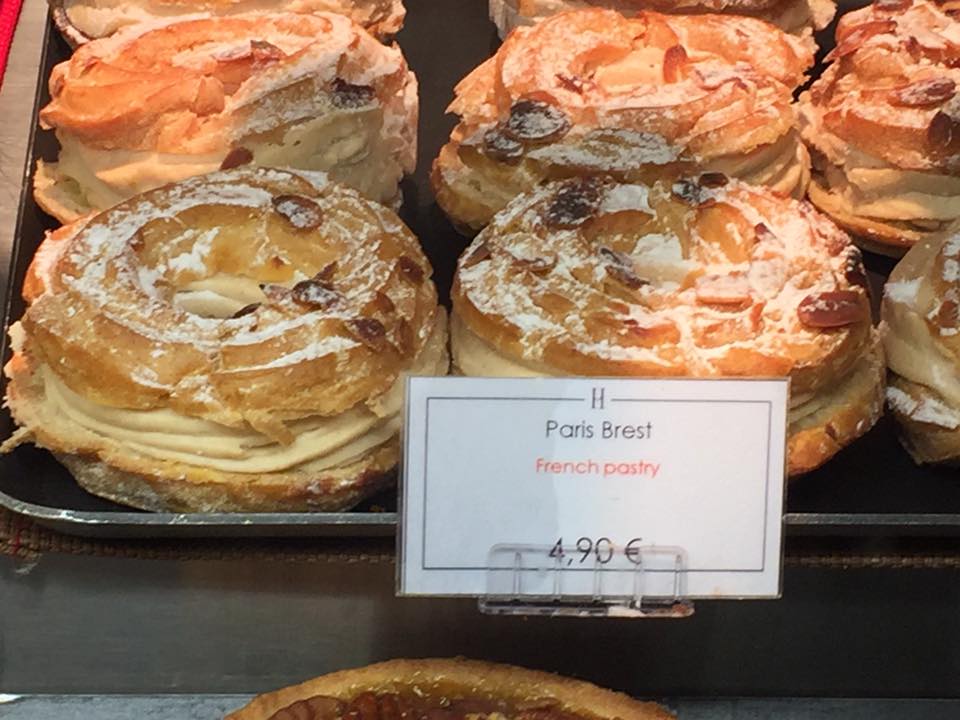
We’re in France…aren’t they all “French pastries?”
We landed in Paris about 5:45 am and found ourselves in a mostly empty airport. We would eventual rendezvous with the other members of our team, but their flights didn’t begin arriving until 8 am. We walked to what we thought was our connecting gate, and then took a little shuttle to our actual connecting gate. A little coffee shop was open. We had some so-so coffee and croissant, and dozed a little in the gate area.
About 9 am, other people began showing up at the gate, including the members of our team:
Pastor Jeff Kuddes, team leader from MO, who had been to Madagascar several times
Diane, a nurse from Napa, CA
Molly, a nurse from Iowa
Tammi, Molly’s mom from Iowa
Jane, a nurse practitioner from Wisconsin
Samantha, a hopeful mad school student from Wisconsin
Christie, a forensic science teacher from Glendale, AZ
Jeanelle, a pharmacist fro Phoenix, AZ
Peter and Donna fro Oregon. Donna is a nurse and Peter’s a pastor
Lydia, a nurse from the Washington DC area
We all had a chance to chat while waiting to board the 777 to Madagascar. (Who knew so many people wanted to travel to Madagascar?) while chatting, we learned that the government had changed some laws, which might prevent some of our nurse practitioners from acting as providers in Madagascar. One rule of trips like this is that you must be flexible.
We departed at 11:30 am and the flight was uneventful. Flying with Delta (Atlanta to Paris) was much nicer than Air France (Paris to Madagascar). Upon reaching 10,000 ft, the flight attendants immediately brought out some iffy-looking food. Then they disappeared and we didn’t see them again until we we began our descent into Antananarivo, when they brought out some iffy-looking breakfast. I do not like them in a plane…I do not like them in the rain…I do not like green eggs and ham.
We touched down in Antananarivo, Madagascar about 11:30 am local time. We had been warned about the long wait at immigration, which indeed took about two hours. All of the three hundred passengers on the plane were funneled to a small glass cubicle containing eight government immigration workers. One took your passport, handed it to one of four people working at computers, who scanned your information and handed it to a third, who stamped it and handed it off to a fourth who signed it and called your name to pick it up. Not efficient, but it provided jobs for eight people.
The blessing of the night: all of our bags arrived with us. As you know, that’s a victory no matter where you are traveling. We loaded up in three vans and drove about 10 minutes to the hotel where we spent the night. It was easy to fall asleep at 2:30 am after about thirty hours of travel.
Our plans to go with a Lutheran Church – Missouri Synod (LCMS) Mercy Medical Team to Madagascar October 9 – 18, 2015 actually began in January as my wife Lisa (a nurse practitioner) explored the idea and we began tossing the possibility around in our minds and conversations.
In June, we got word that flights were filling up fast, and there was some unspent mission money available to help fund a trip. So, we said, “Let’s go!” We got our flights, some travel insurance, and started a Go Fund Me to get some help with expenses. For those who might want to take a trip in the future and are curious about the costs, a round-trip flight cost about $2,500, and ground fees (food, lodging, interpreters, supplies) were $1,500 per person. We are grateful to the church and many generous friends who covered 2/3 of our costs. My daughter kept our dog, saving us kennel costs, and rides to the airport saved on parking fees. Thank you, thank you, thank you!
A few weeks later, Lisa was contacted about leading the trip in October 2016. She said yes, and also mentioned I’d be glad to come along as team chaplain. I hope the trip goes well, cause guess what – we’re going back!
Some of the supplies we took with us to Madagascar.
Our focus now shifted to gathering some supplies to take. Organizations like Blessings International and Brother’s Brother offer medications and supplies for trips like this. Because some of their policies had changed since our last trip (Kenya in 2013), we could only order a few thing, but were able to collect supplies from members and friends of the church. Our flight was classified as humanitarian, so we were allowed to check three fifty-pound bags free. Our front bedroom soon filled with medications, vitamins, soaps, shampoos, toothbrushes and toothpaste, bandages, surgical caps and masks, and some handmade quilts and prayer shawls.
Pre-flight preparation required that we renew our passports, which would expire in January 2016. Check. I needed a typhoid immunization. Check. Get a prescription for Malarone, a malaria preventative, from the doctor. Check. Buy a few more rolling duffle bags for supplies. Check. Conference call with the team. Done. Ready to go!
Last summer, I decided to take a year off from teaching adult Bible classes on Sunday mornings to teach Sunday School. The one class that still needed a teacher was the preschool/kindergarten class. I love to teach, its one of my strengths, but did I have what it takes to handle the littlest ones? There was only one way to find out.
A year has gone by and it has been a wonderful blessing and experience for me. The materials we ordered from Concordia Publishing house were excellent, and provided me with more than enough ideas to keep the children interested and busy for an hour. I also have to thank Shari our preschool director, who has taught me so much about working with that age level for the last nineteen years. I’m also grateful that Sharon, one of our members who teaches kindergarten and first grade in the public schools, allowed me to volunteer in her class once a week. I learned something from her about teaching, classroom management, and discipline every time I am there.
Here’s what I’ve learned about teaching this age group:
Stickers rule. Every single child loves stickers. You cannot have too many stickers.
You also can’t have too much glue. We go through bottles of glue and glue sticks at an alarming rate. This is because the younger you are, the more glue you must use for a craft project.
Everyone needs their own container of crayons. A big bucket to share doesn’t work. But if everyone has a small container of crayons, they will share with each other. (Crayons are also homogeneous. For example, all the orange crayons will end up in one container.)
Give them a job. Everyone wants to help, so let them handle as many classroom tasks as you can. From handing out supplies to cleaning up, they all want something to do.
If any child gets a hold of a stapler, everything will end up with a staple in it.
Whoever taught me that a child’s attention span was the same number of minutes as their age was correct. After the opening, it will take twelve activities to keep a four-year-old busy for 48 minutes.
They want to do it themselves. Cutting, drawing, stapling, folding, gluing, tying, coloring and sticking stickers. So have all the hard stuff done ahead of time (like a hard shape to cut out). Once you’re in the room, you have to let them do it.
They absolutely love Jesus! (Even more than stickers!) They love everything about him. At this age, every story about his life and ministry reinforces their faith in an amazing way.
They are always hungry.
The time I have with them each week flies by. Attendance stickers, a page to color, a story to tell, a story leaflet to put stickers on, a song to sing, a verse to learn, and some crafts to make — before I know it, the parents have arrived to pick them up.
Very few children attend every week because the most active families only come twice a month at best. There are trips, illness, sleepovers, work and sports events that take up previously open weekend time.
Not one can sit in a chair for more than a minute. They either fall off, get up to reach something, get up to pick up something they dropped, come over to get my attention, or whatever. Perpetual motion!
I am about to return to teaching adults on Sunday mornings. It will probably take me a few weeks to adapt. Adult students tend to sit quietly passive in class and dare you to get them to talk. Maybe I will try stickers.
“In the Spring a young man's fancy lightly turns to thoughts of love…” and, as I learned this week, to college.
Weeks after most application deadlines have passed, letters of recommendations mailed and acceptances (or rejections) received, two young men came to me in the space of a week to get a reference from me. Both seniors in high school, each recently was recruited by small schools, in part, for their athletic prowess. Both were small Christian schools that required a reference from a pastor to complete the application. Each student stopped by my office to have me complete that form, saying, “You're the only pastor kind of guy I know.”
Student A graduated from our church's preschool fifteen years ago. His mother also taught at our school for many years. I believe His family was half-Jewish and half-Christian, though I don't think they participated in either tradition very often. Since I had to answer a question about his commitment to Jesus Christ, he explained to me that his parents exposed him to both traditions so he could make up his own mind. I asked him if he had. He said he was open to it, which is what I typed as my answer to that question.
Student B was in confirmation class five years ago. At the time, his family was regular in worship and I got to know him very well. He was smart, asked great questions and seemed to grasp well the basics of the Christian faith. After confirmation, though, I only saw him three more times. Once, when his younger sister was confirmed. The second time was a weekday morning when he asked me to pray for a friend of his in the Marines being deployed to Iraq. Number three was to ask for this recommendation. At one time his commitment seemed strong. Presently I knew little about his faith, so I typed that for my answer.
So now I am wondering how many small Christian colleges get recommendations like mine? How important is my input in the admission process? How important is my input for their athletic programs? Was I just a hoop to jump through? (I'm pretty sure I know the answer to that question.) And why would you ask a virtual stranger to recommend you to a college?
I have written many letters of recommendation over the years, mostly for young people I knew very well and could write pages about. For each I've strived to be unique, creative, entertaining and put into words how impressed I was with them. But this was a new experience. I tried to put the best construction on everything. I tried to express everything in the kindest and most honest way. But I had to be honest.
It took courage to come in and ask me for a recommendation. I'll give them that much. But it takes a lot more than courage to make it through college.
“Then one of the elders addressed me, saying, ‘Who are these, clothed in white robes, and from where have they come?'” (Revelation 7:13)
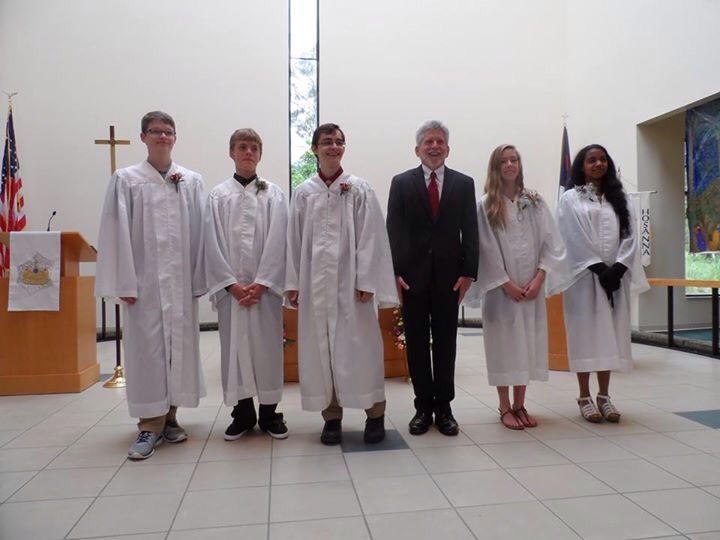
Last Sunday morning, the answer was our church’s most recent confirmation class. With a red carnation pinned to their white robes, five eighth-graders had the promises of their baptism confirmed as they made public profession of their Christian faith. Over the past two years, I taught them the basic stories and truths of the Bible using Luther’s Small Catechism and a variety of teaching materials I’ve collected over the past thirty years.
I’ve known Corey his whole life, baptizing him fourteen years ago. I’ve known Adam nearly as long. They’re both in Boy Scouts, are very intelligent, and talk non-stop at an extremely rapid pace. I’ve known Kristina about six years, since her family moved to town. She’s one of the quietest people I’ve ever met. It was so fun trying to get her to laugh. I met Olivia when her older sister began confirmation class four years ago. She a talented gymnast with a contagious laugh. Cole’s only been here about a year, but he’s smart and has his head on straight. Everything they learned about God and His Word was important. But just as important was the relationship forged during each week’s 90 minute class. I usually make a few extra “unofficial” certificates with some of the nicknames I invent for them. (This year I was convinced Adam was an alien, so I called him “Alphonzo Zorf. And, for some reason we came up with “Potatolivia,” too.)
Confirmation is one of those powerful worship-family-Holy Spirit moments for me. Unable to believe in Jesus Christ or come to him by our own reason or strength, I am so aware of the Spirit’s work during this rite. I choked up a little because Corey’s grandfather, not in very good health, not only came, but was able to come to the altar to lay hands on his grandson.
You see, I have this love-hate relationship with the whole process of confirmation. Call me crazy, but I love teaching Jr. High or Middle School students. They have so many questions and desperately want to learn. High school students are different. They think they know everything. Seventh and eighth graders are just discovering who they are, learning what they can do and dreaming about what they can be. Teaching them involves laughing, teasing, yelling and threatening. It also involves transition, for they grow so much through their seventh and eighth grade years. Clueless in seventh grade, they show up for their second year suddenly having discovered the opposite sex, combing their hair and wearing makeup.
But as much as I love teaching these classes, I hate what confirmation will mean. Typically, I will never see half of them again. The drop out rate is consistently 50%. Tragically, their parents will stop bringing them to church and before long the entire family will drift away from the congregation. Like salmon returning to spawn, families show up with their seventh-grader because they need to make their children attend these classes. Sadly, when it’s over, these families will be gone.
This year will be atypical. Four of the families have been very involved in the church, and I expect they will continue. I only have to say, “Adios” to one. And next fall, I’ll start all over again with a new class of fresh recruits with a variety of backgrounds and personalities. And whenever we meet, it will once again be the most frustrating and rewarding part of my week.
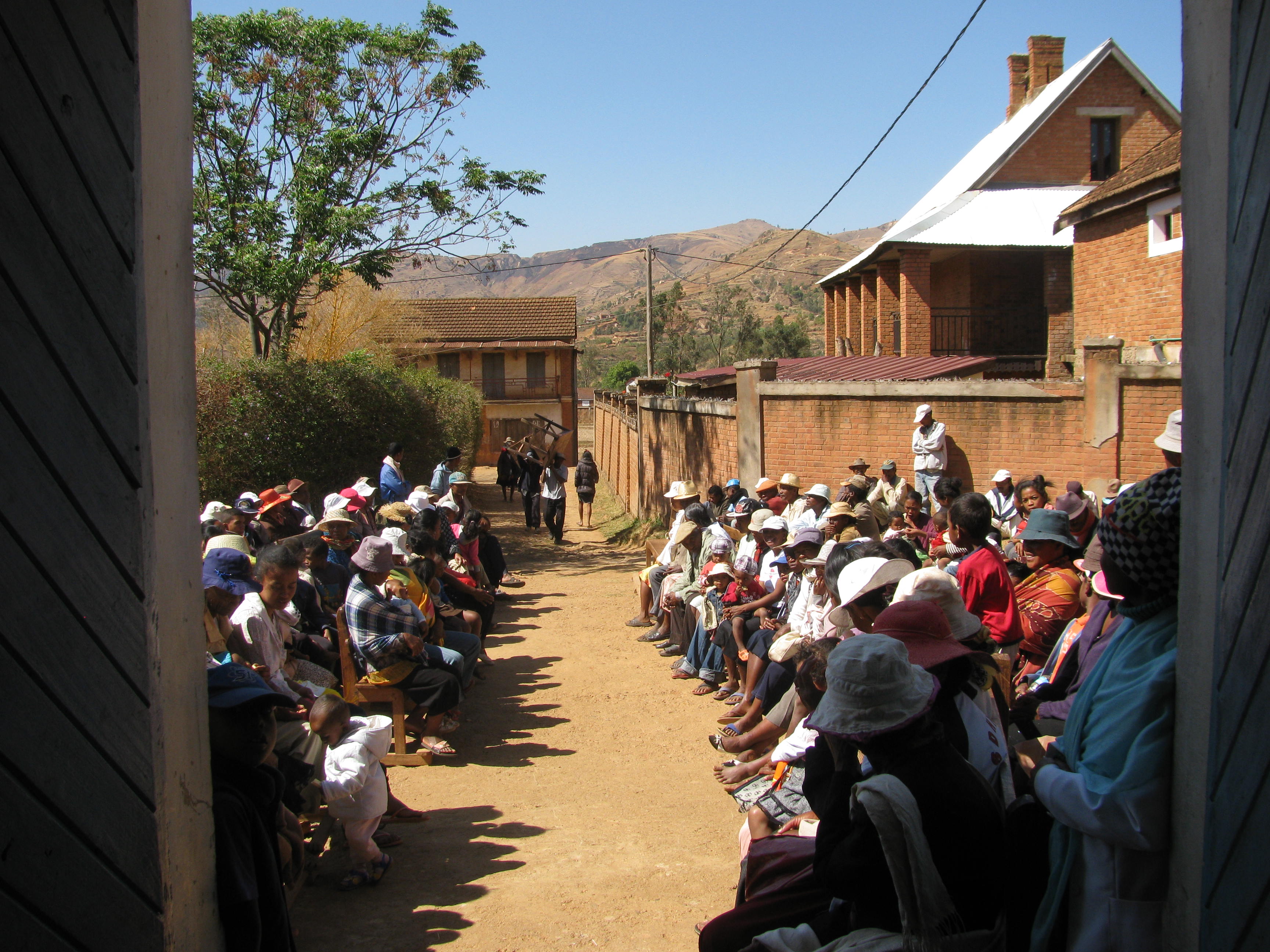 So many people were quietly waiting when we arrived at the fourth clinic site on Thursday, October 15. It felt calmer and less rushed, but we still saw more than 400 patients.


 Posted with Blogsy












 Waite for it...