Posted in sermon

Sola fide: Faith alone

Transcription of Sunday, September 24, 2017 sermon. 

Sept 24 cover pic

It sounded like a really good deal. I could get the first month for free. No other obligation. Why not give it a try? I gave them my name and mailing address. Then they wanted my credit card number. Why do they want my credit card number? I thought the first month was free. Well the product is free, but you have to pay for the shipping. They also want to change my credit card every month after that when I forget to call them and tell them that and tell them I don’t want to receive this every month. I can see by the looks on your faces that you have been through this process yourselves. Continue reading “Sola fide: Faith alone”

Posted in Ministry, sermon

Sola scriptura

Transcription of Sunday, September 17, 2017 sermon. 

Sept 17 cover pic

October 31, 1517 Martin Luther posted 95 theses against indulgences in Wittenberg, at All Saints Church. That day is thought of as the beginning of the Reformation. As we get ready to celebrate the 500th anniversary of the Reformation in just a few weeks, we’re going to look at some of the phrases that grew out of that moment, which started a movement. All of those phrases include the word alone, or the Latin word sola. Like scripture alone, faith alone, grace alone, Christ alone, to God alone be the glory. Sola scriptura, sola fide, sola gratia, solus Christus, soli Deo gloria. We’re going to start with scripture alone, or sola scriptura.

As we’re talking about the Reformation, I know you’re going to have a lot of questions. It’s impossible to go as deep as we need in this short time we have on a Sunday morning. There’s a lot of history involved, a lot of politics involved, it happened a long time ago so the world was much different than today. It involved theology as well as economics. It can be a challenge to understand. But there’s good news. We’re going to start a new class on October 1, on Sunday mornings. An adult bible class where we’re going to unpack, unwrap these things so you ask questions. So sign up for my class. I already signed up. I was the first one on the list. I have to get ready anyway because I’m the teacher. But you’re all invited to come to my class about a Man Named Martin.

A good place to begin is why Luther posted these things to be debated in the first place. the answer is: he was very concerned about poor pastoral care going on in the parishes and churches in Germany. By poor pastoral care I mean that parish pastors or priests were not only encouraging but were profiting from the sale of indulgences. This is a simplified definition of indulgences. Basically an indulgence was a certificate of forgiveness you could receive for a donation to your church. It evolved into something you could receive for yourself or a loved one or even for a loved one who had already died, to make it possible for God’s grace to be applied to them. Basically, what was happening was that the pastors were selling forgiveness for contributions. This was approved and encouraged by the church. From Luther’s point of view, he just couldn’t make that line up with what he found in the bible.

In hindsight, as we look back we understand exactly what issues Luther had. In Hebrews chapter 10 the writers quotes the Old Testament prophet Jeremiah and talks about the covenant God makes with his people, “I will remember their sins and their lawless deeds no more.”  God’s promises to his people that he won’t consider their sins, they’re off the table, they aren’t an issue any more.

John 19, Jesus is hanging from the cross, suffering and dying, and its dark, everyone has abandoned him. Jesus says, “It is finished.” Sin has been paid for. The work of salvation is complete. It’s done.

The apostle Paul wrote to the Philippians about a righteousness that didn’t come from the law but came through faith in Christ, a righteousness from God that depends on faith (Philippians 3:19).

So all of these things in scripture make those indulgences unnecessary. But to say anything about that is to go up against the authority and hierarchy of the church which had tremendous power over people’s lives. The church had political, economic, and social power. To go up against that would take a lot of courage.

Eventually, Martin Luther finds himself standing before the emperor at the Diet of Worms in 1521, saying that his conscience was bound by scripture. What was in God’s Word had to be taken seriously and that every authority in the church was subject to what the scripture said. This would be the only rule faith and practice. Not traditions. Everything had to be measured against the scriptures. That’s where the phrase comes from. Scripture alone. Sola scriprura.

This is no shock for us, especially for those of you who grew up Lutheran or have been around the Lutheran church for a while. We’re familiar with the words of the epistle today where we read that “all scripture is inspired by God and is profitable for reproof, for correction, for training in righteousness, that the person of God may be complete, complete, equipped for every good work. Everything you need to know about God and to be God’s people can be found in the scriptures.


You can find out who God is and what he is like and how this world came to be. You can find out who Jesus is and where he was born and how he lived and how he is uniquely the son of a human mother and a divine father. You can find out what Christ did, what he suffered, why he did it. You find out how much God loves you and the future he’s prepared for you and what it means to believe. You faith can be complete just with the bible.

The important thing to remember is that at the time of Luther they didn’t have bibles. They weren’t walking around with bibles. The printing press had just been invented. Some churches didn’t even have a copy of the bible. All of their spiritual information came from their priests, who told them what they wanted them to know. No one could ask any questions, because no one knew any different. That’s why this is so revolutionary to actually have the scriptures and be able to measure everything against them.

From that idea we can ask ourselves the question: what’s your source of spiritual information? Where do you get the teachings that inform your faith?

The answer is amazing. You get spiritual information from me, your pastor, from other pastors you’ve know. From devotional books, bible study guides you use small groups. Maybe you’ve read commentaries, or used study bible, or listened to other preachers on the radio. You’ve watched them on TV. When you have a question you Google it. There are any number of religious information out there. All of this contributes to your faith.

Some have gotten spiritual truths from dreams or visions, or friends, or your family taught you things growing up. Some have consulted the occult, spiritualists or fortune tellers. All of this shapes our faith.

If that’s true, what does the idea of sola scriptura or scripture alone mean to us?

The best way to think about this is to picture all of the sources of information, all of those books, stacked one on top of another, with the bible on top. Everything must come under the authority of the scriptures. Everything is measured against what God’s word says. Scripture alone becomes the rule for our faith and practice. When I’m studying and preparing to preach or teach, I consult commentaries and what others have written. I had other teachers. I’ve had lot of sources of information, too. But they are all filtered through the word of God. Which we know is true. God doesn’t lie. He is faithful. His word informs our faith; it is the final authority.

As you measure everything against the scriptures, keep this in mind. First of all, the bible’s main message is to reveal to you God’s plan of salvation. To reveal to you who Jesus is, why he came, and what he did for you. it’s not just a book about how to live better, have a better life or prosper financially. The purpose is what John said, that you may know that Jesus is the Christ, and that by believing in him, you will have eternal life.

As we read that sometimes we read Law, and sometimes we read Gospel. Sometimes God’s Word shows us very clearly we’re not on the right track. Then it shows us God’s grace and forgiveness to get us back on the right track. That’s the Law and the Gospel.

And as we read these words, remember that we don’t take them out of context. We don’t use them for an agenda. If there is something in scripture you don’t understand, you hold it up against something in the bible that does make sense. We let scripture interpret scripture. We don’t force our own meaning on it. It’s not for private interpretation. The Holy Spirit moved people who wrote the scriptures for us, so that we would know it was coming from God.

What would you do if the bible was all you had? You have no internet, no commentaries, you’re phone’s not working so you can’t call the pastor, you have no bible study guides, nothing else but the bible. What would you do? You would still have everything you need. Here’s what I would do. I certainly wouldn’t go to the parts of the bible I don’t understand. And there are parts of the bible I don’t understand. I would always go back to the places where I hear God speaking words of peace and calm and reassurance and strength. I would always go back to the passage where Jesus says to the storm, “Be still.” I would always go back to the place where Jesus says, “Let the little children come to me,” because I know I’m one of his kids. I would always go back to the place where Jesus teaches me how to pray, so if I don’t know what to say, at least I would have something to say. Where do you go, if this is all you have?

Trust him. He will always have something to say to you. God has revealed everything we need to be his people in the scriptures. Sola scriptura. Scripture alone.

Posted in Ministry, sermon

Paths of Grace: Joy

Transcription of Sunday, September 10, 2017 sermon. Audio here.

September 10 cover picThis is the hurricane edition of the sermon for Sunday, September 10, 2017, the 14th Sunday after Pentecost.

This is our final week of exploring God’s paths of grace. Today’s the best one of all because we follow out Lord down the path of joy.

In this morning’s Old Testament reading, Isaiah spoke of this reality: “With joy you shall draw water from the wells of salvation.”

In the Psalm, Psalm 118, the psalmist invites us: “This is the day that the Lord has made; let us rejoice and be glad in it.”

In the epistle reading, Philippians 4, Paul commands it. He writes, “Rejoice in the Lord! Again, rejoice!”

In John chapter 16 verse 22, Jesus promises, “You will rejoice and no will will take your joy from you.”

My fear is that some of you have gotten lost. Continue reading “Paths of Grace: Joy”

Posted in Grace, Ministry, sermon

Paths of grace: Humility (Luke 14:11)

Transcription of Sunday, September 3, 2017 sermon.

September 3 cover pic

In the gospel lesson today we heard Jesus say these words, “Everyone who exalts himself will be humbled, and he who humbles himself will be exalted.” (Luke 14:11)

As we begin talking about this path of grace this morning, the path of humility, I want to assure you that I am not an expert on humility. I know that there are some people who would disagree with me. They say, “Well pastor you’re not like some of the other pastors we know. At their churches they have parking spots right by the front door for the pastor and for the pastor’s wife. You’re not like those pastors. You always park in the spot furthest away from the front door.” Y’all give me too much credit. The only reason I park way back there is because I don’t want anymore dings or scratches on my car. It has nothing to do with humility. In fact, I have a lot to learn about humility.

Jesus says those words in the middle of a very interesting occasion where he is at a meal with a ruler of the Pharisees. This is someone who is held in high regard by the religious community. When Jesus is there, they’re watching him carefully. They always want to catch him saying something or catch him doing something that will discredit him. But at the same time, Jesus is watching them. The way Luke describes it, he’s watching them choose the places of honor. So Jesus tells them this little parable. And he says, “When you’re invited to a wedding feast, don’t take the most important seat, the seat of honor at the head table. There might be somebody else there more important than you. You’re going to have to take the walk of shame when someone tells you to go sit at the end of the table. Instead, always sit in the lowest seat so that when the host sees you he’ll say, “You don’t sit down way back here. Come on up and sit near me. Everyone who exalts himself will be humbled, and he who humbles himself will be exalted.”

This is not a new teaching. This is not something revolutionary from Jesus. These words were Solomon’s words of wisdom from Proverbs 25:

Do not put yourself forward in the king’s presence, or stand in the place of the great.  For it is better to be told “come up here,” than to be put lower in the presence of a noble. (Proverbs 25:6-7)

This is a biblical truth that’s been around for a long, long time.

Here’s the question I want us to think about this morning: Do we exalt ourselves? Do we jockey for the seats of honor? Do we presume to sit in better seats than other people? And if so, how do we do that?

We all do it. it’s something we all fall into. it shows up in a number of different ways.

Sometimes, it shows up whenever you think or talk about “those” people. For some reason we have the tendency to talk about “those” people that we don’t approve us, or they do things they shouldn’t be doing. As soon as you start thinking that way, you’re positioning yourself. You’re a little bit better than them.

Or it happens on those occasions when someone confronts you with something you’ve done wrong. Your first response is to talk about those who have done far worse things than you have. You’re doing the same thing. You’re positioning yourself over and above them. You’re better than them.

Or when they confront you, you turn it around. You say, “Well what about you? What about the things that you’ve done?” You’re doing the same thing.

Or those occasions when the conversation is all about you. You’ll ask someone, “How are you doing?” Before they have a chance to answer, you say, “it’s been a tough week, and I’ve had to do this at work, and my family’s driving me nuts” and on and on and they never get a chance to answer. It’s all about you.

These are the ways that even without thinking we tend to put ourselves in a better position than other people. We don’t even realize it. The path of humility is not one we would normally choose. We want to impress other people. We want them to think well of us. And sometimes we even try to impress God.

So let’s stop right there and make sure we all understand – you cannot impress God. It’s impossible. You know the bible verses.

You know Romans 3: None is righteous, no not one. Nobody lives the kind of life that would impress God

isaiah 64 — the best things that you do are nothing more than dirty rags. We are so corrupted by sin. Our sinfulness contaminates everything. Even on our best days, we don’t look any better than we did on our worst days. That’s what sin has done to us.

When Jesus said to a group of people, “Let the one who is without sin throw the first stone,” everyone drops their rock. Everybody knew they weren’t the one.

So we can’t do that. We’re never in a position to impress God with who we are or what we’ve done.

But here’s the good news this morning: you don’t have to impress God. You don’t have to impress him at all. God already knows about your failures, he knows about your sin and he knows exactly what your life is like As we humble ourselves and we confess our sins to God, and we say to him, “We don’t deserve anything but your punishment, Lord. Please, have mercy on us!” God does the same thing everything single time. He forgives us. He cleanses you from all unrighteousness and he lifts you up. When we humble ourselves, he lifts us up. We don’t have to lift ourselves up.

It’s the most amazing news ever, but something we always have to remind ourselves. We come together and we think we don’t even deserve to be at the table, and God invites us to sit with him in the skybox or on the fifty yard line as if we were his own family. That’s who we are to him. That’s important we are to him. That’s how valuable we are to him. We are his dearly loved children.

The path of humility is the path Jesus chose to take. Jesus had all the fullness of God in him. He could do anything — all powerful. Jesus knew everything. Everything of God is in Jesus. Yet the bible tells us Jesus didn’t choose to use that. He empties himself of his divine power on purpose. He humbled himself. He became a servant. He put himself under the law and the will of God, and became obedient even to the point of death on the cross.

The cross is the worst seat in the house, and that’s the path Jesus took. He allowed himself to be nailed to that cross and be the worst sinner ever. He takes the lowest place. The one who didn’t have any sin became sin for us, and died with our sins, so God could lift us up, and we can be the righteousness of God. Jesus didn’t show off or try to impress people with his divine powers. He gave it all up, to die for us.

That’s the path our Lord reveals us and the path our Lord calls us to follow. Following that path is a challenge, but it is not an impossibility. Following that path begins with a change in your attitude and the way you think.

it’s interesting how often your thoughts condemn other people and lift yourself up. it’s scary when I think how often in my mind I think less of people who are overweight and don’t exercise, or they can’t stop smoking, or they can’t keep their marriages together, or they can’t handle their children, or they can’t keep a job. What am I doing? I’m exalting at the expense of others.

The apostle Paul says in Romans 12:3 “Do not think of yourself of yourself more highly than you ought. I do it all the time.

instead, as Paul wrote in Philippians 2:3, we ought to consider others more important than us. God’s word is a very good mirror to show me what I’m like. And suddenly it reveals that when you look at someone else, you should see someone that God has created. They too are his workmanship (Eph. 2:10), created by him for good works and for a purpose. So we’re looking at someone who’s valuable. When you’re look at someone else, you are looking at someone for whom Christ died. They were important enough to him that he redeemed them. He purchased and won them from all sin, death and from the power of the devil, not with gold or silver, but with his holy precious blood, and his innocent suffering and death. When you look at someone else you ought to see someone who is a son or daughter of the king. That’s what he call them. They have the seats of honor and will reign in his kingdom.

So God’s word helps turn things around and helps us realize there’s a much better way to look at others.

It helps when we gather together for worship. This is the great equalizer right here. We all say the same words and confess our sins and the only plea we have is “Lord, be merciful.” And we all hear the same words of forgiveness. We all begin humbling ourselves and God lifts us up. We all start at the same place, at the baptismal font. There with water and his word our Lord washes us makes us his children. His death and resurrection now defines our lives, not what we’ve done, or what we can do, but what he has done for us. We come and kneel at the altar and we eat from the same loaf we drink from the same cup. The same gifts of grace for everyone of us.

Worship is the key to seeing others differently and having the right perspective and remembering that God lifts us up.

Just as gathering helps us keep that perspective, when we go to do his work, when we go for mission and ministry, that too helps our perspective.

Whether you are going on a mission trip with adults or the kids in the summer or down to the resource center, you think you’re going to help somebody who doesn’t have what you have. Once you do it, you realize they’re helping you. They’ve got things you don’t have.

Some of us have made the trip to Haiti to help, especially after the earthquake in 2010. Our minds said, as we packed up supplies and things to take with us, “We’re going to help these poor people. They hardly have anything.” They have two sets of clothes. They only eat a few meals a week. They don’t have much of a house to live in. They don’t have clean water or sanitary facilities.

Then we get there and we serve the people and realize they have things we don’t have. They have lives uncomplicated by schedules and pressures and the stress of having to do so much and always be on time. They’ve got time to spend with family and friends and have relationships. They don’t have a lot of things, but for them that’s freeing. They don’t have to worry about their stuff when a hurricane comes. They are free of that burden. They don’t have to worry about taking care of their car; it doesn’t run anyway. They are free. When they gather for worship their praise is unrestrained and joy pours out of them. They don’t to exalt themselves. They don’t have much, but they have a Savior. He lifts them up.

So it’s one of the ways God teaches us that we’re not up here and the rest of the world is down there. They have much to teach us. The psalm today taught us that the Lord instructs the humble in his ways. You want to learn something from the Lord? It’s going to happen on the path of humility.

God is very good at knocking me down a peg or two when I start to think a little too highly of myself. I get a little too confident, a little too confident and I say something stupid and I forget to do something important. I have to humble myself and I have to apologize. God always forgives me and gives me another chance.

That’s a good God who will do that for us. Who will never let us get carried away with ourselves and forget about him or the other people in our lives who are so important. Jesus’ words are a blessing: Everyone who exalts himself will be humbled, and he who humbles himself will be exalted.


Posted in sermon

Paths of grace: Gratitude

(Transcription of Sunday, August 27, 2017 sermon.)

August 27 cover picSo here we are talking about gratitude and it’s not even Thanksgiving!
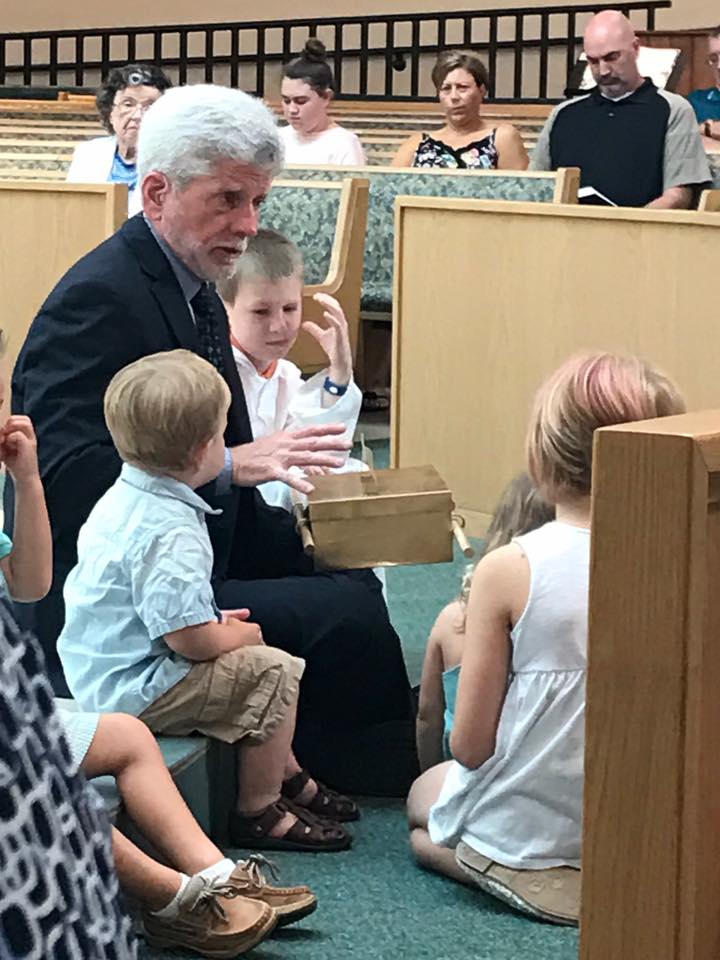
Maybe you think I’m pushing things a little too fast, but I think this is good. By the time November comes you’re going to be so occupied thinking about travel, celebrations, food, family gatherings and all the things Thanksgiving involves that it’s really hard to focus. Everyone is telling you how much you’ve been blessed and how you should donate to people who don’t have as much. So much gets lost in all of that. But now here at the end of August we’re not worried about any of that. We can take a good close look at the path of grace our Lord leads us down today, that path of gratitude.

Using the word of the week, I want to ask you this question: “What is that eclipses gratitude in your life?” What is it that casts a shadow over your thankfulness? You wouldn’t think we would have to ask this question. We have so much. We have so much wealth, so much food so many clothes, we have nice homes to live in. There are so many things to be thankful for.

But you know how it works. You only need to see one person who has something that you don’t have or one person who you thinks looks better than you do or one person who seems to be having a better time than you are, and you are a little bit jealous. And now you’re not content. You wish you had what they have or you could do what they can do or you look like they did. Suddenly, that blocks the things that we should we should be thankful for. Just like the moon blocks out the sun and all of a sudden you can see very clearly the corona around the edge. Things like jealousy, greed and covetousness get in the way and suddenly we see what we’re really like. We’re not nearly as thankful as we probably should be.

And I know that bothers you. I know that grates against you. It really bugs you when somebody is not thankful. When they don’t seem to be grateful for the things they have or the things you’ve done for them.

I love the story of grandparents who loved to send gift to their grandkids for birthdays and holidays. But they never got an acknowledgement that the gift had been received. No phone call, no text, no thank you, nothing. Finally they decided we’re not sending anything else until they get some kind of feedback. You’ve been there. There are people you know you want to grab by the scruff of the neck and say, “Why you ungrateful little…” (You can finish that sentence as you please.)

So we know this is a problem. It’s very interesting that the path of gratitude our Lord reveals and leads us down doesn’t take us past pantries filled with food or garages filled with cars or homes filled with things. No it takes us in a whole different direction. The path we’re going to follow today is a very interesting story from the Old Testament that has to do with the ark of the covenant.

You can read more about this in 1 Chronicles chapters 14-16. The ark of the covenant was that very special chest that God had commanded Moses to build. It was fairly big, covered with gold, gold angels on top, with poles in it so the priests could carry it everywhere they went. Inside was the tablets of the law, a jar of manna, the staff of Aaron (he was to be the high priest for God’s people.) And so they carried that chest with them. It was a reminder that God had come to be with his people.

He was living in the midst of them. When they arrived where they were going to stay they set up the tabernacle around it, the ark was in the holy of holies, the presence of God filled that place and they knew that God was going to take care of them, provide for them and lead them, a very real powerful reminder.

So we’re going to jump into the story at a time after God’s people have come into the promised land after the time of the judges but before they have a king. During this time, Israel as Israel tended to do was always fighting battles with the Philistines. That’s their classic enemy. All kinds of skirmishes all kinds of battles. They could never quite get the best of them.

One day they had this great idea. We’re going to take the ark of the covenant into battle with us. We’re going to take the presence of God with our armies and then we can’t lose. We’re going to have God right there to win the battle for us. It didn’t quite go as they planned. In fact, they lost that battle and they lost the ark of the covenant. The Philistines actually took it, captured it and took it back home.

What a great trophy to bring back home! So they take the ark home and they put it their temple of their god, Dagon. So now they have this statue of their pagan God and they have the ark of the covenant right next to it.

That didn’t work out they way they thought. Every day their priests went into the temple and the statute of Dagon had toppled over. It happens often enough that pieces start breaking off. The hands break off and the head breaks off and around the place where the ark is everyone is getting sick. Everybody’s got these tumors growing on their body. The Philistines finally said we can’t take this anymore. We’ve got to get rid of this thing. It’s killing us. Nobody wants it because they know it’s bad news. They decide they are just going to send it back to Israel.

They put it on a cart, hitch up a couple cows, crack the whip and it’s on the way down the road. Imagine that you are one of the tribes of Israel, working in the field and here’s a cart with the ark of the covenant just walking it’s way back to Israel. They didn’t know what to do with it. So they put it in someone’s house, in a place called Kiriath-Jearim. It’s there for a while.

In the meantime, God’s people insist on having a king. You’ve got King Saul and then King David. David has consolidated the nation of Israel and they have a capital city of Jerusalem. David says, “We’ve got to bring the ark to Israel. The ark of the covenant has to be in Jerusalem.” They send for the ark of the covenant. They put it on a cart, hitch up some oxen and they are going down the road. Now their roads aren’t as nice as our roads. Lots of potholes, rocks, it’s pretty rough going. The oxen are slipping, the cart is rocking back and forth, and the ark starts to fall off the cart.

A man named Uzzah reaches out to steady the ark, and drops over dead. You don’t touch the things of God. You don’t get near the mountain where God is. You don’t get near the ark, unless you are one of the priests. You just don’t mess around with a holy God. Understandably, David is afraid and angry. He leaves the ark right there, in a guy’s house. His name of Obed-Edom.

While the ark is in his house, he is blessed. His flocks are growing, his fields are abundant, everything is good for him.

David goes off, and he is still waging war agains the Philistines. But David does it differently. Everytime David goes to battle, he first talks to God. He inquires of the Lord. “Should we go into battle?” “How should we fight them?” “Is this the right time?” God would say, “Yes, go into battle, you’ll win the victory.” David does. So he learns over the next few months that he can trust God. That God is going to protect them. That God is with them in a very real way. He has learned that he needs to deal with God on God’s terms, not his own.

So we’re going to get the ark and we’re going to bring it to Jerusalem, but we’re going to do it the right way this time. We’re going to have a better cart, and we’re going to fix the road and there’s going to be priests involved who are supposed to handle these things. And they get it back to Jerusalem. It’s a marvelous celebration. It’s an amazing day. There’s music, there’s a parade. David is dancing for all he’s worth as they bring it into Jerusalem.

And that is when David appoints thanksgiving to be sung in the Old Testament lesson today. He orders the people in charge of the music

Oh give thanks to the Lord; call upon his name; make known his deeds among the peoples! Sing to him, sing praises to him; tell of all his wondrous works! Glory in his holy name; let the hearts of those who seek the Lord rejoice! Seek the Lord and his strength; seek his presence continually! Remember the wondrous works that he has done, his miracles and the judgments he uttered (1 Chronicles 16:8-12).

David is commanding that thanksgiving be given to God because of his wonderful presence and power and protection among the people.

In the Psalm today we hear a similar command for thanksgiving.

Sing praises to the Lord, O you his saints, and give thanks to his holy name.
For his anger is but for a moment, and his favor is for a lifetime.
Weeping may tarry for the night, but joy comes with the morning. 

You have turned for me my mourning into dancing; you have loosed my sackcloth and clothed me with gladness, that my glory may sing your praise and not be silent. O Lord my God, I will give thanks to you forever! (Psalm 30:4-5, 11-12)

Listen to that. The motivation for gratitude has nothing to do with clothes, food, possessions, houses where they lived, anything that they had or didn’t have. Their entire motivation was God who showed up and turned their lives around, so that they enjoyed his gracious favor. He turned their sadness into gladness. And that is what led them down that path of gratitude.

Now for us, it’s not all about the ark. Now it’s about Jesus, who is the ark of God’s presence and power and everything that God is for us. You could say that it was the ark who typified who Jesus would be. In Jesus all the law is fulfilled. In Jesus we have a great high priest who goes on our behalf to God. We have Jesus who is the bread of life. Everything that was in that ark is in Jesus.

And Jesus takes the anger of God on the cross for just a moment, that one short time, so that we might have God’s favor and forgiveness for a lifetime. There was mourning when they wrapped up Jesus and put him in the tomb. But in the morning, there was joy, when they discovered that he was alive. Suddenly we realize that Jesus has come to turn everything around. There’s going to be struggles. There’s going to be sadness. There’s going to be pain. But he’s the one who brings the dancing, the gladness, and the praise and everything for which we give him thanks.

In fact, Jesus himself is the one who leads us down that path of gratitude. When he fed the 5,000 with just a few loaves and bread and fish or when he fed the 4,000 in the gospel today in Gentile territory with just a little bit of food. Or when Jesus sat around the last supper with his disciples with a little bread and wine. He gave thanks. Not because there was a whole bunch of food there. But because the presence of God was there to save his people. And he was it. He was the one who was there to save.

And that’s what motivates us to be grateful and to give God thanks. That’s something that never changes. Everything else in life changes but that never does. Our Lord comes, he comes to us, so that our lives are filled with gratitude. That’s why we stand for the holy gospel. Our Lord is talking to us. We kneel at the altar. This is our Lord coming to us to save us. That’s why we pause at the font and we remember the new life we have in our baptism, and the new clothes he gives us, clothing us with gladness.

That’s what the path of gratitude is all about. Jesus took that path to come to us, so that we too can follow him down that path of gratitude.

21150347_10155052106828460_1226444128134615505_n
My children’s sermon, with a scale model of the ark of the covenant.


Posted in sermon

Paths of grace: Love

August 20 cover pic

(Sunday, August 20, 2017 sermon — 1 Corinthians 13:1-3)

Even though the church tries to makes a lot of noise, it seems like no one is listening. We work hard to communicate spiritual truths and church activities in every way we can, from social media to texts to phone calls to plain old letters in an envelope with a stamp. Yet it doesn’t seem like anyone is paying attention. I’ve lost track of how many times I’ve heard, “I didn’t know anything about that!” How can that be?

And even though we have learned so much in all of our different Bible classes, I wonder how much actually sinks in. I witness those who never miss a class struggling with the same worries, doubts and sins as those who have never been to a Bible class in their lives. How can that be?

So many give generously, even sacrificially of their time, abilities and even wealth in the context of the church and our life together. Yet where has it gotten us? The needs are still so great. We don’t seem to be making any progress. In fact, it seems like we’ve lost ground. There seems to be more hungry, more hurting, and more lonely than ever! How can that be?

In 1 Corinthians 13, Paul knew then what we experience now. Something is missing. He wrote

If I speak in the tongues of men and of angels, but have not love, I am a noisy gong or a clanging cymbal. And if I have prophetic powers, and understand all mysteries and all knowledge, and if I have all faith, so as to remove mountains, but have not love, I am nothing. If I give away all I have, and if I deliver up my body to be burned, but have not love, I gain nothing. (1 Cor. 13:1-3).

The missing ingredient is love.

It happens. It happens to the best of us. Yes, it happens in the church. Jesus mentioned that when he spoke to the church in Ephesus in Revelation 2. He said, “I know how hard you’ve worked and all that you’ve done.” “But I have this against you, that you have abandoned the love you had at first” (Rev. 2:2,4). Did you hear what was missing? Love.

What’s the difference between making a lot of noise and actually saying something? Love. What’s the difference between knowing and believing lot of things and actually being something? Love. What’s the difference between giving generously and sacrificially and actually doing something? Love.

If love is missing, we’ve got a big problem. Jesus called that church in Ephesus to repent and come back to where they need to be. Loveless noise, knowledge, faith and sacrifice is sin for which we much seek forgiveness.

How can that be? How can we be doing all the right things and yet still be so far off the mark?

Well, if we aren’t motivated by love, then we must be motivated by something else. So what is our motivation? Why do we do the things we do?

In our context, we want to grow. We want more people to come to our church. We want to be bigger. Why? Because we want to be solvent. We need the cash flow. (And I want a paycheck.) Plus, we want to be as big and popular as the other churches in town. We want people to notice us, so that more people will come, and we’ll have more volunteers to do all the things that need to be done. When you boil it down, our motivation is greed, selfish ambition and pride. All of which Jesus said we should be careful to avoid.

Loveless motivation amounts to nothing. No wonder no one’s listening. No wonder we’re not getting anywhere. Something’s missing. Love.

I guess we better figure out where we dropped the ball. We better go back and learn from Jesus what it means to speak and learn and believe and give with love. We are blessed to have a Savior who shows us that path.

When a rich young man approached Jesus with the question, “What must I do to inherit eternal life?” Jesus told him to obey the commandments. When the young man insisted he had kept them all, Jesus looked at him, loved him, and said, “You need to sell what you have.” (Mark 10:17-22). Jesus’ words were simple and challenging but also came from a deep love for that man. Jesus knew what that man was struggling with and cared enough to call him away from that into a different relationship with God.

When Jesus was in the upper room with his disciples, before his prayer in the garden and his arrest, he washed their feet and spoke prophetically of what was to come. He said that one of them would betray him, another would deny him and they would all desert him. Yet through it all, “he loved them to the end” (John 13:1). His teachings, his insights into the kingdom of God, his humble service, and his predictions of what would happen to him, all came from the one who loved them with an everlasting love. He knew how hard it would be for them, and he wanted them to know that when things got crazy, his love would always be there for them.

And then Jesus gives up all he had, humbled himself and gave up his life on the cross. It is the single greatest expression of love ever. No other expression of love compares. Period. “By this we know love, that he laid down his life for us” (1 John 3:16). Jesus leaves no doubt how he feels about the world and about you and about me.

That’s why Jesus isn’t just more noise in this world. His words are different. His words make us pause. His words make us listen. His words stick in your mind. His words prompt us do things differently. His words are infused with love.

Don’t you find it interesting that the wisdom and the words of Jesus are woven into our literature, conversations, music and news? Without realizing the source, even unbelieving people speak of loving your neighbor. They advocate doing to others as you would have them do to you, They will insist that you not judge others. They speak of a city on a hill. Jesus said all those things. And because his motivation was a love for the whole world, his words speak powerfully in many contexts.

That’s why Jesus’ sacrifice on the cross is so powerful. It expresses a love that defines who God is. It defines our relationship to God. It gives worth and meaning to our lives. You might not think your life is all that significant. But he does. His great love speaks loud and clear about the treasured possession you are.

If love is missing from the things that you do, there is only one who can supply that critical ingredient. Christ’s love alone makes our efforts meaningful and effective. That is exactly what happens when we gather for worship. This is where we hear of God’s great love for us and the forgiveness of our sins. This is where we remember in our baptism that we are his dearly loved children. This is where we to eat and drink the sacrament, Jesus’ great gift of love to us. This is the place and this is the time when our lives are infused with love.

You know what happens when you infuse your water or your olive oil or your vodka with different flavors. It makes a big difference, doesn’t? What will happen when our lives are infused with God’s love? It makes an amazing difference.

For one thing, you won’t just hear what God has to say, but you’ll do it. Jesus said, “If you love me you will obey my commandments” (John 14:15). Our love for God is expressed in following Christ’s example, that is, conforming our lives to him and his word. When we do that, our message isn’t a bunch of noise. The world is watching, and when they see that his words mean something to us, that we believe them and we trust him enough to do them, it makes an impact.

Jesus said, “By this all people will know that you are my disciples, if you have love for one another” (John 13:35). Love for others is a powerful message to the world of who we are and what he has done. “It is no longer I who live, but Christ who lives in me. And the life I now live in the flesh I live by faith in the Son of God, who loved me and gave himself for me.” (Galatians 2:20). The gospel is seen and heard in the love-filled life of his church.

When our lives are infused with love, even the smallest things we do are not a waste of time, but have great meaning and worth. Lives infused with his love are aligned with God’s plan and purpose that “all be saved and come to a knowledge of the truth” (1 Timothy 2:4)

There will be times when you feel like you’re not getting anywhere. Spinning your wheels. Spitting in the wind. Wasting your time. When that happens, come back to these verses, and listen as God reminds you what’s missing: love. Confess your lovelessness, and hear his words of forgiveness. Pause at the font and remember that you are his dearly loved son or daughter. Kneel to eat and drink his loving sacrifice for you. And be infused once again with the gift of his love. On this path of love you can be confident that you’ve got something important to say, you make a difference and you have much to offer.