Posted in Devotions, Lent

2020 Lent devotion #16 – Once again, do not eat the blood

Photo by Brooke Lark on Unsplash

The people pounced on the spoil and took sheep and oxen and calves and slaughtered them on the ground. And the people ate them with the blood. Then they told Saul, “Behold, the people are sinning against the Lord by eating with the blood.” And he said, “You have dealt treacherously; roll a great stone to me here.” And Saul said, “Disperse yourselves among the people and say to them, ‘Let every man bring his ox or his sheep and slaughter them here and eat, and do not sin against the Lord by eating with the blood.’” So every one of the people brought his ox with him that night and they slaughtered them there.  (1 Sam. 14:32-34)

This scene takes place during some of Israel’s intense fighting with their classic enemy, the Philistines. As the battle goes on, Saul has commanded his people to keep fighting rather than stopping to eat. They were exhausted and starving, so when they win some victories, they begin slaughtering and eating some of the plundered cattle on the spot, clearly in violation of God’s law. In one of his moments of faithfulness, Saul supervises them so that all is done in order, and the people are not sinning by eating the raw meat filled with blood.

In times of stress or fatigue, our will power can fail us, and we might just revert to unwise behavior. When you haven’t had a chance to eat all day, you’ll eat whatever’s in the house, even if it’s not good for you. That’s why you really don’t want bags of chips or boxes of donuts in the pantry or containers of ice cream in the freezer. But even better is someone who will help keep you on track. Someone who will encourage you, hold you accountable and walk that healthy lifestyle with you. Don’t get me wrong. Chips, donuts and ice cream are definitely good gifts from God to be enjoyed from time to time. Just maybe not all the time.

Get enough rest, plan and prepare healthy food, enjoy a treat once in a while. That’s some of the best wisdom I’ve received. I’m pretty sure that wisdom can be found in scripture, too. And do it with those you love and care about. Supporting each other is both a gift to be received and to give.

Thanks Lord, for those who help me stay on track. Amen. 

Posted in Devotions, Lent

2020 Lent devotion #15 – The avenger of blood

Photo by Devin Avery on Unsplash

Then the Lord said to Joshua, “Say to the people of Israel, ‘Appoint the cities of refuge, of which I spoke to you through Moses, that the manslayer who strikes any person without intent or unknowingly may flee there. They shall be for you a refuge from the avenger of blood.” (Joshua 20:1-3)

Along with the conquest of Canaan and the division of the land between the twelve tribes was the establishment of refuge cities. These were places you could go to make sure you got a fair hearing if you were guilty of manslaughter. Before the kings, the justice system in Israel was different than what we are used to. It sounds to me like folks were apt to take matters into their own hands. The Lord put some limits on that and required these places of refuge.

Our sinful nature urges us to not only get angry but also get even when we’ve been wronged or hurt. Payback tends to escalate until someone is “out for blood.” However, shedding more blood can’t bring someone back from the dead. Neither can a big settlement. Vengeance always seems appealing, but never delivers the satisfaction we hope and believe it will.

A little time to cool off, some conversation about what happened, and compassion might just bring about a better resolution. Those who accidentally kill don’t feel good about what happened either.

These cities of refuge are shadows of the infinite mercy of God where we flee for refuge when we have sinned. The wages of sin should be our death. But Christ has already died for our sin. Justice has been served.

Thank you, Lord, for being that refuge where I can flee for infinite mercy. Amen.

Posted in Devotions, Lent, Ministry

2020 Lent devotion #14 – Purification after birth

Photo by CDC on Unsplash

The Lord spoke to Moses, saying, “Speak to the people of Israel, saying, If a woman conceives and bears a male child, then she shall be unclean seven days. As at the time of her menstruation, she shall be unclean. And on the eighth day the flesh of his foreskin shall be circumcised. Then she shall continue for thirty-three days in the blood of her purifying. She shall not touch anything holy, nor come into the sanctuary, until the days of her purifying are completed. But if she bears a female child, then she shall be unclean two weeks, as in her menstruation. And she shall continue in the blood of her purifying for sixty-six days. (Leviticus 12:1-5)

This idea of postpartum infant care makes sense to me. Conventional wisdom says you don’t expose your newborn child to too many of the world’s germs until they’ve got some immunity from breast feeding and a first round of vaccinations. So too in the ancient world, some weeks of seclusion gives the baby a better chance of survival.

This law provided a reminder that we are born into this world spiritually unclean. God graciously provides for purification through those rituals and sacrifices that pointed to his own Son, who would “purify us from all unrighteousness.” That is a gift you never want to take for granted. This time of separation reminds each parent and the community of that truth.

But then what a wonderful day when the family reenters the worship community! What a wonderful reminder that our uncleanness does not keep us away from God forever. Instead he has made a way for us to worship him forever, here in time and then in eternity. I believe God is just as anxious for that time to pass, to welcome a mother and child back to the sanctuary, back to worship and back to their church family.

There will be days when all of us will have to stay home from church, recovering from illness. It’s better not to share our germs with the body of Christ. How good to know that our Lord misses your presence there as much as you miss being with your brothers and sisters in Christ!

Thank you, Lord, for making a way for me to be there with you – forever. Amen.

Posted in Devotions, Lent

2020 Lent devotion #13 – Don’t eat the blood

Kaszanka Polish Blood Sausage

“If any one of the house of Israel or of the strangers who sojourn among them eats any blood, I will set my face against that person who eats blood and will cut him off from among his people. For the life of the flesh is in the blood, and I have given it for you on the altar to make atonement for your souls, for it is the blood that makes atonement by the life. Therefore I have said to the people of Israel, No person among you shall eat blood, neither shall any stranger who sojourns among you eat blood.” (Leviticus 17:10-12)

While in college, many of my Jewish friends would not eat a rare steak or roast beef. To do so would be for them a violation of this law in Leviticus. Meat had to be cooked medium-well at the very least.

The prohibition against eating the blood of an animal was closely connected with animal sacrifices made for sin. Those sacrifices powerfully reminded worshipers that “the wages of sin is death” (Romans 6:23). For the time being, the life of an animal was required. But one day, the life of God’s own son would be the atoning sacrifice for the sins of the whole world (1 John 2:2). Blood would never simply be just another part of an animal. It was its life.

I’ve since learned that the red juice that flows from a steak isn’t blood, but myoglobin, a protein that’s found in muscle tissue. But blood is used in some recipes for soup, puddings and sausage, especially in farming communities where every bit of an animal is used and nothing goes to waste. I’ve never tried anything like that and it doesn’t appeal to me at all. But who knows? Maybe I’ll give it a try someday.

Could I do that? Or would that be a violation of God’s law? While the moral law of the Old Testament still serves as a curb, mirror and guide for me, many of the dietary and ceremonial laws do not. They served as a guardian for God’s people, defining their lives while they waited for the Christ. “But now that faith has come, we are no longer under a guardian, for in Christ Jesus you are all sons of God, through faith. (Galatians 3:25-26) In other words, the rules do not define my relationship with God. Faith in his son Jesus does.

As Peter learned in a dream (Acts 10), all foods are now clean, and all people – even Gentiles – can be “clean” through faith in Christ. That’s why ham has long been a traditional entree on Easter Sunday. He is our righteousness.

Thank you, Lord, for the life we have in you and your promises. Amen.

Posted in Devotions, Lent, Ministry

2020 Lent devotion #12 – The horns of the altar

“You shall make an altar on which to burn incense; you shall make it of acacia wood. A cubit shall be its length, and a cubit its breadth. It shall be square, and two cubits shall be its height. Its horns shall be of one piece with it. You shall overlay it with pure gold, its top and around its sides and its horns. (Exodus 30:1-3)

“Aaron shall make atonement on its horns once a year. With the blood of the sin offering of atonement he shall make atonement for it once in the year throughout your generations. It is most holy to the Lord.” (Exodus 30:10)

Even the furnishings for the tabernacle were consecrated with blood from a sin offering. It was “most holy to the Lord,” that is, set apart for no other use than worship.

Every once in a while I’ll catch someone casually using the baptismal font in our sanctuary as a table for their water bottle or a pile of worship folders. I try not to overreact. I just gently relocate the items for them. It’s not a coffee table, folks. It’s for the sacrament! Similarly, I will sometimes find microphones, staplers or binders on the sanctuary altar. Once again, I have to straighten things up. It’s not a workbench or a craft table, folks. It’s for the sacrament!

The idea of “sacred space” is an important reminder that our God is holy. The quality of holiness sets him apart from every other person, place or thing in a sin infested world. Made holy by the blood of Christ, we can enter that space and we can worship him.

That space may be a church building. But it may also be a hospital room where a family prays for healing. Or a child’s room where bedtime prayers are spoken. Or a quiet cemetery anticipating the day of our Lord’s return. Or a dinner table where a couple thanks God for the meal.

Pay attention to the sacred spaces you find yourself in. Keep them holy, for the Lord your God is holy!

Lord, don’t ever let me take sacred space for granted. Amen.

Posted in Devotions, Lent

2020 Lent devotion #11 – Blood of consecration

Photo by DDP on Unsplash

“You shall take the other ram, and Aaron and his sons shall lay their hands on the head of the ram, and you shall kill the ram and take part of its blood and put it on the tip of the right ear of Aaron and on the tips of the right ears of his sons, and on the thumbs of their right hands and on the great toes of their right feet, and throw the rest of the blood against the sides of the altar. Then you shall take part of the blood that is on the altar, and of the anointing oil, and sprinkle it on Aaron and his garments, and on his sons and his sons’ garments with him. He and his garments shall be holy, and his sons and his sons’ garments with him.” (Exodus 29:19-21)

These instructions are part of a whole chapter’s worth of ritual to consecrate Aaron and his sons to serve God as priests. Their ordination includes bulls, rams and lambs, unleavened bread and cakes, anointing oil, special garments, wine and of course, blood. Blood will cover these priests from head to toe as well as their garments and the altar. When it’s all said and done, these men will be a constant reminder that God brought the people out of Egypt, lives with them and is the Lord their God.

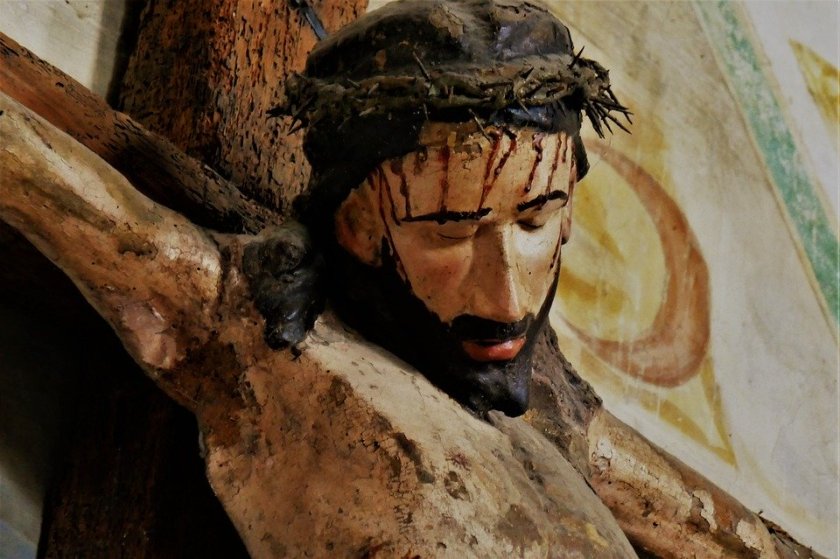
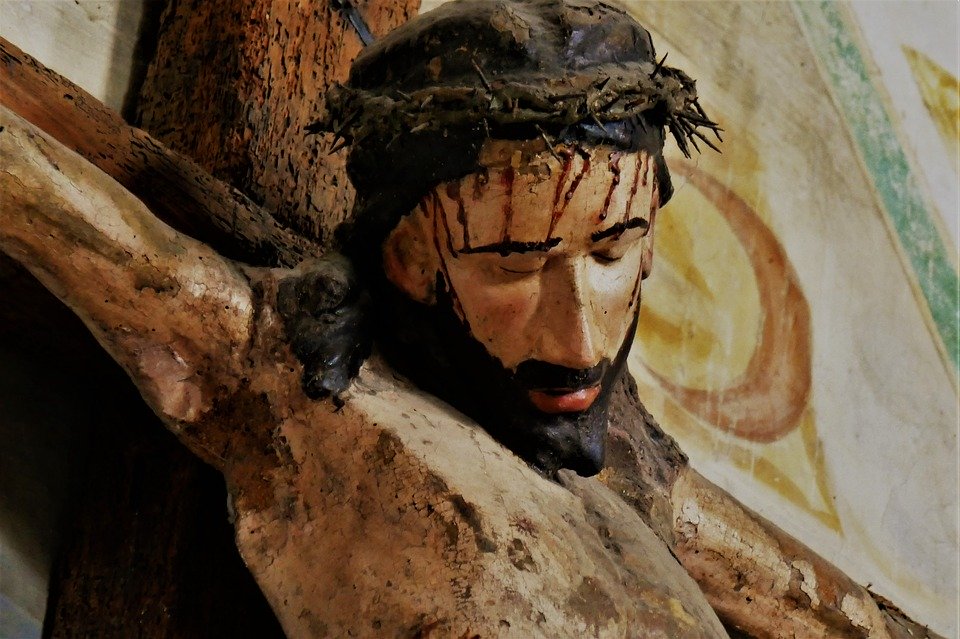
When Jesus was crucified, he was covered with blood from head to toe. His own blood flowed from the thorns on his head and the nails in his hands and feet. Whatever garments they took from him would have been stained by his blood, as would his linen burial cloths. It all makes sense. He is our great high priest. He delivers his people from sin, death and the power of the devil. He is our Lord and our God. The picture from Exodus comes into sharper focus at the end of each of the gospels.

I believe most of us think of “God with us,” in a much cleaner way. But the bloody mess of both the priestly ordination and the crucifixion show us the other side of Emmanuel. It’s a side where the sights and smells of sacrifice and offering define what it’s like to have the Lord in your neighborhood.

Lord, thank you for the blood which shows us who you will be one day, my great high priest. In your name. Amen.

Posted in Devotions, Lent

2020 Lent devotions #10 – Half and half

Photo by RoAll on pixabay

And Moses took half of the blood and put it in basins, and half of the blood he threw against the altar. Then he took the Book of the Covenant and read it in the hearing of the people. And they said,”All that the Lord has spoken we will do, and we will be obedient.” And Moses took the blood and threw it on the people and said, “Behold the blood of the covenant that the Lord has made with you in accordance with all these words.” (Ex 24:6-8)

The last time we refinanced our mortgage, I digitally signed all but few of the required documents. Not too many years ago, a contract signed by both parties would have been business as usual. Before that, many deals were made with a handshake. At the time of Moses, though, the covenant or contract between God and the people was signed, sealed and delivered with blood.

The blood of oxen was thrown both upon the altar (that was God’s side of the agreement) and on the people (their side). The body of the contract was simple: “I am the Lord your God” (Exodus 20:2). Every aspect of their lives would be shaped by his presence, power, protection and provision. God had brought his people out of a life immersed in pagan religion, injustice, violence and slavery into a new life defined by his holiness, justice, reconciliation and mercy.

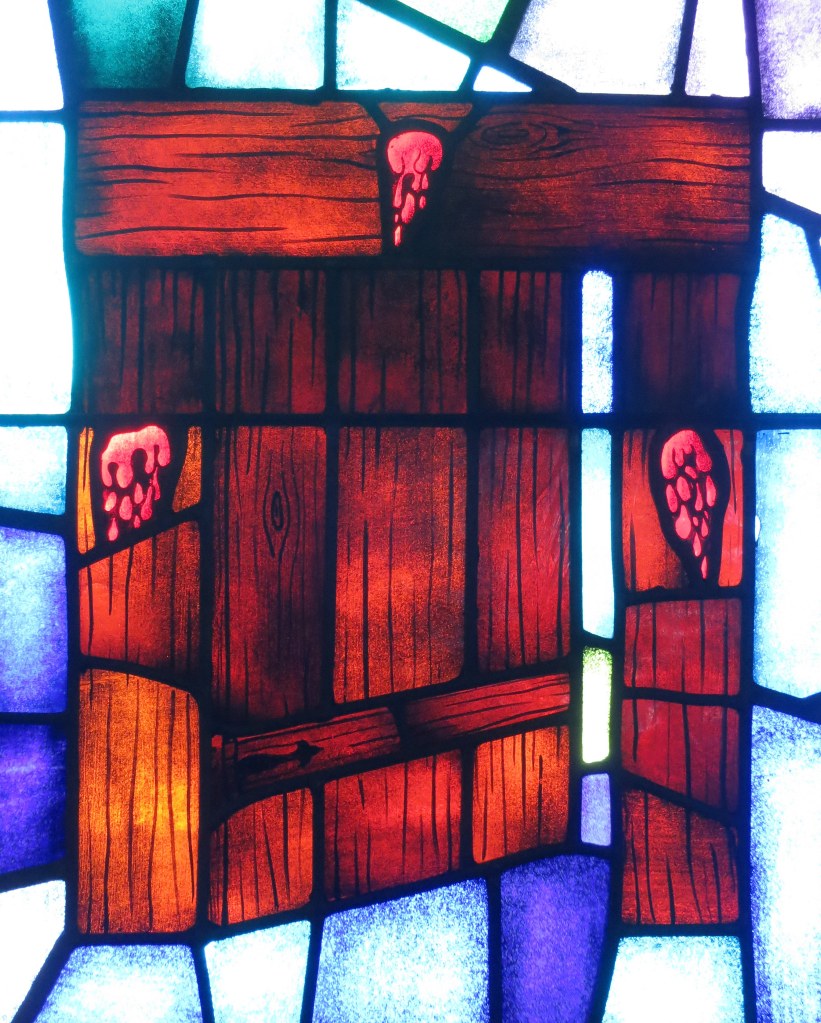
Many years later, many would see blood on the crucified Son of God. It would also be on those responsible for his death. In fact, they insisted, “His blood be on us!” (Matthew 27:25). His blood would also be on those who took his body, wrapped it in linen, and put it in the tomb. All that blood would mean just one thing: a new relationship or covenant with God, sealed by his own blood, the atoning sacrifice for the sins of the world.

Everyone knows that if you get blood on your clothes, you want to rinse out the stain with cold water as soon as possible. It’s just the opposite with the blood of the covenant. We want our sin to be covered by his blood. It’s the only thing that can remove the stain of our sin.

Thank you, Lord, for a new deal – a new covenant – signed and sealed by your blood. Amen.

Posted in common sense, time

“The (fill in the blank) will still be here tomorrow.

Photo by Sophie Elvis on Unsplash

In a world of “limited-time offers”, warnings that “time is running out,” “if you call in the next five minutes” teasers and “not available in stores” products, all of life can seem urgent. After all, yesterday is gone, tomorrow isn’t guaranteed and today is all you really have, right?

Well, yes and no. There are definitely some things you don’t want to put off until tomorrow. But there are other things that will still be there tomorrow. We should pray for wisdom to discern between the two.

For example, definitely spend time with people, especially the ones you love today. But don’t get too hung up on cleaning every nook and cranny in your house. If you are too busy or stressed out today, don’t worry, the dust will still be there tomorrow.

Write a thank you note as soon as you can. The longer you wait, the more awkward that task becomes. Didn’t get to all the weeds in the garden? Don’t worry, they will still be there tomorrow.

If you can, play with your children or grandchildren today. They won’t be little forever. If you don’t get around to throwing out the old leftovers in the refrigerator this afternoon, don’t fret. They will still be growing mold tomorrow.

Spend some time with God today, even if it’s just few minutes in his word or in prayer. He usually has something to tell you that you’ll need later on. But if you didn’t get all the ironing done, don’t sweat it. The wrinkles will still be there tomorrow, or better yet, they might just hang out overnight!

Get some exercise. At the very least, go for a walk. And take the dog. Keep moving rather than feeding inertia. If you don’t get all the toys put away that you got out playing with the kids, never fear. They’ll be waiting for you tomorrow!

Why not run some of your life through the “The (fill in the blank) will still be here tomorrow” filter?

Posted in Devotions, Lent

2020 Lenten devotion #9 – Blood around the door

“Then they shall take some of the blood and put it on the two doorposts and on the lintel…The blood shall be a sign for you, on the houses where you are. And when I see the blood, I will pass over you, and no plague will befall you to destroy you, when I strike the land of Egypt.” (Exodus 12:7,13)

The moment of truth has arrived. The first nine plagues did not persuade Pharaoh to let the people of Israel go free. Frogs, locusts, disease and darkness did not budge his resolve. The tenth plague would. All the firstborn of man and beast would die throughout Egypt.

But every Hebrew household would kill a lamb, drain its blood, and smear the blood around the doorframes of their homes. Death would pass over their homes that night. No one would die. Plus, they should start packing. It was finally time to leave!

Every spring for generations God’s people would eat a “pass over” meal to remember that night and remember God’s deliverance. Jesus ate that meal with his disciples on the night before he was betrayed. That night he told them it was his blood that delivered them from death. They would soon see his blood running from the wounds on his back, the thorns on his head, and the nails in his hands and feet as he hung from the cross. It is the blood that would once again cause death to pass them by and instead take the life of their Lord, the perfect Lamb of God.

How much sleep do you think they got that night? The Egyptians probably slept just fine. They refused to acknowledge what God could do. As the oldest in my family, I would have tossed and turned all night, wondering if that blood would save me. It would be like one of those nights when the hurricane is passing over, and you wonder if the roof will indeed stay attached to the house.

What a great reminder of God’s grace and deliverance each time I eat and drink the bread and the wine, the body and the blood of Christ. I can always sleep easy, because I know tomorrow’s going to be a great day!

Thanks for the blood, the “pass over” and this sign of your great love, Lord. Amen.