When I put my sourdough bread in the oven to bake, I set the timer on the microwave. After I reheated some coffee in the microwave, I realized I turned off the bread timer. Fortunately I was able to guess how much time was left, and neither burnt the bread nor took it out too soon.
Sometimes I have Alexa set a timer on my Amazon Echo. Other times I set a timer in my phone, which is usually in my pocket. I’m toying with the idea of buying a separate magnetic timer I could attach to the oven or microwave.
How did people time their cooking and baking before smart devices and digital clocks. Of course we used to have a timer you twisted to the desired countdown time. But what about before that?
My research uncovered some fascinating techniques used to know when food was fully cooked.
Baking involved watching for browning to occur. It might be when beans or potatoes are soft. Sometimes it’s the smell that tips you off that the food is ready. I’ve learned to press on a steak to determine how done the meat is on the grill.
Older time-keeping methods included measuring the amount a candle melted, the movement of the sun against the wall, sand pouring through an hourglass filled with sand, and a dripping water clock.
With some food, like a pot of soup or stew, it really didn’t matter if you cooked it an extra half-hour or so.
With experience, cooks developed a sense for the passage of time, and knew when time was up. I would love to develop that skill!
Our cottage bakery got an email asking about a cookie order for a corporate event. Other bakers with similar businesses had described these larger-than-usual orders as the real moneymakers.
Our excitement turned to disbelief once we read his request: “25 dozen of a 4-pack of cookies of different flavors with the company logo printed on it.” I did the math and wondered, “Three hundred four-packs?” That’s 1,200 cookies!
Our three-and-a-half inch printed iced cookies start at $4.00 each. He going to spend $4,800 on cookies? That’s too much. Let’s offer 2-1/2 inch cookies at $2.50 each. It would still be a $3,000 order, but maybe that’s what he wants.
That offer was too much for the event budget. He countered, “How about twenty dozen cookies?”
We replied, “We can do 240 three-inch cookies for $3.00 each, a total of $720.”
He was happy with that order. So were we. That’s still a lot of cookies! Could we deliver to the conference venue in a neighboring town? We said we could.
I emailed him the invoice so we could start on the order. He replied, “Can I pay by e-check?” Of course. Our invoice takes you to a payment site with credit card and ACH options.
But his idea of an e-check was totally different than ours. He wanted to write out a check, take a picture of it, and email the picture to us so we could deposit it using our bank’s mobile deposit option.
Red alert! Defcon 5! Danger, Will Robinson! Are you kidding? There’s no way I’m doing that. A picture of a check does work like the real thing, as long as the bank clears it. There’s the catch. It takes up to a week for that kind of deposit to clear.
I learned that this is a set-up for fraud. Someone sends you a check for more than the agreed upon amount. All you have to do is send them a check for the overpayment. But when their check doesn’t clear, they disappear with whatever money you sent them.
I told him I could only take payment through our payment portal. He said he couldn’t do that, but looked forward to working with us in the future. When I looked him up on the corporate website, guess what? No such guy.
This all happened a few months ago. When I looked back at his emails, the first subject line “Cookies Enquiries” should have clued me in from the start. His request for different “flavours” should have tipped me off, too.
Apparently scams and fraud are business as usual for small businesses. Don’t ever let your guard down.
Well, kind of. We just added an Eddie Edible Ink Printer from Primera to our cookie business’ arsenal of equipment. It is amazing how quickly cookie cutters, icing tips, boxes and packaging, food coloring, and little pokey things for smoothing icing accumulate in the kitchen, the bedrooms, and on the dining room table. I suspect they are being fruitful and multiplying when we’re asleep.
The Eddie printer is amazing. It prints a picture with edible ink right on an iced cookie. Here are the first few that I made as I figured out how the printer worked.
You can print any text or picture right on a cookie. Once you get it set up on the computer, it only takes a few seconds. It’s pretty amazing.
I unboxed the printer yesterday. All I had to do was put the carousel in the front, hook up a few cables, pop in the ink cartridge, and I was all set to go.
Unfortunately, most of the software is for Windows and I have a Mac, but I found out a few workarounds from YouTube videos. I found a nice Elsa and Anna picture for my first efforts, one we can use for a fourth birthday party in a few weeks. The other design is for a conference. Once we get them baked, I’ll have to learn how to print them on a different shape. That will be my next challenge.
One of the hardest things to do when custom icing a cookie is lettering. This makes it a snap. Anything I can print on paper, I can put on a cookie! Photographs, logos, cartoon characters, maps, words, dates, anything.
Do they taste good? You better believe it. Butter, sugar, and frosting come together to make you reach for another…and another…and another.
If you want to see more of what we’re making stop by backseatgracebakery.com. We’re printing cookies!
A “through the bible” devotion from Deuteronomy 28.
Towards the end of Deuteronomy we encounter a catalogue of blessings and curses, some of which are quite specific.
This one caught my eye and earned a place in my journal: “If you obey the Lord your God, blessed will be your basket and your kneading bowl” (Deuteronomy 28:5). If you choose not to obey, “Cursed will be your basket and your kneading bowl” (Deuteronomy 28:17).
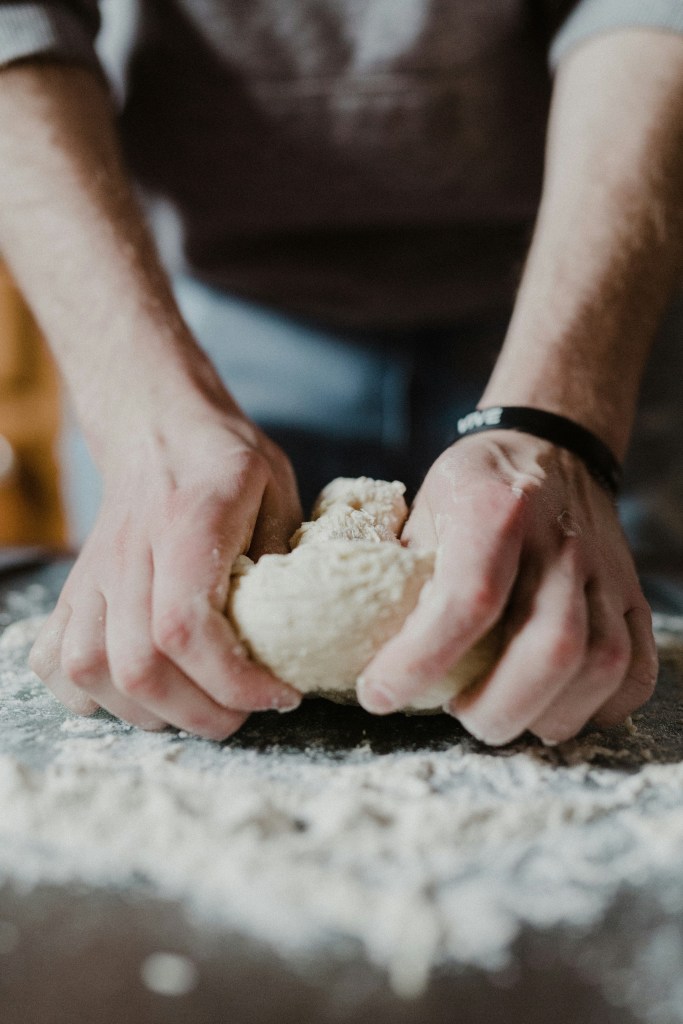
Over the past year I’ve learned how to bake sourdough bread. I’ve figured out the best way to feed the mason jar of starter on the kitchen counter. I use a kitchen scale to weigh out my bread flour, water, salt, and starter for dough. I bake bread in the used cast iron dutch oven I purchased on eBay. I know how many times to stretch my dough before tucking it in for the night in the refrigerator. I have rice flour on hand for the overnight proofing. (Rice flour is inert; it doesn’t react with the dough.)
It’s not an exact science. Every loaf turns out different depending on the weather, how long I let the dough proof, the brand of flour I use, and how the starter is feeling that day. I’ve had some loaves that were impossible to slice because the crust was too tough. I’ve had others that were kind of gummy inside. And I’ve baked some really nice, tasty loaves, too.
Anyway, I would love it if God blessed my kneading bowl! It’s kind of funny to think that he would be a part of the bread baking process. I realize this is an image of God’s blessing in your home. But I still like to picture a really nice loaf of bread cooling on a rack in the kitchen!
The blessings of living as God’s people find their way into every area of life. He wants to bless our families, flocks, fields, homes, and travel. And when I read the much longer list of curses that follow (Deuteronomy 28:15ff), I’m more than ready to repent and get my act together!
We were going to travel. I had a few loaves in the freezer. My sourdough starter didn’t need daily feedings. All the Instagram experts advised, “Just put it in the refrigerator and it will go to sleep. When you take it out and feed it, it will be fine.” I believed them. I just stuck my two mason jars way back on the bottom shelf with about 25 grams of starter in each. “I’ll see you when we get back.” (Yeah, I talk to my starter. Don’t you?”
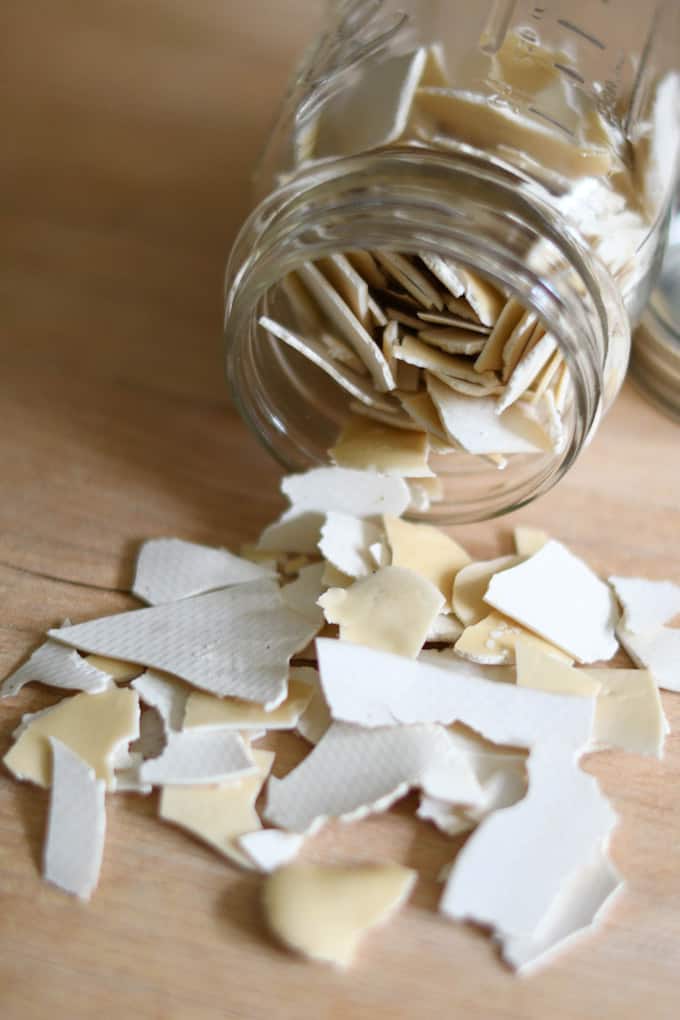
Anyway, I left it in hibernation for about two and a half weeks. When I retrieved it and looked in the jars, the starter looked like hardened paint in the bottom of an old can. Or the cracked, barren ground of a drought-ridden farmland. I guess I should have put lids on the jars rather than just a coffee filter and rubber band.
Of course, I Googled “dried up sourdough starter.” Everyone said, “Don’t give up on it. It will come back to life.” I believe in the resurrection of the dead, but this was a whole different ballgame. I chipped out pieces of dried starter with a knife and soaked them in some water. If I could soften it up, I could mix in flour and water. If. Hours of soaking later, I had a bowl of dried up pieces floating in water.
So I tried to mash them up with a spoon. The pieces were a little softer, but still hard to work with. I decided to go for it. I poured them into the bottom of a jar, added fifty grams of flour and water, covered them with the coffee filter and pushed them back in the corner of the kitchen cabinet. If nothing happened, I’d just toss it and start over. If they came to life, I would be amazed, but would be baking bread soon.
I was skeptical when I peeked at them the next day. I was amazed. The starter hadn’t doubled in size, but I could see little bubbles on the side. Like Dr. Frankenstein, I shouted, “It’s alive!” I discarded a bunch, fed it again, and left it to fully revive.
The next morning, it had doubled, was filled with little bubbles, and had fully come back to life. I fed it in preparation for making dough that night, and the next day I was baking bread.
Some approach sourdough bread as a science project. Others would call it an art. For me, it’s mysterious and magical. I use a scale to measure my quantities. Visual cues tell me when it’s ready. But I am always astounded when I put a ball of dough into the over and pull out a crusty loaf of bread.
If I were still preaching, this would have made a great Easter Sunday illustration.
Since then I’ve learned that some dry out their starter on purpose, to store it for long periods of time. One person kept theirs for fifteen years! It came right back to life with a little flour and water
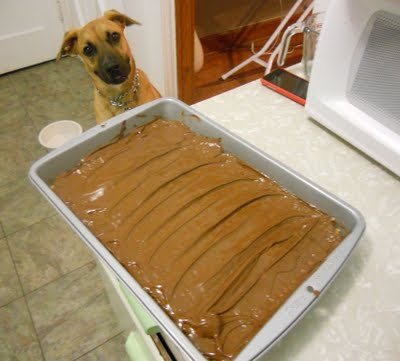
It didn’t take long before we forgot. Over the course of one summer we forgot a cardinal kitchen rule: don’t leave food near the edge of the counter.
It a dog thing. Years of Labrador retrievers hammered that statute home. The most retold story was from the Gabriel archives when we lived in Baltimore, almost forty years ago. My wife decided to make homemade noodles from an old family recipe. She mixed them up, rolled them out, sliced them up, and laid them out on towels to dry. We had to go out that night and upon our return, the noodles were missing. They were gone. Every single one of them. Yes, Gabe helped himself and like a lot of delicious foods, once you start, you just can’t stop.
Lesson learned. From that point on we pushed any kind of food to the back of the kitchen counter or placed it on a higher shelf, out of reach. Our most recent large dog, Samson, wasn’t really a counter surfer, but we still didn’t leave anything in reach.
With a smaller dog at home now – my readers will know him as Winston the West Highlands White Terrier – it’s not an issue. At less that one foot high, he’s no threat to food on the counter. However, one of his best friends, my daughter’s one-year-old Golden Retriever Rex is.
I had several pans of meatballs ready to go into the oven. I walked over to the refrigerator to grab something, and by the time I turned back, Rex had eaten one row of uncooked meatballs. If I had not caught him, it would have been a pizza delivery night.
Then, just the other night, my wife baked a loaf of cranberry bread. After it had cooled on the counter she sliced it in two to freeze half and eat the other. Winston and Rex were outside chasing each other around the yard and the family sat around the fire pit getting ready to roast marshmallows for s’mores. My two grandsons ran in and out of the house as they usually do, one time letting the dogs inside. When my wife went inside to get a drink, she discovered half of a half a loaf was missing. Teeth marks betrayed the culprit, Rex. With that goofy dog smile on his face, I’m sure he thought, “If you didn’t want me to try it, you shouldn’t have left it on the counter.”
Yes, we should have known better. In fact, there’s no guarantee a short dog won’t find his way up on the table. Winston has gotten up on the dining room table when a bench wasn’t pushed in all the way. Sharp eyes caught him before he got any food.
And then there is the legend of Sable our basset hound from a decade or so ago. With a vertical leap of about 2 inches, we never thought she would be a threat to a kitchen counter. However, we did pull into the driveway one day, and saw her up on the kitchen table looking out the window. Somehow she got up on a chair and from there up onto the table. No food was consumed and from that perch, she was able to effectively watch the house while we were gone.
We’ve learned to be safe rather than sorry. Keep all food out of reach.
In 1981, my New York Times Book of the Month choice was James Beard’s Beard on Bread. It was my first step into making my own bread. My favorite recipe in the book was actually Kate Claiborne’s cornmeal pancakes. It’s a complicated recipe that I seldom make, but the pancakes are awesome so it still has a place in our recipe box. Of course, the author also inspired me to bake my first loaves of bread.
While I liked the idea of making bread, I don’t think I made a lot of loaves back then. After mixing the ingredients there’s a lot of time spent kneading, waiting for the dough to rise, more kneading, more waiting for another rise, before you finally put the bread into the oven. More time than I was willing to invest in a loaf that made the house smell great but wasn’t the best bread I’d ever eaten.
We had a bread machine for a while, and made some pretty good loaves in it. But the kneading cycle got a bit bumpy sometimes. We had to toss it when the machine vibrated itself off the kitchen counter.
In recent years, grains weren’t on the approved list for Whole30 and Paleo eating plans. We were also a fairly gluten-free home, so we didn’t eat much bread. Slowly but surely this past year, bread has returned to our table again. When I learned that it’s gut-healthy, I decided to try baking my own sourdough bread.
At first, I tried to bake some gluten-free sourdough loaves. Challenging, but not impossible. Following a little pamphlet of instructions, I mixed some rice flour with water and a special starter we purchased online. I assumed it was doing something as I added water and flour each day. When it was baking day, I followed the directions, put my ball of dough on a pan and covered it with aluminum foil. I got a loaf of bread. It smelled great and looked wonderful. It was just really hard to slice into. I have a really good bread knife, but the bottom of the loaf was so hard I’m not sure I could have cut it with my power mitre saw.
At this time, the Instagram algorithm started showing me sourdough recipes. I took a lot of notes from people willing to share their methods and secrets.
It turns out you can make your own starter with just flour and water. Distilled water. The chlorinated water from the tap hurts the fermentation. Using a mason jar from our cupboard, covered with a coffee filter and rubber band, I faithfully fed my starter each day, watching it bubble and double. In a week or so, it actually smelled like sourdough. Now I was getting somewhere.
I bought a cast iron dutch oven on eBay online for about $20. After watching a few more videos, I was ready to give it a try. Using a kitchen scale, I measured everything by weight. Mix up the dough (made with higher protein bread flour) and wait. Stretch and fold, and wait. Repeat. Repeat. Repeat. Put it in the refrigerator overnight. Grabbing the corners of the parchment paper, I lowered my ball of dough into the dutch oven, threw in a few ice cubes, covered it, and slid it into the oven. A little half an hour later, I had a nicely puffed up, brown loaf of sourdough bread. It tasted pretty good, even if it was denser than all the pictures I had seen.
I began varying my feeding schedule and amounts. I tried a few different recipes. Finally, I started getting some nice looking loaves. Puffed up just right, easy to slice, and delicious. What a feeling of satisfaction!
Once I got a few good loaves, I thought, “That wasn’t so hard.” I still eat some store bought bread, the kind made with lots of different grains. But it doesn’t taste the same. A thick slice of homemade sourdough with butter is the best. Pair it with some homemade soup, and it’s even better.
Now if you’ll excuse me, I have to go feed my starter. I’ve got some baking to do in a few days.
I had heard of rhubarb. My dad used to speak of it. I had seen a “rhubarb” break out at a ballgame when players poured out of the dugout to trade blows on the field.
But the first time I encountered rhubarb was in Iowa. I’m a city mouse, born and raised in suburban Philadelphia. Iowa was all about farming, where my wife, the county mouse, would feel at home. We moved into our Iowa home in the late spring of 1991. As soon as the snow melted and the days got longer in 1992, the rhubarb sprouted in our backyard. The red celery-like stalks and large green leaves baffled me. What was this?
We lived in Iowa for five years and learned that you don’t have to do anything to grow rhubarb. It sprouts and grows every spring and produces magnificent plants. The big question: what do you do with rhubarb?
The easy answer: make a pie. Rhubarb pie. Strawberry rhubarb pie. My wife makes an incredible pie crust using her grandmother’s recipe. And she made some incredible rhubarb pies. The second secret to a great rhubarb pie? Lots and lots of sugar. (The first secret is to use ice water when you make the crust.)
A straight rhubarb pie is delicious. But beware, it will clean you out. (You know what I mean.) Strawberry-rhubarb is delicious, too, with a little more natural sweetening and a little less natural fiber.
Fast forward to 2023. We’ve been living in Florida for 26 years. Rhubarb doesn’t grow in Florida. But strawberries do. And they are ripe and plentiful in March. We went to a strawberry festival last weekend and bought a flat. that is twelve pints of strawberries. I bought that flat with my wife’s promise, “I’ll make you a strawberry rhubarb pie.” Deal.
So I head off to the store to buy rhubarb. Every once in a while I can find frozen rhubarb in the freezer section of the store. No such luck on this trip. Well, maybe it’s in the frozen vegetable section. Nope. I finally asked a manager, “Sometimes you have rhubarb – where would I find it?”
He whipped out his smartphone and checked the inventory. “We’ve got fifteen pounds in produce.”
“Ok,” I said, “I’m headed over there.” At the other end of the store, I asked another manager, “Do you have any rhubarb?”
He disappeared into a cooler and came out with a huge box. “How much do you need?”
“Not that much,” I replied. “How about a pound?” He cut and wrapped up about 8 nice stalks and I was on my way home with fresh rhubarb.
The secret to baking rhubarb, besides lots of sugar, is peeling the strings off the back of the stalks. As my wife laboriously peeled, she said, “That’s the virtue of frozen rhubarb – no peeling.”
This year’s strawberry-rhubarb pies (a big one and some little ones) are in the oven. I’ll let you know exactly how delicious they are!






 Waite for it...