I’m a techie so this box on the curb next to my neighbor’s trash can caught my eye. My toaster is the cheapest one I could find on Amazon. But her’s is extra wide, digital, and smart.
I took a quick look at the user guide online. Twenty pages! The toaster may be smart, but some users may not be. The troubleshooting guide includes this instruction if the toaster won’t turn on: plug it in.
“Toasting tips” warns against putting buttered bread in the toaster. So noted.
There’s no more guess work. No dial to adjust the temperature. Perfect toast every time!
I like the shade option all the way to the right. You can choose to burn your toast if that’s your preference. That must be for the person who enjoys a well-done steak.
A long time ago, my college best friends and I all promised to buy each other toasters when we got married. In theory, we’d all receive at least four toasters as gifts. I think I was the only one who actually did it.
So it’s been three months since I last made some sourdough bread? I don’t remember. But suddenly, I wanted a slice. Slathered with butter. It’s time to get back in the game.
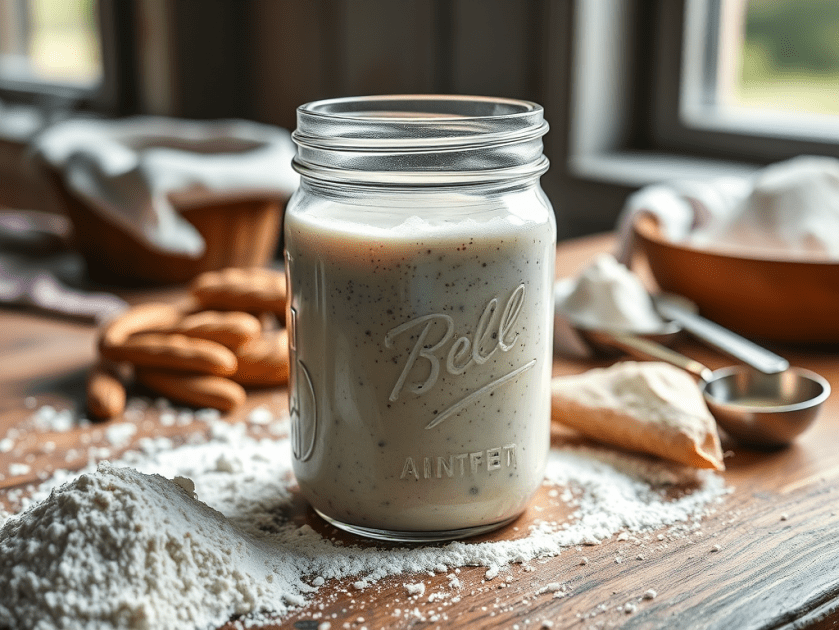
I had some starter in a mason jar in the refrigerator. The starter was harder than a block of cement in the bottom of the jar. It had a bluish tint. And it smelled strange.
I decided to start over. A little flour and water in the jar. Leave it overnight. Add a little flour and water. Repeat. Repeat. Repeat.
Three days later I started to feed the jar and caught a whiff of something really bad. Old socks? Unwashed feet? Cheese from the back of the fridge? I don’t know, but it was funky. This can’t be right.
So, of course, I Google “bad smelling starter. Guess what I? In the first days a starter will smell like old socks, sweaty feet, or worse. Nice. I’m on the right track. In a day or two, my starter will have that fmiliar yeasty smell, and I’ll be ready to bake.
A “through the bible” devotion from Deuteronomy 28.
Towards the end of Deuteronomy we encounter a catalogue of blessings and curses, some of which are quite specific.
This one caught my eye and earned a place in my journal: “If you obey the Lord your God, blessed will be your basket and your kneading bowl” (Deuteronomy 28:5). If you choose not to obey, “Cursed will be your basket and your kneading bowl” (Deuteronomy 28:17).
Over the past year I’ve learned how to bake sourdough bread. I’ve figured out the best way to feed the mason jar of starter on the kitchen counter. I use a kitchen scale to weigh out my bread flour, water, salt, and starter for dough. I bake bread in the used cast iron dutch oven I purchased on eBay. I know how many times to stretch my dough before tucking it in for the night in the refrigerator. I have rice flour on hand for the overnight proofing. (Rice flour is inert; it doesn’t react with the dough.)
It’s not an exact science. Every loaf turns out different depending on the weather, how long I let the dough proof, the brand of flour I use, and how the starter is feeling that day. I’ve had some loaves that were impossible to slice because the crust was too tough. I’ve had others that were kind of gummy inside. And I’ve baked some really nice, tasty loaves, too.
Anyway, I would love it if God blessed my kneading bowl! It’s kind of funny to think that he would be a part of the bread baking process. I realize this is an image of God’s blessing in your home. But I still like to picture a really nice loaf of bread cooling on a rack in the kitchen!
The blessings of living as God’s people find their way into every area of life. He wants to bless our families, flocks, fields, homes, and travel. And when I read the much longer list of curses that follow (Deuteronomy 28:15ff), I’m more than ready to repent and get my act together!
In 1981, my New York Times Book of the Month choice was James Beard’s Beard on Bread. It was my first step into making my own bread. My favorite recipe in the book was actually Kate Claiborne’s cornmeal pancakes. It’s a complicated recipe that I seldom make, but the pancakes are awesome so it still has a place in our recipe box. Of course, the author also inspired me to bake my first loaves of bread.
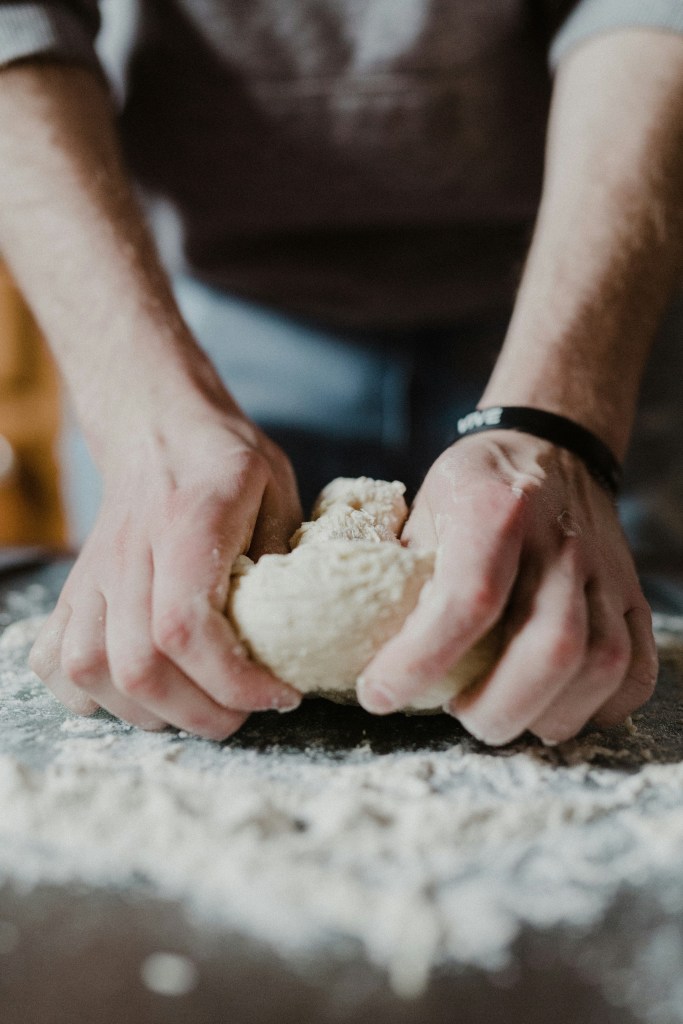
While I liked the idea of making bread, I don’t think I made a lot of loaves back then. After mixing the ingredients there’s a lot of time spent kneading, waiting for the dough to rise, more kneading, more waiting for another rise, before you finally put the bread into the oven. More time than I was willing to invest in a loaf that made the house smell great but wasn’t the best bread I’d ever eaten.
We had a bread machine for a while, and made some pretty good loaves in it. But the kneading cycle got a bit bumpy sometimes. We had to toss it when the machine vibrated itself off the kitchen counter.
In recent years, grains weren’t on the approved list for Whole30 and Paleo eating plans. We were also a fairly gluten-free home, so we didn’t eat much bread. Slowly but surely this past year, bread has returned to our table again. When I learned that it’s gut-healthy, I decided to try baking my own sourdough bread.
At first, I tried to bake some gluten-free sourdough loaves. Challenging, but not impossible. Following a little pamphlet of instructions, I mixed some rice flour with water and a special starter we purchased online. I assumed it was doing something as I added water and flour each day. When it was baking day, I followed the directions, put my ball of dough on a pan and covered it with aluminum foil. I got a loaf of bread. It smelled great and looked wonderful. It was just really hard to slice into. I have a really good bread knife, but the bottom of the loaf was so hard I’m not sure I could have cut it with my power mitre saw.
At this time, the Instagram algorithm started showing me sourdough recipes. I took a lot of notes from people willing to share their methods and secrets.
It turns out you can make your own starter with just flour and water. Distilled water. The chlorinated water from the tap hurts the fermentation. Using a mason jar from our cupboard, covered with a coffee filter and rubber band, I faithfully fed my starter each day, watching it bubble and double. In a week or so, it actually smelled like sourdough. Now I was getting somewhere.
I bought a cast iron dutch oven on eBay online for about $20. After watching a few more videos, I was ready to give it a try. Using a kitchen scale, I measured everything by weight. Mix up the dough (made with higher protein bread flour) and wait. Stretch and fold, and wait. Repeat. Repeat. Repeat. Put it in the refrigerator overnight. Grabbing the corners of the parchment paper, I lowered my ball of dough into the dutch oven, threw in a few ice cubes, covered it, and slid it into the oven. A little half an hour later, I had a nicely puffed up, brown loaf of sourdough bread. It tasted pretty good, even if it was denser than all the pictures I had seen.
I began varying my feeding schedule and amounts. I tried a few different recipes. Finally, I started getting some nice looking loaves. Puffed up just right, easy to slice, and delicious. What a feeling of satisfaction!
Once I got a few good loaves, I thought, “That wasn’t so hard.” I still eat some store bought bread, the kind made with lots of different grains. But it doesn’t taste the same. A thick slice of homemade sourdough with butter is the best. Pair it with some homemade soup, and it’s even better.
Now if you’ll excuse me, I have to go feed my starter. I’ve got some baking to do in a few days.
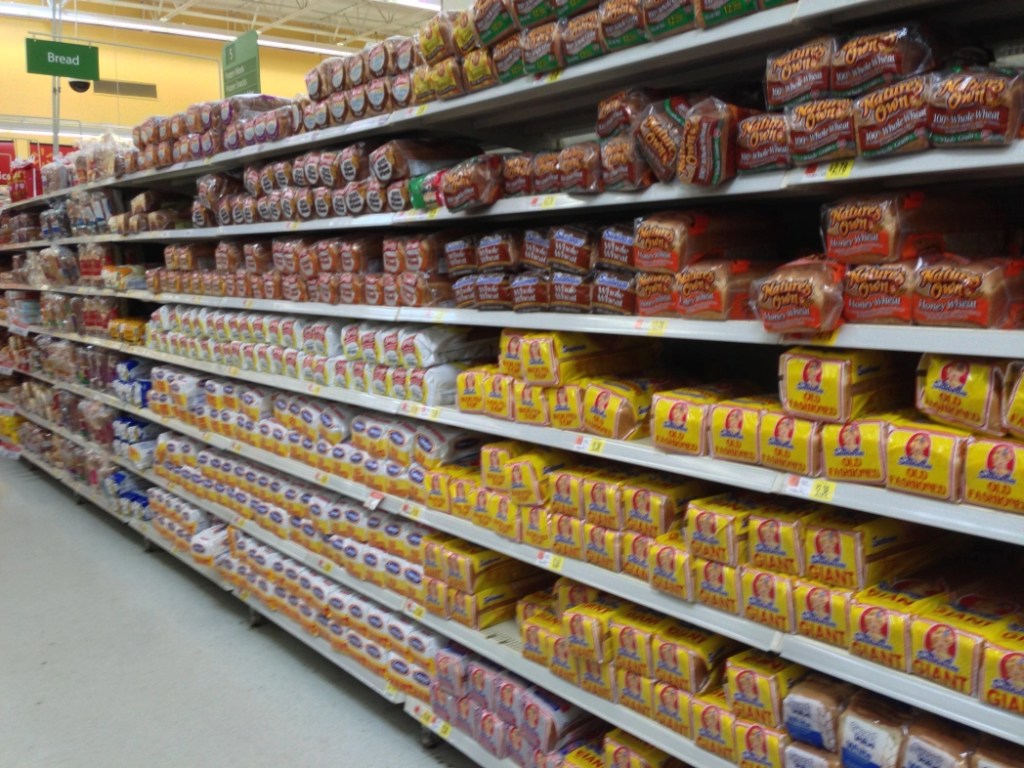
All I wanted was one jar of peanut butter. But the peanut butter section was all the way at the other end of the bread aisle in Walmart. In between me and that one jar were people pondering the hundred foot selection of bread. Everything was in stock that day: white bread, wheat bread, raisin bread, double fiber bread, butter top, sour dough, marble rye, high protein, low carb, and gluten free.
Blocking my way down the aisle were two types of people. The first couldn’t find what they wanted. The second couldn’t decide what they wanted. As I circled around an adjacent aisle to get to the peanut butter, I wondered, “Is it good or bad to have so many choices?”
On the one hand, it’s great. No matter what flavor, texture, shape or nutrients you prefer, there is something for you. Want to try something different? No problem. There is always something new. On a tight budget? There are lower priced items on the bottom shelf. Counting calories? Some loaves have thinner slices.
On the other hand, it can be paralyzing. You only wrote the word bread on your shopping list. Will the store brand taste the same as name brand? Will the kids eat it if they see the word wheat on the wrapper? High fiber is good for you, right? Cracked wheat sounds good, but isn’t all bread made from wheat? I didn’t know they made oatmeal bread! Oh, wow, I haven’t had pumpernickel in ages. Look, there’s a buy one get one free. Before you know it, you’ve spent ten minutes pondering your bread purchase.
I am not one of those people. I know what I want, I’ve got a list, and I get in and out of the store as quickly as I can. I squeeze my way past many just wandering through the store overwhelmed by the selection.



 Waite for it...