Posted in communication

Can we talk?

Bloganuary writing prompt
In what ways do you communicate online?

Carefully

I carefully choose my words. How many times has my online communication been misunderstood? Recipients hear emotions in my texts that I never intended. A missing exclamation point means I’m not excited. A delayed response is interpreted as disinterest. One cannot be too careful when communicating online.

Inefficiently

Everyone has a preferred means of online communication. Some send texts. Others use Messenger. Many turn to email. A few respond immediately on Telegram or Google Chat. Still others are only found on social media. Ironically, with so many ways to communicate, it is harder than ever to contact someone. If you want to reach a lot of people, you’ve got to be on a lot of different platforms.

Ineffectively

“Did you get my text?”

“No.” Or, “I did, but forgot to reply.” Or, “I did but thought it was spam.” Or, “No, my phone was dead.”

When I was working, I sent out a email newsletter opened by less than half of the recipients. Important weekly updates were lost in sea of spam.

Less frequently

More and more, I call. Online communication has lost it’s appeal.

Posted in communication, Life

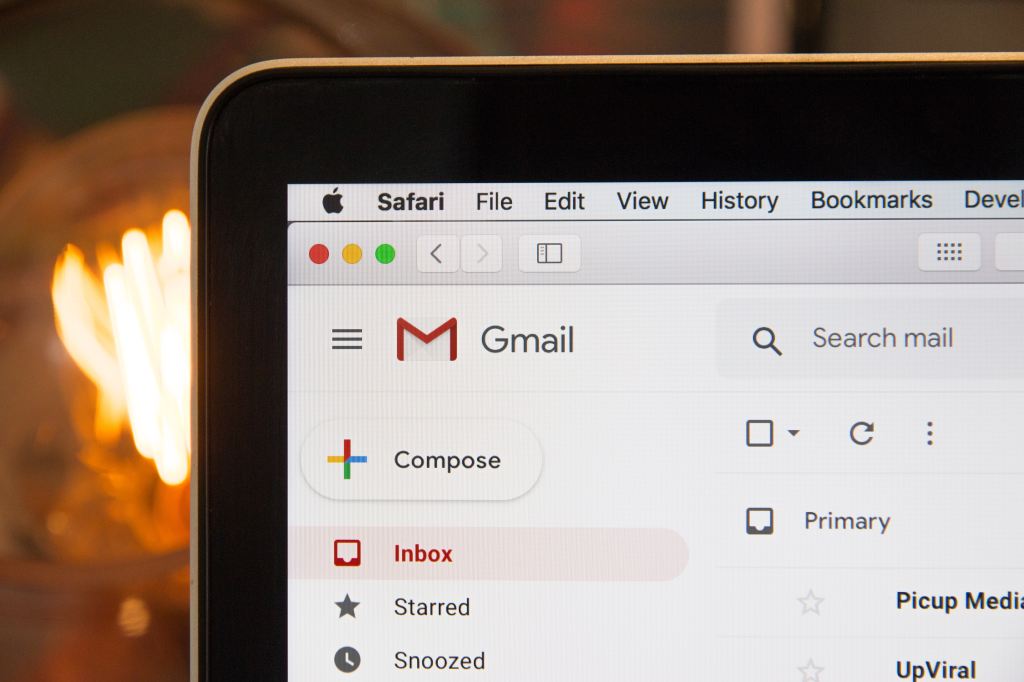
You better check your email

At the beginning of my online bible study group, the leader reminded us of an email he had sent out a few days before, telling us that we would have to cover two lessons to stay on schedule. However, we would not have time to discuss two entire lessons in our one-hour time slot. So he sent out some highlight questions from each of the two lessons.

One group member entered the Zoom room about five minutes late, and was surprised at how far along we were. The leader explained that we were fast-tracking each of the two lessons, as outlined in his email. This member replied, “Oh, well, I’m only on my email once every couple of weeks, so I didn’t see that.”

That comment got my attention. He only checks his email once every two weeks? I check mine at least twice a day. I’ll bet many check it more often than that.

So I’ve been wondering if it’s better to check it more often or less. I can think of pros and cons for both.

If I check my email more than twice a day, I end up spending a lot more time online than I want to. A few newsletters bring me up to date on current events. Merchants I’ve purchased from send along coupons and discount codes so I’ll return to their sites to shop for more. I get weekly updates about activities at church and in the community. I receive notifications about recent purchases and upcoming deliveries. I get appointment reminders. All of these beg for my attention, tempt me to click and read more, eating away at my day one little bite at a time.

But if I go more than a day without checking my email, I’ll have over fifty unread emails. If I skip a week, my inbox will be filled with hundreds of emails. And that doesn’t include all that go immediately into the spam folder. When the list of unread email is more than several pages, I’m sure to miss something I need to know or communication from someone close to me.

On the other hand, I don’t get much email from those close to me. Most of my personal communication comes via text message. Family photos are mostly shared on social media. Important official correspondence comes in the mail.

But I depend on email to find out about local events. I get receipts from recent purchases and updates on travel arrangements. One Sunday morning, I was alerted to a detour I’d have to take to get to church. The library sends me a list of books I’ve checked out by email, too.

I remember when email was a new experience. We were all thrilled to read, “You’ve got mail.” Once, someone called me to ask, “Did you get my email?” Lol. You could have just called me. Twenty years later, the shine has worn off. Too much spam. Too many promotions. Too much junk.

Twice a day should be plenty. Productivity experts say don’t check email till 11 am and never after 8 pm. I can do that. But once every two weeks is a bit much for me.

Posted in communication, Ministry, preaching

What makes a sermon “good?”

Photo by Brandable Box on Unsplash

The other day I was pondering the question, “What makes a sermon good?” What makes it effective, memorable, inspiring, applicable and edifying? Can it even be all of those things at the same time? I know that some sermons are none of those things. Every preacher has a dud or two somewhere in their files. But if someone comments, “Boy, that was great!” what moved them to say that? Was it short, funny, convicting or reassuring?

I’ve come to believe that a sermon that touches my own heart will connect with others, too. Perhaps that’s the best quality for a sermon to have. It connects an ancient scripture with contemporary life. It moves from a page in the bible to a place in your mind. It connects the Creator with his creatures. It allows the thoughts and feelings of a prophet or a king or a fisherman to resonate with a parent, a waitress, a student or a welder.

The moment of truth comes when somewhere in my preparation, a word, a phrase, an image or an event suddenly strikes a nerve. It’s hard to describe, but I know it when it happens. It might be a moment of conviction, relief, surprise or joy. But at that moment, I know I have something to say.

For example, I’m preaching on the transfiguration of Jesus from Matthew’s gospel this Sunday (Matthew 17:1-9). The disciples get to see a side of Jesus they’ve never seen before and never get to see again. All kinds of glory wrapped up in a very plain human package. There it is. Great things like computers or gifts are wrapped and shipped and arrive at my house in very plain packages. Church and ministry might seem boring and unexciting, but don’t ever forget all that glory wrapped up in “the body of Christ.”

That’s the thought process that got me to Tuesday. Now I have something to say. I’m still putting it all together for Sunday. But I’ve made a connection. I pray that my hearers will, too.

Posted in communication, Ministry

“I want to talk to a person”

Photo by Joshua Ness on Unsplash

A few days ago, before I took the long drive to visit one of my members at home, I stopped to pick up some lunch to take to them. Earlier that morning, I ordered a few subs online and indicated when I wanted to pick them up. When I got to the store, I spotted them in the bin with my name on them, paid at the register and I was on my way.

After I arrived at their home, we sat down for lunch and I casually explained how easy it was to pick up the food. I’ve done it often. Another family member there said, “When I order food, I want to talk to a person!” Fair enough. Technology isn’t for everyone. But it got me thinking, when do we want to speak to a living being, and when do we avoid it?

We’ve all been through the frustration of calling to inquire about an account, only to be greeted by layer after layer of automated responses and numbers to press. It would be so much easier if we could just speak to a person.

On the other hand, how often do we text or email or message someone rather than calling or talking to them face to face? It’s so easy to zip off a message and be done with it. They’ll get back to us when they can. In that case we save a lot of time by not talking to a person.

Look at how much you can buy without interacting with a human. Practically everything. And since online shopping grows and grows and grows, obviously we like that method.

Ever been in a store where someone shadows you, waiting for you to pause before an item for a moment, so they can ounce and try to sell it to you? I hate that. Sometimes I just want to look without being sold to. On the other hand, have you ever been in a store and need help finding anything, only to discover that every sales associate has disappeared. That moment when you need assistance, every aisle is deserted like you are in a ghost town.

I’ve learned that talking to a person face to face is always preferable. A phone call is second. Texts, messages and emails come third. I use digital means often, but it’s too easy to miscommunicate or misunderstand. Phone calls, including video, help span the distances you can travel. But nothing beats talking to a person. You can accomplish so much in five minutes when you speak in person!

Why do you think God showed up in person?

Posted in communication, Ministry, preaching, speaking

I’ll do better next time.

Last Monday morning, as I was reading the bible and journaling, I jotted down a few reflections about Sunday morning. I preach twice each Sunday morning and one sermon always goes a little better than the other. Sometimes it’s the first one, sometimes the second. Anyway, I noted that I left out an illustration the second time around, one that really helped me connect with that morning’s text. Of course, no one knew this but me. I’m the only person who heard the sermon twice that morning.

So I started pondering what I could do to do better next time. Should I have reviewed the sermon between Sunday School and the second worship service? Should I have practiced more the week before?

And then I paused and mused to myself, “After all these years, I am still trying to do better next time.” If I include some of my seminary field work and my vicarage, I’ve been preaching for over thirty-five years. One might assume I’ve got it down by now. But weekly a little voice in my mind suggests, “You can do better than that!”

I like to read articles, books and blogs, and watch videos about speaking effectively. I love to watch TED talks as much to learn as speaking as about the topic. My radar is always on when it comes to techniques that get people’s attention, how connect with listeners, the power of storytelling, and what people remember. I rarely learn anything new, for there is still nothing new under the sun. But it never hurts to reinforce what I’ve learned and remember what’s effective.

At the end of my journal entry, I wrote, “Don’t worry. If you forgot to mention something, it probably wan’t that important anyway. I’ll do better next time.” And I will.

Posted in children, communication

Learning to communicate

So I’m learning how to communicate with someone who can’t communicate. I’m talking about my three-week old granddaughter. I’m fascinated by one who can’t speak or understand a word, yet can communicate so much.

Her face, cries and body language effectively communicate discomfort, curiosity, recognition, surprise, anger and contentment. She responds to voice, music, touch, motion, a breeze, and a smile. Without speaking a word, we communicate very well with each other!

In contrast, there are many adults I speak with who completely misunderstand my words. Or sometimes as I listen I have no idea what someone is talking about.

So one of my “blessings du jour” is learning to communicate – from someone who herself is just learning how to communicate! My granddaughter reminds me to watch the eyes, the mouth, the hands and the feet. Those parts of the body speak non-verbal volumes. She also reminds me to listen to the pitch, the timbre, and the volume of the voice. Or the silence. When I pick her up and she suddenly calms down, it’s clear that she just needed to be held. Words weren’t necessary. But human touch was. My nose tips me off to what she needs, too. (And you know exactly what I’m talking about!)

Much of my work as a pastor is communication. I preach the word in season and out of season. I proclaim the excellencies of the one who called me out of darkness into his marvelous light. I’m ready to give a reason for the hope I have. I teach. I listen as a person confesses their sin, and then speak absolution. I have ears to hear God’s word. And I not only call upon him in the day of trouble, but I pray, praise and give thanks.

I am still learning how to do all these things, from someone who is also learning to communicate!

Posted in church, Ministry, preaching

“What are you talking about?”

marcos-luiz-photograph-292698In the introduction to my sermon yesterday, I referred the HGTV show “Fixer Upper.” I knew that many in attendance were fans or had at least seen or heard of the show. Of course, you never hit the bull’s eye every time. There were some there who leaned over the person next to them asking, “What’s he talking about?”

It is so energizing to make a pop culture reference and watch as faces light up with familiarity. It is equally nauseating to see puzzled looks on faces who have no idea what you are referring to. It is humbling to either take the time to explain it, or discard what was a wonderfully powerful way to illustrate your point.

When you are speaking to an audience that ranges in age from two months to ninety-two years, with different experiences, tastes and interests, it is very hard to find that idea or image that everyone is familiar with. There are some who have never seen a Star Wars movie, don’t know anything about Jerry Seinfeld’s defective girlfriends, don’t read the newspaper, own flip phones, don’t Instagram, got a D in world history, only order wine by it’s color, and can’t name any of the Paw Patrol. I’m not saying that’s bad, I’m just saying you better remember that dynamic when you’re speaking.

So what’s a preacher to do? First of all, it helps to know your audience. When I preach, it is almost always to a congregation I know well. I know many of their interests, tastes, occupations, hobbies and families. I’ve been to their homes, talked over coffee, taught them in classes, and have a pretty good idea of what they are familiar with.

Second, you can’t just depend on one illustration or example. You need to throw out a bunch to catch the attention of pre-adolescents, young parents, millennial, baby-boomers and those of the greatest generation. It helps to hang out with and get to know people from all walks of life.

Finally, a lot of it is just trial and error. Thankfully, a swing and a miss one week can be redeemed the next, because Sunday and the next sermon comes around at least once every seven days. I got on base yesterday. We’ll see what happens next week.

Posted in listening, speaking

Can we be better speakers and listeners?

the-climate-reality-project-349094
Photo by The Climate Reality Project on Unsplash

So I am sitting at a conference, watching the other attendees, fascinated at all the other activity going on. Yes, there are a few people sitting, listening and taking noted. But there are many more people who have come well-equipped to do other things. A few still bring books and newspapers, but many more do their reading on a phone, tablet or laptop. One person is preparing slides for a presentation. Another is catching up on email. Of course, some are scrolling through their Facebook newsfeed. Some have brought their breakfast with them. There is plenty of texting going on. Me? I admit, I was doodling on the back of the conference agenda as I listened.

It’s tough to listen. It’s tough to just it there and listen. It is hard, hard work. Which puzzles me a little. I have two ears that hear naturally, involuntarily receiving lots of sounds. But it is still hard to listen.

That got me thinking, when I was supposed to be listening, about those who listen to me preach each week. I can’t see everything everyone is doing, but I know there’s a lot going on. There are people on their phones, and I know they aren’t all using their Bible apps to follow along with the sermon text. I see a few of the weekly church newsletters in people’s hands — well, at least they will know about upcoming events. The congregation always includes a few note-takers, snackers, dozers, draw-ers, sneezers, whisperers, and nose-blowers. Some need to visit the bathroom, a few need a drink, a couple have to go back to the car to get their glasses, and who can help but watch the babies?

I know it’s different. I only have to keep their attention and they only have to keep their focus for fifteen to twenty minutes. But whether it’s a scheduled hour-long presentation or a blessedly-brief twelve minute homily, I believe there is a shared burden by both speaker and listener for effective communication.

For the speaker at the conference (or in church):

  • Do not read your powerpoint slides to me. I can read them myself, thank you very much.
  • Tell me stories, get me to laugh, paint some word pictures and engage my attention before you get to the weightier part of your presentation.
  • Make sure you haves a point. At some moment, give me something that will stick in my mind. It can be a phrase, a 140 character summary, a slogan, something to take with me.

For the listeners at a conference (or in church):

  • Don’t bring a diversion. Instead, come prepared to listen.
  • Take notes. Write down a few words, a phrase, a summary, something you can take with you.
  • Visit the facilities before the speaker begins.
  • Commit to giving the speaker some kind of useful feedback. By useful, I mean beyond the generic, “Thanks, I enjoyed that.”

I do not offer the above advice as an expert speaker or listener, just as someone who wants to learn to do both better.


Posted in Life

Huh?

At Adam’s first homiletics (preaching) class this semester, the professor,  Dr. Dale Meyer, said, “Just because you said it doesn’t mean they heard it.” That’s a good thing to keep in mind. Communication seems simple enough. Preach the word, and watch the Holy Spirit work, right? Well, kind of. Jesus told that story about the different kinds of soil. Sometimes the word takes root and changes lives. But not always. Rock, weeks, birds, and whatever get in the way. Even for Jesus.

It reminds me a little of watching a movie or some TV, when someone leans over and says, “What did he say?” There’s a lot we hear that we don’t understand. We don’t understand what was said, or we don’t understand what the words mean, or we don’t understand what the speaker is talking about. I don’t understand everything I hear. I often ask, “What are you talking about?” Wouldn’t you like to ask me that question sometime? Feel free. You have my permission. How about if I leave my phone out on the pulpit and you can text me, “Huh?”