Posted in Through the Bible Devotions

Sweet (sleepy) hour of prayer

Some “through the Bible” thoughts from Matthew 26.

“So, could you not watch with me one hour?” (Matthew 26:41)

The disciples snooze as Jesus prays in the garden of Gethsemane. What do you think? Is an hour of prayer a long time or a short time?

I guess it depends. I’ve tried to listen and keep my focus as someone said a long, involved prayer before we sat down to eat a meal. The prayer went far beyond, thanking God for food, and the friends who were gathered, praying for healing, peace, church, and numerous other issues. Those five minutes seemed like a very long time to me.

On the other hand, I remember taking tests that had a one hour time limit. That hour passed by so quickly. I could’ve used a little more time to go back over some of my answer answers.

At the airport, a one hour flight delay seems to take forever. I wander around get some coffee find a snack and still have 15 minutes to wait.

When we’re driving somewhere small voices from the backseat say how long till we get there? There are lots of grounds when I say an hour. Even though I might know where I’m going, I’ll bring the GPS up on the screen so it can tell them how much farther we have to go.

Some people feel the need to include some doctrine statements in their prayers, probably more for the benefit of those listening. We want to make sure that people know what it is that we believe. To me that seems kind of redundant, since God knows what I believe.

In conjunction with a fundraising effort for sanctuary, our church had a 24 hour prayer vigil. People signed up for an hour slot and came to the church to pray, as we suck God‘s blessings not just for a new building, but our church’s ministry. Not many people wanted to be there between three and four in the morning, so that’s the slot that I took. I have to to admit it seemed like a very long hour to me.

I guess that’s because I tend to get to the point. When I’m called upon to pray before a meal or to begin or close a Bible class, I generally say what I can in one breath. I can usually capture the essence of my thoughts in 20 words or less. But that’s just me.

But the same token an hour of prayer doesn’t have to consist of your words. That sweet hour of prayer could also involve reading God’s word, hearing God’s word, thinking about God’s word, and listening. I believe we pay attention to God‘s half of the conversation when we pray. I do find that hour in the morning of reading my Bible, journaling, praying, thinking, and planning my day does go by pretty quickly.

Posted in Through the Bible Devotions

I have a question for you

Photo by Edwin Andrade on Unsplash

Once Jesus goes public by riding a donkey into Jerusalem as the king predicted in the Old Testament, challenges to his authority come from all directions.

  • Pharisees ask, “Should we pay taxes to Caesar? (Matthew 22:17)
  • The Sadducees ask about marriage in heaven (22:28).
  • A lawyer asks, “What’s the greatest commandment in the law?” (22:36)

They weren’t curious, though. They weren’t seeking answers to difficult questions. They were trying to trip up the one who claimed to be the Son of God. They wanted to discredit him, at the very least getting him to incriminate himself.

I’ve heard many say that when they get to heaven, they’ll have lots of questions for Jesus. In this world there’s much we don’t understand about tragedy, conflict, and death. We just want a moment with the one we know is omniscient.

I doubt we’ll have many questions once we get to see Jesus face-to-face. I believe we’ll forget about all that in the awe and joy of being with him. We may see very clearly what we now see dimly. Plus, we’ll remember that Jesus often replied with questions of his own. Or he told a story about farmers, fishermen, birds, and flowers.

In John’s visions of heaven in Revelation, people from every culture don’t gather around the Lamb for a Q & A. They’re there to worship. Maybe there’s something to that old bumper sticker, “Jesus is the answer.”

Posted in Through the Bible Devotions

What’s in it for me?

Photo by Yorgos Ntrahas on Unsplash

Some “through the bible” thoughts from Matthew 19.

It was a shock to hear Jesus challenge a rich young man to sell his possessions, give to the poor, and follow. The disciples paid close attention when Jesus spoke of how hard it was to get rich people into his kingdom. Peter responds, “See, we have left everything and followed you. What then will we have?” (Matthew 19:27)

We know exactly where Peter is coming from. We wonder, no more than that, we need to know, “What’s in it for me?” Is it worth it. What’s the return on my investment?

Why should I exercise? Why should I eat healthy? Why should I take the medication? Why should I care about someone else? Why do I have to learn this in school? When will I ever use it?

Of course, we’ve been conditioned to respond this way. If you eat your green beans, you’ll get dessert. After you clean your room, you can play with your friends. You get an allowance, but you’ve got to do your chores each week. If you want a starting spot on the team, you’ve got to show up and practice hard. Those who follow the rules of the road don’t get traffic tickets.

So why follow Jesus? Why trust in him? Why do what he says? What’s the payout?

Jesus said to them, “Truly, I say to you, in the new world, when the Son of Man will sit on his glorious throne, you who have followed me will also sit on twelve thrones, judging the twelve tribes of Israel. And everyone who has left houses or brothers or sisters or father or mother or children or lands, for my name’s sake, will receive a hundredfold and will inherit eternal life” (19:28-29)

When most of us read this, we like the idea of eternal life. But we really like the idea of receiving a hundred times what we’ve given up. That’s a 10,000% return on your investment! That’s nothing to sneeze at. Wouldn’t this be a great place to begin a prosperity gospel ministry?

Unfortunately, greed causes us to misinterpret that promise. Jesus also said that life doesn’t consist of an abundance of possessions.

So what is Jesus talking about here? What did he want the disciples to take home with them? Maybe this is his way of saying that the rewards are far beyond anything you could ask or imagine!

Posted in Through the Bible Devotions

From small to large (and everywhere in between)

Photo by Crystal Jo on Unsplash

Some “through the bible” thoughts from Matthew 14 and 15.

In quick succession, two people desperately ask Jesus for help in these chapters. Peter, distracted by the storm, learns that walking on water isn’t as easy as it looks. When he cries out, “Lord, save me!” Jesus grabs his hand and gets him back in the boat (Matthew 14:30-31). Soon after a Canaanite woman with a demon possessed daughter begs Jesus, “Lord, help me.” Jesus instantly heals her daughter.

They both needed Jesus’s help. But while Jesus says to Peter, “O you of little faith” (14:31) he says to the woman, “Great is your faith!” (15:28). Both did the right thing in a dire situation. Both knew only Jesus could help them. Neither one deserved Jesus’s help. Peter should have kept his eyes on Jesus. The woman wasn’t one of the lost sheep of Israel Jesus came for.

What makes the different between “little” faith and “great” faith? It can’t be quantity. Jesus taught that faith the size of minute mustard seed can move mountains. It’s never about quantity. It’s always about the object of your faith.

Was it her persistence and humility? “Even the dogs eat the crumbs that fall from their masters’ table” (15:27). Was it Peter’s bold challenge, “Lord, if it is you, command me to come to you on the water” (14:28)?

I don’t have an answer. I just know on any given day, faith fills my field of vision, while on others, my faith tank seems to be empty. However, the object of my faith is the constant. He’s there regardless of the size of my faith.

Posted in Through the Bible Devotions

Why did Jesus teach in parables?

Photo by Andrea Piacquadio: https://www.pexels.com

“The disciples came and said to [Jesus], “Why do you speak to them in parables?” (Matthew 13:10)

That’s a great question. To tell you the truth, I have trouble understanding Jesus’s answer:

“To you it has been given to know the secrets of the kingdom of heaven, but to them it has not been given. For to the one who has, more will be given, and he will have an abundance, but from the one who has not, even what he has will be taken away. This is why I speak to them in parables, because seeing they do not see, and hearing they do not hear, nor do they understand” (13:11-13).

Huh?

After a little reading and a lot of thought, it makes a little more sense to me. Jesus wants some people to get the point of the parables. But he doesn’t want everyone to understand.

Those who believe that Jesus is the Christ will gain insight into his kingdom. His stories help this believer comprehend spiritual truths that would otherwise be over my head.

But if you’ve already rejected Jesus, if you are someone who’s plotting against him, additional spiritual truths will only make things worse. Plain teaching only further hardens dull hearts. At this point in his ministry, Jesus doesn’t need that. Their time will come, and they will put him to death. But not yet.

Jesus’s parables quickly divide the room. You’ve got the disciples who want to know what they mean. And then you’ve got others who think he’s just the carpenter’s son. It will sound like nonsense to them.

But to those who cried out to him for mercy, followed him to hear more, and confessed him to be the Christ, the Son of God, his stories lodged permanently in their minds. They got it because they got him.

I read somewhere that our minds are wired for story. Businesses know that. Video creators know that. God knew that. The bible is filled with so many memorable stories. Jesus knew it, too.

Posted in Through the Bible Devotions

Imagine the possibilities

Jesus went throughout all the cities and villages, teaching in their synagogues and proclaiming the gospel of the kingdom and healing every disease and every affliction. When he saw the crowds, he had compassion for them, because they were harassed and helpless, like sheep without a shepherd. Then he said to his disciples, “The harvest is plentiful, but the laborers are few; therefore pray earnestly to the Lord of the harvest to send out laborers into his harvest.” (Matthew 9:35-38)

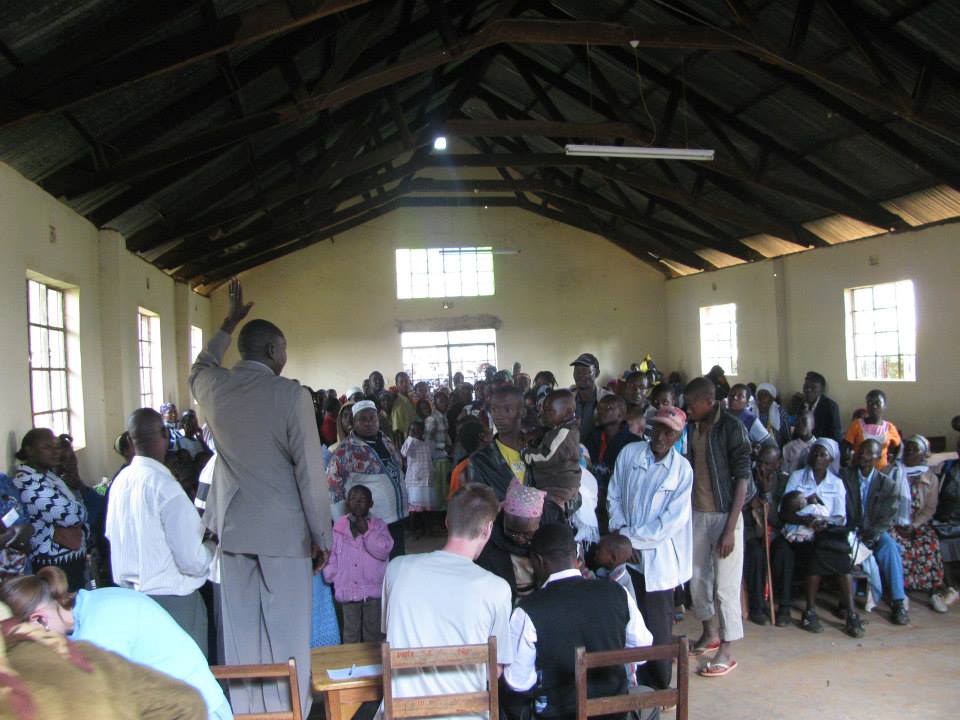
One of my most vivid memories from our medical mission trips was encountering a sea of people every place we set up a clinic. We would leave the guest house early in the morning to drive on highways, narrow city streets, back roads, dirt roads, and across shallow streams. Our driver would successfully navigate steep rutted hills, mountainside roads with no guardrails, and insist his way through standstill traffic in the middle of towns with no traffic lights.

When we finally arrived at a school, church, or tent, a crowd of men, women, children, were waiting for us. Everyone showed up in remote places where there was no medical. Some had walked miles through the night to get from their town to the place where they heard the clinic would be. From nursing newborns to grandparents with canes, lines filled makeshift waiting rooms.

Every day was a full day. The providers, nurses, and pharmacists saw three to four hundred patients a day and gave out as much medication as we could bring with us. Each day a new crowd was a new challenge.

When Jesus saw similar crowds in the cities and villages of Galilee, he saw an opportunity. He saw people who desperately needed teaching, compassion, healing, and a shepherd. Jesus saw beyond people and problems to a harvest ready to be gathered.

What would it be like to see the world like Jesus did? Sometimes I feel compassion. More often I’m amazed and annoyed at the number of people who appear harassed and helpless. My eyes see impossibility rather than possibilities.

Lord, help me see people like you do.

Posted in Through the Bible Devotions

Sleeping on the job

Some “through the bible” thoughts from Matthew 8.

“Behold, there arose a great storm on the sea, so that the boat was being swamped by the waves; but he was asleep” (Matthew 8:24).

This time when I read these words, I thought of Elijah’s contest with the prophets of Baal in 1 Kings 18. (I’ve written about that before here and here.) After the prophets of Baal cry out to their God for half a day, Elijah taunts them, “Maybe he’s sleeping!” (1 Kings 18:27) God’s people counted on the truth that “He who keeps Israel will neither slumber nor sleep” (Psalm 121:4).

But now here’s Jesus fast asleep when his disciples need him the most. Their boat is small, the storm is big, and they are all going to die! At least they knew Jesus could help them. They woke him up and pleaded, “Save us, Lord; we are perishing” (8:25). I don’t Jesus was happy that they disturbed him. He rebukes them for their small faith, and then he rebukes the wind and the waves, “and there was a great calm” (8:26). It didn’t take much for Jesus to control the weather. You could say that he could do it in his sleep. (If I were texting you, I’d add an lol.)

We need a fully human Savior, so we shouldn’t be surprised when he takes a nap. We need a fully divine Savior, too, so his handle on the weather shouldn’t surprise us either. However in this moment, in this boat, Jesus is full of surprises, as he usually is. He’s always going to be more than we can figure out, better than we expect, and beyond our imagination.

Posted in Through the Bible Devotions

Therapeutic touch

Some “through the bible” thoughts from Matthew 8.

A leper came to [Jesus] and knelt before him, saying, “Lord, if you will, you can make me clean.” And Jesus stretched out his hand and touched him, saying, “I will; be clean.” And immediately his leprosy was cleansed. (Matthew 8:2-3)

Jesus didn’t have to touch this man to heal him. He can heal just by speaking. He can heal at a distance, too. He heals a centurion’s servant without going to his house. Jesus heals other lepers while they are on their way to be pronounced clean by a priest.

But sometimes Jesus touches a person to heal them. He touches the blind and the deaf to restore their lost senses. I’m not sure why he does or doesn’t.

I just remember that no one could come near or touch God in the Old Testament. When God was in the cloud on top of Mount Sinai, no one could get near the mountain except for Moses. If you touched it, you died. That same God, in the flesh, now touches people and gives them life.

How do you think that felt? What would it be like to shake Jesus’s hand? What about a hug? Would that be a powerful moment? Do you imagine Jesus’s hands to be rough and calloused? Was his healing touch gentle or firm?

Some people are very touchy when they talk. They reach out and touch your arm or hand as a natural extension of their words. That doesn’t bother me, but I notice it when someone converses with frequent touch. Maybe it’s their way of connecting, of making sure you’re paying attention.

A touch to my ribs makes me jump. The grasp of a little hand reassures me that a grandchild is safe with me. I’m glad when someone grabs my arm so I don’t bump into someone. I’m annoyed when someone bumps into me.

Touch can mean a lot of different things. I imagine Jesus’s touch to communicate love, life, and security.

Posted in Through the Bible Devotions

“Good eye!”

Photo by Mason McCall: https://www.pexels.com

Some “through the bible” thoughts from Matthew 6.

It’s fall baseball season in Florida, and we’ve been going to a lot of my grandsons’ games. The younger seven-year-old is playing in a machine pitch rec league, where every batter gets five pitches. The older is playing on an Under 10 kid pitch league, with umpires calling balls and strikes.

When a batter takes a pitch high and inside or low and away, someone in the stands always encourages them, “Good eye!” It takes time to learn how to not swing at a ball outside of the strike zone.

That’s the first thing I thought of this time around Matthew 6 when Jesus talks about a “good eye.”

[Jesus said,] “The eye is the lamp of the body. So, if your eye is healthy, your whole body will be full of light, but if your eye is bad, your whole body will be full of darkness. If then the light in you is darkness, how great is the darkness! (Matthew 6:22,23)

What does it mean to have a “good eye” in God’s kingdom? I think it means you see things from Christ’s perspective. You view eternal treasures in heaven as worth pursuing, rather than the earthly that too quickly slip through your fingers. You see God as provider, assuaging anxiety about your daily needs. You give, pray, and fast with a focus on God rather than recognition from others.

That sounds like a good prayer request. “Lord, give me a ‘good eye’ so that I have less anxiety as I pursue worthwhile things. Help me see you at work in my life, past, present, and future. Open my eyes to see the wonderful things you have created and provided.”

Every morning when you wake up, you’re up to bat. You (and I) are going to need a good eye!