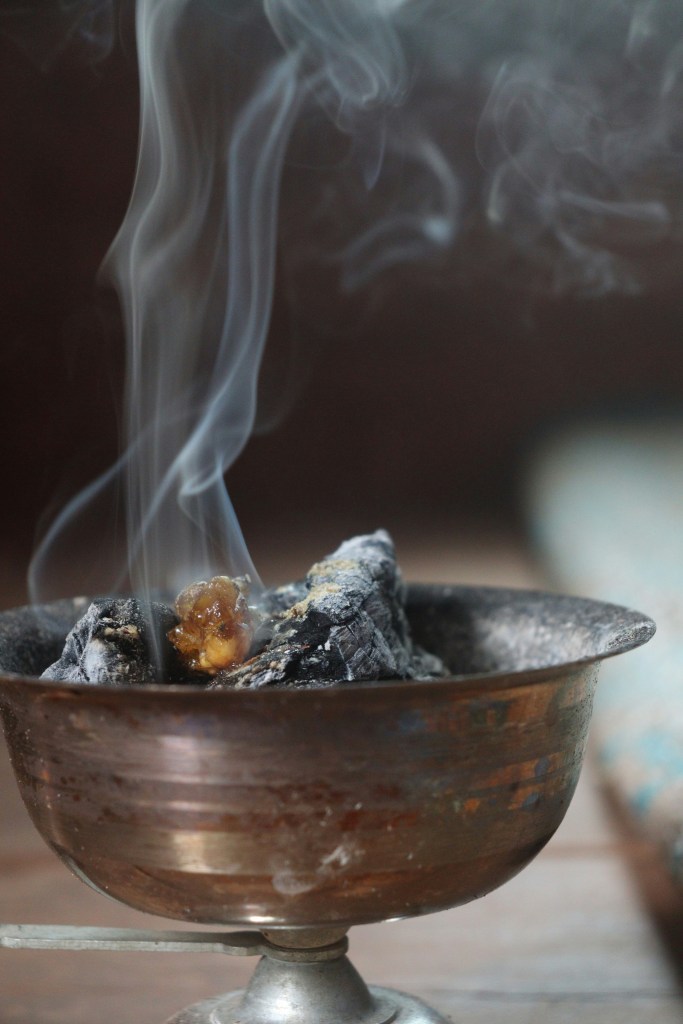
“Make an altar of acacia wood for burning incense” (Exodus 30:1).
“Aaron must burn fragrant incense on the altar every morning when he tends the lamps. He must burn incense again when he lights the lamps at twilight so incense will burn regularly before the Lord for the generations to come. (Exodus 30:7,8)
Why was the altar of incense and the daily burning of incense such an important part of tabernacle, and later, temple life?
My first experience with incense was at my first pastoral conference in Ashaway, Rhode Island. We gathered for evening prayer in a retreat center chapel. The chaplain for the conference leaned towards high church traditions, and had filled the chapel with thick clouds of incense. It was dense, fragrant, stifling, and intense. That night’s worship was unlike anything I had ever experienced.
Many years later, I was asked to preach at the anniversary of a colleague’s ordination. He also leaned towards high church traditions, and would walk through his church sanctuary leaving a lingering aroma of incense an hour before Sunday worship.
My only other encounter with incense was at the funeral of a good friend’s mother. She was Roman Catholic, and the priest prepared to walk around the casket with incense. To his dismay, there was nothing to light the incense. I watched with interest and amusement as various people did their best to make it happen.
The best explanation of incense may be from a psalm:
“May my prayer be set before you like incense” (Psalm 141:2).
As the smoke of incense rose upward, worshipers would follow the smoke’s upward ascent. Their attention would be focused upward towards the one who is worthy of all honor and praise.
How much of worship is about us? Or me? Plenty. I could use a good reminder that it’s about him, the one, God. He’s the only one worthy of praise.
How could I forget that? When I’m distracted, self-absorbed, and indulgent, the smoke of incense rising up might remind me that it’s about him.


