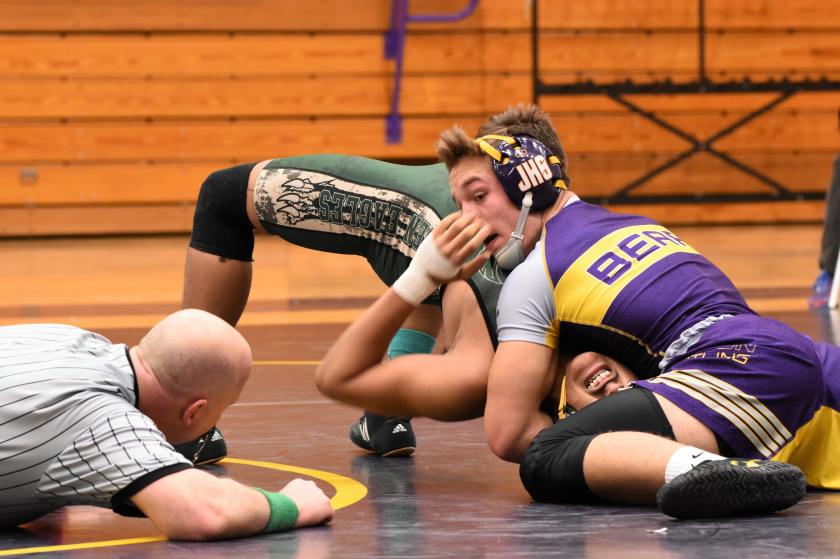
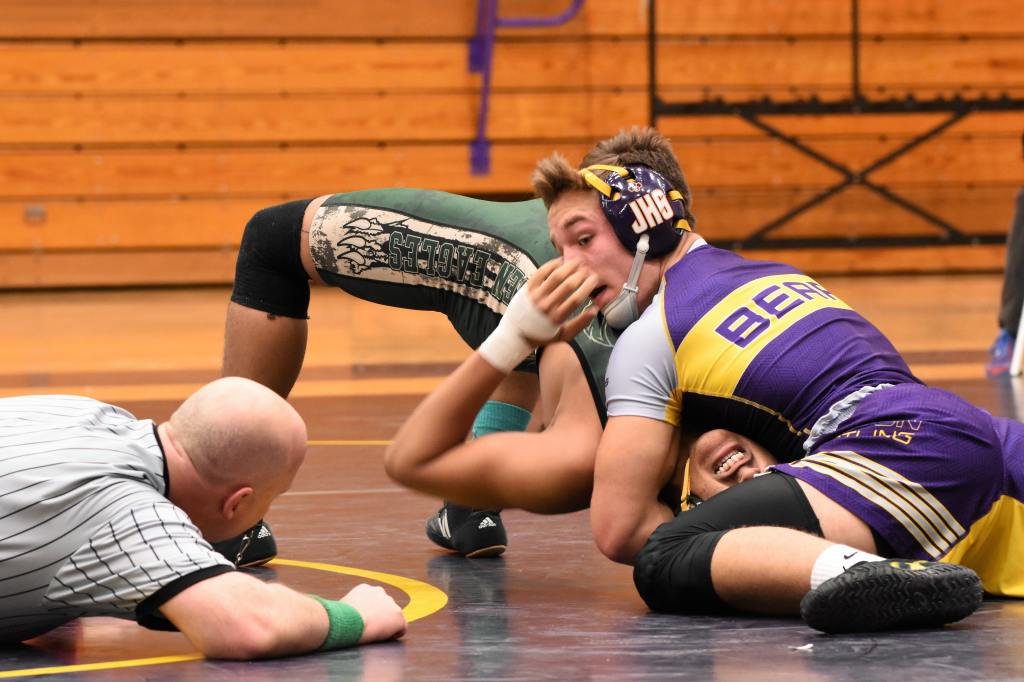
Jacob ran away from home twenty years ago. After cheating his brother Esau and deceiving his father Isaac, he literally had to run for his life. Now with two wives and a boatload of kids, it’s time to return. The night before the reunion, he wrestles all night with a man later identified as God himself, a unique pre-incarnational appearance of the Lord.
If there was ever a person who could make you say “uncle,” it would be the Almighty. But Jacob will not give up. He said, “I will not let go unless you bless me” (32:26). And God does! He blesses Jacob, who will now be known as Israel (32:29). Until this moment, who would have thought you could wrestle a blessing out of God?
In one of his lessons on prayer, Jesus taught his disciples to always pray and not lose heart, just like the proverbial widow who wouldn’t stop bothering a judge until she got justice (Luke 18:1-8). With boldness and confidence we call God “our Father” when we come to Him in prayer because we are His dear children. The point is, you really don’t have to try that hard to wrestle a blessing out of God. “He who did not spare his own Son but gave him up for us all, how will he not also with him graciously give us all things” (Romans 8:32)?
I remember wrestling with my kids. When they were little they loved hanging on me, climbing on me, jumping on me, and rolling around on the floor with me. The blessing was in the wrestling! They knew they couldn’t win, and I didn’t want to win. It’s reassuring to know that your father has strength you can count on when you need him! Just like Jacob needed to fully realize the power and the promises of God.
Did anyone else in the bible wrestle? Rachel “wrestled” with her sister Leah who was able to have more kids than her (Genesis 30:8). Samson kind of wrestled with a lion, tearing it to pieces with his bare hands (Judges 14:5,6). Paul writes that we do not wrestle with flesh and blood, but with evil spiritual forces (Eph. 6:12). That’s scary!
But you know what? Once you’ve wrestled with God, you know He can handle those spiritual enemies, and nothing can ever separate you from His love!
Lord, I think I’ll just hang on to you with every ounce of faith I have, for you are the One who blesses me with every good and perfect gift from above! Amen.
So Abraham is just chilling in his tent by the oaks of Mamre when three men show up. The gracious host in him shifts into high gear and he invites them in for a drink and a snack. And what a snack that was! Freshly baked bread, a little cottage cheese and veal.
The conversation turns to Sarah, listening in the tent as “the Lord” says, “Congratulations! You’re gong to have a son next year!” Sarah must have overheard the conversation, and chuckled to herself, “I’m a little old for that!” (18:12) “The Lord” heard her and wondered why she was laughing. Such a blessing isn’t too hard for someone like the Lord!
Anyway, two of the men head towards Sodom to see if it’s as evil as everyone says it is. In 19:1, we learn that they are angels. But one, the Lord, stays behind to let know Abraham know about the destruction to come (18:22). After Abraham tries to bargain for the survival of the righteous in Sodom, “the Lord went His way” (18:33). I am certain Abraham never forgot the day the Lord stopped by his tent!
If Jesus stopped by your house for coffee and cake, how do you imagine the conversation would go? Would you have the guts to ask Him all those questions you say that you want to ask Him? Would you make sure you told Him why you didn’t make it to church last week? Or apologize for some of the things that have come out of your mouth recently? Show him pictures of the family? While I would love to know about unexpected blessings on my way next year, I wouldn’t be as excited to hear forecasts about imminent devastation and destruction.
That “snack” we have in worship, the Lord’s Supper, is accompanied by words of blessing and judgment. The body and blood of Christ bore God’s judgment for our sins on the cross. But it is also ours to eat and drink for the forgiveness of sins, eternal life and salvation, the most unlikely and surprising blessings we could ever receive from the Lord.
I love the bible’s banquet imagery of heaven. At that occasion, the Lord is the host with a table full of blessings like no other. We won’t be talking about judgment. That will all be in the past. We won’t have to dig deep to believe the good news, either. It will – He will – be right there before our eyes, live and in person!
Thanks, Lord, for inviting me to the meal that speak both law and gospel. And thanks, too, for the invite to the ultimate banquet of heaven! In Jesus’ name. Amen.
It has been four chapters and ten years since Abram believed and obeyed the command of the Lord to go to Canaan where he would become a great nation. Abram and his wife Sarai still have no children. Not much of a nation so far. So Sarai has her husband sleep with her servant Hagar. Hagar conceives and Sarai is not happy. She treats Hagar badly until Hagar finally leaves.
The angel of the Lord finds her at a spring and asks, “What are you doing out here?” Now that phrase “the angel of the Lord” means more than just an angel like the ones Jacob sees in his staircase dream or that the shepherds saw on the night when Jesus was born. By the end of these verses, Hagar knows she has seen the Lord, “a God of seeing,” “him who looks after me” (16:13). This moment is one of the pre-incarnational appearances of the second person of the Trinity, whom we will later get to know as Jesus Christ. No one can look at God the Father and live. You can see God the Holy Spirit at work, but it’s like the wind. You can’t see it but you can see its effect. It must be the Son.
Hagar couldn’t win. She did what she was told, but still got in trouble. It was one of the first “no good deed goes unpunished” moments. But the Lord found her and sent her back home to be the mother of a great nation. Hers would not be the covenant people of God, but they would be a family to be reckoned with nonetheless.
All of us have had moments when we’ve done everything right, but it still turned out wrong. A recipe that tasted terrible. A do-it-yourself project that soon ended up in the trash. A best effort that only earned a “C” from the teacher. A carefully chosen gift the recipient returns the next day.
What do you do when you just can’t win? You remember that God doesn’t care about you because you’re a winner, or successful, or get lots of “likes.” He cares about you because you are one of His. He made you, knows you, loves you and sometimes asks “What are you doing?” Jesus, live and in person, would later reassure His disciples, “Don’t let your hearts be troubled. Believe in God, believe also in me” (John 14:1). Thanks be to God who gives us the victory through our Lord Jesus Christ (1 Corinthians 15:58)!
When it feels like I’m out in the middle of nowhere, thanks for finding, seeing and looking after me, Lord. It is so good to know that I’m not alone! Amen.
The consequences of the first disobedience and fall into sin are immediate and varied. The man and the woman cover their nakedness, hide from the presence of God in the garden, and make excuses for their behavior. But the effects of sin will go much further, affecting families and relationships, what it means to work the ground to produce food, and making life finite. After all that, you will die. Or as God puts it, “to dust you shall return” (Genesis 3:16-19).
Before all that, though, God addresses the serpent, whom John will identify as the devil and Satan in Revelation. He condemns the serpent saying, “Because you have done this, cursed are you above all livestock, and above all beasts of the field; on your belly you shall go and dust you shall eat all the days of your life” (Genesis 3:14). God goes on to say, “I will put enmity between you and the woman.” In other words, you’re now the enemy. That hostility will span generations, “between your offspring and her offspring; he shall bruise your head and you shall bruise his heel” (Genesis 3:15). One day an offspring, a descendant of the woman will step on the head of the enemy, an image of victory over an opponent.
One of the first things I do when I see a bug in the house is step on it. Problem solved. Well, most of the time. I once stepped on a wolf spider whose babies scattered in all different directions! It’s not always as easy as it seems.
A descendant of the woman, Jesus of Nazareth, stomped on the head of Satan and won a decisive victory over sin, death and the devil’s power. But it wasn’t easy. The Son of God, live and in person, experienced the same struggles of life that we do. When He showed up, it seemed like the demons came out of the woodwork like swarming insects (or arachnids). His ministry quickly took Him to the cross, a Good Friday death, and a Sunday resurrection that swallowed up death forever.
From “way back when,” God intended to come and take care of the problem Himself, live and in person. The eternal Word would indeed become flesh to not only live among us but overcome death for us, too.
A virtual doctor’s appointment might be able to prescribe something for your sore throat. But you’ll need the hands of a surgeon to take out those tonsils. Or a visit from a pest control person to really take care of those spiders. And a Savior, live and in person, to give us life.
Heavenly Father, thank You for the amazing gospel promise wrapped up in Your condemnation of the serpent so long ago. Thank You for the fulfillment of that promise in the birth, life death and resurrection of Your Son, Jesus. Amen.
This has been a crazy year of quarantine, shelter-in-place, distancing and masks. I’ve preached to an empty sanctuary. You’ve worshiped online. I’ve taught and led meetings via Zoom.
But it’s just not the same, is it?
From the very beginning, God said it wasn’t good for his created people to be alone. That’s why he created the woman. In those Edenic days, God would walk through the garden he had created, personally interacting with the man and the woman. Until that one day, Adam and Eve attempted to “quarantine” themselves with some leaves in the bushes because they had disobeyed the prime directive to not eat from that tree.
That changed everything. But God knew that was not the way it was supposed to be. In that moment, he initiated a plan to restore the relationship between Him and His creation. He promised to be a part of their lives.
Advent is a powerful time in the church year to remember God’s journey into this world as flesh and blood, as a person, as a baby. Scripture is filled with images and foreshadowing of the incarnation when the Word would indeed become flesh. This year my Advent devotions are intended to help you reflect upon the power, comfort and assurance that God has not abandoned you, but has come to be with you. It’s not just on paper. it’s not just a story. It is God in the flesh, live and in person!
In the past few months, some of your doctor visits have been through windows or via Skype. You have virtually celebrated birthdays, anniversaries and graduations via Zoom. Perhaps you have appeared before a judge online. Yes, we can get it done that way. But it’s just not the same, is it? It’s frustrating, isolating, quiet, confining, claustrophobic and lonely.
God’s word says we are much stronger when we are together than when we are apart. Two or three together cannot be easily broken!
Isolation threatens our faith. It weakens us. It undermines our faith, friendships and perceptions.
Job knew that not even death could take away his personal connection with God. He knew he would see his Redeemer in the flesh one day. We too look forward to that day!
I pray that this year’s devotions will bless you. I hope they will help you grasp the amazing grace of God that refuses to let us live apart form His love!
I had a couple of moments this morning when I knew I had connected with the congregation. The first was during the children’s sermon. As the three little ones watched and listened, I explained to them that I had been painting my son-in-law’s house the previous afternoon. It was really hot, and I thought I might still be thirsty today, so I brought a drink along with me. I then produced a can of Pepsi.
My son-in-law, our praise service music leader works for Coca-Cola, so we avoid Pepsi products like the plague. We rarely even say the P-word out loud. When my daughter, his wife, saw the can she audibly gasped with a huge “OH NO” look on her face. It was priceless!
But I had it all planned. I then produced the outside of a Coke can to cover it up. Then, because I really shouldn’t be drinking soda, I used the outside of a can of Lacroix seltzer to cover that up. You can watch my whole message here.
What was the point? We often try to cover up what we’ve done wrong. But God does a better job of covering up our sin with His forgiveness (Psalm 32). That’s why we confess, or admit what we’ve done. We’ve got the promise of His mercy.
The second connection came about two-thirds of the way through my sermon when I asked, “Did you ever eat something at home and hide the wrapper so no one would know?” I got an immediate chuckle from more than a few of the congregation. Obviously I’m not the only one who does that. We just need to remember that God does a much better job of covering up our guilt.
I can’t always tell if I’ve connected with people on a Sunday morning. It’s a blessing when I know I have.
It’s been six months. Six months since hospitals, nursing homes and assisted living began restricting visitors. That means I can’t go to the hospital. Or the nursing home. Or the ALF. I cannot go when the phone rings and I hear,
“Pastor, we had to call 911. They’re taking him to the emergency room.”
“Pastor, I’m having surgery next week.”
“Pastor, they moved her to hospice care.”
“Pastor, we just had a baby girl!”
“Pastor, I haven’t had communion for three months.”
In a pre-2020 — pre-CoVid-19 — world, my weekly schedule would include pre- and post-surgery visits, monthly nursing home rounds, homebound communion visits and emergency room prayers. It’s all part of pastoral care in a congregation. I cannot do any of those things now. It feels like you cut one of the legs off my stool.
A lot of visitation and prayer has been replaced by phone calls. It is a gracious alternative, but let’s face it, it’s not he same. It’s not the same as holding a hand for a prayer. It’s not the same as communion at a bedside. It’s not the same as one final face-to-face conversation. It’s not the same as reading scripture to a long-time friend struggling for every breath. It’s not the same as making the sign of the cross on a forehead while speaking words of benediction.
In the past two months, I have been able to visit some of my members in their homes who feel comfortable with an in-person visit. For many, it is the only contact with another person for months.
Others have decided to wait. For a vaccine. For a cure. For the number of positive tests to decrease. For their family to tell them it’s OK to have visitors. I’m always available, but I always respect their wishes.
This reality leaves me feeling like I’m not doing my job. Yes, you can watch me preach on YouTube. You can watch my bible class. You can pray with me on a phone call. But it’s not the same, is it? Pastoral care was designed to be analog, not digital. In person, not remote. Face-to-face.
In the past I have often sighed as I headed out the door for yet another hospital visit. Now I am looking forward to a quick prayer of thanks for the opportunity to do that again.
(Over 850 blog posts and no stories about dogs? This post is way overdue.)
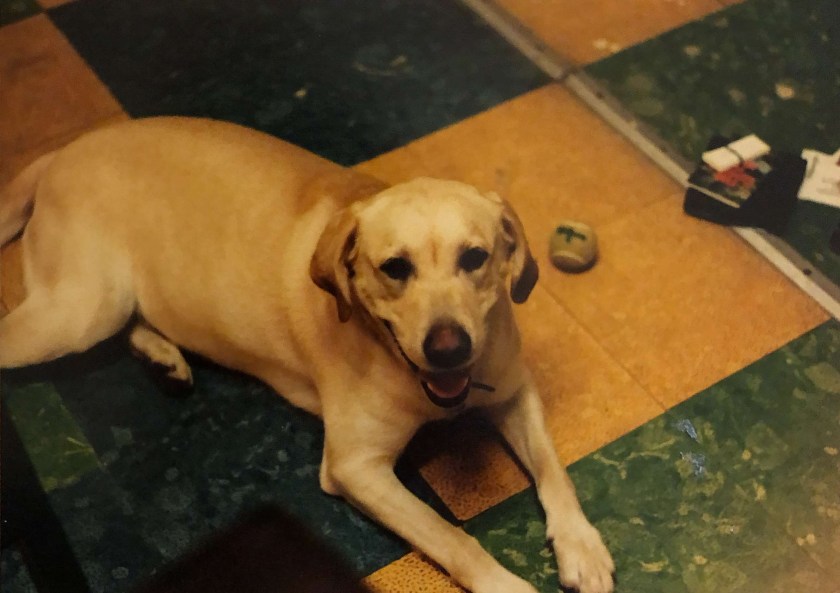
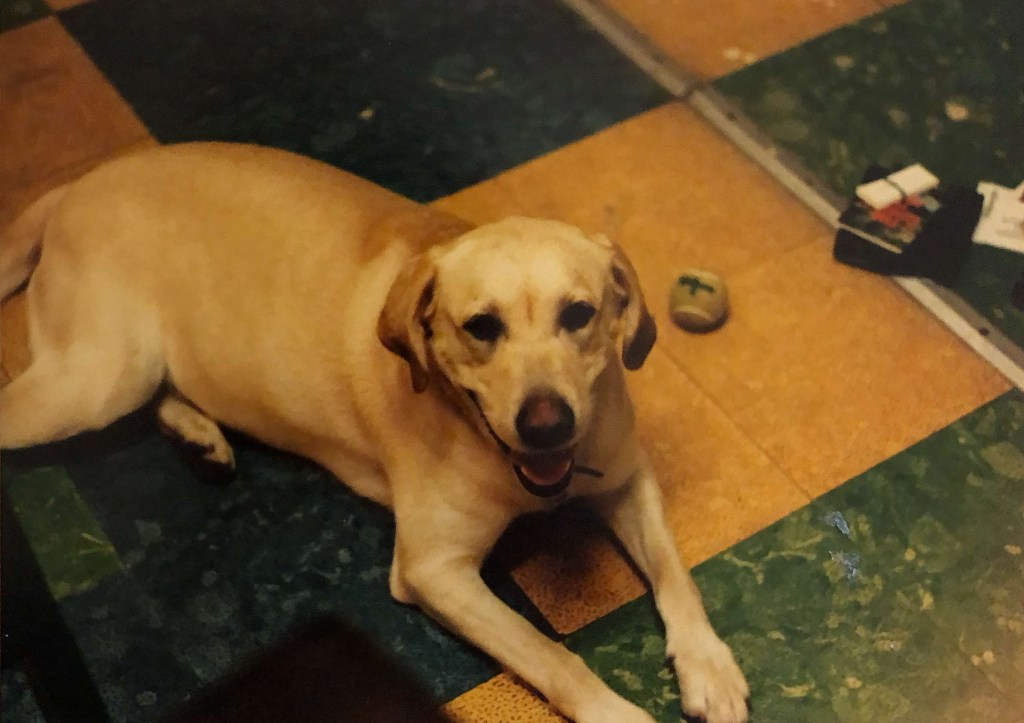
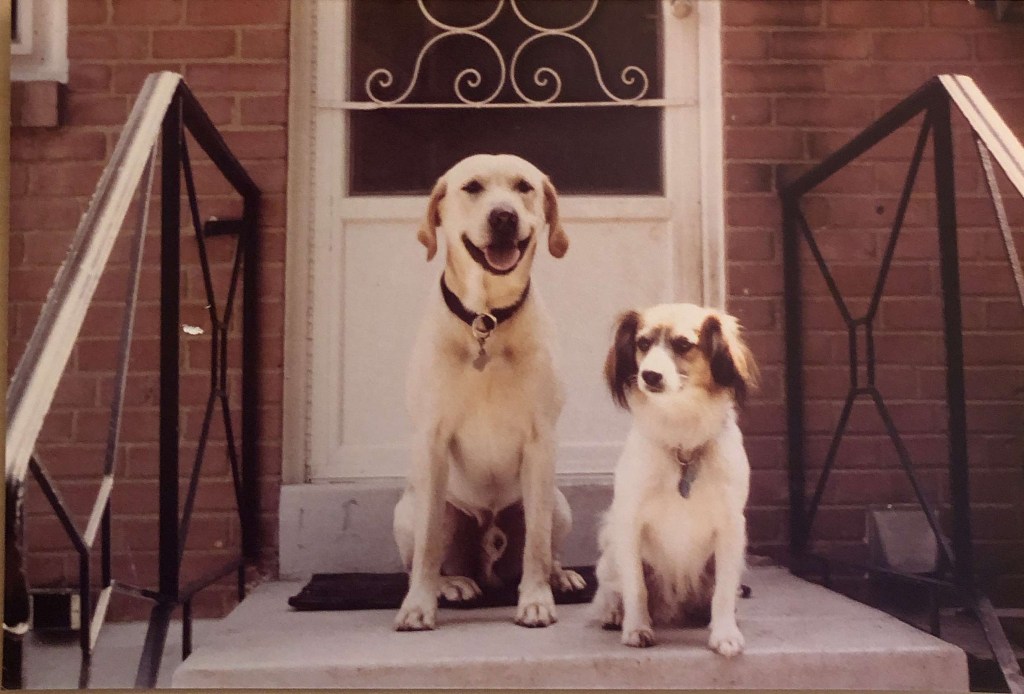
Gabriel is my first dog after I graduated from college, started working at Bell Labs and moved out of an apartment into a house I shared with my friend Jim. He had a beautiful Irish Setter named Shannon. If I got a dog, they could keep each other company. I worked days and Jim worked nights, so the dogs would have plenty of human company, too.
So what kind of a dog did I want to get? I wanted something energetic and active, big enough to run with. This was 1980. Want to do research? You go to the library. It didn’t take me long to decide on a Labrador Retriever. I had seen black ones before, but now I knew they also came in yellow. That’s what I wanted.
OK, so where do you go to get a yellow Lab? This is 1980. You look in the newspaper, under pets. Sure enough, there was an ad for yellow Lab puppies at a home somewhere in the pine barrens of southern New Jersey. I made a call, got directions, and headed out to pick a pup from the litter. I had a map, too. This is 1980. That’s how you navigate.
When I arrived, some kind folks took me down to their basement where about a dozen six week old yellow Lab puppies were running around a large enclosed area. I sat down in the middle of them and let them run around me, on top of me, in and out of my lap. Some chewed on my fingers, some watched carefully from a distance and some wrestled with each other. I learned from my research to watch the little for a while, to tell who was most aggressive and who was most shy. I picked one out that wasn’t the craziest, but seemed to have a good amount of energy. The owners marked a number on the tummy of the one I picked, and I would be able to take him home in a few weeks when he was weaned.
First night home.
I named him Gabriel and I am pretty sure he cried all the way home. I’m pretty sure he cried all night, too, as pups do in their new home. But he quickly adapted to his new place. In those first few months, of course, he chewed out the backs of most of the shoes we owned, chewed up a few candles he got his teeth into and went through a bunch of rawhide.
Gabriel lived up to his retriever breed, naturally fetching anything and everything we would throw around the yard or out into the water of a nearby lake. On one occasion, he came back with a swan by the neck rather than the stick I had thrown! Had I been a hunter, I am sure he would have enjoyed retrieving ducks.
A couple of years later, I moved to Austin, TX for a new job offer. Gabe comfortably rode in the back of my Volkswagen Rabbit Diesel hatchback as we headed out for a new adventure. I rented a pretty nice house in Austin, just a few miles south of the capitol building, and just a short run from what was then called Town Lake (Now Lady Bird Lake). My work hours were such that I had to leave Gabe home alone for a long time each day, so I made sure we went for a run when I got home. Once we got across some busy streets and onto some lake side trails, I could let Gabe off his leash and he would run along side of me, or our ahead of me, or in and out of the water next to me. Four, six, even eight miles later, I would be tired but he would be ready for more.
If some folks were playing frisbee in the park, Gabe would join them even if uninvited. He would leap up and grab it midair, proudly bringing it to me. He could get some pretty good air!
Gabe was a strong swimmer, churning through the after to go after a thrown ball or stick, almost leaving a wake behind him. He would spring from the land and sail out across the water before splashing in and powerfully dog-paddling out and back. He loved to get wet, even in the cold. To this day, I call any cold, rainy day “Labrador weather.”
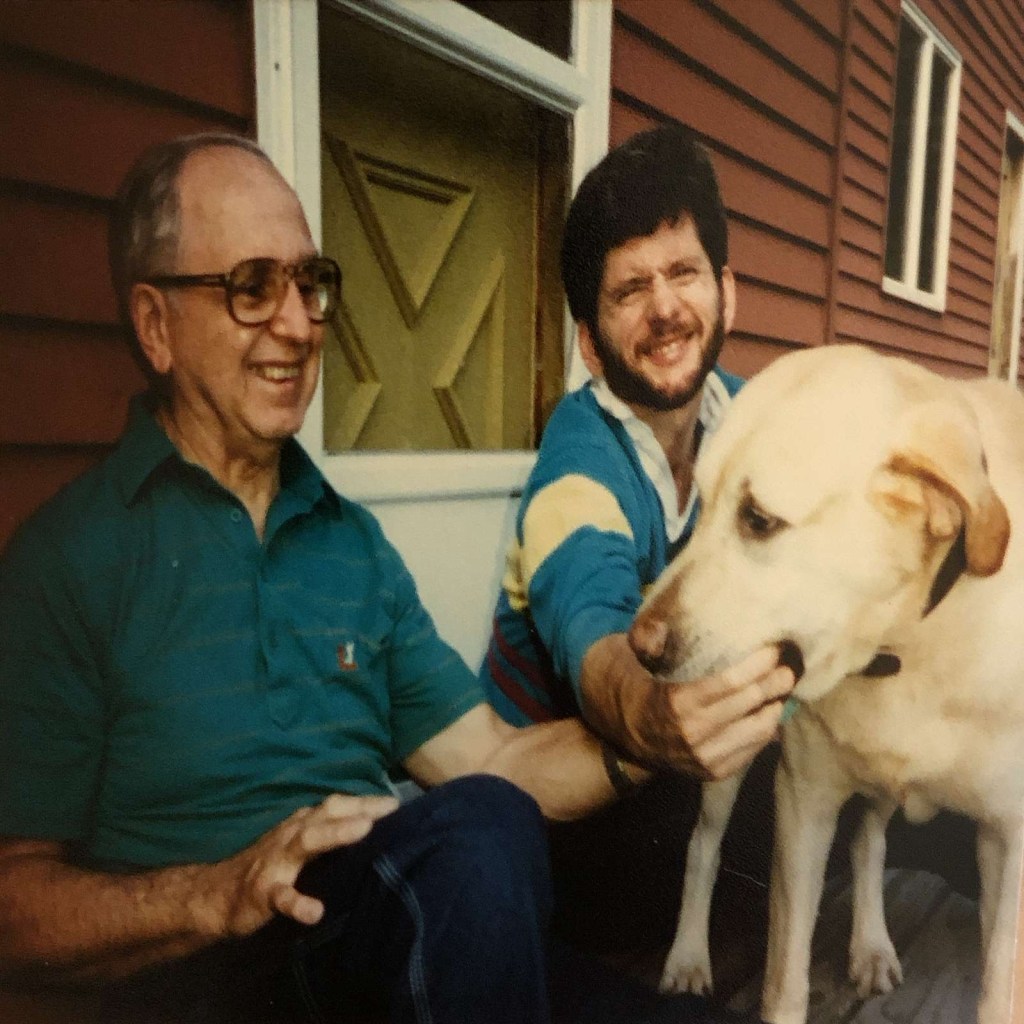
Before that year was out, though, I had decided on a career change and was headed for the seminary. Unfortunately, dogs were not welcome in the dormitories, so Gabe would go to live with my dad for a couple of years. Dad was a dog lover, had a great fenced-in yard and even built a house for Gabe. Gabe and my dad’s dog Barney had a great time chasing balls and squirrels together.
When I met a classmate’s sister, who would later become my wife, one of the first things she noticed on my bulletin board was a picture of Gabriel. With a good looking dog like that, she knew I must be a pretty good guy! Gabe knew she was a keeper, too. When my wife-to-be came to Philadelphia to meet my parents, he not only welcomed her but climbed up in bed with her, too.
“She’s a keeper, Bill.”
After our wedding, my wife and I headed for Baltimore for my vicarage year. Inner city life would be very different that what either of us had experienced before, so having a big dog along was a good thing. In fact, on one of our first days in our house, Gabe had pinned a repairman up against the wall to protect us. I had never seen him do that before! He didn’t do that often, but it was reassuring to know he could.
We got a companion for Gabriel that year, a chocolate Lab named Rachel. She was much more docile, just as good of a retriever, and had a beautiful shiny brown coat. Our two dogs were quite popular in Baltimore. Every day after school, kids from the neighborhood would be knocking at our door, asking, “Can we play with your dogs?” Dozens of kids would then chase our two Labs around our small yard. Everyone had such a great time.
I would take Gabe for runs with me early in the morning. Good exercise for him, and good protection for me to and from a nearby park with great running paths. During those runs, I discovered that Gabe had a sixth sense when it came to balls. We would be trotting down a path when suddenly, he would break for the woods of weeds on one side of us, and come out with a baseball or tennis ball. Somehow, he just knew it was there, and that it was there for him to take home. At home, he would chew the cover off and unravel all the string inside.
After vicarage, we moved back to the seminary for one last year of study. We had a house to live in and I put up a wire fence around the yard so the dogs could be outside. Winter was extremely cold that year, and the dogs provided much needed warmth in bed at night.
We moved to Connecticut after graduation for my first call in the ministry. The church was small, but they provided a huge house on four acres of property, a paradise for dogs who loved to run and fetch. I had a five gallon bucket of baseballs and softballs. I would hit them out into the yard and woods from our driveway for Gabe and Rachel to retrieve. We always let them run free, which sometimes meant they would be way off in the woods. But when I whistled from the back door, I could see them coming through the tall weeds of a nearby field, usually pretty muddy or dirty.
Our scariest moment came when my son was about two years old and eye level with Gabriel. Gabe felt assertive one day and snapped at him, scaring all of us. It was completely unexpected and reminded us to closely supervise their interactions.
Dad loved dogs!
Once Gabriel got hold of a tennis ball, he sometimes didn’t want to let it go. When he was especially stubborn, I would insert a broom handle behind the ball in his jaws and pick up up with it. He would not let go if he didn’t want too Other times, I would stand about 10 yards in front of Gabe and throw the ball as hard as I could right at his head. He would catch it in his mouth every time.
When we moved to Iowa to serve a new church, Gabe was about eleven years old and had mellowed out. Our much smaller back yard was fine for him. We went for walks rather than runs.
As often happens with Labs in their teens, Gabe spent a lot more time sleeping on the couch and had a lot less pep. Finally, when he just couldn’t keep much food down, our vet felt a mass in his abdomen, and we knew Gabe’s time was up. He was almost fifteen and would always be the dog we would compare all our other pets to. I don’t know that I have ever bawled the way I did the day I came back from the vet without him. My daughter Katie hand drew a little book for me, to commemorate Gabe’s life and cheer me up. It still brings a smile to my face.
Just a few months later, Rachel would develop a limp which would be diagnosed a malignant tumor in her leg. Our time with her would be over, too. But we would not be dog-less for long. Michael would be next, and that’s a whole different story!
About twelve years ago, a few of the ushers were chatting about handguns a few minutes before a worship service was about to begin. One of them was considering a new purchase, something a little smaller and easier to conceal. Floyd, sitting there listening, raised his pant leg revealing his weapon in an ankle holster and said, “Like this one?” That was the first time I realized that folks in my church came to church with their guns.
The news of mass shootings in schools, movie theaters, churches and other public places has prompted more and more men and women to purchase and carry guns with them for protection and peace of mind. That same news has moved these same folks to bring their guns to church, too. With weapons concealed beneath sport coats and inside purses, I know our worshipers are carrying on Sunday morning. Is that a good thing? Should you bring a gun to church or any house of prayer?
On the one hand, I appreciate having someone watching my back and noticing who comes into the church. We’ve had visitors in church who arrived on bike, carried backpacks, and looked a little nervous as they found a place to sit. We’ve never had a problem with any of them, but they initially made some feel uneasy.
On the other hand, I doubt that many armed worshipers spend much time honing their shooting skills at the range. Law enforcement officers train and certify often. Should a threat arise, I not confident my average attender would be able to pull and effectively fire a weapon. I’m not sure I would want them to.
And anyway, a very small number of shootings have happened in churches. Though such shootings make the headlines, they are few and far between. As they should be, churches are safe places. Church (or synagogue or mosque) violence is disconcerting, but from what I’ve observed, rare.
I do remember that when we worshiped in Haiti, I caught a glimpse of a 9mm on the belt of just about every male worshiper in the building. But in that country there were also armed guards sitting by every gas pump and grocery store entrance. A local guide with an automatic rifle who accompanied every medical mission team like ours from outside the country. I’m thankful for those who watched out for us. I’m also thankful to live where I can fill my gas tank without a guy with a sawed-off shotgun watching me.
I do not own a gun and do not plan on getting one. Right now, I think that any place where I would need to be armed is most likely a place I shouldn’t be going anyway. But a church has never felt like that kind of a place. And if I should be somewhere, even in church, when someone starts shooting, I know I’m not going to be the hero who takes him out.