Posted in Life, memories

My other career: working at Bell Labs

I began working for Bell Laboratories in February 1979. My department was titled Network Modeling. At the time, AT&T had a monopoly on long distance telephone service in the United States. Just about every call was made on their equipment on their networks. Network modeling involved coming up with algorithms to figure out how much equipment was needed to handle long distance demand and how much it would cost. Since every call traveled over copper wire through switching offices, a lot of equipment was involved. Remember, this was long before the days of cell phones, wireless carriers, fiber networks, and unlimited calls and data.

Since every phone call traveled through AT&T equipment, the justice department had filed a lawsuit to break up the monopoly. The purpose of my department’s network modeling was to show that breaking up the Bell system would make long distance calls unaffordable for most people, and therefore was not in the best interest of the nation.

Engineers and mathematicians in my department would come up with ways to determine and present how much equipment was needed and how much it cost to handle all the telephone calls being made across the country. Then people like me would code computer programs to analyze this information.

Since I was totally new to this, I really appreciate the time the others in my department took to explain how it all worked. Every explanation began with, “You have two wires…” Every phone had two wires that would connect to a local switching office to connect with other switching offices to the two wires of the other person’s phone.

When hired, I thought I would be working for Gerd Printz, but when I arrived, I was put in Ron Skoog’s group. I had a title: Senior Technical Associate. It sounds impressive, but it’s only one level above the lowest tier of employees. There were plenty of levels above me, all those with masters and Ph.D degrees.

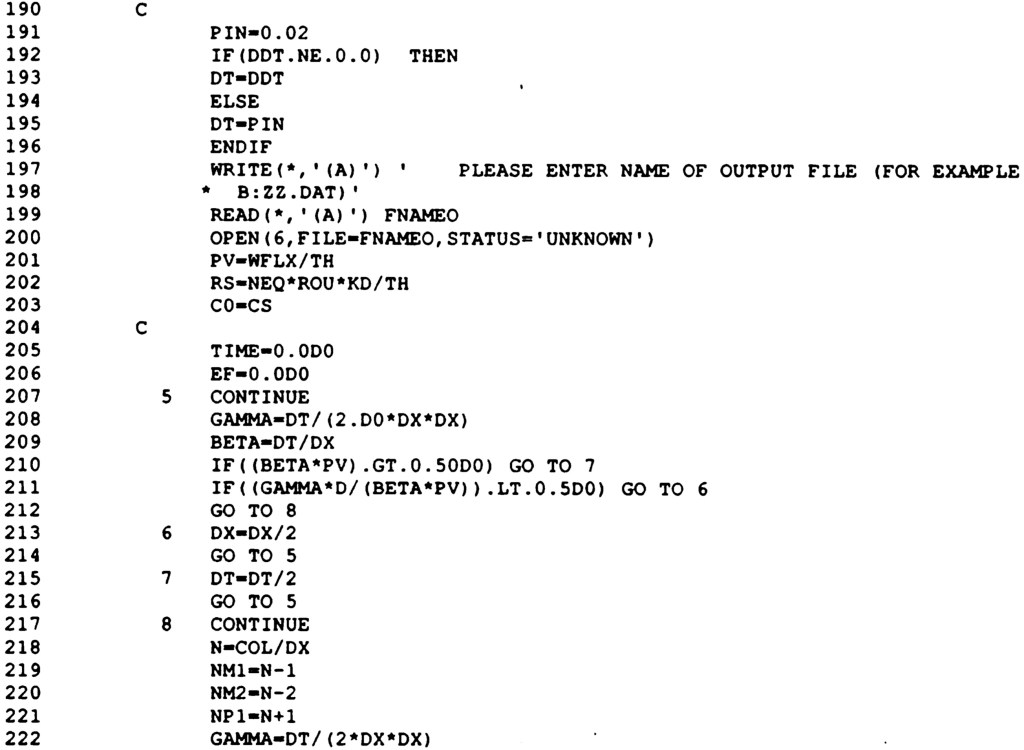
They handed me half-inch thick printout on 11×17 tractor feed printer paper filled with thousands of lines of Fortran code. It was my job to finish the coding, test it, and write it up. I worked alongside many group members who were level higher than me. I’m amazed I remember so many of their names: Joan Bazely, Pam Turner, Ted Ahern, George Askance, Joe Scholl, Gina Langlois, Lachsman Sinha, Eric Grimmelman. A few guys from Western Electric who knew a lot about equipment in the field were around the office a lot, too.

I had an office, a CRT terminal to work on, and shelves filled with IBM manuals. I would work on the code, test parts of it, and then have to go down to the computer room to pick up printouts of what I had worked on.

Once I had the program up and running, I wrote it up for internal publication and made a presentation to some who were higher up the organization who were preparing to go up against the justice department.

Our network model was a stepping stone for my next assignment. Now we began to look at how solar flares and electromagnetic pulses (EMP) would affect telecommunications. If an enemy detonated an EMP device over the United States, it could disrupt communication. But how much? And for how long? Some of this project must have had a connection with the Department of Defense, because I had to get top secret clearance. I felt pretty important for a moment, until I realized no one was going to tell me any secrets.

Anyway, to study this, we found a long distance cable between Aurora, IL and Clinton, IA that was perfectly east and west. I programmed an HP minicomputer in Basic that we installed in Aurora. The staff there would send us a cassette tape filled with data every week that we would analyze along with solar flare activity. I don’t remember what we learned from the whole effort, but it was a fun project to work on.

While I was working on those projects, I go to see other Bell Labs facilities in Holmdel and Murray Hill, both in New Jersey. Those are the places where engineers and scientists invented transistors and lasers, and developed digital communication. I also got to go the main switching office in Manhattan to see all kinds of different phone switches in action. For three years I was a beneficiary of the massive amount of money AT&T poured into it’s research arm. I met a lot of brilliant people and learned so much from them.

Posted in Life, memories

My other career: getting to Bell Labs

I was sitting eating supper with some of the men in my small group when Jim, across the table from me, asked, “You’re from south Florida, right?”

I chuckled, “Almost. Not south Florida. I grew up in south Philly.”

Knowing that I’m a retired pastor, he asked, “Did you serve a church in that area?”

“No, I left there after high school to go to college in Lancaster. Then I worked for Bell Labs in New Jersey for a few years before I found my way to the seminary.”

The mention of Bell Labs sparked interest at the table. “What did you do there?”

I explained, “I was a programmer, working with a bunch of people who were way smarter than me. Like the guy up the hall who developed digital voice communication for Apollo 8. I worked on some projects for the antitrust case against AT&T, and then some telephone network survivability studies.”

One of the guys asked, “Whatever happened to Bell Labs?”

“AT&T lost the antitrust case and had to spin off Western Electric, a bunch of Baby Bells, and Bell Labs, later renamed Lucent Technologies. But that was after I had left them for another job.”

That brief discussion brought back memories of my first career at Bell Labs after graduating from Franklin and Marshall College in 1979. At the time I did not realize how prestigious the labs were. I was an overconfident graduate from a small liberal arts college with a degree in math and experience in programming in an organization filled with geniuses.

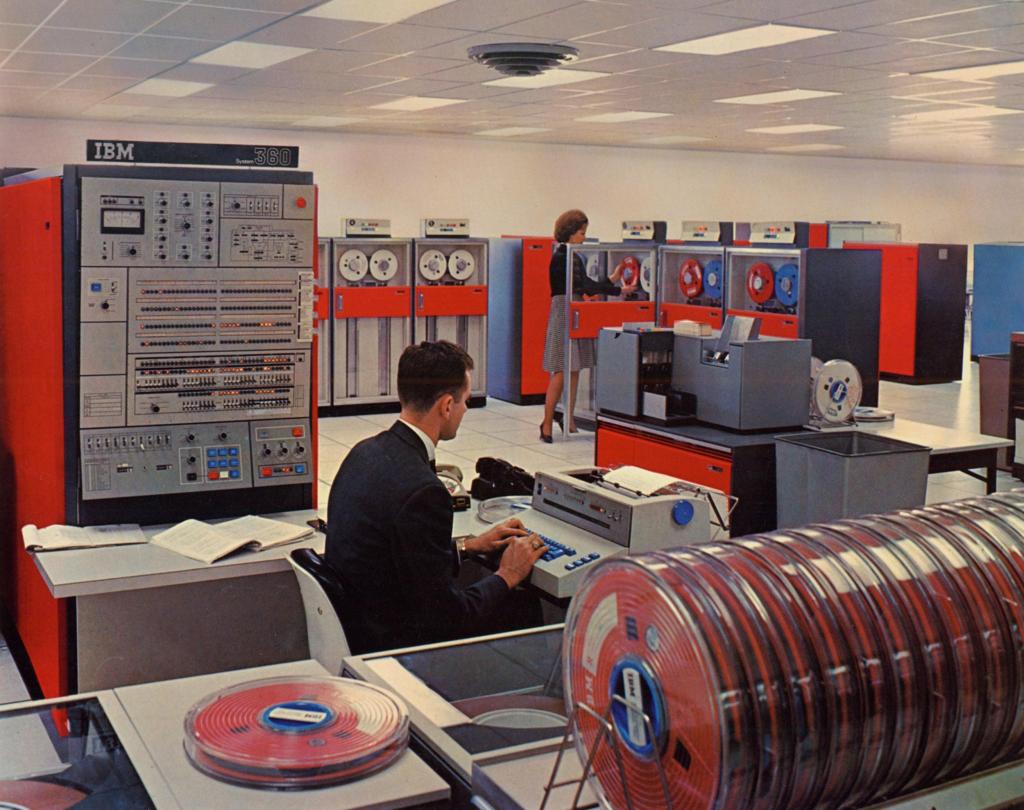
Keep in mind that programming in the early 80’s was Fortran, Cobol, and PL/1 on big old IBM 360s and 370s, with disk storage the size of forty-five pound barbell plates and long term tape drive memory. (IBM’s first desktop computers were released in August of 1981.) I could also program in Basic, which would come in handy a little later on.

My programming portfolio included compiling some survey data a friend of mine collected for the college radio station, some statistics for the basketball team, and some numerical analysis for some math classes. In retrospect, that doesn’t seem like much. But it was more than many of my classmates could do.

I only had to take three classes in the fall of 1978 to finish up my degree a semester early. I spent most of that fall applying for jobs. With just a manual typewriter, I cranked out dozens of cover letters to send out with my resume. I don’t remember how I found out where to apply for jobs. I must have found opportunities in math and science journals. I really swung for the fences, applying to Sandia Labs in Albuquerque, Lawrence Livermore in California, Bell Laboratories in New Jersey, New Jersey Bell, and a load of other places I can’t remember. I think I also sent away for master’s programs at universities all over the country. I had a pretty impressive collection of college catalogues. I had no idea how I would get there or pay for more education, but I would worry about that later.

I finished up my course work and moved back home in December of 1978. The next six weeks dragged on as I waited to hear from someone, anyone. Finally, at the end of January, I got a call from New Jersey Bell and Bell Labs in the same week, inviting me to come and interview.

My interview with New Jersey Bell came first. I drove up the NJ turnpike from south Philly to Newark. First, I took a test of general knowledge, simply math problems, vocabulary and grammar, and current events. After talking with a few people, I was taken to a room with about a dozen other interviewees to work on a test problem. The problem was a math and physics exercise about telephone poles and lines and cables. Wrote up my answer and headed home.

The Bell Labs interview was much different, lasting two days, talking to people from four different departments. They offered to put me up in a hotel in the area, but it was less than an hour away, so I elected to drive up each day. The first day of interviews was at the Holmdel, NJ location. It was impressive inside and out. I don’t remember much about the first day of interviews since I didn’t go to work at that location. The second day of interviews was in the Holmdel overflow location in West Long Branch, NJ.

I interviewed with two different groups in a department called Network Modeling. Just so you know, I had no idea what that meant. I interviewed with Gerd Printz and Ron Skoog, two group supervisors. They brought along Ted Ahern and Pam Turner, two of the group members I would be working with. I also talked with Bill Ross, the head of that department. As I sit here writing this, I am amazed that I remember these names from forty-four years ago!

Could I actually land a job there? I had no idea. But a couple of weeks later, a offer letter came in the mail and I had my first post-college job. I was on my way to Monmouth County New Jersey, my first apartment and life on my own.

Now that I’ve written this much, I think I’ll write about working at Bell Labs and leaving there in two subsequent parts.

Posted in Food

My newest hobby: sourdough bread

In 1981, my New York Times Book of the Month choice was James Beard’s Beard on Bread. It was my first step into making my own bread. My favorite recipe in the book was actually Kate Claiborne’s cornmeal pancakes. It’s a complicated recipe that I seldom make, but the pancakes are awesome so it still has a place in our recipe box. Of course, the author also inspired me to bake my first loaves of bread.

While I liked the idea of making bread, I don’t think I made a lot of loaves back then. After mixing the ingredients there’s a lot of time spent kneading, waiting for the dough to rise, more kneading, more waiting for another rise, before you finally put the bread into the oven. More time than I was willing to invest in a loaf that made the house smell great but wasn’t the best bread I’d ever eaten.

We had a bread machine for a while, and made some pretty good loaves in it. But the kneading cycle got a bit bumpy sometimes. We had to toss it when the machine vibrated itself off the kitchen counter.

In recent years, grains weren’t on the approved list for Whole30 and Paleo eating plans. We were also a fairly gluten-free home, so we didn’t eat much bread. Slowly but surely this past year, bread has returned to our table again. When I learned that it’s gut-healthy, I decided to try baking my own sourdough bread.

At first, I tried to bake some gluten-free sourdough loaves. Challenging, but not impossible. Following a little pamphlet of instructions, I mixed some rice flour with water and a special starter we purchased online. I assumed it was doing something as I added water and flour each day. When it was baking day, I followed the directions, put my ball of dough on a pan and covered it with aluminum foil. I got a loaf of bread. It smelled great and looked wonderful. It was just really hard to slice into. I have a really good bread knife, but the bottom of the loaf was so hard I’m not sure I could have cut it with my power mitre saw.

At this time, the Instagram algorithm started showing me sourdough recipes. I took a lot of notes from people willing to share their methods and secrets.

It turns out you can make your own starter with just flour and water. Distilled water. The chlorinated water from the tap hurts the fermentation. Using a mason jar from our cupboard, covered with a coffee filter and rubber band, I faithfully fed my starter each day, watching it bubble and double. In a week or so, it actually smelled like sourdough. Now I was getting somewhere.

I bought a cast iron dutch oven on eBay online for about $20. After watching a few more videos, I was ready to give it a try. Using a kitchen scale, I measured everything by weight. Mix up the dough (made with higher protein bread flour) and wait. Stretch and fold, and wait. Repeat. Repeat. Repeat. Put it in the refrigerator overnight. Grabbing the corners of the parchment paper, I lowered my ball of dough into the dutch oven, threw in a few ice cubes, covered it, and slid it into the oven. A little half an hour later, I had a nicely puffed up, brown loaf of sourdough bread. It tasted pretty good, even if it was denser than all the pictures I had seen.

I began varying my feeding schedule and amounts. I tried a few different recipes. Finally, I started getting some nice looking loaves. Puffed up just right, easy to slice, and delicious. What a feeling of satisfaction!

Once I got a few good loaves, I thought, “That wasn’t so hard.” I still eat some store bought bread, the kind made with lots of different grains. But it doesn’t taste the same. A thick slice of homemade sourdough with butter is the best. Pair it with some homemade soup, and it’s even better.

Now if you’ll excuse me, I have to go feed my starter. I’ve got some baking to do in a few days.

Posted in flash fiction

Just a box of ashes? Or something (someone) more?

Photo by Polina Tankilevitch on pexels.com

The attic stairs moaned like an old man getting out of bed in the morning as I pulled them down from the garage ceiling. As I ascended the stairs, I thought to myself, “I hope the light still works.” I found the cord and pulled. Suddenly, I could see to the far reaches beneath the roof. It was empty except for one box.

When we moved into the house, we made a pact. We will not fill the attic with stuff. We worked too hard to declutter our lives with this move. If there is no place for it in the house, we’ll sell it or donate it. But it will not find a place in our attic.

Unless we’re talking about Christmas. Five totes of decorations, one filled with nativities, Santas, snowmen, and themed-plates, plus a three-part Christmas tree had to go somewhere. April is a long way from the holidays, so all those things get a place in the attic.

As I surveyed the space, I was glad to see some plywood nailed across the the rafters. From experience, I knew it was way too easy to step through the ceiling.

I scrambled back down the stairs for the first tote. I pushed it up ahead of me and found a good place to start storing up Christmas. I grabbed the box left behind by the previous owners and headed back down for more.

The box was about eight inches per side, a cube that felt to be a little more than five pounds. What did they forget to take with them? What did they leave behind?

I was too curious to wait. I grabbed by knife and sliced through the packing tape. Pulling the box flap aside, I looked inside and saw a plastic bag secured by a twist tie. I untwisted the tie and looked inside, finding what looked like ashes.

Ashes. Uh-oh. I’ve held a box like this before. Someone once handed me a box like this in their backyard at a family memorial and said, “Do what you usually do.” At the time, I was a rookie pastor who had never held a box of remains. As we stood in the backyard, bordering a salt marsh, I said a quick prayer, opened up the box, and threw the contents up into the air, letting the wind carry them away. (Note: always make sure the wind is blowing away from you and the family’s home.)

Ashes. This was a box filled with someone’s remains. Grandma? Uncle Sid? The wife everyone thought ran away with the other guy? The family dog? Great-grandpa?

It was weird, but I had to make the phone call. “Hey, I found a box in the attic. When can I drop it off?”

It wasn’t theirs. They didn’t leave anything behind. They never went up into the attic. It must have been from a previous owner. “I’m sorry, I don’t know how to get in touch with them.”

Great. Here is a person, a life, a relative, reduced to a box of ashes. Doesn’t anyone miss this, I mean, them? Is this what we’ll all be someday, a box of ashes forgotten in an attic?

Maybe there’s something written on the box. A clue. A crematory? Funeral home?

Nada. Nothing. Not a clue as to who this was. I searched the internet. No obituaries, stories, or missing persons connected with this address.

It’s sobering to realize that this is how you’ll end up. A simple six or maybe seven pounds of ashes in a box in an attic. It’s a little depressing, too.

As I sat and pondered my discovery, something caught my eye. It was subtle, not gray. Something shiny? This is too weird. I ran my finger through the ashes and hit something hard. Bone? No. It’s…a ring. A gold ring. It’s large, like one that would fit a man’s finger.

Well, it’s not Grandma. Or Aunt Kate. Or the missing wife.

It was Uncle John. Great-grandpa Will. Someone with large fingers and strong hands.

Well, we’re not going to live here forever. I folded the flaps together and pushed the box to a far corner of the attic. When we move to another house, we’ll just leave it – or them – right here.

This is their home.

Posted in grandfather, grandparenting, Life

Another overnight adventure

I thoroughly enjoy every time we get to have some of our grandchildren for an overnight. I never had the chance to sleepover at a grandparent’s. I just didn’t get to spend much time with them or know them very well. But I get to see some of my nine grandchildren at least once a week.

This past Saturday, two of my grandsons (ages 8 and 5) stayed with us while their parents celebrated their anniversary. I think it’s interesting how we spent our time together.

First, we played a lot of basketball. On the way home from picking them up, we stopped at a craft fair not too far from our home. Not much for kids except for food. I was pretty excited about an outer perimeter of food trucks. Tacos, BBQ, fries, cajun, hoagies, kettle corn – and Chick-fil-A. Guess what they chose? Yep, chicken, waffle chips and Powerade from the Chick-fil-A trailer. (I got a 6″ hoagie. And I know what a “hoagie” is since I grew up in Philadelphia.)

When we got back home, it was basketball. I have a moveable hoop to set up in the driveway. The older guy has a season of rec league behind him, so he’s a pretty good shooter. The younger had to work hard to get an lighter ball through the hoop I set at eight foot. But they were out there for a couple of hours.

After that, snack time. Apples, Taki, and goldfish crackers tided them over until supper time. You’ll notice that food plays a major role in their lives at home and away. Don’t worry, they burn off all the calories.

After snack number whatever, I showed them a cool motorized engine we bought for our wooden train set. I helped them build a couple of loops and they sent long lines of cars around and around the inner, outer, and middle loops.

“Can we go outside?” Of course! Guess what kept them busy for the next hour? Pine needles. Our yard, flanked by two wooded lots, is full of them. The two boys spent the next hour raking and gathering pine needles to fill up the play fort and bury the younger grandson. My yard? Raked and looking nice!

Supper time! As I made my always delicious homemade pizza, they snacked on apple slices, Taki, grapes, and goldfish crackers. I was lucky to get a couple of slices of pizza. They doused their slices in red pepper flakes, Italian salad dressing, parmesan cheese, and ranch dressing. Yum.

Once that was gone, we got ready for the pre-bedtime movie. I gave the younger one a quick bubble bath and the older decided on thje 2018 edition of “The Grinch.” As soon as we started the movie, I heard fervent pleas for “popcorn.” Okay. I microwaved a large bowl for each, and we laughed through the movie.

Once the movie was over, we brushed teeth and fought over who would sleep in the top bunk. Younger had it last time, so it was Older’s turn. After brushing teeth, the two yawned through the Lord’s Prayer, and it was lights out (with a sound machine).

Whew. We were exhausted. And it was only 8 pm! These two grandsons only have two speeds: 100% or fast asleep. My wife and I knew we better turn in early. Before you know it, the sun would be up and they would be awake!

Posted in Christmas, Life

A little bit of everything for Christmas

I know we’re still a month out, but I’ve been enjoying the Christmas yard decorations on my daily neighborhood walks. This one yard especially caught my attention. The longer you look at it, the more interesting things you’ll notice.

Initially I was happy to see the holy family right up front. While there are a few scattered here and there, Jesus, Mary, and Joseph are generally outnumbered by snowmen, penguins, the Grinch, Santa and reindeer. Oh, and did you know they are New York Yankees fans?

Santa is here too, standing guard by a “Happy Holidays” candy cane and a “Let it Snow” sign (yes, even in Florida). Another Santa is off in the distance on the front walk. Large nutcrackers are posted on each side of the front door. Off to the right, not yet inflated for the night, is a Christmas Mickey Mouse. Colored lights frame all the roof edges. And then there is the virgin Mary, in traditional blue, with a white poinsettia in front of her.

I have to give them credit. They have a lot of bases covered. But not everything. I’ve got some other yards I’ll show you soon who feature even more seasonal characters.

Posted in Life

Could this be the last of the old TVs?

Just when I though everyone had a flat screen TV, I saw this in my neighbor’s trash this morning.

As I came around the corner, I first saw the box. I see a new television box on trash day at least once a week. These folks got a modest sized 32 inch “As I came around the corner, I first saw the box. I see a new television box on trash day at least once a week. These folks got a modest sized 32 inch “full HDTV” model. I’ll bet it cost them less than one hundred dollars.

And then I saw their old TV. An old, heavy, tube model from a few years ago. I honestly thought that no one had those anymore. Do you remember carrying those monsters from one room to another? Even the smaller ones, like this model, were heavy (at least fifty pounds) and awkward. At 8-10 pounds, I could lift this one between my thumb and forefinger.

We had deeper furniture and larger entertainment centers to have these in our living rooms. By contrast, this one is no more than one inch thick. I can hang it on the wall like a framed picture.

New TVs are increasingly thinner, lighter, brighter, sharper, smarter and have great sound. The leap from this old curbside TV to the new probably blew them away. Welcome to the twenty-first century.

Oh, and by the way, your new TV will be obsolete in a few months.

Posted in Life, running

Going out for a Thanksgiving run

My wife, younger daughter and I decided to run a 5k race this morning. It’s the first race I’ve run in I know don’t how long. I looked through some old journals, but haven’t been able to pinpoint the last time I ran a road race.

I signed us all up online last week and paid our entry fee. While five-mile races cost an average of $5 in the 1980s, I had to cough up $35 each for this race. Of course, you get a t-shirt (this year’s was bright orange!), a medal, electronic timing, and some of the proceeds supported a local food bank, so I guess that’s not so bad.

The fairly mild fall Florida weather suddenly turned cooler last night, and I woke to a fifty degree morning. Now I have to decide what to wear. It’ll be cool while waiting for the start, but I’ll generate plenty of heat once the race starts. Shorts for sure. My rule of thumb was always a t-shirt down to fifty, and a long sleeve t-shirt if it was colder than that. I never wear anything on my legs unless the temps dip below freezing. It’s been a while since I ran, so I opted for a long sleeve t-shirt with a light short t sleeve on top. Once we got going, a t-shirt would have been enough, but this worked.

We arrived about twenty five minutes before the start time. Many runners were already there. And they were dressed in everything imaginable. The male high school cross country runners were in shorts with no shirt. The season had just ended and they were in top shape. Quite a few runners and walkers were in tights, shirts, coats, vests, hats, and gloves. I saw lots of turkey hats. One woman had her head poked through a large cardboard thanksgiving dinner table, set with plates, silverware and fake food. I saw a few runners wearing tutus, too.

When we noticed the crowd drifting towards the starting line, we followed. Suddenly, a siren sounded and we were on our way. Everyone had to funnel through a ten-foot wide inflatable starting gate, so we didn’t really begin running for about ninety seconds.

We settled into a comfortable thirteen-minute-per-mile pace as the sun appeared above the tree line. It turned out to be a nice day for a run. The course took us through live oak canopied streets, sidewalks, and trails along the intracoastal waterway and then back towards the starting area. Cups of water were available at the halfway point. I always take advantage of the water, even though it was only a three mile run. The course was well marked, and lots of sheriffs deputies were out to control traffic and keep an eye on the runners.

We only took a couple of short walking breaks. We passed many walkers who had started toward the front of the pack. We were passed by many serious runners who had gotten stuck in the crowd behind us. It always takes about a mile for the crowd to thin out and you find yourself among those running your pace.

Without any split designations, I could only guess how far we had run. Suddenly (at least for me), we rounded a corner and there was the finish line. We all finished together in the vicinity of forty minutes. Race results were online by the time we got home, letting us know we had all finished in the top half of all who came out today. The overall winner was a young man who finished in just under fifteen minutes. I believe he was one of the local high school cross country runners. The last person crossed the finish line just under the one hour mark.

This was my wife’s first official race. My daughter had run a few before. And I ran a lot of road races in my twenties. When you run with a crowd, you often do better than you would alone. Once you’ve finished, you start thinking about your next one, training more, and running faster next time. And of course, no matter how hard or easy the race was, it gives you an excuse to eat whatever you want for Thanksgiving!

Posted in Life

Thanksgiving: a path to joy?

Tucked away in a pile of ideas to write about someday I came across this quote: “If gratitude leads to joy, joy is never out of reach!” I searched and could not find the source or the author. While those aren’t my words, they seem like an appropriate place to start writing on the day before Thanksgiving.

From my experience, gratitude always leads to a good place. It melts my heart to hear a little two-year old voice say, “Thank you.” I’ve yet to meet someone who didn’t appreciate receiving a thank you note. Gratitude makes you feel noticed. Gratitude leads to generosity for it usually reminds us that we have more than we need. And the gratitude of one healed leper led him to the feet of Jesus.

So what about joy? Would you agree that joy is different than happiness? I think so. I think happiness is a moment, while joy persists. Happiness comes and goes, depending on the circumstances, while joy is independent of what is going on around you. Happiness is an emotion, while joy is independent of your feelings.

Perhaps joy is a gift. We know it’s a fruit of the Spirit. We know Jesus left it behind for his disciples. We’re filled with it in God’s presence. There is joy in heaven. Nature expresses joy. John the Baptist leaps for joy in utero.

And that brings us back to thanksgiving. Or Thanksgiving. Why do we do this? Why do we feast like no other time of the year? Why do we travel to gather with family? Why do children dress up like pilgrims and native Americans for school programs? Why are front yards in my neighborhood lit up with inflatable turkeys or a wiener dog wearing a pilgrim hat?

Somewhere deep down, we know we need Thanksgiving. We need to express our gratitude, because it leads us to an elusive joy. A joy we can only find when we give thanks to the Lord whose steadfast love endures forever.