People are screaming, “Why didn’t you write about Jericho?” Relax. Here’s a “through the bible” devotion from Jericho 6.
There are lots of walls in Port-au-Prince, Haiti. As we drove from the airport to our guest house, every home that could be lived in was enclosed in an eight-foot tall wall topped by shards of broken glass. Heavy iron doors were the only way in and out, and you had to call ahead of time so someone on the inside would open them.
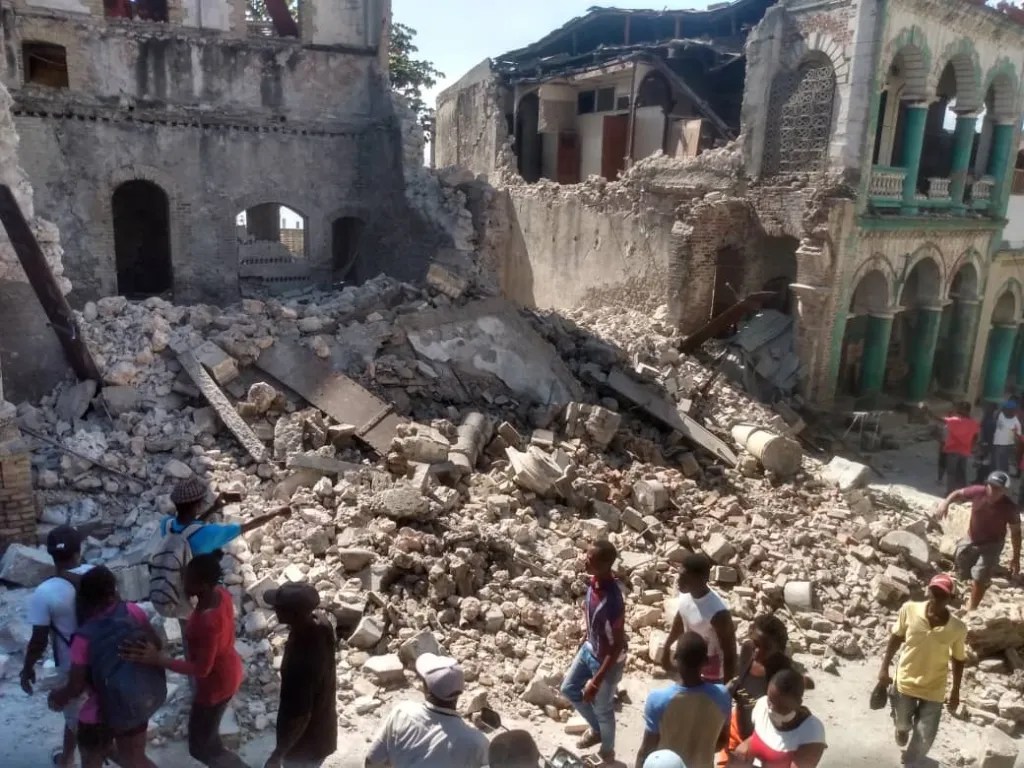
Safe? Secure? Not really. All it took was a moment, a 7.0 earthquake, and many of those walls, gates, and homes fell into piles of rubble.
Jericho looked secure from the inside and the outside (Joshua 6:1). Safe? Secure? Not really. Not after seven laps around the city, when the priests blew the trumpets, the armed men shouted, and “the wall fell down flat” (6:20). A well-timed earthquake? A sonic-wave of destructive proportions? Who knows? The earth shook at Mount Sinai and at Jesus’s temporary tomb. The sound of many waters and loud thunder accompanies God’s presence. If the Lord can raise the dead with a cry of command and the sound of a trumpet (1 Thessalonians 4:16), then a few city walls are a cinch.
The fall of Jericho is Israel’s first victory in the promised land. They marched. They blew ram’s horn trumpets. They shouted. But God did the heavy lifting. He brought down the walls. Is there a lesson there for us? We go (to all nations), we lift up our voices and play our instruments in worship, and God “gives us the victory through our Lord Jesus Christ” (1 Corinthians 15:57).
 We really like it when our Lord stills the storm. When the hurricane’s over and your house is still standing and the skies clear and the sun comes out, we’re ready to go. We’re ready for the power to come back on, stores to reopen, the kids head off to school, fill the car with gas and get back to work.
 So about a week ago I found myself worshiping in a different language. On the Sunday after we arrived in Haiti, we attended a worship service at Good Shepherd Lutheran Church in Port-au-Prince, Haiti. The service was spoken and sung entirely in Haitian Creole. The extent of my Haitian Creole is a few numbers and colors.


 Waite for it...