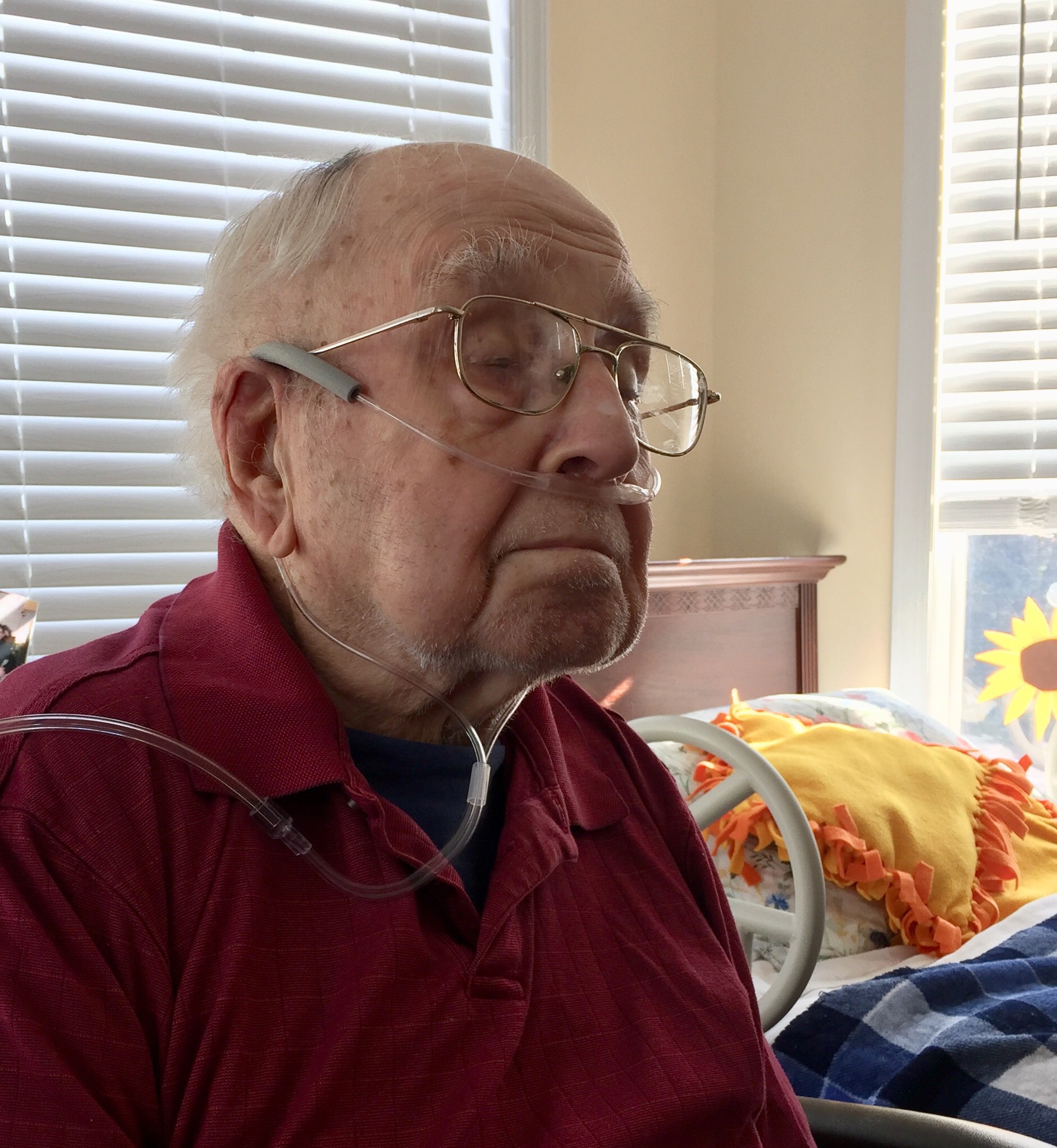
It’s been about three months since I’ve seen my dad. My brother gave me a heads up last week that he thought dad was slowing down. Sleeping more, eating less, not sick, just wearing out. Since I was going up to northern VA, i took time one morning to drive about 2 hours to see him.
My brother was right. Dad was different. There but not really there. I could only keep him awake for about five minutes at a time. I showed him pictures of the great-grandkids, read with him, drew a picture on his white board, but he quickly dozed off each time. So my visit became more of me just being there. Ironically, that’s all dad could do, too. Just be there.
I thought a lot about that on my way home. Is just “being there” a good thing or a bad thing? We spend a lot of time telling people in the church and community, “Don’t just sit there; do something!” Yet there are times when simply being present is not just meaningful, but is everything.
I’ve heard some describe this as “ministry of presence.” Maybe there’s not much you can do. There aren’t any profound words to speak. There’s nothing you can bring. But you can be there.
You can be there when your child looks up in the stands or out into the crowd. You can be there when someone comes home. Or when it’s time for them to leave. You can be there when they open their eyes. Or when they close them (maybe for the last time).
You can be there because it’s not good to be alone (you or them).
By Gods grace we are spending a long weekend near Harrisonburg, VA at the time of peak fall color. It’s hard to predict, so I don’t take credit, but just thank God for the beauty of autumn all around me for these next few days.
As I sit and enjoy the reds, yellows and oranges, and watch as gentle breezes suddenly shake free leaves that lazily fall like huge snowflakes, I realize how fleeting this moment is. In a week, these leaves will be gone. Okay, they won’t be gone. They will cover the ground, but without their brilliant color. The trees will be bare, mere sticks coming up from the ground. The view will be hues of gray, brown, and black.
Isn’t that the way of so much beauty? Beautiful people surrender to aging, beautiful night skies disappear at dawn, a beautiful sunrise gives way to the day and the colorful fall leaves too soon fall.
So we savor the moment. We do not despair it’s passing, for we know it was never meant to last. We await beauty’s next appearance, for we know she’s on her way.
Photo by Connor Ellsworth on UnsplashBlaap. Blaap. Blaap.
Alright, alright. I reach around and finally shut off the alarm. Are you kidding? It’s still dark out. Really dark. What was I thinking? No — today we are doing it. We are getting up and going to church. Period. No debate. Let’s go.
Sheesh. Why does the Keurig work so slowly on Sunday mornings? We are getting a new one as soon as the Black Friday sales come out. As the fog lifts from my brain, I realize that we’ve got lots of time to get ready. 8:15 worship? No problem.
O. My. God. The shower feels so good. I could just stand here in the hot water for hours. Just a month ago the water was chilly, ’cause we had no power for a week. Yes, God, thank you for answering my prayer and restoring my power!
Let’s go. Everyone up! Breakfast? Don’t worry about it. They have cookies and muffins and donuts there. Just find something clean. You know how the pastor is. He’s not looking to see how well the kids are dressed. No, it doesn’t matter if your socks match. Who’s going to see them? We sit in the back anyway. Yes, you can bring your octopus. And your ferret. And a waffle.
It’s only ten minutes to church. The ride is quiet. Not too many cars on the road. D*** we are early. There aren’t any other cars in the parking lot. That’s strange. We’re never the first ones here.
No way. The sign on the door says “One service at 11 am”. Are you kidding me? Why didn’t anyone tell me?
Shoot. That’s right. He did send a text. And an email. Wasn’t there something on Facebook too? Son of a b****.
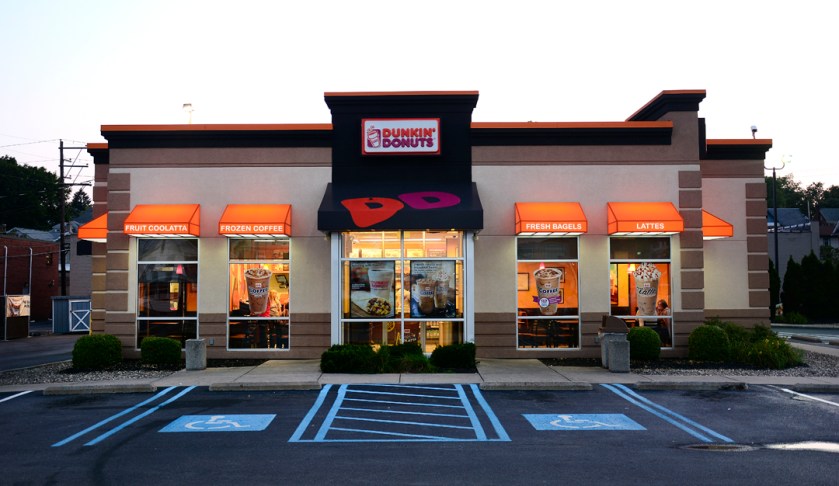
Oh well. Dunkin Donuts is open. What kind of donuts do you guys want?
This one happened in Florida, late one morning when the intercom from the front office told me, “There’s a man on the phone who wants to talk to the pastor.”
I knew how these conversations usually went. But I wasn’t all that busy and was feeling fairly pastoral, so I said, “OK, I’ll talk to him.”
It was a little different than what I expected. He didn’t ask anything of me other than wanting to have lunch with me. I was free for lunch, so when he told me where he was, I told him I would meet him at the barbecue restaurant just a quick walk away.
When I arrived at Woody’s, I figured that he was the guy standing by the front door, so I introduced myself, we went inside and sat down.
I told him lunch was on me. I was fairly certain a request for help would eventually come, so I was prepared to pick up the tab. When the waitress came, I ordered a lunch special, but he only got a plate of fries and some ice water. Interesting.
As we waited for our food he did most of the talking and I mostly listened. He was an experienced truck driver and was on his way to St. Augustine for his next job. He didn’t have his own truck, but was meeting someone for his next haul.
The food arrived in a few minutes, and while I enjoyed some pulled pork and sweet tea, he launched into a lengthly monologue about driving truck, his experiences and what he hoped his future would look like.
“You know all those orange and blue trailers you see on the road? Those are all beginners. That’s their first job. Trust me, they aren’t making much money. Barely enough to get by. They are just learning how to drive, so when you see them, give them lots of room.” I took his word for it, though I didn’t know if that was a fact.
I did ask, “So how long do you have to drive before you are making good money?”
He said, “At least ten years. Until then, you aren’t making anything. Most drivers don’t last that long. You have to stay clean — no record, no drugs, no alcohol. Most can’t do it. Companies can’t find drivers who are clean and most guys who want to drive can’t get jobs.”
Our conversation went on for about an hour. Mostly about truck, a little bit about family, and of course a mention of church life, since I’m a pastor and all. Then he mentioned that he just need to get up to St. Augustine to pick up the truck for the next job.
I said, “I can give you a ride.” He was meeting someone at a place near the outlet mall. Half-an-hour away, not a problem. Of course, in the back of my mind a voice tried to tell me I probably shouldn’t do this alone. But I didn’t feel threatened and he seemed honest enough, so we headed up the interstate to his destination.
On the way we talked about where he had lived in Florida, his time in the military, his kids, who were grown and living somewhere, and of course a quick mention of wanting to get back to church. In fact, when he was in the area, he would probably stop in.
When we got to the motel, he told me his truck was arriving the next day. I wasn’t going to just leave him there, so I went inside and paid for a hotel room for him.
As I drove home, I marveled at how he chose to spend a couple of hours with me rather than just asking for some help. I don’t know if he had practiced that skill, or if it just worked out that way. But it was effective. I probably would have said no to an outright request, but was willing to help as the need unfolded. Pretty clever. I’ll bet anyone could use that strategy. Invite someone into your life, gradually unfold your need, and let them be a part of your story.
I didn’t come away from that encounter feeling used. Instead, I was fascinated how our lives had intersected for just a moment in time. I learned a lot. Every time I see one of those trailers on the highway, I remember that day and what he told me about those drivers. I also think often about my vocation, and how people seek out a pastor for help. I’m safe, often generous and usually compassionate. I didn’t do any preaching or teaching that day, just bought a guy lunch and gave him a ride. Ministry moments aren’t spectacular. Neither was Jesus. Maybe that’s the point.
“You are a priest, so you have to give me a place to stay.”

Those were the first words out of the woman’s mouth when I answered the door one evening just before dark and found her standing on our front step. We had only been at my first parish for a year to two. Even in the rolling rural hills of eastern Connecticut, a variety of people quickly found out that we lived in the parsonage next door to the church. So we got the usual procession of people looking for food or gas money, but till now never a demand for housing.
Inge introduced herself with a thick Swedish accent. She hadn’t been in America very long, found herself abused and estranged from her husband, and had nowhere to go. I think at some point we actually met her husband, but there wasn’t going to be any reconciliation. She was also Lutheran, actually a pastor of some sort herself. We were a combination of naive, compassionate, and new at this, and we had a huge house full of rooms we weren’t using, so we took her in. Our family was small, just my wife and I and our infant son — and now a boarder.
She didn’t bring much with her. Inge had little money, just a few items of clothing and personal items in a small suitcase. Her habits were a little different than ours. She liked eating bread slathered with mayonnaise and tomato sauce. On many a pasta night we found ourselves with no sauce. She also like to make sweet rolls with lots and lots and lots of butter. I seem to remember that she showered and shaved only occasionally, taking more of a continental approach to hygiene.
Inge found a job at some kind of small manufacturing company in our town, one she could walk to. She did attend worship and bible class when she didn’t have to work. She used some of her income to buy things like a VHS player, which she wanted to take back to Sweden with her. Since she was “buying American” for the moment, we saw a glaring flaw in her plan. She wasn’t actually saving anymoney to go back home.
After a few months, we decided we would help her out. She didn’t have a bank account, so we cashed her paychecks for her, withholding some and saving up for a flight back to Sweden. Within a month, we had enough for the trip. I purchased a ticket, drove her to La Guardia, and dropped her off. I don’t think we ever heard from her again.
I have helped a lot of people in a lot of different ways over the years. This was the only time we actually took someone in. It’s been a memory-stretcher to recall this story. I wasn’t journaling my life then as I do now. I definitely remember it being a less fearful and more innocent time, before the Persian Gulf conflicts, 9/11, Internet, wifi, and smart phones.
I’m not sure we would do this again. Were we foolish or faithful? Hard to say. Following Christ seems to be a mixture of both sometimes.
The call came pretty late last night, about 10:45. I was driving, and felt my phone buzz in my pocked, but didn’t listen to the message until after I got home. “She said she thinks he’s dying.” I only live about a mile away and I didn’t want them to be alone, so I headed over to the apartment.


When I arrived, it was and it wasn’t what I expected. I’ve been with many people in hospice care for the last days and hours of their lives. I’m familiar with the shallow, irregular, rattling breathing. I just didn’t think it would happen this soon. Just hours earlier, he had been awake, conversant, signing his own documents and deciding to come home from the hospital. Hospice hadn’t even been to the house yet, and it looked like he’d be gone before they even arrived. He wasn’t conscious, but he also didn’t seem uncomfortable, which was a blessing.
A few more people arrived. All we could do was wait. Wait for a call back from hospice. Wait and wonder whether it was a wise choice to come home. Wait and pray, commending him to the Lord’s care.
With her encouragement, we left about 12:30 pm. She knew who to call if anything got out of hand. When I called back this morning, I learned he had died about an hour after we all left. Her words to me on the phone were, “I know he’s with the Lord. I just hope God accepts him.”
Without hesitation, I replied, “I have no doubt! He had faith in Christ. We just talked about that the other day when I brought him communion, He was forgiven. You don’t have to worry about that at all.”
“Thank you so much. That’s just what I needed to hear.”
If you know me at all, you know I talk about that all the time. Maybe when you’re sitting there on a Sunday and life is pretty good and you don’t have too many worries, it doesn’t register. But when the breathing stops, you feel all alone, and reality kicks in, it suddenly becomes an issue. So, you need to hear it again. If I can, I’ll be there to make sure you do.
Lately it seems like I’ve been spending a lot of time with people who get hit with stuff over and over again. What do you do for someone when the cancer keeps coming back? Or the headaches? Or the strokes? Or the flooding? I’m humbled knowing I don’t have a whole lot of answers. But I get to bring Christ, and he gives more than we ask or imagine.
Over the past few weeks I’ve been spending time with families who are making some big decisions about their living situation. For a variety of reasons, they may not be able to continue living in their homes and are exploring other options, from moving in with family to assisted living and long term care. This can never be an easy decision to make. For some, the decision is being made for them by family who are taking a greater role in caring for them. For others, the handwriting is on the wall, and they know that hour is coming.
A common theme in our discussions is church. One of their concerns is not wanting to lose access to their church family, involvement and worship. Among the many financial, health and transportation issues that must be addressed, their faith life rose to the top, like cream atop the milk. Continue reading ““I don’t want to be too far from church.””→
I just spent a week without (and greatly appreciating!) my office manager and assistant. She took a well deserved vacation with her husband, and will be back tomorrow. (God is good — all the time!)
That meant that I couldn’t just ignore the phone when it rang last week. If you called, that was my voice who answered, “Shepherd of the Coast Lutheran Church — this is Pastor Douthwaite.” Here are some of the responses I heard last week:
“Oh. <long pause> Nicole must not be there.”
In a thick Indian accent: “Thank you very much.” Click <hang up>
“Call this number immediately, or you will face arrest and imprisonment by the IRS for tax evasion…”
“Oh, hi Pastor. Are you going to be in the office today?” <seriously?>
“Do you have chronic back pain…?”
“Congratulations, you have just won…” Click. <I hung up.>
“Oh, hi. You’re just the person I need to talk to.”
“Hi, I’m from the Best-Ever-Media company. We’d like to send you a 37 volume DVD series to inspire your youth to more vibrant faith…” Click. <I hung up.>
“I sent you an email. Did you get it?”
“Stay on the line for important information about…” Click. <I hung up.>
“Hi. I scheduled a meeting, but don’t know if any space is available.”
“I saw you have a food pantry today.” Me: “No, I’m sorry, that’s the church next door.”
I never know what the voice on the other end is going to say. However, it just amazes me that 90% of the phone calls we receive are irrelevant to our ministry. So for a couple of hundred bucks a month, we maintain phone lines for no good reason at all!
I cut off our landline about five years ago. Neither my wife or I were making any outgoing calls. All of the inbound calls were telemarketers, surveys, robocalls and wrong numbers. The provider representative I talked with couldn’t understand why I wanted to disconnect.
Just about every week, I speak to someone who has served our nation in the military. Some were career. Some enlisted. Some were drafted. Some were deployed. Some served stateside. I have listened with great interest to those who fought in World War II, Korea, Viet Nam, and the Gulf wars. It is a life and a world I’ve never experienced.
In 1975, as my eighteenth birthday approached, I was under the impression that I still had to register with the selective service. Even though there had been no draft lottery since 1972, there was still registration. Up until March 29, 1975, when President Ford ended registration.
I remember calling information and asking for a number to call, to find out what I needed to do to register. The man who answered told me that they were in the process of packing up and cleaning out the office. There was no more registration.
Registration would resume a few years later, but I fell into a narrow window of time — those born between March 29, 1957 and December 31, 1959 — who were exempt from Selective Service registration. At one point during my senior year in high school, I had entertained the idea of pursing an appointment to the Air Force Academy. But my eyesight was poor enough that I wouldn’t qualify to fly, so I pursued other college options.
Our church’s ministry to veterans and their families has given me the chance to meet and talk with many who have served in many different ways. From infantry to pilots to helmsmen to electronics specialists to gunners to intelligence to chaplaincy to accounting to medical corps, they all have stories to tell. And some they do not tell. Some have killed. Some have lost friends and family. Some suffered physical or mental injury. Others were discharged unharmed.
I sometimes wonder how my life would be different had I been drafted or enlisted. What would I have learned? What would I have experienced? Would I have good memories? Or nightmares?
My father was in the Army Air Corps from 1943-45. He flew with a B-17 rescue team in the South Pacific. I recently asked him how many rescues he was a part of. He said, “None.” They never actually had to rescue anyone. With the dropping of two atomic bombs the war came to an end before he experienced combat. My dad wrote down a very detailed record of every place he went while he was in the service. I have able to find them all using Google Maps. Some of the places were nothing more than atolls in the middle of a very large ocean, where makeshift airstrips had been constructed.
Many of the youth I’ve worked with enlisted for military service upon graduating from high school. A few of our current youth are hopefully waiting for an appointment to a military academy. We pray for them by name each and every week. We know there is no guarantee of a safe return. But we are very grateful for their service.